Our Short List of 3

All 3 Picks at a Glance
| Product | Specs | Action |
|---|---|---|
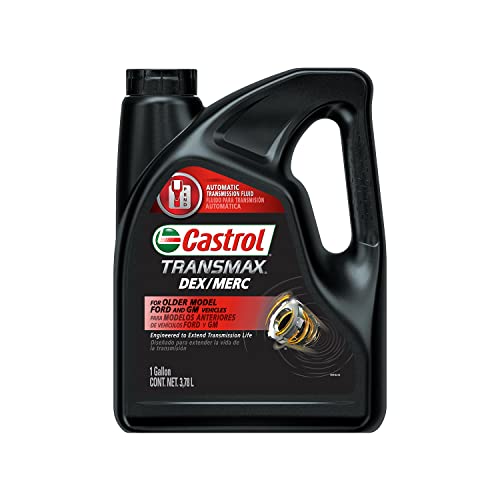
| Castrol Transmax DEX/MERC Automatic Transmission Fluid, 1 Gallon | Check price on Amazon | |
| Castrol Transmax ATF+4 Automatic Transmission Fluid, 1 Quart, Pack of 6 | Check price on Amazon | |
 Mobil 1 Synthetic LV ATF HP, Case of 6 x 1 Quart | Check price on Amazon |
📅 Last updated:
As an Amazon Associate we earn from qualifying purchases.
Automatic transmission oil, sold almost everywhere as ATF (automatic transmission fluid), is not a generic lubricant that happens to be red. Each automatic gearbox is built around a specific fluid specification that sets its viscosity, its friction behaviour on the clutch packs, and its resistance to heat and oxidation. Filling a transmission with a fluid that does not carry the specification named in the owner’s manual can produce harsh or slipping shifts long before it produces obvious damage, which is why choosing ATF starts with the specification and only then moves to brand, pack size and formula.

This guide is limited strictly to automatic transmission fluids. Motor oil, gear oil, manual transmission fluid and aftermarket additives are different products for different jobs, and none of them appears here. Every product below is a genuine ATF sold on Amazon US, with its ASIN confirmed in the product information of its Amazon US page or in the page address itself, and with a current buying option shown for the listing and no statement on the page that the item is unavailable or has no featured offers. Four fluids qualified under those conditions: a broad-coverage multi-vehicle quart, a gallon jug for older Dexron and Mercon applications, a six-pack built for Chrysler ATF+4 applications, and a low-viscosity synthetic case for newer high-performance automatics.
Disclosure: This article contains affiliate links. If you buy through these links, we may earn a commission at no additional cost to you.
📋 Table of Contents
- How to Choose an Automatic Transmission Oil
- Valvoline Multi-Vehicle ATF Full Synthetic Automatic Transmission Fluid, 1 Quart
- Castrol Transmax DEX/MERC Automatic Transmission Fluid, 1 Gallon
- Castrol Transmax ATF+4 Automatic Transmission Fluid, 1 Quart, Pack of 6
- Mobil 1 Synthetic LV ATF HP, Case of 6 x 1 Quart
- Which Automatic Transmission Oil Should You Buy?
- Frequently Asked Questions
How to Choose an Automatic Transmission Oil
Start with the specification in the owner’s manual or on the transmission’s service documentation. Automatic transmissions are specified by named standards rather than by a single universal grade: GM’s Dexron family, Ford’s Mercon family, Chrysler’s ATF+4, Toyota’s Type T-IV and WS, Honda’s ATF-Z1 and DW-1, and Nissan’s Matic fluids are common examples. A fluid is suitable for your vehicle only when its product page states that it meets, is approved for, or is recommended for the exact specification your transmission requires. A long compatibility list is useful, but the one line that matters is the line that names your specification.
Next, separate conventional automatics from CVTs and dual-clutch gearboxes. A continuously variable transmission uses a belt or chain running on pulleys and needs a fluid with its own friction profile; a dual-clutch transmission is different again. Some multi-vehicle ATFs are also recommended for belt and chain CVTs, and where that is the case the product page says so explicitly, as it does for the Valvoline fluid below. If a fluid’s page does not mention CVT use, do not assume it covers a CVT, and never use a conventional ATF in a gearbox that calls for a dedicated CVT or dual-clutch fluid unless the fluid maker names that application.
Consider the formula. Full synthetic ATFs generally hold their viscosity more steadily at high temperature and flow more readily in cold weather than conventional fluids, which matters for transmissions that tow, work in hot climates, or start on cold mornings. What matters in practice is what the product page states: thermal stability, viscosity stability and frictional enhancements are the properties the makers below claim for their synthetic formulas, and those claims are tied to the specific product, not to synthetic fluids in general.
Match the pack size to the job. A single quart suits a top-up or a power steering system that specifies ATF. A gallon or a five-quart jug suits a pan drop and refill on many cars, which typically exchanges only part of the total capacity because the torque converter retains fluid. A case of quarts suits a larger service, a workshop shelf, or an owner who maintains several vehicles on the same specification. Buying the case only makes sense when every vehicle it will serve shares the specification; a case of the wrong fluid is worse than a single quart of the right one.
Finally, check what the fluid is not for. None of the fluids in this guide is an engine oil, none is a gear oil for differentials or manual gearboxes, and none is a stop-leak or shift-fixing additive. ATF belongs in the automatic transmission and, only where the manufacturer specifies it, in a power steering reservoir or transfer case. Putting the right fluid in the wrong component is the same class of mistake as putting the wrong fluid in the right component.
Valvoline Multi-Vehicle ATF Full Synthetic Automatic Transmission Fluid, 1 Quart
See also: Best Box Trailer for Car: How to Pick a Small Enclosed Trailer That Your Car Can Tow • Utility Bed Work Trucks: A Buying Guide (December 2026)
The Valvoline entry is the broadest-coverage fluid in this guide. Its Amazon US product page lists the ASIN B000BOYCN6, identifies the product as Valvoline Multi-Vehicle (ATF) Full Synthetic Automatic Transmission Fluid in a one-quart bottle, and gives the model number VV324 with part number VV3246. The page describes the formula as the full synthetic MaxLife Multi-Vehicle ATF, a synthetic liquid with a stated flash point of 394 degrees Fahrenheit, packaged as a single one-quart bottle.
Coverage is the reason this fluid leads the list. According to its product description, it is suitable for the overwhelming majority of ATF vehicles in operation in US-registered light-duty applications, and it is also recommended for most belt and chain driven continuously variable transmissions. The applications named on the page include GM DEXRON-II, DEXRON-III, DEXRON-VI and DEX-CVT; Ford MERCON LV; Toyota and Lexus Type T, T-II, T-IV, WS, CVTF FE and CVTF TC; Honda and Acura ATF-Z1 and Honda CVT; Nissan and Infiniti Matic-D, Matic-J, Matic-K and Matic-S; Hyundai and Kia SP-II, SP-III, SP-IV and SPH-IV; several BMW specifications; Allison C-4; Mercedes-Benz NAG-1; Volvo applications; Subaru ATF HP and Lineartronic CVT fluids; and Volkswagen and Audi G-052-025-A2 and G-052-162-A1.
The formula claims on the page are specific. The fluid is designed with advanced additives intended to help prevent leaks, reduce wear and maximise performance for longer than conventional fluids, with improved thermal stability for longer fluid life, better viscosity stability for consistent transmission operation, and frictional enhancements for smooth gear engagements. For an owner whose vehicle sits on one of the many specifications in its list, and especially for a household maintaining more than one make of car, this is the simplest single bottle to keep on the shelf. The quart size suits top-ups and partial services; owners planning a full pan-drop service on a larger transmission will need several bottles, which is where the gallon and case options below become relevant.
Castrol Transmax DEX/MERC Automatic Transmission Fluid, 1 Gallon
Castrol’s Transmax DEX/MERC is the traditional-specification option, sold in a one-gallon jug for the large group of older and mid-age automatics built around the Dexron and Mercon fluid families. Its Amazon US product page lists the ASIN B00DILUBL6, part number and model number 03520, a liquid volume of 128 fluid ounces, and one included component: the one-gallon jug of automatic transmission fluid itself. The page gives an upper temperature rating of 175 degrees Celsius for the product.
Castrol’s manufacturer text on the page explains the thinking behind the Transmax range: its automatic transmission fluids are engineered to protect critical transmission components in GM, Ford, Chrysler, Toyota, Honda and Nissan vehicles and many others, and several Transmax products are formulated with Smooth Drive Technology, whose active control molecules adjust their friction level under changing pressures and speeds with the aim of delivering a smoother drive for longer. The DEX/MERC naming is the specification signal: this is the jug for a vehicle whose manual calls for a Dexron or Mercon type fluid, rather than one of the newer low-viscosity specifications.
The gallon format is the practical difference between this fluid and the quart above. A pan drop and filter change on a typical older automatic commonly takes a volume in this range, so a single jug covers the service without opening a case, and the remainder keeps for top-ups between services. Owners of newer transmissions that specify a low-viscosity fluid such as Dexron VI or Mercon LV should confirm that this DEX/MERC fluid’s stated applications cover their exact specification before choosing it over the Valvoline or Mobil 1 entries, because the newer specifications are not interchangeable with the older ones simply because the brand names sound similar.
Castrol Transmax ATF+4 Automatic Transmission Fluid, 1 Quart, Pack of 6
The second Castrol fluid serves a single specification family rather than a broad list. The Transmax ATF+4 listing, at amazon.com/dp/B008MISB2Q, is a pack of six one-quart bottles, with a total liquid volume of six quarts (192 fluid ounces). Its product information describes the specific use plainly: automatic transmission fluid for vehicles meeting ATF+3, ATF+2, ATF+ or Allison C-4 requirements. The page lists the material as synthetic, the model as 06810, the item model number as 15A9FA-6PK, and states that the product is not discontinued by the manufacturer.
ATF+4 is the Chrysler specification used across a wide range of Chrysler, Dodge, Jeep and Ram automatics, and it is a specification where substitution is a genuine risk: those transmissions were not designed around Dexron or Mercon fluids, and the ATF+4 friction profile is part of how they shift. A dedicated ATF+4 fluid removes the guesswork of reading a multi-vehicle compatibility list and hoping the Chrysler line is present. Castrol’s own data sheet for Transmax ATF+4 describes it as a full synthetic formula that exceeds ATF+3 requirements and is certified and approved for Chrysler applications requiring ATF+4.
The six-pack format fits how ATF+4 vehicles are usually serviced: a pan drop on a Chrysler automatic typically needs several quarts, so the case covers a service with bottles left over for the next top-up, and individual quarts are easier to pour and measure than a single large jug. If your vehicle does not specify ATF+4 or one of the earlier ATF+ specifications named on the page, this is the wrong shelf item despite the Castrol name; choose by specification first and brand second, as with every fluid here.
Mobil 1 Synthetic LV ATF HP, Case of 6 x 1 Quart
The Mobil 1 entry is the specialist for newer low-viscosity applications. Its Amazon US listing, at amazon.com/dp/B07Q3H159N, is the Mobil 1 Synthetic LV ATF HP in a case of six one-quart bottles. The product information on the page names the manufacturer as Mobil 1, gives the model, manufacturer part number and OEM part number all as 124715, and lists an item weight of 11.66 pounds with package dimensions of 9 x 7.8 x 9.6 inches for the case.
LV in the name stands for low viscosity, and that is the defining trend in modern automatic transmission design: as gear counts have risen, manufacturers have specified thinner fluids that reduce drag inside the gearbox while still protecting clutch packs designed around that thinner film. HP designates Mobil 1’s high-performance line of this fluid. A low-viscosity fluid is not a thinner version of an older ATF to be used interchangeably; it belongs only in transmissions whose specification calls for a low-viscosity fluid, and conversely a transmission built for an LV specification should not be filled with a heavier conventional ATF.
The case format suits this fluid’s typical use. Low-viscosity specifications belong to newer vehicles that are now reaching the age where owners service them at home or at independent workshops, and a six-quart case covers a pan service on many of them. Because the page for this listing states fewer application details than the Valvoline page, the practical step before ordering is to confirm that your transmission’s named specification is the LV ATF HP application this product is sold for, using the specification in your owner’s manual rather than the model name of the car. If the specification matches, this is the purpose-built choice in the guide; if it does not, the multi-vehicle Valvoline is the safer generalist.
Which Automatic Transmission Oil Should You Buy?
Choose by specification, in this order. If your manual names ATF+4 or an earlier Chrysler ATF+ specification, the Castrol Transmax ATF+4 six-pack is the dedicated match. If your transmission calls for a low-viscosity HP-class fluid, the Mobil 1 Synthetic LV ATF HP case is the purpose-built option. If your vehicle uses one of the many specifications on the Valvoline list, including most traditional automatics from GM, Ford, Toyota, Honda, Nissan, Hyundai, Subaru, BMW, Mercedes-Benz, Volvo and Volkswagen group cars, the Valvoline Multi-Vehicle quart is the broadest single answer and the only fluid here also recommended for most belt and chain CVTs. If you service an older Dexron or Mercon application and want service volume in one container, the Castrol Transmax DEX/MERC gallon is the straightforward pick.
Two cautions apply to all four. First, a fluid change that drains the pan does not replace all the fluid in the transmission, because the torque converter and cooler lines retain a share; plan quantities around the service procedure for your vehicle, not the total capacity figure. Second, no ATF corrects a mechanical fault. A transmission that slips, bangs into gear or carries burnt, debris-filled fluid needs diagnosis, and fresh fluid of the correct specification is maintenance, not a repair. Used ATF should be drained into a sealed container and taken to a recycling point, never poured into a drain or onto the ground.
Frequently Asked Questions
Is automatic transmission oil the same as ATF?
Yes. Automatic transmission oil is the plain-language name for ATF, automatic transmission fluid. The products in this guide are all ATFs. The name matters less than the specification: what decides suitability is whether the fluid’s stated applications include the exact specification your transmission requires.
Can I use one of these fluids as engine oil or gear oil?
No. ATF is formulated for the friction and hydraulic demands of an automatic transmission. It is not a motor oil, it is not a gear oil for a differential or manual gearbox, and it should not be used in either place. The locked rule for this guide is ATF products only, and the reverse rule applies in the vehicle: each component gets the fluid type its manufacturer specifies.
Does a multi-vehicle ATF really cover my car?
It covers your car only if your car’s specification appears in the fluid’s stated applications. The Valvoline fluid above lists an unusually wide range, from Dexron VI and Mercon LV to Toyota WS and Honda ATF-Z1, which is why it suits mixed households. Read the list for your specification rather than relying on the words multi-vehicle.
Can these fluids be used in a CVT?
Only where the product page says so. The Valvoline Multi-Vehicle ATF is recommended for most belt and chain driven CVTs and names several CVT specifications. The Castrol ATF+4, the Castrol DEX/MERC and the Mobil 1 LV ATF HP pages make no such CVT claim in the information checked for this guide, so treat them as conventional-automatic fluids unless the maker states otherwise for your exact application.
How much ATF do I need for a fluid change?
It depends on the vehicle and the method. A pan drop typically exchanges several quarts, which is why the pack sizes here run from a single quart for top-ups to a gallon jug and six-bottle cases for services. Check the service quantity in your owner’s manual or workshop documentation before ordering, and remember that a drain and fill leaves the converter’s share of old fluid in place.