📅 Last updated:
Litter will not make a cat lose weight, and no product on the shelf is designed to. What the right litter and box set-up will do is make life easier for a heavy cat that struggles to climb in, turn around, squat and clean itself afterwards. Obesity changes how a cat uses the litter box in ways owners often miss: stepping in awkwardly, perching on the edge, urinating over the rim, or leaving the rear end soiled because it cannot reach to groom. Fixing those problems keeps an overweight cat using the box reliably while diet and exercise do the real work.
📋 Table of Contents
Quick answer: For most people in 2026, the best cat litter for cats with obesity is the Average adult, 4 to 5 kg — our #1 rated choice. See the full ranked comparison, alternatives and buying advice below.
How excess weight affects litter box use
- Getting in and out: high sides and top-entry boxes are hard for heavy cats, especially if arthritis is also present.
- Turning and squatting: a large cat in a small box ends up with its rear hanging over the edge.
- Grooming: obese cats often cannot reach their back end, leading to soiled fur, odour and skin irritation.
- Urinary risk: overweight indoor cats have a higher risk of urinary problems, which also show up first in the litter box.
Box size and entry for heavy cats
See also: How to Pick a Heating Pad for an Arthritic Senior Dog • How to Transition a Picky Cat to a New Food
| Cat size | Recommended box length | Entry height | Style |
|---|---|---|---|
| Average adult, 4 to 5 kg | At least 45 to 55 cm | About 12 to 15 cm | Standard open tray |
| Overweight, 6 to 7 kg | At least 60 cm | About 10 to 12 cm or a cut-down side | Large open tray or storage box with a low entry cut |
| Obese or large breed, 7 kg plus | 70 cm or more | Under 10 cm at the entry point | Extra-large tray, higher sides elsewhere to catch spray |
A good rule of thumb is a box at least 1.5 times the cat’s body length from nose to base of tail. Hooded and top-entry boxes are generally poor choices for heavy cats.

Dr. Elsey's Ultra UnScented Clumping Clay Cat Litter 40 lb. Bag
Included for 'Best Cat Litter for Cats with Obesity' as a relevant option in this category; details come from the product listing.
View on Amazon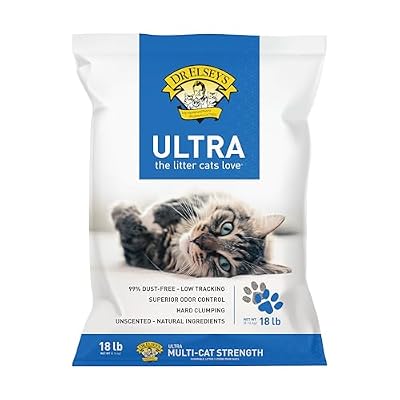
Dr. Elsey's Ultra Unscented Clumping Clay Cat Litter 18 lb Bag
Included for 'Best Cat Litter for Cats with Obesity' as a relevant option in this category; details come from the product listing.
View on Amazon
Purina Tidy Cats Free and Clean Unscented Clumping Cat Litter, 38 lb Box
Included for 'Best Cat Litter for Cats with Obesity' because the listing specifies 38 lb Box, details this guide uses to compare options.
View on Amazon
World's Best Cat Litter Multiple Cat, Unscented, Odor Control, 32 lb Bag
Included for 'Best Cat Litter for Cats with Obesity' because the listing specifies Unscented and Odor Control, details this guide uses to compare options.
View on AmazonChoosing litter for an overweight cat
Firm, stable footing
Heavy cats sink into deep, very fine litter and can feel unsteady. A medium-texture clumping litter at a moderate depth of around 5 cm gives firm footing while still allowing digging. Very deep litter makes it harder to balance.
Strong, fast clumping
Larger cats pass larger volumes of urine. A clumping litter that forms solid clumps quickly prevents urine reaching the bottom of the tray and makes it easier to monitor volume, which is useful because diabetes, a common complication of obesity, causes much larger clumps.
Low clinging
Cats that cannot groom well should not have litter sticking to soiled fur. Slightly coarser clumping litter or pellet litter clings less than dusty fine clay.
Unscented
Fragrance does not solve the odour of a soiled coat and can make the box less appealing. Keep boxes clean instead.
Hygiene support for cats that cannot groom
- Check the rear end daily and clean with unscented pet wipes.
- Ask your groomer or vet about a sanitary trim for long-haired overweight cats.
- Look for redness or sores under skin folds and around the tail base; these need a vet check.
Using the box area to support weight loss
Some owners are tempted to place the box upstairs to “make the cat walk more.” That can backfire: a cat that finds the trip uncomfortable may start going elsewhere. Better ways to add movement are feeding puzzle toys, short play sessions and placing food bowls, not litter boxes, in places that need a few extra steps. Keep at least one box on each floor the cat uses.
When to see your vet
See your vet if your overweight cat is urinating outside the box, straining, producing very large clumps, drinking more, or has a persistently soiled rear. These can indicate arthritis pain, urinary disease or diabetes, all more common in obese cats.
FAQ
Can the wrong litter box make my cat gain weight?
Not directly. But an uncomfortable box can make a heavy, possibly arthritic cat less willing to move around. Removing discomfort supports a more active routine.
Is a self-cleaning box a good idea for obese cats?
Many have small, enclosed interiors that suit average cats, not large ones. Check the internal usable length and entry height carefully before buying.
Bottom line
For an overweight cat, the most important litter decision is the box: long, open and low at the entry. Pair it with an unscented, fast-clumping, medium-texture litter at moderate depth, help with rear-end hygiene, and let diet and play handle the weight loss. See your vet if box habits or urine volume change.
Ready to decide? Our #1 pick for 2026 is the Average adult, 4 to 5 kg.
Live price & availability on Amazon.