📅 Last updated:
A cat with a sensitive stomach puts more pressure on the litter box than any other kind of cat. Soft stools smear, stick to paws and fur, and are harder to scoop, and a cat that has had an uncomfortable bout of diarrhoea in a particular box may start avoiding it. Litter will not settle an upset gut; diet, parasite control and veterinary care do that. But the right litter makes loose stools easier to manage, keeps a long-haired cat cleaner, and gives you an honest read on whether a new diet is working.
📋 Table of Contents
The litter box as a digestion report card
When you are trialling a new food for a sensitive cat, the box is where you measure success. Vets often use a stool score from 1 (very hard, dry pellets) to 7 (watery). An ideal cat stool usually sits around 2 to 3: formed, segmented, firm enough to pick up without leaving much residue. Tracking this daily for the first few weeks of a diet change is far more reliable than a general impression.
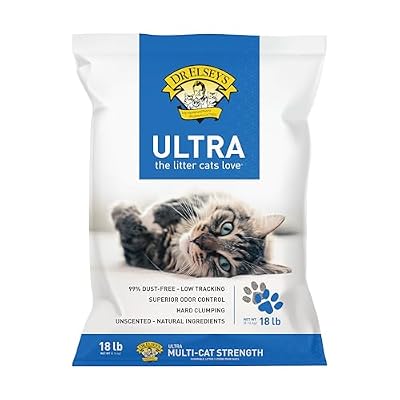
Dr. Elsey's Ultra Unscented Clumping Clay Cat Litter 18 lb Bag
Included for 'Best Cat Litter for Cats with Sensitive Stomach' as a relevant option in this category; details come from the product listing.
View on Amazon
Dr. Elsey's Ultra UnScented Clumping Clay Cat Litter 40 lb. Bag
Included for 'Best Cat Litter for Cats with Sensitive Stomach' as a relevant option in this category; details come from the product listing.
View on Amazon
Cat's Pride Total Odor Control, Max Power, Clumping Litter Unscented 15lb
Included for 'Best Cat Litter for Cats with Sensitive Stomach' because the listing specifies Max Power and Clumping Litter Unscented 15lb, details this guide uses to compare options.
View on Amazon
Cat's Pride Natural Lightweight Hypoallergenic Clumping Litter 10lb
Included for 'Best Cat Litter for Cats with Sensitive Stomach' as a relevant option in this category; details come from the product listing.
View on Amazon| Stool score | Appearance | What it often means | Action |
|---|---|---|---|
| 1 | Very hard, dry pellets | Constipation, dehydration | Increase moisture; vet if persistent |
| 2 to 3 | Firm, formed, segmented | Ideal | Keep current plan |
| 4 | Moist, loses shape when picked up | Mild softness, often during diet transitions | Slow the transition |
| 5 to 6 | Very soft piles to shapeless | Diarrhoea | Vet if lasts more than 1 to 2 days or cat is unwell |
| 7 | Watery | Significant diarrhoea | See your vet promptly, especially kittens and seniors |
What to look for in litter for a sensitive-stomach cat
See also: How to Pick a Heating Pad for an Arthritic Senior Dog • How to Transition a Picky Cat to a New Food
Firm clumping for easier clean-up
Loose stool mixes into litter. A strong-clumping, unscented clay or plant-based litter forms a crust around soft stool so it lifts out in one scoop, leaving less residue to smell or get tracked. Non-clumping litters such as plain clay or some pellets let liquid seep through and saturate the bottom layer, so the whole box needs changing more often.
Low tracking and less clinging
Fine clumping litter sticks to soft faeces on paws and fur. For long-haired cats with frequent soft stools, a slightly coarser clumping litter reduces clinging. Paper pellets cling least of all but handle soft stool poorly, so they suit cats with only occasional episodes.
No fragrance
Cats with abdominal discomfort are more sensitive to strong smells. Scented litter can push them to avoid the box during an episode, which is exactly when you need them to use it.
Light colour for observation
Blood, mucus and black, tarry stool are important findings. They are much easier to see on pale litter. Black or tarry stool and fresh blood should always be reported to your vet.
Practical set-up for cats with loose stools
- Scoop twice a day during a flare-up so the cat always finds a clean area.
- Add an extra box if you have several cats, so an unwell cat is not forced into a soiled one.
- Consider a disposable liner under clumping litter during diet trials to make full changes faster; some cats dislike liners, so watch for scratching changes.
- Keep a hygiene kit nearby: unscented pet wipes and a comb for long-haired cats, plus a sanitary trim if soiling is frequent.
- Collect samples properly: if your vet wants a faecal sample, scoop the freshest possible stool into a clean container; litter particles do not usually prevent testing.
Could the litter itself be upsetting the stomach?
Rarely. Cats swallow small amounts of litter while grooming, and occasional kittens eat it out of curiosity. Large amounts of clumping litter can in theory cause gut problems in very small kittens, so many breeders use non-clumping or pellet litter until about three to four months of age. An adult cat that deliberately eats litter should see a vet, because pica can indicate anaemia or other disease. Switching to a litter with a perfume or dust your cat dislikes can cause stress, and stress can loosen stools in sensitive cats, so change litters gradually.
Signs to take to your vet
- Diarrhoea lasting more than 48 hours, or any diarrhoea in a kitten or senior cat that seems unwell.
- Vomiting plus diarrhoea together.
- Blood, mucus or black stool.
- Straining without producing stool, which can be constipation or, in male cats, a urinary blockage.
- Weight loss despite a normal appetite.
FAQ
Is clumping or non-clumping litter better for diarrhoea?
Clumping litter usually handles soft stool better because it encases it for removal. Non-clumping litter lets liquid soak through, so the whole box needs changing more often.
Should I change litter at the same time as food?
No. Change one thing at a time. If you switch litter and food together and your cat’s stools or box habits change, you will not know which caused it.
Bottom line
For a cat with a sensitive stomach, choose an unscented, light-coloured, firmly clumping litter that does not cling to fur, and scoop more often during flare-ups. Use the box as a daily stool log when trialling diets, and treat blood, black stools, persistent diarrhoea or straining as reasons to see your vet rather than reasons to try another litter.