📅 Last updated:
Hairball supplements come in three main forms: lubricant gels, fibre additives and coat-support oils. They work in completely different ways, and choosing the wrong one for your cat’s situation is why so many owners conclude that “nothing works.” This guide sorts them by mechanism, gives labelled starting ranges to discuss with your vet, and explains the cases where no supplement will help because the real problem is somewhere else. We cover hairball treats in a separate article; here the focus is on products you add to food or give directly.
📋 Table of Contents
Quick answer: For most people in 2026, the best cat supplement for cats with hairballs is the Petrolatum hairball gel — our #1 rated choice. See the full ranked comparison, alternatives and buying advice below.
Three ways a supplement can help
1. Lubricants: help hair slide through
Classic hairball remedies are malt- or fish-flavoured gels based on white petrolatum or mineral oil. They coat swallowed hair so it passes into the stool. They can be useful for a short run during heavy seasonal shedding. The caveats: petroleum lubricants may reduce absorption of fat-soluble vitamins if given with meals every day for long periods, so most labels suggest giving them between meals and only a few times a week for maintenance. Never syringe oil directly into a cat’s mouth; it can be inhaled and cause pneumonia. Let the cat lick the gel from a paw or finger.

Pet Honesty Vet Backed Cat Hairball Remedy Chews, Chicken, 30-Day Supply
Included for 'Best Cat Supplement for Cats with Hairballs' because the listing specifies Chicken and 30-Day Supply, details this guide uses to compare options.
View on Amazon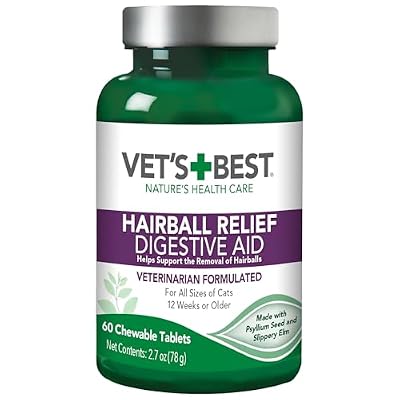
Vet's Best Cat Hairball Relief Chewable Tablets, Relief for Cats, 60 Count
Included for 'Best Cat Supplement for Cats with Hairballs' because the listing specifies Relief for Cats and 60 Count, details this guide uses to compare options.
View on Amazon
Pet Honesty Vet Backed Cat Hairball Remedy Chews, Tuna, 30-Day Supply
Included for 'Best Cat Supplement for Cats with Hairballs' because the listing specifies Tuna and 30-Day Supply, details this guide uses to compare options.
View on Amazon
Vet's Best Cat Hairball Relief Chewable Tablets, Digestive Aid, 180 Count
Included for 'Best Cat Supplement for Cats with Hairballs' because the listing specifies Digestive Aid and 180 Count, details this guide uses to compare options.
View on Amazon2. Fibre: carry hair out with the stool
Psyllium husk powder and plain canned pumpkin add soluble and insoluble fibre. They help hair move along and soften stool, which is useful for cats that are also mildly constipated. They can cause gas or loose stools if overdone, and they need to be mixed into wet food because fibre without water can make stools harder.
3. Coat support: reduce the amount shed
Fish oil supplying EPA and DHA supports skin and coat health. It does not stop normal shedding, but a less dry, less itchy coat can mean less excessive grooming. Results take six to eight weeks because they depend on the hair growth cycle. Plant oils such as flaxseed are less useful for cats, which convert plant omega-3 poorly.
Supplement comparison with labelled starting ranges
See also: How to Pick a Heating Pad for an Arthritic Senior Dog • How to Transition a Picky Cat to a New Food
| Supplement | Mechanism | Typical starting range for an adult cat (discuss with your vet) | Main cautions |
|---|---|---|---|
| Petrolatum hairball gel | Lubricates hair | About 2.5 to 5 cm (1 to 2 in) ribbon, 2 to 3 times weekly, between meals | Long-term daily use may affect vitamin absorption |
| Psyllium husk powder | Soluble fibre bulks and softens stool | About 1/4 to 1/2 teaspoon daily mixed into wet food | Gas, loose stools; needs moisture |
| Plain canned pumpkin | Mixed fibre | About 1 to 2 teaspoons daily | Must be plain, not pie filling; adds calories |
| Fish oil (EPA plus DHA) | Skin and coat support | Dose by label and body weight; vets often start low | Fishy breath, soft stools; caution with clotting disorders |
| Probiotic or enzyme blends | General gut support | Per label | Little direct evidence for hairballs specifically |
These are general reference ranges only. Your vet may recommend different amounts for small, senior or medically treated cats.
Matching the supplement to your cat
- Long-haired cat, healthy, occasional hairballs in shedding season: a short course of lubricant gel plus daily brushing.
- Cat with hairballs and small, hard stools: fibre in wet food, more water, and a vet check for constipation.
- Short-haired cat grooming constantly: the supplement is not the priority. Look for the cause of overgrooming: fleas, skin allergy, pain or stress.
- Senior cat with new hairballs: see your vet first. Arthritis can change grooming patterns, and new vomiting in older cats often has a medical cause.
What to avoid
- Butter, household cooking oils in large amounts, or laxatives made for people.
- Stacking several products at once. If you add a gel, fibre and fish oil together and the cat gets diarrhoea, you will not know which caused it.
- Using supplements to mask frequent vomiting. Hairballs more than about once or twice a month, vomiting of food, weight loss or lethargy are reasons to see your vet.
FAQ
Can I give a hairball gel every day?
Some labels allow short daily courses, but for ongoing use most vets prefer a few times a week, given away from meals. If your cat seems to need it daily indefinitely, ask your vet to look for an underlying cause.
Is coconut oil a good hairball remedy?
There is little evidence it works better than purpose-made products, it is high in calories, and it can cause diarrhoea. It is not a recommended first choice.
Bottom line
The best hairball supplement depends on the job: a lubricant gel for short spells of heavy shedding, fibre for cats whose stools are firm and slow, and fish oil for long-term coat support. Add one at a time, use modest amounts, and keep brushing. If hairballs are frequent or come with other symptoms, a supplement is covering up a question your vet should answer.
Ready to decide? Our #1 pick for 2026 is the Petrolatum hairball gel.
Live price & availability on Amazon.