📅 Last updated:
When an itchy dog licks its paws raw or keeps getting ear infections, food is usually the first suspect. The honest picture is more complicated. True food allergies are real, but they account for a minority of allergic dogs; environmental allergies to pollen, dust mites, and molds, along with flea allergy, are more common. The right food can transform a food-allergic dog, but it only works if you use it properly, and switching kibble brands every few weeks almost never gives a clear answer. This guide explains how food allergies work in dogs, which diet types actually help, and how to run a proper food trial with your vet.
📋 Table of Contents
Quick answer: For most people in 2026, the best dog food for dogs with allergies is the Hydrolyzed protein (veterinary) — our #1 rated choice. See the full ranked comparison, alternatives and buying advice below.
What food allergy looks like in dogs
Food allergy in dogs is usually a reaction to a protein. Common culprits reported in studies include beef, dairy, chicken, wheat, lamb, soy, and egg, not because they’re especially “allergenic” but because dogs eat them most often. Signs typically include year-round itching (rather than seasonal), paw licking, recurring ear infections, itching around the rear end, and sometimes soft stools or more frequent bowel movements. Symptoms can start at any age, including in dogs that have eaten the same food for years.
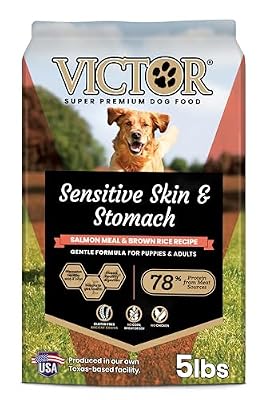
VICTOR Sensitive Skin & Stomach - Salmon Meal & Brown Rice Dog Food, 5 lb
Included for 'Best Dog Food for Dogs with Allergies' because the listing specifies Salmon Meal & Brown Rice Dog Food and 5 lb, details this guide uses to compare options.
View on Amazon
IAMS Proactive Health Sensitive Skin Dry Dog Food, Salmon & Rice, 4.5 lb
Included for 'Best Dog Food for Dogs with Allergies' because the listing specifies Salmon & Rice and 4.5 lb, details this guide uses to compare options.
View on Amazon
Purina ONE Plus Skin & Coat, Sensitive Stomach Dry Dog Food, 16.5 lb Bag
Included for 'Best Dog Food for Dogs with Allergies' because the listing specifies Sensitive Stomach Dry Dog Food and 16.5 lb Bag, details this guide uses to compare options.
View on Amazon
Blue Buffalo True Solutions Skin & Coat Care Salmon Dry Dog Food, 11 lb
Included for 'Best Dog Food for Dogs with Allergies' because the listing specifies 11 lb, details this guide uses to compare options.
View on AmazonAllergy versus intolerance
An intolerance, such as a dog that gets diarrhea from rich or fatty foods, is not an immune reaction. The approach differs, which is why a vet’s diagnosis matters before you commit to an expensive specialty diet.
Diet types compared
See also: How to Pick a Heating Pad for an Arthritic Senior Dog • How to Transition a Picky Cat to a New Food
| Diet type | How it works | Good for | Limitations |
|---|---|---|---|
| Hydrolyzed protein (veterinary) | Protein broken into fragments too small to trigger most reactions | Diagnostic food trials; severe cases | Needs vet authorization; higher cost |
| Novel protein (veterinary) | Protein the dog has never eaten, e.g., kangaroo, rabbit, venison | Food trials when history is known | “Novel” is harder to find as exotic proteins become common |
| Over-the-counter limited-ingredient | Fewer ingredients, often one main protein | Mild cases, long-term maintenance once triggers are known | Studies have found undeclared proteins in some OTC foods |
| Home-cooked elimination diet | Single protein + single carbohydrate | Short-term trials under vet guidance | Not balanced long-term without a nutritionist’s recipe |
How a proper food trial works
An elimination trial is still the only reliable way to diagnose food allergy in dogs; blood and saliva “food allergy tests” sold online are not considered accurate for this. The trial usually lasts at least 8 weeks, and sometimes 10 to 12, because skin takes that long to recover.
- Your vet treats existing ear or skin infections and confirms flea control, since those cause itching regardless of food.
- The dog eats only the trial diet: no treats, table scraps, flavored chews, or flavored medications unless your vet approves them.
- If itching improves substantially, the old food is reintroduced. A flare within days to two weeks confirms the diagnosis.
- Single proteins can then be tested one at a time to build a list of safe foods.
The most common reason trials fail
Hidden food. A chicken-flavored heartworm chew, a child dropping crackers, or a dental stick can undo weeks of work. Tell everyone in the household, and ask your vet about unflavored versions of medications.
What about grain-free?
Grains are not the leading cause of food allergy in dogs; animal proteins are. Grain-free diets don’t help most allergic dogs, and some grain-free, legume-heavy diets have been under investigation for a possible link to a heart condition called dilated cardiomyopathy. Discuss with your vet before choosing grain-free for allergy reasons.
Tracking progress during the trial
Score your dog’s itch weekly from 0 to 10, photograph red areas, and note ear problems. These records make the reintroduction step much clearer for you and your vet.
Frequently asked questions
How quickly will a new food stop the itching?
Some dogs improve in 3 to 4 weeks, but many need 6 to 8 weeks or more. Judge the trial at the end, not in the first fortnight.
Can small and large dogs use the same approach?
Yes. The principles are identical, though large-breed puppies need a trial food suited to growth; ask your vet so calcium and calories stay appropriate.
Bottom line
The best food for a dog with allergies is the one that passes a proper 8 to 12 week elimination trial, usually a veterinary hydrolyzed or novel-protein diet. Over-the-counter limited-ingredient foods can work for maintenance once you know the triggers. Rule out fleas and environmental allergies with your vet, and see your vet before starting any trial.
Ready to decide? Our #1 pick for 2026 is the Hydrolyzed protein (veterinary).
Live price & availability on Amazon.