📅 Last updated:
Obesity is the most common nutritional disease in dogs, and it’s more than a cosmetic issue. Excess weight is linked to arthritis, reduced lifespan, breathing problems, and a higher risk of several diseases. A long-term study of Labrador Retrievers found that dogs kept lean lived about two years longer on average than their overweight littermates. The good news is that weight loss in dogs is very achievable with the right food and a measured approach. This guide explains how weight-loss diets work, how much to feed, and how to avoid common mistakes like simply cutting portions of regular food.
📋 Table of Contents
Quick answer: For most people in 2026, the best dog food for dogs with weight loss obesity is the Lower calorie density — our #1 rated choice. See the full ranked comparison, alternatives and buying advice below.
Why not just feed less of the regular food?
Cutting a standard diet by 30 to 40 percent reduces calories, but it also reduces protein, vitamins, and minerals, which can lead to muscle loss and nutrient shortfalls. It also leaves dogs hungrier. Weight-loss diets are designed to provide fewer calories while keeping nutrients adequate and helping dogs feel full.

Purina Pro Plan Vet OM Overweight Management Dry Dog Food, 6 lb Bag
Included for 'Best Dog Food for Dogs with Weight Loss Obesity' because the listing specifies 6 lb Bag, details this guide uses to compare options.
View on Amazon
Hill's Science Diet Adult Perfect Weight Dry Dog Food
Included for 'Best Dog Food for Dogs with Weight Loss Obesity' as a relevant option in this category; details come from the product listing.
View on Amazon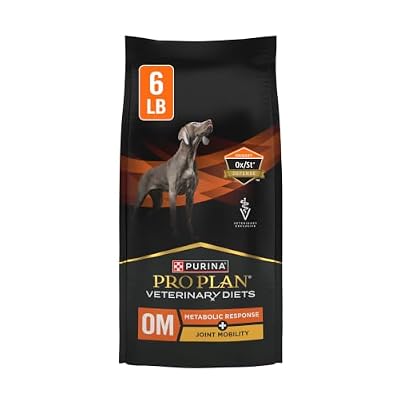
Purina Pro Plan Vet Diets OM Metabolic Response Dry Dog Food, 6 lb Bag
Included for 'Best Dog Food for Dogs with Weight Loss Obesity' because the listing specifies 6 lb Bag, details this guide uses to compare options.
View on Amazon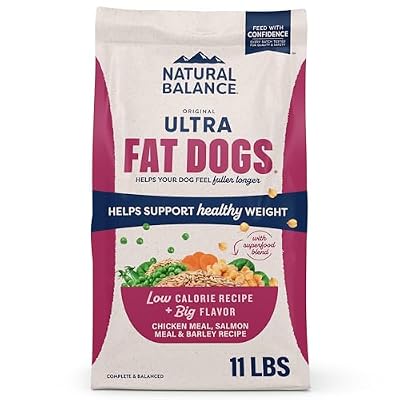
Natural Balance Fat Dogs, Chicken Meal, Salmon Meal & Barley, 11 lb
Included for 'Best Dog Food for Dogs with Weight Loss Obesity' because the listing specifies Chicken Meal and Salmon Meal & Barley, details this guide uses to compare options.
View on AmazonWhat a good weight-loss diet looks like
See also: How to Pick a Heating Pad for an Arthritic Senior Dog • How to Transition a Picky Cat to a New Food
| Feature | Why it helps |
|---|---|
| Lower calorie density | More food volume for fewer calories |
| Higher protein | Preserves muscle during weight loss; aids satiety |
| Higher fiber | Helps dogs feel full |
| Lower fat | Fat is the most calorie-dense nutrient |
| Fortified vitamins and minerals | Adequate nutrition at reduced intake |
| L-carnitine (in some diets) | May support fat metabolism |
Veterinary vs. over-the-counter options
Veterinary weight-loss diets are formulated for significant weight loss with high protein and fiber, and studies show they help dogs lose weight while staying satisfied. Over-the-counter “light” or “healthy weight” foods are fine for mild weight gain, but calorie content varies widely. Some are only slightly lower in calories than standard food.
How much to feed
Your vet will calculate a calorie target based on your dog’s ideal weight, often starting around the dog’s resting energy requirement at target weight. A common formula is 70 multiplied by (ideal weight in kg) raised to the 0.75 power. For a dog with an ideal weight of 20 kg (44 lb), that’s about 660 kcal a day. The goal is typically to lose 1 to 2 percent of body weight per week. Faster loss can cause muscle loss and is harder to maintain.
Measure accurately
Use a kitchen scale in grams rather than a scoop. Studies show scoop measurements can be off by 20 percent or more, which can stall weight loss.
Size and breed considerations
Labradors, Beagles, Cocker Spaniels, Dachshunds, and Pugs are among the breeds prone to obesity. Some Labradors carry a gene variant (POMC) linked to increased hunger, making high-fiber, high-volume diets especially helpful. For small dogs, a few extra kibble pieces matter; a 1 pound gain in a 10 pound dog is like 15 pounds on a 150 pound person. For brachycephalic breeds like Pugs and Bulldogs, weight loss can noticeably ease breathing.
Making it work
- Weigh your dog every two to four weeks and adjust with your vet.
- Use puzzle feeders to slow eating and add enrichment.
- Count treats, keeping them under 10 percent of calories.
- Add gradual exercise suited to your dog’s fitness and joints.
Body condition score: your progress tracker
Vets commonly use a 9-point body condition score (BCS), where 4 to 5 is ideal, 6 to 7 is overweight, and 8 to 9 is obese. Each point above 5 represents roughly 10 percent excess body weight. You can check at home:
- Ribs: should be easy to feel with light pressure, like the back of your hand.
- Waist: visible behind the ribs when viewed from above.
- Tummy tuck: the belly should rise toward the hind legs when viewed from the side.
Take photos from above and the side every month; changes are easier to see side by side than day to day.
Frequently asked questions
How long will weight loss take?
At 1 to 2 percent per week, losing 15 percent of body weight typically takes several months. Slow and steady is more sustainable.
Could a medical problem be causing weight gain?
Yes. Hypothyroidism and Cushing’s disease can cause weight gain. See your vet before starting a weight-loss plan.
Bottom line
The best food for an overweight dog is a high-protein, high-fiber, lower-calorie diet, ideally a veterinary weight-loss formula, fed in portions measured by weight to a calorie target set by your vet. Aim for gradual loss of 1 to 2 percent per week, count treats, and monitor progress regularly.
Ready to decide? Our #1 pick for 2026 is the Lower calorie density.
Live price & availability on Amazon.