📅 Last updated:
A Weimaraner on a leash can feel like holding onto a grey torpedo. The breed has a strong prey drive, huge stamina and a deep chest over a narrow waist, a shape that lets many standard harnesses slide or rub. The right harness makes walks safer and more controlled, protects the neck of a dog that lunges at birds and squirrels, and stays put through long hikes or runs. This guide explains the harness types that suit Weimaraners, how to size that distinctive body, and what to avoid.
📋 Table of Contents
Why a Weimaraner benefits from a harness
Weimaraners were developed as versatile hunting dogs, and the instinct to chase is strong. When a squirrel crosses the path, a 70-90 lb dog can hit the end of the leash hard. On a collar, that force lands on the throat and trachea. A harness distributes it across the chest and shoulders. For young dogs still learning loose-leash walking, a front-clip harness also gives you useful steering.
Harness types compared
See also: How to Clean and Maintain a Pet Water Fountain: A Weekly Routine That Works • Best Automatic Cat Feeder With Battery Backup: 8 Picks and a Power-Cut Plan
Front-clip harness
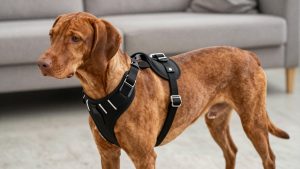
The leash attaches at the chest, so when the dog pulls it is gently turned sideways. This is the most effective tool for adolescent Weimaraners that pull. Choose a Y-front design that does not sit across the shoulder joints and restrict the long reach of the front legs.
Dual-clip harness
With both front and back attachment points, you can use the front for training and the back once your dog walks nicely. Many owners find this the most versatile choice for the breed.
Back-clip adventure harness
Padded back-clip harnesses with a handle suit hiking, running and dogs that already walk well. They are comfortable but give little control over a determined puller.
Running or canicross harness
If you run or bikejor with your Weimaraner, a harness designed for pulling spreads load along the body and leaves the shoulders free. It is a sport tool, not a daily walking harness.
| Harness type | Best for | Control level | Typical price range |
|---|---|---|---|
| Front-clip Y harness | Pullers, adolescents | High | Check on Amazon |
| Dual-clip harness | Training plus daily use | High / medium | Check on Amazon |
| Padded back-clip | Hiking, trained walkers | Low-medium | Check on Amazon |
| Canicross/running | Running, bikejoring | Sport-specific | Check on Amazon |
| Step-in harness | Small dogs | Low | Not recommended |
Sizing a deep chest and narrow waist
Measure the girth at the deepest part of the chest, just behind the front legs. Adult Weimaraners often measure 30-36 inches, with a neck around 18-22 inches. The narrow tuck-up behind the ribs means harnesses with a single belly strap placed too far back can slide backward; look for designs where the girth strap sits one hand-width behind the elbows. You should fit two fingers under each strap, and the harness should not shift more than an inch when you tug the leash sideways. Weimaraners have thin skin and a short coat, so check the armpits and chest after the first few walks for rubbing. Soft-edged or lined straps help.
Preventing escapes
These dogs are known for being clever and slippery. A harness with an extra belly strap or a “third strap” further back makes backing out much harder, which is worth considering for a dog with a high prey drive near roads.
Using the harness to build good habits
A harness manages pulling; training fixes it. Reward your dog for walking beside you, stop when the leash tightens, and practise around small distractions before big ones. A Weimaraner needs one to two hours of exercise daily, and part of that should be off-leash running in a safe, fenced area or on a long line, so walks do not become the only outlet for energy. A tired Weimaraner pulls far less.
Weather and visibility
The silver-grey coat blends into dusk and fog. Reflective stitching or a light clip on the harness makes early morning and evening walks safer. In wet weather, choose quick-drying webbing, since padded foam harnesses can stay damp against thin skin.
FAQ
What size harness does a Weimaraner need?
Most adults need a large harness fitting a 30-36 inch chest. Measure your own dog’s girth and check the manufacturer’s chart.
Is a front-clip harness safe for running?
Front-clip harnesses are best for walking and training. For running, a back-clip or dedicated running harness allows a freer stride.
Bottom line
For most Weimaraners, a dual-clip harness with a Y-shaped front and a well-placed girth strap offers the best mix of control and comfort. Use the front clip while teaching loose-leash walking, check for rubbing on that thin-skinned body, consider an escape-proof third strap, and pair the harness with plenty of real exercise.