📅 Last updated:
No treat will stop a dog from leaking urine, despite what some “bladder support” chews imply. But treats still matter for incontinent dogs in a few specific ways. Salty treats increase thirst and urine volume, which makes leaking harder to manage. Weight gain from treats puts extra pressure on the bladder of larger spayed females, the dogs most prone to sphincter incontinence. And treats are useful tools for building a toileting routine and for making pill-giving easier, since many incontinent dogs take daily medication. This guide covers choosing treats with those factors in mind.
📋 Table of Contents
Quick answer: For most people in 2026, the best dog treats for dogs with incontinence is the Carrot, cucumber, green beans — our #1 rated choice. See the full ranked comparison, alternatives and buying advice below.
Start with a diagnosis
Incontinence can result from urethral sphincter weakness, which is common in spayed females over about 20 kg, including Dobermans, Boxers, Old English Sheepdogs and Rottweilers; urinary tract infections; bladder stones; diabetes; kidney disease; Cushing’s disease; and spinal problems. Many of these are treatable. See your vet before assuming treats or supplements can help, especially if the dog is drinking more than usual.

Zesty Paws Cranberry Supplement for Dogs - Bacon, 90 Ct
Included for 'Best Dog Treats for Dogs with Incontinence' because the listing specifies Bacon and 90 Ct, details this guide uses to compare options.
View on Amazon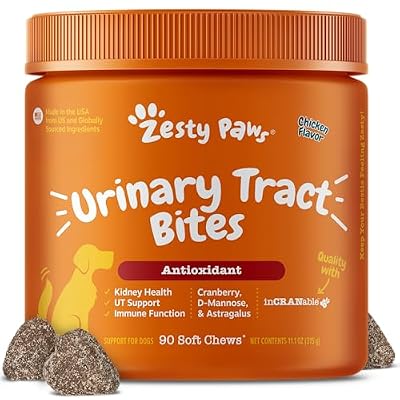
Zesty Paws Cranberry Supplement for Dogs - Chicken, 90 Ct
Included for 'Best Dog Treats for Dogs with Incontinence' because the listing specifies Chicken and 90 Ct, details this guide uses to compare options.
View on AmazonWhat makes a treat suitable
See also: How to Pick a Heating Pad for an Arthritic Senior Dog • How to Transition a Picky Cat to a New Food
Low in salt
Jerky, cured meats, cheese, and some processed treats can be high in sodium. More salt means more drinking and more urine, which increases the chance of leaks overnight. Choose low-sodium options and avoid table scraps like ham or crisps.
Low in calories
Excess body fat is associated with worse incontinence in some dogs, and many incontinent dogs are older and less active. Keep treats under about 10 percent of daily calories.
Compatible with urinary diets
If your vet has prescribed a urinary diet for bladder stones or infections, many treats can change urine chemistry and undermine it. Use treats made to match the diet or kibble from the diet itself.
Good for hiding pills
Dogs with sphincter incontinence often take daily or twice-daily medication. A soft treat or pill pocket that hides tablets makes dosing reliable, which matters because missed doses often mean wet beds.
| Treat type | Salt level (typical) | Calories (approx.) | Fit for incontinent dogs |
|---|---|---|---|
| Carrot, cucumber, green beans | Very low | 1–5 kcal per piece | Excellent |
| Kibble from the dog’s diet | Balanced | 3–5 kcal per piece | Excellent; required on urinary diets |
| Soft pill-wrap treats | Low to moderate | 5–15 kcal each | Good for medication |
| Jerky and cured meats | High | 20–60 kcal per strip | Limit or avoid |
| Cheese cubes | Moderate to high | 10–20 kcal per cube | Occasional only |
| Cranberry “bladder” chews | Low | 5–20 kcal | Possible UTI benefit; not for sphincter weakness |
Using treats to build a toileting routine
For senior dogs, or dogs whose leaking is worse when the bladder is full, frequent opportunities to urinate help. Take the dog out first thing, after meals, after naps, and right before bed, and reward urinating outside with a small treat. A last late-evening toilet trip reduces the volume in the bladder overnight. This does not fix sphincter weakness, but it reduces the amount of urine available to leak.
Making pill time reliable
Medications for sphincter incontinence usually work only while they are given consistently; a few missed doses and the wet patches often return. Give the pill inside a small soft treat, followed straight away by a second plain treat so the dog swallows without inspecting the first one. For dogs that learn to spit pills out, rotating between two or three different soft wrappers helps. Keep the calories of pill wraps inside the daily treat budget, since two doses a day add up over months.
Do not restrict water
It can be tempting to reduce water to reduce accidents. This is harmful: concentrated urine irritates the bladder, encourages infection and stones, and can damage kidneys. Provide water freely.
Breed and size
For a 30 kg Boxer or Doberman, the treat budget at 10 percent is roughly 100 to 130 kcal per day, depending on activity. For small dogs with incontinence, such as older Dachshunds with disc disease, the budget may be just 25 to 40 kcal, so choose very small pieces.
FAQ
Do cranberry treats help urinary incontinence?
They may slightly reduce the risk of some urinary infections, but they do not strengthen the urethral sphincter. For typical spay-related leaking, prescription medication is far more effective.
Can treats interfere with my dog’s incontinence medication?
Generally not, but salty or high-calorie treats can make leaking harder to control. If your dog is on a prescription urinary diet, use matching treats only.
Bottom line
For incontinent dogs, the best treats are low in salt and calories, compatible with any urinary diet, and useful for hiding daily medication. Use them to build a regular toileting routine, never restrict water, and rely on your vet for diagnosis and treatment of the leaking itself.
Ready to decide? Our #1 pick for 2026 is the Carrot, cucumber, green beans.
Live price & availability on Amazon.