📅 Last updated:
Orijen and Acana are sister brands. Both are made by Champion Petfoods, which is headquartered in Alberta, Canada, runs its own kitchens in Canada and Kentucky, and has been owned by Mars since 2023. They share the same philosophy of high animal content and named, regional proteins, which is why owners often assume they are interchangeable. They are not quite. Orijen is the premium tier with more meat and a higher price; Acana is the more accessible line with a bit more produce and a broader range. This comparison explains the practical differences.
📋 Table of Contents
The core difference: animal content
Champion publishes the proportion of animal ingredients on its bags. Orijen dry recipes are typically around 85% to 90% animal ingredients, with a large share added fresh or raw and the balance dehydrated. Acana recipes generally range from roughly 60% to 75% animal ingredients depending on the line, with the remainder from fruits, vegetables, legumes and, in some lines, whole grains. More meat usually means higher protein and fat, and a higher price.

ORIJEN Grain Free WHOLEPREY Dry Dog Food Original Recipe 23.5lb Bag
Included for 'Orijen vs Acana Dog Food Comparison' as a relevant option in this category; details come from the product listing.
View on Amazon
ORIJEN Poultry Free WHOLEPREY Dry Dog Food Regional Red 23.5lb Bag
Included for 'Orijen vs Acana Dog Food Comparison' as a relevant option in this category; details come from the product listing.
View on Amazon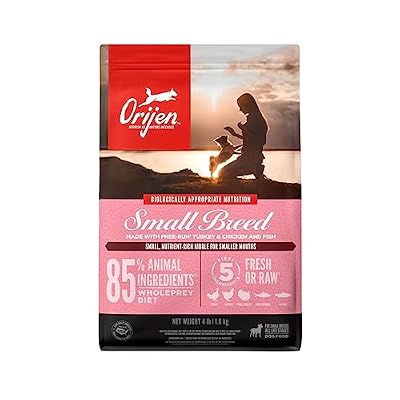
ORIJEN Grain Free WHOLEPREY Dry Dog Food Small Breed Recipe 4lb Bag
Included for 'Orijen vs Acana Dog Food Comparison' as a relevant option in this category; details come from the product listing.
View on Amazon
ORIJEN Poultry Free WHOLEPREY Dry Dog Food Six Fish Recipe 23.5lb Bag
Included for 'Orijen vs Acana Dog Food Comparison' as a relevant option in this category; details come from the product listing.
View on AmazonSide-by-side
See also: How to Pick a Heating Pad for an Arthritic Senior Dog • How to Transition a Picky Cat to a New Food
| Factor | Orijen | Acana |
|---|---|---|
| Maker | Champion Petfoods (Mars) | Champion Petfoods (Mars) |
| Animal ingredients (approx.) | 85–90% | 60–75% |
| Typical crude protein | High, often around 38% or more | Moderate-high, often mid-20s to low-30s % |
| Grain options | Mostly grain-free; some “Amazing Grains” recipes | Grain-free and “Wholesome Grains” lines |
| Freeze-dried and treats | Freeze-dried food and treats | Freeze-dried coated kibble in some lines |
| Price per pound (approx.) | $5.50–$7.50 | $3.80–$5.50 |
Always check the guaranteed analysis on the specific bag; values differ by recipe and change when formulas are updated.
Who each brand suits
Orijen
Very active dogs, working dogs and dogs that maintain weight easily on calorie-dense food. Because Orijen is rich, portion control is essential; many dogs need less than they would of a mainstream kibble. Owners of couch-potato dogs sometimes find weight creeps up.
Acana
Most family pets that do well on a high-protein diet but do not need maximum calories. The Wholesome Grains line gives a grain-inclusive option, and the Singles limited-ingredient line helps owners who want a single animal protein.
The DCM question
In 2019 the FDA published the names of brands most frequently reported in cases of dilated cardiomyopathy in dogs eating certain diets, many of them grain-free and legume-rich. Acana was the most frequently named brand in that report, and Orijen also appeared. The FDA did not determine that these foods caused DCM, and research into the connection is ongoing. Champion responded by expanding grain-inclusive recipes. If you feed either brand, discuss it with your vet, particularly for breeds predisposed to heart disease such as Dobermans, Boxers and Golden Retrievers.
Digestive transition
Both foods are richer than many supermarket kibbles. Transition slowly over 10 to 14 days. Softer stools during the switch are common; persistent diarrhea is a sign to slow down or reconsider. Seniors and dogs with pancreatitis history may not tolerate high fat, so check with your vet before switching.
Palatability and value
Dogs tend to love both. Because Orijen is more calorie dense, the per-day cost gap is smaller than the per-pound gap suggests, since you feed somewhat less. Calculate cost per day using the feeding chart and your dog’s weight rather than comparing bag prices.
Reading the bag: what to compare
Because both brands change recipes periodically, compare the actual bag rather than a review. Look at four numbers: calories per cup (Orijen recipes often land above 450 kcal per cup, Acana somewhat lower), crude protein, crude fat and the AAFCO life-stage statement. Then check the first five ingredients to see whether the protein comes mostly from fresh meat or from meals, and whether legumes such as peas, lentils or chickpeas appear high on the list. If you have a large-breed puppy, confirm the bag states it is formulated for growth including large-size dogs. For small dogs, both brands offer small-breed kibble. Finally, note the manufacturing location printed on the bag, since Champion supplies different markets from different kitchens. Keeping a photo of the label makes it easy to spot a formula change later if your dog’s stool or appetite suddenly shifts.
FAQ
Is Orijen worth the extra money over Acana?
For high-energy dogs that thrive on dense nutrition, it can be. For average pets, Acana usually offers similar quality at a lower cost.
Are Orijen and Acana made in the same place?
Both are produced by Champion Petfoods in its own kitchens. Recipes and origin can vary by market, so check the bag in your country.
Bottom line
Orijen is the maximal-meat option for athletic dogs and owners willing to pay for it; Acana delivers much of the same philosophy with more recipe variety, grain-inclusive choices and a gentler price. Given the ongoing DCM research, a grain-inclusive recipe from either brand is a reasonable default, and your vet is the right person to help decide for dogs with heart risk.