📅 Last updated:
If your vet has diagnosed a urinary, kidney, digestive or thyroid problem in your cat, you will likely be offered a therapeutic diet from Royal Canin Veterinary Diet or Hill’s Prescription Diet. Both require authorization from a veterinarian, both are backed by clinical research, and both can be the difference between a cat that stabilizes and one that keeps relapsing. This guide explains how the two ranges line up condition by condition, so you can have a better-informed conversation with your vet. It is not a substitute for that conversation.
📋 Table of Contents
Important: these are not interchangeable by default
Therapeutic diets are formulated for specific diseases with specific nutrient targets, such as restricted phosphorus for kidney disease or controlled minerals and urine pH for bladder stones. Two products aimed at the same condition may use different strategies. Do not switch brands, stop the diet or mix in other foods without asking your vet, particularly for urinary stone dissolution or iodine-restricted thyroid diets, where even small amounts of other food can undermine the plan.
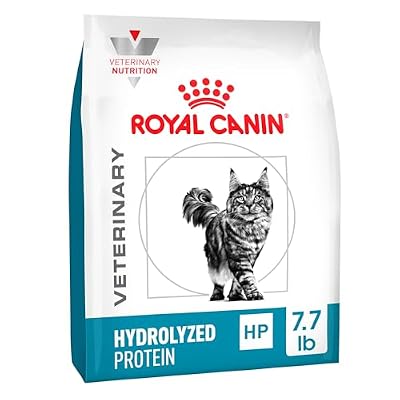
ROYAL CANIN Veterinary Hydrolyzed Protein HP Adult Dry Cat Food, 7.7 lb Bag
Included for 'Royal Canin vs Hill's Prescription Cat Food Comparison' because the listing specifies 7.7 lb Bag, details this guide uses to compare options.
View on Amazon
ROYAL CANIN Veterinary Diet Feline Urinary SO Adult Dry Cat Food, 7.7 lb Bag
Included for 'Royal Canin vs Hill's Prescription Cat Food Comparison' because the listing specifies 7.7 lb Bag, details this guide uses to compare options.
View on Amazon
ROYAL CANIN Veterinary Diet Feline Urinary SO Adult Loaf in Sauce Cat Food, 5.1 oz (Pack of 24)
Included for 'Royal Canin vs Hill's Prescription Cat Food Comparison' because the listing specifies 5.1 oz (Pack of 24), details this guide uses to compare options.
View on Amazon
Hill's Prescription Diet c/d Multicare Stress Urinary Care Dry Cat Food
Included for 'Royal Canin vs Hill's Prescription Cat Food Comparison' as a relevant option in this category; details come from the product listing.
View on AmazonCondition-by-condition comparison
See also: How to Pick a Heating Pad for an Arthritic Senior Dog • How to Transition a Picky Cat to a New Food
| Condition | Hill’s Prescription Diet | Royal Canin Veterinary Diet |
|---|---|---|
| Urinary crystals and stones | c/d Multicare (long-term), s/d (short-term struvite dissolution), c/d Multicare Stress | Urinary SO, Urinary SO + Calm |
| Chronic kidney disease | k/d, k/d Early Support | Renal Support (several flavors and textures), Early Renal in some markets |
| Digestive upset | i/d, i/d Low Fat, Gastrointestinal Biome | Gastrointestinal, Gastrointestinal Fiber Response |
| Food allergies | z/d (hydrolyzed), d/d (novel protein) | Hydrolyzed Protein, Selected Protein |
| Weight loss | Metabolic, w/d, r/d | Satiety Support |
| Hyperthyroidism | y/d (iodine-restricted) | No widely available direct equivalent in the U.S. |
| Diabetes support | m/d, w/d | Glycobalance |
Product names and availability change by country; your vet’s clinic will know the current range.
Urinary diets
Hill’s splits urinary care between s/d for relatively quick struvite dissolution and c/d Multicare for long-term prevention of struvite and calcium oxalate. Royal Canin Urinary SO is designed to create an environment unfavorable to both struvite and calcium oxalate, using its “RSS” (relative supersaturation) approach. Many vets consider them broadly comparable for long-term maintenance, and the choice often comes down to which one your cat will eat. Both have stress-supportive versions for cats with idiopathic cystitis.
Kidney diets
Both reduce phosphorus and sodium and moderate protein to follow IRIS staging guidance. Royal Canin offers many Renal Support textures and flavors, which helps with the appetite loss common in kidney disease. Hill’s k/d has an Early Support version for cats in earlier stages. Wet versions are preferred when possible because moisture intake matters so much for cats with kidney disease.
Thyroid
Hill’s y/d is an iodine-restricted diet that can be used to manage hyperthyroidism when it is the only food eaten. Royal Canin does not offer a widely available equivalent in the U.S. Medication, radioiodine therapy and diet are all options; your vet will help decide which fits your cat.
Palatability and cost
Therapeutic diets are expensive. Wet prescription foods commonly cost $1.50 to $3.00 per can, and dry $6 to $10 per pound. Ask your vet about auto-ship through the clinic or an online pharmacy, and ask whether a different brand is acceptable if your cat refuses one.
Getting a reluctant cat to eat a therapeutic diet
Therapeutic diets only work if they are eaten. Owners often have the best success introducing the new food gradually over a week, unless the vet wants an immediate switch for stone dissolution. Try both wet and dry versions, warm wet food slightly, and offer small fresh portions rather than leaving food out all day. Royal Canin and Hill’s both offer several textures within most therapeutic categories, so trying another texture from the same brand is often the first step before changing brands. Do not add toppers, treats or other foods without asking your vet, because they can change the mineral, phosphorus or iodine balance the diet depends on. If your cat still refuses, your vet may prescribe an appetite stimulant or recommend an alternative diet. Recheck visits and lab work will show whether the diet is doing its job.
FAQ
Can I switch my cat from Hill’s c/d to Royal Canin Urinary SO?
Often, yes, but only with your vet’s approval. They may want a follow-up urinalysis after the switch.
Do I need a prescription to buy these diets?
Yes. Retailers verify veterinary authorization for Hill’s Prescription Diet and Royal Canin Veterinary Diet products.
Bottom line
Hill’s Prescription Diet and Royal Canin Veterinary Diet cover most of the same conditions with research-backed formulas; Hill’s has an iodine-restricted thyroid diet that Royal Canin does not widely offer, while Royal Canin often wins on flavor and texture variety. The right choice is the one your vet recommends for your cat’s diagnosis and that your cat will actually eat consistently.