📅 Last updated:
Dental disease is one of the most common health problems in adult cats; many studies suggest a majority of cats over about three to four years old have some degree of gum disease or other dental problem. Food can help slow plaque and tartar build-up, and certain diets are proven to do so. But food cannot treat existing tartar, infected teeth or tooth resorption, a painful condition common in cats. And a cat with a sore mouth may not be able to chew a crunchy dental kibble at all. Choosing food for a cat with dental disease means thinking about both prevention and comfort.
📋 Table of Contents
Quick answer: For most people in 2026, the best cat food for cats with dental disease is the VOHC-accepted dental kibble — our #1 rated choice. See the full ranked comparison, alternatives and buying advice below.
Know what kind of dental problem your cat has
- Plaque and tartar with gingivitis: diet can help slow return after a professional cleaning.
- Periodontal disease: infection around the tooth roots; needs anaesthetic cleaning, X-rays and often extractions.
- Tooth resorption: the tooth structure breaks down, often painfully. Diet does not prevent or treat it; affected teeth usually need extraction.
- Stomatitis: severe inflammation of the mouth. Very painful; often requires extensive extractions and medical management.
Only a vet exam, ideally with dental X-rays under anaesthesia, can tell which applies.

Hill's Science Diet Adult Oral Care Dry Cat Food
Included for 'Best Cat Food for Cats with Dental Disease' as a relevant option in this category; details come from the product listing.
View on Amazon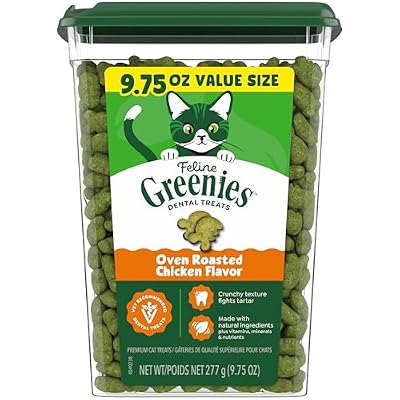
Greenies Feline Natural Dental Cat Treats, Roasted Chicken Flavor, 9.75 oz
Included for 'Best Cat Food for Cats with Dental Disease' because the listing specifies Roasted Chicken Flavor and 9.75 oz, details this guide uses to compare options.
View on Amazon
Purina Pro Plan Veterinary Diets Dental Bites Cat Treats, 1.8 oz Pouch
Included for 'Best Cat Food for Cats with Dental Disease' because the listing specifies 1.8 oz Pouch, details this guide uses to compare options.
View on Amazon
Royal Canin Feline Care Nutrition Dental Care Adult Dry Cat Food, 6 lb Bag
Included for 'Best Cat Food for Cats with Dental Disease' because the listing specifies 6 lb Bag, details this guide uses to compare options.
View on AmazonHow dental diets work
See also: How to Pick a Heating Pad for an Arthritic Senior Dog • How to Transition a Picky Cat to a New Food
Mechanical cleaning kibble
Dental diets use larger kibble with a fibrous internal structure. When the cat bites, the tooth penetrates the kibble and the fibres wipe the tooth surface rather than the kibble shattering. Some have been shown in trials to reduce plaque and tartar accumulation compared with standard dry food.
Chemical plaque control
Some diets coat kibble with polyphosphates, which bind calcium in saliva and slow tartar formation.
The VOHC seal
The Veterinary Oral Health Council reviews trial data and awards a seal to products that meet standards for reducing plaque or tartar. It is the most useful single marker when comparing dental foods.
Comparing food options
| Food type | Dental effect | Best for | Not suitable for |
|---|---|---|---|
| VOHC-accepted dental kibble | Slows plaque and tartar build-up | Cats after professional cleaning, mild gingivitis | Cats with painful mouths or few teeth |
| Standard dry food | Minimal; most kibble shatters | General feeding | Not a dental strategy on its own |
| Wet food | No cleaning effect | Cats with oral pain, after extractions, hydration | Plaque control needs other tools |
| Softened kibble or pate | None | Cats recovering from dental surgery | N/A |
The wet food myth
Wet food does not “rot” cats’ teeth. It simply does not clean them. Many cats with dental disease do best on wet food because chewing hurts, and cats with multiple extractions, or even no teeth at all, generally eat wet food, and often kibble, perfectly well once healed.
Signs your cat’s mouth is too sore for dental kibble
- Dropping food, chewing on one side, or tilting the head while eating.
- Approaching the bowl eagerly then walking away.
- Drooling, pawing at the mouth, or bad breath.
- Preferring wet food suddenly, or weight loss.
If you see these, see your vet before introducing dental kibble. Treating the painful teeth comes first.
Feeding in the first two weeks after dental surgery
Most cats are offered a small meal the evening after a dental procedure, once they are fully awake. For roughly 10 to 14 days, while extraction sites heal, vets usually recommend soft wet food or kibble soaked until mushy, and no hard treats or chews. Pain relief is normally prescribed, and a cat that eats well is a good sign it is working. Contact your vet if your cat has not eaten within about 24 hours of coming home, if you see fresh bleeding, or if one side of the face swells. Once your vet confirms healing at the recheck, you can decide whether a dental kibble fits the long-term plan.
A sensible plan
- Vet dental assessment and professional cleaning with X-rays if recommended.
- After healing, introduce a VOHC-accepted dental diet as all or part of the daily ration if your cat has enough comfortable teeth to chew it.
- Add daily or near-daily toothbrushing with pet toothpaste if your cat tolerates it; this remains the single most effective home measure.
- Annual dental checks, more often for cats with a history of gum disease.
FAQ
Can dental food remove existing tartar?
No. Dental diets slow new build-up. Existing tartar, especially below the gumline, needs professional cleaning under anaesthesia.
My cat has had most teeth removed. What should it eat?
Most cats do very well on wet food and many manage small kibble after healing. Your vet will advise on softened food during the recovery period, usually around 10 to 14 days.
Bottom line
A VOHC-accepted dental diet is a useful tool for slowing plaque and tartar in cats with healthy, comfortable mouths, especially after a professional cleaning. It is the wrong choice for cats in oral pain. Treat existing disease first, use wet food whenever chewing hurts, brush if you can, and let your vet guide the timing.
Ready to decide? Our #1 pick for 2026 is the VOHC-accepted dental kibble.
Live price & availability on Amazon.