📅 Last updated:
Most cat tree advice assumes a cat that loves to leap to the ceiling. The Scottish Fold is a different case. Folds are usually calm, sociable cats that enjoy being near people and like a good lookout, but the fold gene affects cartilage throughout the body, and many Folds develop stiff ankles, knees and tails as they age. A tall tree with big gaps between perches can go from fun to risky. The right tree for a Fold is lower, wider and built around stepping rather than jumping.
📋 Table of Contents
Quick answer: For most people in 2026, the best cat tree for scottish fold 2026 is the Low lounger with 2-3 wide tiers — our #1 rated choice. See the full ranked comparison, alternatives and buying advice below.
How the Fold’s build changes what a “good” cat tree looks like
An adult Fold typically weighs 6-13 lb, with males at the heavier end. That is an ordinary size, so the tree does not need extreme load ratings. What it needs is geometry that respects joints. The condition linked to the folded ears, osteochondrodysplasia, can cause thickened joints, a short or rigid tail and pain on landing. A cat that jumps down from 5 feet onto a hard floor is loading exactly the joints that are most vulnerable in this breed. Landing, not climbing, is the bigger strain.
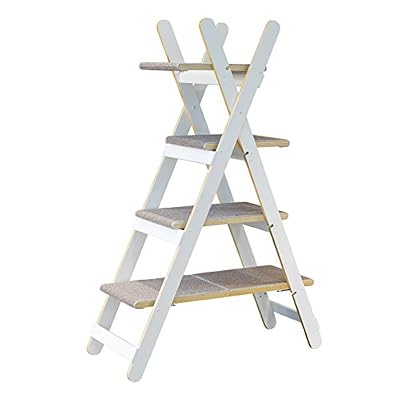
Merry Products Modern Folding Cat Tree
Included for 'Best Cat Tree for Scottish Fold 2026' as a relevant option in this category; details come from the product listing.
View on AmazonMany Folds also sit in an unusual upright position with their back legs stretched in front of them. That posture needs a flat, broad platform, not a narrow curved perch.
Features to prioritize
See also: How to Pick a Heating Pad for an Arthritic Senior Dog • How to Transition a Picky Cat to a New Food
Low total height
For most Folds, a tree of about 3-4 feet is plenty. It still gives a view out of the window and a sense of height without long drops. Young, agile Folds can handle a little more, but a tree you can keep for the cat’s whole life is the better buy.
Short steps between levels
Look for gaps of 10-14 inches between platforms, arranged like stairs. Ramps and carpeted steps are even better for older cats. If you already own a taller tree, you can add a pet ramp or a sturdy footstool at the base to cut the first jump in half.
Wide, flat, padded platforms
Platforms of at least 16 x 16 inches let a Fold stretch out or sit in its “Buddha” pose without hanging off the edge. Plush or fleece covers are kinder than bare wood for a cat with sore joints. A shallow bolstered bed on the top level is often the most-used spot.
Stable base
A wobbling tree makes a cautious cat more cautious. Choose a base of at least 20 x 20 inches for a 3-4 foot tree, or anchor it to the wall.
Tree types rated for a Scottish Fold
| Design | Typical height | Step gap | Fold suitability |
|---|---|---|---|
| Low lounger with 2-3 wide tiers | 2.5-4 ft | 10-14 in | Excellent, lifelong option |
| Window perch at sill height | Sill level | Needs a step up | Very good with a footstool |
| Ramp-style or stair tree | 2-4 ft | Continuous | Best for senior or stiff Folds |
| Mid tower with condos | 4-5 ft | 14-20 in | Fine for young, agile cats only |
| Floor-to-ceiling tower | 6-8 ft | 18-24 in | Not recommended |
Scratching still matters
Folds scratch like any cat, and a stiff cat may actually enjoy the stretch. Choose a tree with at least one sisal-wrapped post tall enough for a full-length vertical stretch, roughly 24-30 inches of scratching surface. A horizontal cardboard scratcher at floor level is another good option, since some Folds with sore backs prefer to scratch lying down.
Where to put the tree
Folds are people cats. A tree in a spare room often goes unused, while the same tree beside the sofa or near a sunny window becomes a favorite. Put it on carpet or a rug rather than tile so the occasional jump down lands on something softer. Warmth helps stiff joints, so a sunny spot or a self-warming pad on the top level is a nice touch.
Signs your Fold’s tree needs to change
Watch whether your cat still uses the top level. If it starts sleeping only on the bottom platform, stops jumping on the tree at all, or yelps or lands awkwardly, that is useful information. Lower the tree, add steps, and book a vet check. Joint pain in this breed is common and treatable to a degree, but only if it is noticed.
FAQ
Can a Scottish Fold use a tall cat tree?
Some young Folds climb happily, but tall towers mean long drops, and landing is where joint strain happens. A lower tree with short steps is the safer long-term choice. If your Fold already has signs of stiffness, avoid tall trees and ask your vet about pain management.
Do Scottish Folds even want a cat tree?
Most do, though they tend to lounge more than climb. They value a raised, soft spot near their people with a view. If your Fold ignores a tree, try moving it closer to where you sit before assuming it is not interested.
Bottom line
For a Scottish Fold, pick a 3-4 foot tree with wide padded platforms, short stair-like gaps, a solid base and a proper scratching post. Place it where the family spends time. Skip floor-to-ceiling towers, and add ramps or steps as your cat ages, because protecting a Fold’s joints from hard landings is the whole point.
Ready to decide? Our #1 pick for 2026 is the Low lounger with 2-3 wide tiers.
Live price & availability on Amazon.