📅 Last updated:
A harness spreads pulling force across the chest instead of the throat, which matters for a
large dog like the Labrador Retriever that can generate real pulling power. With its broad, deep chest
and thick, muscular neck, the Lab often needs a harness measured to the body rather than guessed by
weight alone. Here is how to pick one that fits, lasts, and gives you control.
📋 Table of Contents
What to look for in a harness
Front-clip vs back-clip vs dual-clip
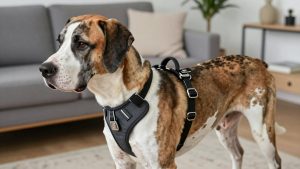
A front-clip (chest) ring gently redirects a puller and is ideal during leash training. A back-clip
suits dogs that already walk politely and reduces tangling. Dual-clip harnesses give you both options,
which is the most flexible choice for a strong Lab.
Fit and adjustability
Look for at least four adjustment points so you can dial in the broad, deep chest without the straps
sliding into the armpits, where they cause chafing. You should fit two fingers flat under any strap.
Measure the widest part of the ribcage and the neck base, then match to the maker’s chart.
Padding and materials
Breathable mesh or neoprene padding prevents rubbing on daily walks, while a padded handle on the
back helps you steady the dog near traffic or lift over obstacles. Reflective stitching adds
low-light safety.
Harness styles compared
See also: How to Clean and Maintain a Pet Water Fountain: A Weekly Routine That Works • Best Automatic Cat Feeder With Battery Backup: 8 Picks and a Power-Cut Plan
| Style | Control | Best use | Typical price |
|---|---|---|---|
| Front-clip no-pull | High | Training, pullers | Varies |
| Padded back-clip | Medium | Relaxed daily walks | Varies |
| Dual-clip / Y-front | High | All-round versatility | Varies |
| Step-in | Medium | Quick on/off | Varies |
Sizing for a Labrador Retriever
At 55-80 lb, most Labs land in a medium-to-large size, but the broad, deep chest means girth
is the number that counts. If the dog is between sizes, size up and tighten the straps. A Y-shaped
front that sits clear of the shoulder joint protects the natural gait, which is important for a breed
prone to hip and elbow dysplasia.
Common mistakes to avoid
The most common harness mistake is buying by weight instead of measuring the broad, deep chest — two dogs of the same weight can need different sizes. Owners also over-tighten, causing chafing, or leave a harness on for days, which mats the coat. Finally, clipping a strong puller to a back ring can actually encourage pulling; use the front ring while training.
Budget tiers
Spending more usually buys durability and better materials rather than a fundamentally different
result, so match the tier to how hard your Lab is on gear.
| Budget tier | What you get | Worth it? |
|---|---|---|
| Value ($) | Basic padded nylon, 2-3 adjust points | OK for calm walkers |
| Mid ($$) | Y-front, 4-point fit, dual clip, reflective | Best all-round pick |
| Premium ($$$) | Tactical/heavy-duty, padded handle, ID panels | For pullers and working dogs |
Fit, safety, and longevity
Whatever you buy, the fit to your individual dog matters more than any brand name. A Labrador Retriever at
55-80 lb sits in a predictable size range, but every dog is built a little differently, so measure
rather than assume and re-check as your dog gains muscle, loses winter weight, or ages. Because the
Lab is a large breed with a broad, deep chest, pay special attention to anything that wraps
the torso, and give the dog a few positive, treat-backed sessions to get comfortable with new gear
instead of forcing it on the first day.
Longevity comes down to maintenance. Wipe down or wash gear on a regular schedule, inspect straps,
seams, buckles, and stitching for wear before each heavy use, and retire anything that is fraying,
cracked, or no longer holding its shape — a failure at the wrong moment can let a strong dog loose near
traffic. Keeping a spare on hand is smart for daily-use items, and it is worth remembering that this
breed’s tendency toward hip and elbow dysplasia means comfortable, well-fitted equipment is part of
keeping the dog sound and active for years, not just a convenience.
FAQ
Will a harness stop my dog from pulling?
A front-clip harness reduces pulling by redirecting momentum, but it is a training aid, not a cure. Pair it with reward-based loose-leash training for lasting results.
Should the harness stay on all day?
No. Remove it during crate time and long rest periods to let the coat and skin breathe and to prevent matting or pressure sores, especially under the chest straps.
Bottom line
For a Labrador Retriever, choose a well-padded, four-point-adjustable harness with a Y-front and ideally
a dual clip. Prioritize a true chest-girth fit over a size label, and you get comfortable control
without stressing the neck or shoulders.