📅 Last updated:
Calming chews, drops, and powders are everywhere, and many owners of anxious dogs try several before asking a vet. Some ingredients have modest evidence, some have almost none, and a few carry real risks. The key point: supplements can take the edge off mild anxiety for some dogs, but they’re not effective for severe separation anxiety, intense noise phobia, or fear-based aggression, where behavior modification and prescription medication make the biggest difference. This guide sets out what the main calming ingredients do, how strong the evidence is, and how to use them safely.
📋 Table of Contents
Quick answer: For most people in 2026, the best dog supplement for dogs with anxiety is the L-theanine — our #1 rated choice. See the full ranked comparison, alternatives and buying advice below.
Calming supplements compared
| Ingredient | How it may work | Evidence in dogs | Notes |
|---|---|---|---|
| L-theanine | Amino acid from tea; may promote relaxation | Modest | Generally well tolerated |
| Alpha-casozepine | Milk protein derivative with calming properties | Modest | Avoid in dairy-allergic dogs |
| Probiotic strain Bifidobacterium longum BL999 | Gut-brain axis | Limited but interesting | Strain-specific |
| Melatonin | Sleep and noise-phobia support | Limited | Use xylitol-free pet products; dose via vet |
| Tryptophan | Serotonin precursor | Weak alone | Often in combination products |
| Chamomile, valerian, herbal blends | Traditional sedatives | Very limited | Can interact with medications |
| CBD (cannabidiol) | Unclear mechanism | Limited, mixed | Not approved for dogs; quality varies; may affect liver enzymes |
Where supplements fit
See also: How to Pick a Heating Pad for an Arthritic Senior Dog • How to Transition a Picky Cat to a New Food
Supplements are most reasonable for mild, predictable anxiety: a dog that’s a bit unsettled by visitors, car rides, or a new home. For these situations, start a supplement several days before the event, since many ingredients need time to build up, and combine it with practical changes like a quiet den, white noise, and structured routines.

Advanced Calming Chews for Dogs - Hemp Dog Calming Chews Anxiety Relief
Included for 'Best Dog Supplement for Dogs with Anxiety' because the listing specifies Hemp Dog Calming Chews Anxiety Relief, details this guide uses to compare options.
View on Amazon
Purina Pro Plan Veterinary Supplements Calming Care Dog Supplement, 30 ct
Included for 'Best Dog Supplement for Dogs with Anxiety' because the listing specifies 30 ct, details this guide uses to compare options.
View on Amazon
BARK&SPARK Hemp Calming Treats for Dogs - Stress, Anxiety Relief Treats
Included for 'Best Dog Supplement for Dogs with Anxiety' because the listing specifies Stress and Anxiety Relief Treats, details this guide uses to compare options.
View on Amazon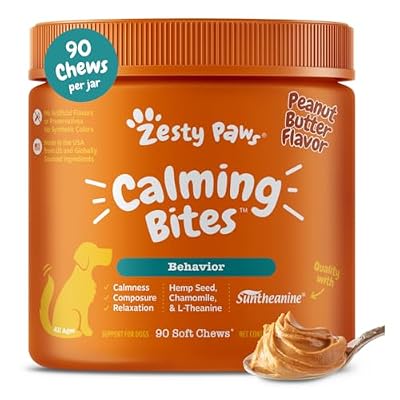
Zesty Paws Calming Chews for Dogs - Dog Calming Supplement, PB, 90 Ct
Included for 'Best Dog Supplement for Dogs with Anxiety' because the listing specifies Dog Calming Supplement and 90 Ct, details this guide uses to compare options.
View on AmazonWhen supplements aren’t enough
Dogs that destroy doors trying to escape, injure themselves, panic during storms, or show aggression when fearful need more than a chew. Veterinary behavior medications, both daily and situational, have far stronger evidence and can be life-changing. They work best with a behavior modification plan from a qualified trainer or veterinary behaviorist. Always see your vet before assuming anxiety is behavioral; pain, hearing or vision loss, thyroid disease, and cognitive decline in older dogs can all look like anxiety.
Safety checklist
- Check for xylitol in any human product, including melatonin gummies. It’s toxic to dogs even in small amounts.
- Tell your vet about supplements if your dog takes prescription behavior medication, since combining serotonin-affecting ingredients like tryptophan or St. John’s wort with some medications can be risky.
- Dose by weight: fixed-size chews can overdose toy breeds. A 6 pound Chihuahua and an 80 pound shepherd shouldn’t take the same chew.
- Watch for sedation or wobbliness, especially with herbal blends; stop and contact your vet.
- Choose quality: look for brands with independent testing and clear ingredient amounts per chew.
Size and temperament considerations
Toy and small breeds, which are often more sound-sensitive, are easy to overdose with chews designed for average-sized dogs. Working and herding breeds like Border Collies and German Shepherds can be anxious when under-exercised; more mental and physical activity may help more than a supplement. Senior dogs with new night-time restlessness may have cognitive dysfunction rather than anxiety, which your vet can assess and treat.
How to judge whether it’s working
Pick one supplement, give it consistently for three to four weeks, and keep a simple diary: how long your dog takes to settle, pacing, panting, and response to known triggers. Without notes, it’s hard to tell a real effect from a calmer week.
Combining supplements with a behavior plan
Supplements work best as part of a broader plan. For mild anxiety, that plan often includes predictable daily routines, enough physical and mental exercise, a safe den area, and gradual desensitization to specific triggers. A supplement may make a dog slightly more receptive to training, but it’s the training that changes behavior over time. If your dog’s anxiety is getting worse despite these steps, or if you see self-injury or aggression, see your vet promptly.
Frequently asked questions
Can I give a calming chew right before fireworks?
Some products act within an hour or two, but many work better when started days ahead. For severe noise phobia, ask your vet about situational prescription medication.
Are pheromone diffusers a supplement?
No, but dog-appeasing pheromone products are a low-risk add-on with some evidence, and can be used alongside supplements.
Bottom line
For mild anxiety, L-theanine, alpha-casozepine, or a specific calming probiotic are reasonable, low-risk supplements to try for three to four weeks. Dose by weight, avoid xylitol, and don’t expect them to fix severe anxiety. See your vet for a full assessment and, where needed, a behavior plan and medication.
Ready to decide? Our #1 pick for 2026 is the L-theanine.
Live price & availability on Amazon.