📅 Last updated:
The Bichon Frise is a cheerful white powder puff, and that puff does not happen by accident. Bichons shed very little, which is why they are popular with tidy homes and many allergy-conscious owners. But their curly double coat grows continuously and mats quickly without regular brushing and professional grooming. This Bichon Frise grooming and shedding guide explains how to keep a Bichon soft, white and mat-free.
📋 Table of Contents
- Do Bichon Frises shed? The quick answer
- The Bichon Coat
- Brushing Routine
- Tools that make Bichon grooming easier
- How to keep a Bichon still when grooming
- Bathing and Fluff Drying
- Tear Stains
- Skin and Allergies
- Ears, Teeth and Nails
- Keeping the Coat White
- When Mats Get Ahead of You
- Bichons and children: grooming, exercise and handling
- FAQ
- Bottom Line
- More for Bichon Frise
- Sources we checked
Do Bichon Frises shed? The quick answer
Very little. The curly double coat traps loose hair, so it mats instead of falling out. Plan to brush 3-4 times a week (daily is best), bathe every 3-4 weeks and visit a groomer every 4-6 weeks.
| Bichon Frise at a glance | What to expect |
|---|---|
| Weight and height (AKC) | 12-18 lb; 9.5-11.5 inches at the shoulder |
| Coat (AKC) | Curly, double, long |
| Shedding (AKC) | Lowest setting on the AKC shedding scale; AKC calls the double coat non-shedding |
| Grooming effort (AKC) | Top of the AKC grooming-frequency scale, which runs from monthly to daily |
| Brushing at home | 3-4 times a week at minimum, daily for longer trims |
| Bath | Every 3-4 weeks, brush out mats first |
| Professional trim | Every 4-6 weeks for most pet trims |
| Nails | Every 3-4 weeks |
The Bichon Coat
See also: How to Clean and Maintain a Pet Water Fountain: A Weekly Routine That Works • Best Automatic Cat Feeder With Battery Backup: 8 Picks and a Power-Cut Plan
Bichons have a double coat: a soft, dense undercoat and a coarser, curly outer coat. The combination creates the characteristic plush, springy texture that stands away from the body when brushed out and scissored. Shedding is minimal; loose hairs get trapped in the curly coat rather than falling out, which is why mats form easily.
Brushing Routine
Brush at least three or four times a week, and ideally daily for longer trims. Line brushing is essential:
- Lightly mist the coat with a detangling spray. Never brush a dry, dirty coat.
- Part the hair to the skin and brush the section below the part with a slicker brush, using a light touch.
- Move the part up and repeat until the whole dog is done.
- Check with a metal comb. If it passes from skin to tip easily, the section is finished.
Pay special attention to behind the ears, armpits, belly, the insides of the legs and under the collar or harness.
| Trim style | Length | Home brushing | Groomer interval | Upkeep level |
|---|---|---|---|---|
| Short puppy cut | About 1/2 to 1 inch | 3x per week | Every 4-6 weeks | Lowest; easiest after a matting problem |
| Classic rounded pet trim | 1-2 inches, round head | Daily or 4-5x per week | Every 4-6 weeks | Moderate; ask your groomer for a quote |
| Show trim | Sculpted, longer | Daily | Every 2-4 weeks | Highest; ask your groomer for a quote |
Tools that make Bichon grooming easier
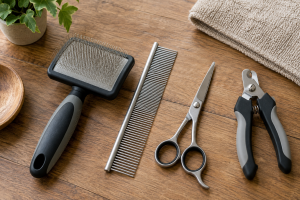
You need only two tools to follow the line-brushing steps above. Keep this short list at home and let your groomer handle scissoring. For a full comparison of brushes, see the Bichon Frise grooming brush review linked at the end of this page.
Best slicker brush for line brushing: Coastal Safari curved slicker

Coastal Pet Hair Brush for Dogs of All Types - Safari Curved Slicker Brush - Pet Grooming Tools for Shedding - Dog Pin Brush for Detangling - 7.5 x 4.5 inches
Included for 'Bichon Frise Grooming and Shedding Guide' because the listing lists an explicit depth/thickness, which is the attribute this article compares.
View on AmazonCoastal Pet Safari curved slicker – stainless pins – suits the part-and-brush method. Bichon fit: works through the curly outer coat from the skin out when used with a light touch. Watch-out: press lightly, so the pins do not scratch the skin.
Best comb to check your work: Andis stainless-steel comb

Andis 65730 Stainless-Steel Comb for Knots, Mats & Loose Hair Removal - Effective Dematting Tool, Comfortable, Lightweight, Portable & Safe for Dogs, Cats & Pets – Silver, 7-1/2-Inch
Included for 'Bichon Frise Grooming and Shedding Guide' as a representative home product in this roundup; selection reflects the product set returned for this topic.
View on AmazonAndis stainless-steel comb – metal teeth – the comb check in step four. Bichon fit: if it passes from skin to tip, that section is mat-free. Watch-out: a comb that snags means go back over that spot with the slicker, not pull harder.
How to keep a Bichon still when grooming
Most Bichons stay calmest in short sessions on a non-slip surface, with a treat reward and one hand always on the dog. Groom on the floor, on your lap or on a sturdy table with a non-slip mat, and finish the most-disliked areas (feet, face, underarms) in the first minutes while the dog is fresh. Professional groomers sometimes use a grooming loop attached to a table arm; the loop is meant to stop a jump or slide, not to tie a dog in place, and it needs the maker’s instructions and a trained handler. Never leave a dog alone on an elevated surface, with or without a restraint. If your Bichon panics, stop and ask your groomer or a trainer to show you a desensitization routine.
Bathing and Fluff Drying
Bathe every three to four weeks. Brush out mats first; water tightens them. Use a gentle shampoo formulated for white coats if you like, but avoid frequent use of harsh whitening products. Rinse thoroughly and use a light conditioner.
Drying
Fluff drying is what gives the Bichon its signature look. Blow-dry on low heat while brushing the coat straight out from the body. Air-drying lets curls tighten and tangle, making scissoring uneven and mats more likely.
Tear Stains
Bichons often show reddish-brown staining under their eyes. Wipe the area daily with a soft damp cloth and dry it. Keep the hair around the eyes trimmed short. If tearing increases suddenly or your dog squints, see your vet; blocked tear ducts, eyelid issues or allergies can be responsible.
Skin and Allergies
Bichons are prone to skin allergies, which can cause itching, redness, paw licking and ear infections. Frequent scratching can also damage the coat and create mats. If your Bichon is itchy, see your vet for a diagnosis rather than switching shampoos repeatedly.
Ears, Teeth and Nails
Ears
Bichons have drop ears with hair growing in the canal. Check weekly for wax, odor and redness. Ask your vet whether hair plucking is appropriate for your dog.
Teeth
Dental disease is common in small breeds. Brush teeth daily if possible and schedule regular vet dental checks.
Nails and paws
Trim nails every three to four weeks. Keep hair between paw pads trimmed for traction and cleanliness.
Keeping the Coat White
Wipe the beard and mouth area after meals, and wipe paws after walks. Use stainless steel or ceramic bowls and keep them clean. Staining often reduces when the face stays dry.
When Mats Get Ahead of You
A Bichon that has gone a few months without thorough brushing often develops a pelt of mats close to the skin. Brushing these out is painful and time-consuming, and groomers usually recommend a humane short clip to start fresh. The coat grows back normally, and a shorter trim is easier to maintain at home while you build a new brushing habit.
Bichons and children: grooming, exercise and handling
Bichons are small, sturdy dogs, and the AKC rates their energy level at 4 on its 5-point scale, so a daily walk and play sessions suit the breed. The AKC also advises supervising any dog around young children. For grooming, children can help with a gentle first brush or hand a treat, but a parent should handle the slicker, comb, scissors and clippers, and keep sessions short so the dog stays comfortable.
FAQ
Are Bichon Frises hypoallergenic?
No dog is completely allergen-free, but Bichons shed very little, so many people with mild allergies find them easier to live with. Allergens are also present in saliva and dander.
How often does a Bichon need a haircut?
Every four to six weeks for most pet trims. The coat grows continuously and mats if left too long.
Do Bichon Frises shed?
Very little. The AKC calls the Bichon’s double coat non-shedding. Loose hair stays trapped in the curls, so the coat mats unless you brush it out several times a week.
How often should a Bichon be brushed?
At least 3-4 times a week, and daily is best. Use line brushing and finish with a metal comb, paying extra attention behind the ears, in the armpits and under the collar or harness.
Bottom Line
Bichon Frises shed very little but need line brushing several times a week, regular baths with thorough fluff drying and a professional trim every four to six weeks. Keep the face clean and dry, watch for skin allergies and stay on top of dental care. With that routine, your Bichon stays fluffy, white and comfortable.
More for Bichon Frise
- Best grooming brush for Bichon Frise
- Best dog shampoo for Bichon Frise
- Bichon Frise car seat and safety restraint
- Best crate for Bichon Frise
- Best dog bed for Bichon Frise
- Best dog harness for Bichon Frise
- Best dog collar for Bichon Frise
- Best dog toys for Bichon Frise
- All dog guides
Sources we checked
- American Kennel Club, Bichon Frise breed page: weight, height, coat type and length, and the AKC shedding, grooming-frequency, energy and children traits.
We choose from published breed standards and manufacturer specifications and do not test products. Skin, ear and eye problems need a vet, not a new shampoo.