📅 Last updated:
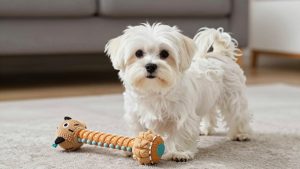
A Bichon Frise is a people-loving companion that would rather be on your lap than anywhere else. That makes the crate a slightly different proposition than for an independent working breed. For a Bichon, the crate is most valuable for house training, which can be slow in this breed, for safe travel and for giving a sensitive little dog a quiet den. Getting the size right is essential, because too big a crate undermines house training and too small is uncomfortable. This guide covers crate sizing, types and training for a Bichon.
📋 Table of Contents
Why a crate helps a Bichon
Bichons have a reputation for being tricky to house-train, partly because small dogs have small bladders and partly because accidents behind the sofa are easy to miss. A correctly sized crate uses a dog’s natural reluctance to soil its sleeping area to build bladder control. Crates also keep puppies safe from chewing hazards, help with vet recovery, and make car and air travel easier. Because Bichons are prone to separation anxiety, the crate should be introduced gently and never used for long isolation.

Homey Pet 24 Inch Puppy Crates for Small Dogs, Up to 25 lbs, White
Included for 'Best dog crate for bichon frise 2026' because the listing specifies Up to 25 lbs and White, details this guide uses to compare options.
View on Amazon
Petmate Dog Crate for Small Dogs and Cat Carrier, 24in, Pearl Tan
Included for 'Best dog crate for bichon frise 2026' because the listing specifies 24in and Pearl Tan, details this guide uses to compare options.
View on AmazonCrate size for a Bichon Frise
See also: Best Electric Dog Fences for Reliable, Humane Containment • Best Dog Boots for Basset Hound
Adults stand about 9.5-11.5 inches at the shoulder and weigh 12-18 lb. A 24-inch crate suits most adult Bichons: enough room to stand, turn around and stretch out, without extra space for a toilet corner. Larger males or dogs that like to sprawl may prefer a 30-inch crate. For puppies, a 24-inch crate with a divider lets you adjust the space as they grow.
| Use | Crate size | Type | Typical price range |
|---|---|---|---|
| Puppy house training | 24 in with divider | Folding wire | Check on Amazon |
| Adult home crate | 24-30 in | Wire or plastic | Check on Amazon |
| Car or air travel | Small (to ~20 lb) | Plastic kennel or crash-tested carrier | Check on Amazon |
| Under-seat cabin travel | Airline-sized soft carrier | Soft-sided | Check on Amazon |
| Living-room den | 24-30 in | Furniture-style | Check on Amazon |
Crate types
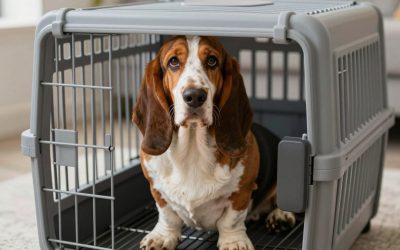
Folding wire crates
Affordable, well-ventilated and easy to clean, with the option of a divider. Good for house training. Cover part of the crate with a light blanket to make it more den-like.
Plastic kennels
Cosier and more enclosed, which some Bichons prefer. Required for many airline cargo journeys and useful for car travel.
Soft-sided carriers
Light and portable, ideal for cabin travel and visits. Not suitable for unsupervised use with chewers or diggers.
Furniture-style crates
Wooden end-table crates blend into living rooms and work well for calm adult Bichons that are already house-trained.
Crate training a sensitive companion dog
- Place the crate where the family spends time; Bichons hate being isolated.
- Feed meals inside the crate with the door open, and toss treats in randomly.
- Start closing the door for a few seconds while you sit nearby, then build up gradually.
- Take puppies out to toilet immediately after waking, eating and play, and after crate time. Young puppies may need to go out every one to two hours during the day.
- Avoid using the crate as punishment.
- Keep adult crate periods reasonable, generally no more than about three to four hours during the day.
If your Bichon howls, drools, scratches frantically or soils the crate repeatedly, it may be experiencing separation anxiety. Scale back and speak to your vet or a qualified trainer.
Comfort inside the crate
Add a soft, washable mat or small bed; Bichons love comfort. Provide a safe chew toy. In summer, keep the crate out of direct sun, since the thick coat makes Bichons warm quickly. Remove collars with dangling tags before crating. Wash crate bedding weekly with an unscented detergent; Bichons are prone to skin allergies, and clean bedding cuts down on dust mites and a musty smell in the coat.
FAQ
What size crate does a Bichon Frise need?
A 24-inch crate suits most adults. Larger Bichons may prefer 30 inches. Use a divider for puppies.
How long can a Bichon stay in a crate?
Adults generally no more than three to four hours during the day. Puppies need much shorter stretches and frequent toilet breaks.
Bottom line
The best crate for a Bichon Frise is a 24-inch wire or plastic crate with a divider for puppies, placed near the family, with a soft washable bed inside. Use it to support house training and travel, introduce it with meals and treats, keep sessions short, and watch for signs of separation anxiety in this people-focused breed.