📅 Last updated:
Akitas have big, tight, cat-like feet with thick pads, and on a snowy trail they rarely need help. City winters are different. Rock salt and chemical de-icers can crack pads and irritate the skin between the toes, and summer asphalt can burn even tough paws. For a heavy, strong breed like the Akita, boots must be big enough, grippy enough and secure enough to survive a 100-lb dog moving with purpose. This guide explains when an Akita benefits from boots, how to size them and how to get a stubborn dog to accept them.
📋 Table of Contents
When boots make sense for an Akita
Salted sidewalks and de-icers
This is the most common reason. Salt and de-icing chemicals dry and crack paw pads, cause stinging in small cuts and can upset the stomach when licked off. Akitas have hair between their toes that holds onto salt crystals. On routes with heavy salting, boots prevent most of the problem.

Furrtripsy Dog Boots,Rugged Anti-Slip Sole Paw Protectors for Medium Large Dogs,Boots & Paw Protectors with Adjustable Straps,Waterproof Dog Booties for Hot Pavement,Snow,Hiking(Red,#10)
Included for 'Best dog boots for akita 2026' because the listing specifies Rugged Anti-Slip Sole Paw Protectors for Medium Large Dogs and Boots & Paw Protectors with Adjustable Straps, details this guide uses to compare options.
View on Amazon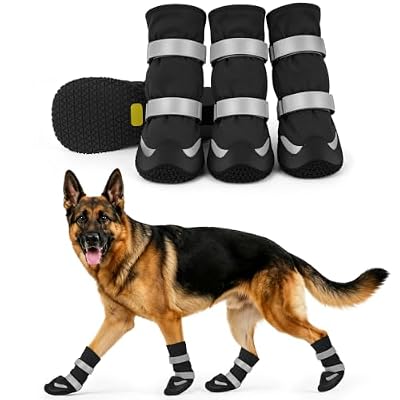
LUCKYPAW Dog Shoes for Winter Snow Waterproof Dog Boots with Fleece Lining
Included for 'Best dog boots for akita 2026' as a relevant option in this category; details come from the product listing.
View on Amazon
QUMY Dog Shoes for Hot Pavement, Dog Snow Boots & Paw Protectors for Winter
Included for 'Best dog boots for akita 2026' because the listing specifies Dog Snow Boots & Paw Protectors for Winter, details this guide uses to compare options.
View on Amazon
Hcpet Dog Boots for Large Dogs, Dog Shoes for Hot Pavement Winter Snow, Paw Protector Dog Booties Designed for Comfort and Breathability, Outdoor Booties for Small Medium Dogs for Hiking Brown Size 4
Included for 'Best dog boots for akita 2026' because the listing specifies Dog Shoes for Hot Pavement Winter Snow, details this guide uses to compare options.
View on AmazonIce balls in the paw hair
Snow can pack into the fur between an Akita’s toes and freeze into hard balls that pull at the skin and make the dog limp. Boots stop this, as does trimming the fur flush with the pads before winter.
Hot pavement, rough terrain and injuries
Asphalt in direct sun can reach well over 130F (54C) on a warm day. Boots protect paws on unavoidable hot surfaces, sharp gravel, lava rock or long hikes, and a single boot can protect a bandaged or healing paw.
What to look for in Akita boots
See also: Best Electric Dog Fences for Reliable, Humane Containment • Best Dog Boots for Basset Hound
Correct width for a compact, round foot
Akita feet are wide and round rather than long. Most adults need a boot about 3-3.5 in wide, but individual dogs vary, and front paws are often slightly larger than back paws. Always size by width, not by weight.
A sole with real traction
Look for a rubber sole with a textured tread for grip on ice and wet pavement. A 100-lb dog slipping on ice can strain joints already prone to dysplasia, so traction matters more than looks. A slightly flexible sole lets the dog feel the ground and walk more naturally.
Secure closure
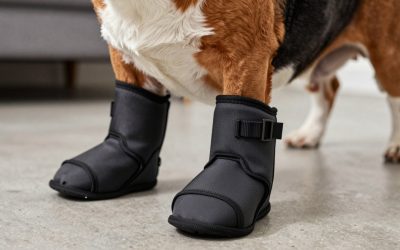
Boots with two hook-and-loop straps, or a strap wrapped above the dewclaw area, stay on far better than single-strap designs. Wide openings make it easier to slide boots onto a large paw.
| Use case | Boot type | Key feature |
|---|---|---|
| Salted city walks | Water-resistant winter boot | Rubber sole, high cuff, double strap |
| Deep snow hiking | Insulated or gaiter-style boot | Tall cuff to keep snow out |
| Hot pavement in summer | Breathable mesh boot | Heat-resistant rubber sole |
| Short salt exposure, dog refuses boots | Disposable rubber booties or paw balm | Thin, flexible, cheap |
| Injured or bandaged paw | Single recovery boot | Wide opening, padded interior |
How to measure an Akita’s paw
Have the dog stand with full weight on a front foot on a sheet of paper. Mark the widest points on each side and the tip of the longest nail to the back of the main pad. Measure both front and back feet. If your dog falls between sizes, choose the larger one for winter boots, since you may use them with socks, and check the maker’s advice. Trim the paw hair first so you measure the foot, not the fur.
Getting an Akita to accept boots
Akitas are sensitive about having their feet handled and are not known for going along with things they dislike. Start indoors: put one boot on, give a treat, take it off. Then two, then all four for a minute or two while you walk and toss treats. The high-stepping walk is normal and fades as the dog adjusts. Keep sessions short and positive, and practice for several days before the first real winter walk. If your Akita refuses completely, paw balm before walks and a thorough rinse and dry afterward are a good backup.
FAQ
Do Akitas need boots in snow?
Usually not for clean snow on trails; the breed is built for it. Boots are most useful on salted streets, for dogs that get ice balls between their toes, and for older dogs that slip on ice.
How can I stop my Akita’s boots from falling off?
Make sure the boots fit the paw width, tighten straps snugly above the wrist or hock pad, and choose designs with two straps or a longer cuff. Boots that twist or come off are nearly always too wide or too loose.
Bottom line
A healthy Akita does not need boots for most snowy walks, but they are valuable on salted sidewalks, hot pavement and rough terrain, and for seniors that slip on ice. Choose wide, round-fitting boots with a grippy rubber sole and a secure double closure, measure paw width carefully and introduce them slowly. Paw balm and a post-walk rinse cover the rest.