📅 Last updated:
A Pomeranian weighs somewhere between 3 and 7 pounds, which means every piece of kibble counts. A few extra treats a day can be 10 or 20 percent of a Pom’s calories, a crowded little mouth makes dental disease almost routine, and tiny puppies can run low on blood sugar if they skip meals. Choosing the right food for a Pomeranian is less about finding a magic brand and more about matching calorie density, kibble size, and feeding routine to a very small, very lively dog.
📋 Table of Contents
How much does a Pomeranian actually eat?
Less than most owners expect. A typical adult Pom at 4 to 6 pounds, spayed or neutered and moderately active, needs roughly 180 to 280 calories a day. That can be as little as a third to half a cup of kibble, depending on the food’s calorie content. Always check the kcal per cup on the bag, since foods range from about 325 to over 450 kcal per cup.
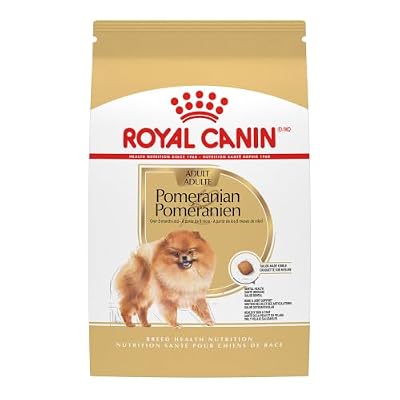
Royal Canin Pomeranian Adult Dry Dog Food, 2.5 lb Bag
Included for 'Best Dog Food for Pomeranian' because the listing specifies 2.5 lb Bag, details this guide uses to compare options.
View on AmazonROYAL CANIN Pomeranian Adult Dry Dog Food, 10 lb Bag
Included for 'Best Dog Food for Pomeranian' because the listing specifies 10 lb Bag, details this guide uses to compare options.
View on Amazon
Royal Canin Pomeranian Adult Wet Dog Food, 3 oz, 6-Pack
Included for 'Best Dog Food for Pomeranian' because the listing specifies 3 oz and 6-Pack, details this guide uses to compare options.
View on Amazon| Pomeranian | Approximate daily calories | Meals per day |
|---|---|---|
| Puppy, 8 to 16 weeks | Per food label, by weight | 3 to 4 small meals |
| Puppy, 4 to 12 months | Per food label, by weight | 3 meals |
| Adult, 4 lb, less active | About 170 to 200 kcal | 2 meals |
| Adult, 6 lb, active | About 240 to 290 kcal | 2 meals |
| Senior, less active | Often 10 to 20 percent less | 2 meals |
These are starting points. Weigh your dog every few weeks and adjust by about 10 percent if weight drifts, and ask your vet to assess body condition at checkups.
What to look for in food for a Pom
See also: Best Electric Dog Fences for Reliable, Humane Containment • Best Dog Boots for Basset Hound
A complete and balanced statement
Look for a statement that the food meets AAFCO nutrient profiles (or the equivalent in your country) for the correct life stage: growth for puppies, adult maintenance for grown dogs. Small breed puppy foods should be labeled for growth.
Small, crunchy kibble
A Pom’s jaw is tiny and its teeth are crowded, which is one reason the breed has such high rates of dental disease. Small-bite kibble is easier to chew. Kibble does not replace brushing, but it is easier to manage than large pieces that get swallowed whole.
Appropriate calorie density
Small breed formulas are usually more calorie-dense per cup, which suits a small stomach. The flip side is that overfeeding is easy. Measure with a real measuring cup or, better, a kitchen scale.
Quality protein and moderate fat
A named animal protein early in the ingredients list and moderate fat support muscle and coat. The Pom’s plush double coat benefits from adequate omega-3 and omega-6 fatty acids, which many small breed foods include.
Special concerns for Pomeranian puppies
Toy breed puppies can develop hypoglycemia, a dangerous drop in blood sugar, especially if they skip meals, get chilled, or are stressed. Feed a young Pom three to four small meals a day and do not let it go long periods without eating. Weakness, trembling, wobbliness, or unusual sleepiness in a small puppy is an emergency; contact your vet right away.
Wet, dry, or fresh?
| Food type | Pros for a Pom | Cons for a Pom |
|---|---|---|
| Small breed dry kibble | Convenient, calorie-controlled, small bites | Some picky Poms get bored |
| Wet or canned food | Very palatable, adds moisture | More plaque buildup, pricier per calorie |
| Fresh or refrigerated | Palatable, lightly processed | Expensive, short shelf life |
| Mixed feeding | Picky eaters, added moisture | Needs careful calorie math |
Any of these can work if the food is complete and balanced and portions are controlled. What matters most is that the total daily calories stay appropriate.
Common feeding mistakes with Poms
- Free-feeding a bowl all day, which makes weight hard to track.
- Treats adding up. Keep treats under 10 percent of daily calories; for a 5-pound Pom, that may be only 20 to 25 calories. Break treats into tiny pieces.
- Sharing table scraps. Fatty foods can trigger pancreatitis, and grapes, onions, chocolate, and xylitol are toxic.
- Ignoring the teeth. Food helps, but daily brushing and vet dental cleanings are what protect a Pom’s mouth.
- Switching foods overnight. Transition over 7 to 10 days to avoid an upset stomach.
FAQ
How often should I feed my adult Pomeranian?
Two measured meals a day works well for most adults. Some very small Poms or those with a history of low blood sugar do better with three smaller meals; ask your vet.
Is grain-free food better for Pomeranians?
Not necessarily. Most Poms do fine with grain-inclusive foods, and grain-free diets have been investigated for a possible link to heart disease in dogs. Unless your vet has diagnosed a grain allergy, a quality grain-inclusive small breed food is a sensible default.
Bottom line
The best food for a Pomeranian is a complete and balanced small breed formula with small kibble, a named animal protein, and appropriate calorie density, fed in measured portions of roughly 180 to 280 calories a day for most adults. Feed puppies little and often, keep treats tiny, and pair any diet with daily tooth brushing.