📅 Last updated:
As an Amazon Associate, All Ears Pet Care earns from qualifying purchases. This article contains affiliate links — if you buy through them we may earn a small commission at no extra cost to you. We only recommend products we believe in.
🛒 Best Price Today on Amazon
Prime members get fast, free shipping on everything above, plus member-only deals. New members get a 30-day free trial — cancel anytime.
As an Amazon Associate we earn from qualifying purchases at no extra cost to you.




📋 Table of Contents
- Quick Comparison
- Why Litter Boxes Smell (And Why Scented Litter Makes It Worse)
- 1. Scoop Twice Daily, Without Exception
- 2. Use the Right Number of Boxes
- 3. Choose a Quality Clumping Clay Litter
- 4. Maintain Adequate Litter Depth
- 5. Do Complete Litter Changes Every 2-3 Weeks
- 6. Replace the Litter Box Every 6-12 Months
- 7. Position the Box in a Well-Ventilated Location
- 8. Consider an Automatic Self-Cleaning Box
- 9. Use Baking Soda Sparingly (or Not at All)
- 10. Address Diet and Health Issues
- 11. Use Air Purifiers and Activated Charcoal Strategically
- What NOT to Do
- Building Your Odor-Control Routine
- Frequently Asked Questions
- Final Thoughts
- Related Guides
- Related Articles
- Related Guides
Quick Comparison
| Product | Brand | Price | Rating | Availability |
|---|---|---|---|---|
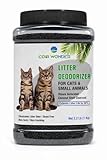
| Rocco & Roxie Litter Box Odor Eliminator, Best Natural Urine Deodorize | RoccoRoxieSupplyCo | $11.97 | 4.4★ (12,194) | In stock |
| ARM & HAMMER Cat Litter Deodorizer Double Duty, 30 oz, 6 Pack | ARMHAMMER | $20.94 | 4.8★ (41,558) | In stock |
| Arm & Hammer Pets Cat Litter Box Deodorizer Pods, Adhesive Odor Absorb | ArmHammer | $5.69 | 3.9★ (0) | In stock |
| Nature's Miracle Litter Box Deodorizer, 20 Ounces, Litter Deodorizing | NaturesMiracle | $9.77 | 4.5★ (8,572) | In stock |
A smelly litter box turns even the most beloved cat into a household problem. The good news: persistent litter box odor isn’t inevitable, and it isn’t solved by stronger-scented litter. It’s caused by specific factors you can identify and eliminate systematically. This guide breaks down the eleven proven methods to keep your home odor-free, ranked from most impactful to most supplementary — so you can start with the changes that deliver the biggest difference.

Prime
Best Seller
Automatic Litter Box Self Cleaning, FeelNeedy Open-Top Smart Cat Litter Box with App Control, Odor-Control Safety Sensor Design for 1-3 Cats, Includes Waste Bags


Prime
Top Rated
Fresh Step Heavy Duty Odor Block Advanced Multi Cat Clumping Litter with Febreze, 17.5 lb (Package May Vary)
Why Litter Boxes Smell (And Why Scented Litter Makes It Worse)
See also: Washable Kitten Bed With Removable Cover: 7 Easy-Wash Picks • Cat House for Outdoor Cats: Insulated Shelters and Straw Bedding
Cat urine contains urea, which bacteria break down into ammonia — the source of the sharp, eye-watering smell. Feces add bacterial decomposition odors. Scented litters mask these smells temporarily but create a worse combined odor when the original waste continues decomposing under the fragrance. The strategy isn’t masking; it’s prevention and rapid removal.
1. Scoop Twice Daily, Without Exception
The single most impactful change is frequency. Most cat owners scoop once daily or less, allowing urine clumps to sit for 12-24+ hours while bacteria multiply. Twice-daily scooping (morning and evening) removes waste before significant decomposition occurs.
This isn’t optional or aspirational — it’s the foundation of an odor-free litter setup. Five minutes per day total prevents the majority of household litter odor. Set phone reminders if needed. If scooping twice daily isn’t sustainable, consider an automatic self-cleaning litter box.
2. Use the Right Number of Boxes
The veterinary standard: one box per cat, plus one extra. Two cats need three boxes. Three cats need four. This sounds excessive, but underprovisioned boxes fill faster than you can clean them, and stressed cats will eliminate elsewhere when their box is unappealing.
Spread boxes across different areas of the home. Cats prefer privacy and dislike sharing — providing multiple options reduces stress, prevents territorial disputes, and gives waste less time to accumulate in any single location.
3. Choose a Quality Clumping Clay Litter
The litter market is filled with novelty options — pine, wheat, corn, recycled paper, silica gel beads. Most underperform traditional clumping clay for odor control. Bentonite clay forms tight, solid clumps that trap urine in the litter, preventing it from soaking the box bottom and creating persistent odor.
Look for unscented, low-dust clumping clay litter. Premium brands (Dr. Elsey’s, Arm & Hammer Clump & Seal, World’s Best) outperform budget options measurably. Avoid heavily scented varieties — the fragrance masks rather than eliminates odor, and many cats find scented litter aversive.
4. Maintain Adequate Litter Depth
Insufficient litter depth means urine reaches the box bottom before clumping, soaking into the plastic and creating permanent odor. Maintain 3-4 inches of litter at all times — top up after each scooping session rather than waiting for the box to look empty.
Excessive depth wastes litter and makes scooping harder. The 3-4 inch range is the sweet spot for clump formation and adequate buffer between urine and box surfaces.


As an Amazon Associate we earn from qualifying purchases. Product prices and availability are accurate as of the date/time indicated.
5. Do Complete Litter Changes Every 2-3 Weeks
Even with daily scooping, fine particles and dissolved compounds gradually accumulate in litter. A complete litter change — dump everything, wash the box, refill with fresh litter — refreshes the system entirely. Frequency depends on cat number and litter quality, but every 2-3 weeks works for most households.
During the complete change, wash the box with unscented dish soap and water. Avoid strong cleaning chemicals (especially anything ammonia-based) — they leave residues cats dislike and can confuse them about appropriate elimination locations.
6. Replace the Litter Box Every 6-12 Months
Plastic litter boxes accumulate microscopic scratches that trap odor-causing bacteria. After 6-12 months of daily use, even thorough cleaning can’t eliminate this trapped odor. The box itself becomes the smell source — replacing it eliminates accumulated bacteria entirely.
Mark your calendar when you buy a new box and replace it on schedule. The $20-40 expense pays off in dramatically reduced household odor compared to clinging to old, scratched boxes.
7. Position the Box in a Well-Ventilated Location
Litter boxes in closets, small bathrooms with closed doors, or unventilated basements trap odor concentrations far beyond what occurs in better-ventilated spaces. Air circulation dramatically reduces perceived odor without requiring expensive air purifiers.
Best locations: laundry rooms with exhaust fans, basements with air circulation, larger bathrooms with windows. If your only option is a closet or small room, install a small exhaust fan vented outside or to an attic space. Some users add quiet inline fans to litter box enclosures specifically for ventilation.
8. Consider an Automatic Self-Cleaning Box
Automatic litter boxes (Litter-Robot, PetSafe ScoopFree, Whisker, Smarty Pear Leo’s Loo Too) sift after each use, sealing waste in odor-resistant containers. They effectively eliminate the scooping frequency problem by working continuously. The investment ($300-$700) pays off in time savings and consistent odor control.


As an Amazon Associate we earn from qualifying purchases. Product prices and availability are accurate as of the date/time indicated.
Automatic boxes work best when paired with quality clumping litter (not the silica beads many promote — beads don’t form sealed clumps and can leak urine odor). Empty the waste container weekly, not monthly, regardless of capacity claims.
9. Use Baking Soda Sparingly (or Not at All)
Adding baking soda to litter is a common “tip” — but it provides minimal benefit beyond what quality clumping litter already accomplishes. Worse, baking soda dust can irritate sensitive cats’ respiratory systems and many cats dislike the texture change.
If you want to use baking soda, sprinkle a thin layer at the bottom of the clean box before adding fresh litter. Don’t dump it on top of existing litter where cats encounter it directly.
10. Address Diet and Health Issues
Extreme litter box odor sometimes signals dietary or health problems. Strong-smelling urine can indicate dehydration, urinary tract issues, or kidney concerns. Especially smelly feces may reflect digestive issues or low-quality food.
If odor seems disproportionate to your cleaning frequency, consult your veterinarian. Switching to a higher-quality food (especially wet food, which increases water intake) often reduces both stool and urine odor naturally. This isn’t a marketing claim — it’s a real biological effect of better digestion and hydration.
11. Use Air Purifiers and Activated Charcoal Strategically
For households where the previous ten steps still leave residual odor, supplemental odor control helps. HEPA air purifiers with activated carbon filters effectively remove airborne particles and odor compounds in the litter box room. Place them within 6-10 feet of the litter setup.
Activated charcoal bags or containers near (not in) the litter box continuously absorb odor compounds. Replace or reactivate (by placing in sunlight) every 1-2 months. These aren’t substitutes for the previous steps — they’re supplementary to a properly managed litter setup.
What NOT to Do
Several common “solutions” cause more problems than they solve:
- Strongly scented litter: Masks rather than eliminates, often offensive to cats, can trigger litter aversion
- Plug-in air fresheners near the box: Heavy fragrances can stress cats and trigger respiratory issues
- Ammonia-based cleaners: Cats interpret ammonia smell as urine markings and may re-mark the area
- Covered boxes without enough cleaning: Trap odors and create concentrated smells when opened
- Switching litters frequently: Cats prefer consistency; sudden changes can cause elimination outside the box
Building Your Odor-Control Routine
Combine these strategies into a sustainable routine:
- Daily: Scoop morning and evening, top off litter as needed, brief box wipe-down
- Weekly: Empty automatic box waste containers, replace activated charcoal if used, check ventilation
- Bi-weekly to monthly: Complete litter change with box washing
- Every 6-12 months: Replace plastic litter boxes entirely
- Ongoing: Monitor cat health, hydration, and dietary quality
Frequently Asked Questions
How often should I clean the litter box?
Scoop twice daily, complete litter change every 2-3 weeks, full box replacement every 6-12 months. This combination handles 95% of household odor.
What’s the best litter for odor control?
Unscented clumping bentonite clay from premium brands like Dr. Elsey’s, Arm & Hammer Clump & Seal Platinum, or World’s Best Cat Litter (corn-based for those preferring natural). Avoid heavily scented varieties.
Are automatic litter boxes worth it?
For single-cat households with one or two boxes, automatic boxes (Litter-Robot, ScoopFree) eliminate the scooping frequency problem entirely. For multi-cat households, you’ll still need traditional boxes since automatic units serve only 1-2 cats reliably.
Can I use deodorizing sprays or powders?
Most are unnecessary if the previous steps are followed. If used, choose unscented or cat-safe formulations specifically designed for litter boxes. Avoid fragranced household sprays which can stress sensitive cats.
Why does my cat go outside the litter box?
The most common cause is litter box aversion from inadequate cleaning, insufficient boxes, or strong scents the cat dislikes. Less commonly, it indicates urinary or behavioral issues requiring veterinary attention. Address cleanliness and box count first; consult your vet if problems persist.
Final Thoughts
Eliminating litter box odor isn’t about finding a single miracle product — it’s about building a maintenance routine that prevents odor from developing in the first place. Twice-daily scooping, adequate box numbers, quality clumping litter, and regular complete changes eliminate the conditions where odor develops. Add ventilation, automatic boxes, or air purifiers as supplements if needed. A well-maintained litter setup is virtually undetectable in the home — guests shouldn’t be able to tell you have a cat just by walking through your door. With consistent execution of these eleven strategies, that’s a realistic standard for any cat household.