📅 Last updated:
As an Amazon Associate, All Ears Pet Care earns from qualifying purchases. This article contains affiliate links — if you buy through them we may earn a small commission at no extra cost to you. We only recommend products we believe in.

TL;DR: Dog stairs and ramps reduce joint stress for small breeds, seniors, and post-surgery dogs. Ramps suit dogs with mobility issues; stairs work better for dogs with good flexibility in tight spaces. Material, incline angle, and surface grip are the three specs that matter most.
As an Amazon Associate we earn from qualifying purchases at no extra cost to you.
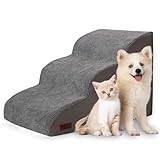


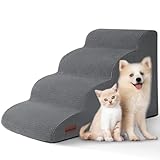


Dog Stairs Ramp for Bed and Couch: Best Picks for Small Dogs and Seniors
Every time a small dog leaps from a bed or couch, the landing sends a force equal to several times their body weight through their joints. For a healthy young dog, this is manageable. For a senior dog with arthritis, a post-surgery patient, or a small breed with long back genetics like a Dachshund, those repeated impacts accumulate into real damage over time. A quality dog stairs ramp removes that impact entirely—and for many dogs, it’s genuinely life-changing.
The question isn’t whether to use stairs or a ramp. It’s which design fits your dog’s specific mobility profile, your furniture height, and your floor space. This guide covers everything you need to know to make the right choice.
🛒 Best Price Today on Amazon
Prime members get fast, free shipping on everything above, plus member-only deals. New members get a 30-day free trial — cancel anytime.
📋 Table of Contents
Top Dog Stairs and Ramp Products

9
In Stock






As an Amazon Associate we earn from qualifying purchases. Product prices and availability are accurate as of the date/time indicated.
The best dog stairs and ramps share a common design priority: non-slip surfaces. A dog that slips on the first use will refuse to use the product again—instinctively. Premium products use carpet, rubberized foam, or high-traction EVA treads that grip paw pads without catching nails. Surface texture is not an afterthought; it’s the feature that determines adoption.
Stairs vs. Ramp: Which Is Right for Your Dog?
See also: 7 Best Refillable Frozen Dog Treat Toys for Long-Lasting Licks • Best Dog Door Mat for Muddy Paws: Sizing, Materials and Picks by Entryway
The stairs versus ramp decision comes down to your dog’s specific physical condition and your space constraints:
- Choose stairs if: Your dog has good hip and knee flexibility, you have limited floor space, your furniture is 18–30 inches tall, and your dog is a quick learner. Steps require a stepping motion that some arthritic dogs find uncomfortable.
- Choose a ramp if: Your dog has hip dysplasia, arthritis, recent surgery, intervertebral disc disease (IVDD), or any condition limiting range of motion. Ramps allow a continuous walking motion with no vertical stepping.
- Choose a combo unit if: You have multiple dogs with different needs, or a dog that’s transitioning from healthy to senior mobility stages. Many premium products fold into either configuration.
Dogs recovering from orthopedic surgery are excellent candidates for ramps. If your dog is also dealing with outdoor terrain challenges, our guide on the hands-free dog leash for running covers ergonomic gear for post-rehab mobility work with your dog.
Dog Stairs and Ramp Comparison by Feature
| Feature | Budget Option | Mid-Range | Premium |
|---|---|---|---|
| Weight capacity | Up to 30 lbs | Up to 60 lbs | Up to 150 lbs |
| Surface material | Smooth plastic | Carpet-covered | Non-slip rubber/EVA |
| Height range | Fixed height | 1–2 height settings | Fully adjustable |
| Foldability | No | Some models | Yes, compact fold |
| Side rails | No | Partial | Full-length safety rails |
| Incline angle (ramps) | Fixed steep | ~22–26° | Adjustable 18–35° |
| Step depth (stairs) | 4–5 inches | 7–8 inches | 9–10 inches wide |
| Assembly required | Minimal | Some | Tool-free clips |
Measuring for the Right Fit
Getting the dimensions right prevents returns and frustrated dogs. Here’s the quick measurement protocol:
Measure the height from floor to the top of your bed or couch surface—not the frame, but the top of the mattress or cushion where your dog will land. Standard beds range from 18 to 34 inches. Standard couches average 18–22 inches. Your ramp or stairs must reach this height at a comfortable angle.
For ramps, the ideal incline is between 18 and 25 degrees. Steeper than 30 degrees defeats the purpose—it’s as stressful on joints as jumping. To calculate: divide the rise (furniture height) by the length of the ramp. A 24-inch tall bed needs a ramp at least 60 inches long for a 22-degree angle. For stairs, count the number of steps needed by dividing furniture height by individual step height (typically 5–7 inches per step).
If your dog sleeps in a crate as well as on furniture, our dog crate furniture end table guide covers crate solutions that integrate into your home’s aesthetic—including models with built-in ramp access for senior dogs.
Training Your Dog to Use Stairs or a Ramp
Never force a dog onto a new ramp or stairs. The training process should take 3–7 days and uses positive reinforcement exclusively. On day one, simply place the ramp next to the furniture and let your dog sniff it. Place a treat on the first step and let them retrieve it without any pressure to go further. Over the following days, gradually move treats further up the ramp or stairs until your dog walks the full path independently.
For dogs that are especially treat-motivated, using a puzzle feeder at the top of the ramp on the third or fourth day creates a powerful incentive to make the full ascent. See our puzzle feeder guide for compatible options that work well in this training context.
Frequently Asked Questions
What weight limit should I look for in dog stairs or a ramp?
Always choose a product rated for at least 20% more than your dog’s actual weight to account for dynamic loading—the additional force when a dog accelerates up the ramp or lands on the top step. A 50 lb dog should use a ramp rated for 60 lbs minimum. For dogs over 80 lbs, look for commercial-grade ramps with steel or aluminum frames, not plastic.
Are dog stairs or ramps better for dogs with arthritis?
Ramps are almost universally preferred for arthritic dogs. The continuous walking motion on a ramp requires no joint flexion beyond normal walking gait. Stairs require a stepping-up motion that uses hip flexors and knee extensors—the joints most commonly affected by canine arthritis. If your arthritic dog already knows how to use stairs, a low-incline ramp with a non-slip surface is the upgrade that most veterinary rehabilitation specialists recommend.
How do I keep dog stairs from sliding on hardwood floors?
Most quality stairs include rubber feet, but those can wear out. Add a non-slip rug pad cut to fit under the base of the stairs—the same pad material used under area rugs works perfectly. For ramps, a small bungee hook or furniture anchor strap that clips to the bed frame prevents the ramp from sliding away from the furniture when the dog descends.
At what age should a dog start using stairs or a ramp?
The earlier the better—ideally before any joint issues develop. Starting at 1–2 years old for small breeds prone to joint problems (Dachshunds, Corgis, French Bulldogs, Toy Poodles) establishes good habits before the jumping instinct becomes ingrained. For dogs already showing signs of joint discomfort, introduce a ramp immediately regardless of age. Prevention is dramatically more effective than treatment for canine orthopedic conditions.
Can I use the same ramp for both bed and car access?
Yes—many premium ramps are designed for dual use. Car ramp height (truck tailgates average 30–35 inches, SUV cargo areas 24–30 inches) often requires a longer ramp than bed access. Look for telescoping or fold-out ramp designs that extend to 60–72 inches for vehicle use while folding down to 36–40 inches for bedroom furniture. The non-slip surface is especially critical outdoors where wet paws reduce traction further.