- Top Pick: Carhartt Firm Duck Insulated Dog Chore Coat Carhartt Brown/Brass L
- Best Value: QBLEEV Warm Dog Jacket, Waterproof Dog Winter Coat with Harness
- Premium Choice: Fleece Dog Coat for Small Medium Dog,Pullover Pajamas Jumpsuit Bodysuit Puppy Coats with Legs, Pet Windproof Warm Cold Weather Jacket Full Body Vest Cozy Snowsuit Outfit Clothes (Black, S)
📅 Last updated:
As an Amazon Associate, All Ears Pet Care earns from qualifying purchases. This article contains affiliate links — if you buy through them we may earn a small commission at no extra cost to you. We only recommend products we believe in.
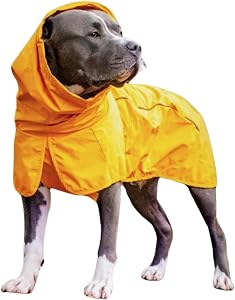
TL;DR: A dog winter coat with insulated construction keeps short-coated, small, senior, or post-op dogs warm during cold-weather walks. The best picks combine wind-resistant outer shells with thermal fill, harness pass-through slots, and machine-washable construction for practical daily use.
As an Amazon Associate we earn from qualifying purchases.



Best Dog Winter Coat: Insulated Jackets That Actually Keep Dogs Warm
Not every dog is built for winter. Greyhounds, Chihuahuas, Dobermans, Whippets, and senior dogs of any breed lose body heat rapidly in temperatures below 45°F — and small dogs can reach dangerous hypothermia risk below freezing in minutes without insulation. A quality dog winter coat bridges that gap, allowing cold-sensitive dogs to exercise comfortably, recover post-surgery without shivering stress, and spend enough time outside to meet their physical and mental health needs year-round.
This guide covers what separates functional dog insulation from fashion pieces, which specs matter most by dog type, and our top pick tested against real winter conditions.
🛒 Best Price Today on Amazon
Prime members get fast, free shipping on everything above, plus member-only deals. New members get a 30-day free trial — cancel anytime.
📋 Table of Contents
- Top Dog Winter Coat Pick
- Which Dogs Actually Need Winter Coats
- Key Technical Specs to Evaluate
- Dog Winter Coat Spec Comparison
- Sizing Your Dog Correctly
- Conditioning Your Dog to Wear a Coat
- FAQ: Dog Winter Coats
- Pairing Cold-Weather Gear for Complete Protection
- Final Verdict
- Related Guides
- Frequently Asked Questions
- Related Articles
Top Dog Winter Coat Pick

9
In Stock


As an Amazon Associate we earn from qualifying purchases. Product prices and availability are accurate as of the date/time indicated.
9
In Stock
As an Amazon Associate we earn from qualifying purchases. Product prices and availability are accurate as of the date/time indicated.
9
In Stock
As an Amazon Associate we earn from qualifying purchases. Product prices and availability are accurate as of the date/time indicated.
Which Dogs Actually Need Winter Coats
See also: 7 Best Refillable Frozen Dog Treat Toys for Long-Lasting Licks • Best Dog Door Mat for Muddy Paws: Sizing, Materials and Picks by Entryway
Dogs with double-layer coats — Huskies, Malamutes, German Shepherds, Bernese Mountain Dogs — generate and retain body heat efficiently and typically don’t require jackets. The dogs that genuinely benefit from insulated outerwear fall into six clear categories:
- Short-coated breeds — Boxers, Pit Bulls, Beagles, Dalmatians, Vizslas. Minimal fat and coat thickness = rapid heat loss.
- Small and toy breeds — Chihuahuas, Yorkshire Terriers, Italian Greyhounds. Higher surface-area-to-mass ratio accelerates cooling.
- Senior dogs — Thermoregulation efficiency drops with age. Dogs 8+ frequently need supplemental warmth below 45°F.
- Dogs post-surgery or on medication — Anesthesia and certain drugs impair thermal regulation temporarily.
- Dogs with health conditions — Arthritis, hypothyroidism, Cushing’s disease, and kidney disease all affect cold tolerance.
- Sighthounds — Greyhounds, Whippets, and Italian Greyhounds have extremely lean body composition and single-layer coats.
Key Technical Specs to Evaluate
Marketing language on dog coats is notoriously vague. These are the specs that actually predict thermal performance and durability in real conditions:
- Fill type — Synthetic polyester fill (like PrimaLoft or equivalent) performs better than down when wet, which matters since dogs encounter snow and rain. Down compresses when damp and loses insulating value.
- Outer shell material — Ripstop nylon or polyester with a DWR (durable water-repellent) coating sheds light moisture. Heavy waxed canvas is too stiff for dog movement.
- Coverage area — A coat that ends at the ribcage leaves the abdomen and flanks exposed. Look for coverage extending to the base of the tail on the dorsal side and forward to the chest.
- Harness compatibility — A D-ring pass-through or back opening allows leash attachment without removing the coat in the field — critical for winter walks.
- Fastening system — Velcro along the belly is faster to put on a squirming dog than buckles, but wears out sooner. Quality designs use both: Velcro for quick adjustments, a snap or buckle for secure closure.
- Machine washability — Dog coats accumulate mud, saliva, and dander. Any coat that requires dry cleaning is impractical for weekly cold-weather use.
Dog Winter Coat Spec Comparison
| Feature | Budget Layer | Mid-Range Insulated | Premium Technical Coat |
|---|---|---|---|
| Fill Type | Fleece lining | Synthetic poly fill | High-loft synthetic/down |
| Outer Shell | Polyester knit | Ripstop nylon | DWR ripstop nylon |
| Coverage | Partial torso | Full torso + chest | Full torso + chest + collar |
| Harness Slot | Rarely | Common | Standard |
| Washable | Yes | Yes | Yes |
| Temp Range | Above 40°F | 20°F–40°F | Below 20°F |
| Lifespan | 1–2 seasons | 3–4 seasons | 5+ seasons |
Sizing Your Dog Correctly
A coat that’s too small restricts movement and causes chafing. Too large and it shifts during walks, creating cold gaps and potential tripping hazards. The three critical measurements for dog coat sizing are back length (base of neck to base of tail), chest girth (widest point behind the front legs), and neck girth. Always measure before purchasing — breed-based sizing charts are notoriously inconsistent across manufacturers.
For dogs that fall between sizes, size up and use the belly fasteners to take in extra material. A coat that’s slightly large can be adjusted; a coat that’s too small cannot. Pay particular attention to chest girth on barrel-chested breeds like Bulldogs and Basset Hounds, which typically need a larger size than their back length suggests.
If your dog has winter paw sensitivity alongside cold-body issues, see our guide on dog paw booties for winter for a complete cold-weather protection strategy — coat and booties together address the two biggest cold-exposure vulnerabilities simultaneously.
Conditioning Your Dog to Wear a Coat
Many dogs show initial resistance to wearing any garment — stiff gait, freezing in place, or attempting to bite the coat off. This is learned aversion to novel sensation, not an indication the coat fits poorly. A systematic desensitization protocol resolves most coat refusal within a week:
- Let the dog sniff and investigate the coat while it’s on the floor — reward with high-value treats for calm investigation.
- Lay the coat over the dog’s back for 30 seconds without fastening — reward and remove.
- Fasten one closure only for indoor wear during a positive activity (mealtime, play).
- Fully fasten the coat indoors for 5–10 minutes, gradually increasing duration over 3–4 days.
- First outdoor wear should be a short, high-reward walk so the dog associates the coat with going outside.
Dogs that exercise outdoors and return muddy benefit from a grooming routine — our review of pet grooming tools for home use covers the post-winter-walk cleanup gear worth having, including undercoat rakes for double-coated dogs that don’t need jackets but do accumulate snow and debris.
FAQ: Dog Winter Coats
At what temperature does a dog need a winter coat?
Short-coated and small dogs typically benefit from insulation below 45°F (7°C). At 32°F (0°C) and below, all dogs in the “needs a coat” categories are at genuine cold stress risk during walks lasting more than 15 minutes. In sub-zero wind chills, even some well-coated dogs benefit from a windproof outer layer. Use behavioral cues — shivering, reluctance to move, lifting paws off pavement, hunching — as real-time indicators that your dog is too cold regardless of temperature thresholds.
Can my dog sleep in a winter coat overnight?
Not recommended for unsupervised wear. Coats can shift during sleep, creating constriction or entanglement risks. If your dog sleeps in a cold area and needs overnight warmth, a heated dog bed or self-warming blanket is the safer option. Coats are designed for supervised, active use outdoors — not extended sedentary indoor wear where overheating becomes a secondary risk.
How do I wash a dog winter coat without damaging the fill?
Machine wash on cold or gentle cycle with a mild, fragrance-free detergent. Avoid fabric softener — it coats synthetic fill fibers and reduces loft. Tumble dry on low with two or three clean tennis balls to break up fill clumping. Check for uneven fill distribution after drying and manually redistribute if needed. Store the coat loosely folded or hanging, not compressed, to preserve fill loft between seasons.
Will a dog winter coat interfere with my dog’s harness?
A well-designed coat with a harness pass-through slot allows most standard back-clip harnesses to attach without removing the coat. Front-clip harnesses are more problematic — the chest strap runs under the coat, which some designs accommodate with a chest opening, others don’t. If you use a front-clip harness for leash manners training, verify the coat has a chest cutout before purchasing. Our review of no-pull dog harnesses includes fit guidance useful for layering harness under coat in cold weather.
Is a dog sweater as effective as an insulated coat for winter?
Sweaters provide mild insulation suitable for temperatures between 40–55°F and short outdoor exposure. For sustained cold — extended walks, outdoor play sessions, or temperatures below freezing — an insulated coat with wind-resistant shell significantly outperforms knitwear. Sweaters absorb moisture from snow and wet pavement and lose most insulating value when damp. Reserve sweaters for light indoor chill and transition weather; use an insulated shell coat for genuine winter conditions.
Pairing Cold-Weather Gear for Complete Protection
A winter coat addresses core body heat, but cold-weather walks stress multiple body systems simultaneously. For dogs that spend significant time outdoors in winter, consider a layered approach: insulated coat for core warmth, booties for paw protection from ice, road salt, and sub-zero surfaces, and a reflective attachment for the reduced-daylight hours of winter walks. Our guide on dog hiking and outdoor gear covers the broader outdoor kit for dogs that stay active through cold months.
Final Verdict
A quality dog winter coat is not a luxury purchase for cold-sensitive breeds — it’s a functional welfare item that enables adequate exercise and prevents cold-stress health complications during winter months. Prioritize insulated fill over fleece, wind-resistant shell over knit fabric, harness compatibility for practical use, and machine washability for realistic maintenance. Size carefully using actual measurements rather than breed charts, and budget 15–20 minutes of desensitization training before the first outdoor wear.
Related Guides
Frequently Asked Questions
Which dogs actually need a winter coat?
Short-coated and single-coated breeds such as Greyhounds, Whippets, Boxers, and Pit Bull types benefit most, along with toy breeds, puppies, seniors, dogs with thin body condition, and any dog recovering from illness or recently clipped. Double-coated northern breeds like Huskies and Malamutes usually generate plenty of their own insulation and can overheat in a heavy jacket during active exercise.
How should a dog coat fit?
Measure the back length from the base of the neck to the base of the tail, plus the chest girth and neck. The coat should end at the tail base rather than covering it, leave the belly clear for toileting, and never restrict shoulder movement. You should slide two fingers under any strap. Watch for rubbing at the armpits, which is the most common chafing point on ill-fitting jackets.
Is a waterproof shell or fleece better?
It depends on conditions. Fleece adds warmth for dry cold and indoor drafts but soaks through in wet snow or rain. A waterproof or water-resistant outer shell with insulation handles slush and sleet far better and blocks wind chill. In very cold climates, a layered approach works well: a thin fleece base under a windproof shell for long walks, and just the fleece for quick trips outside.
How do I wash an insulated dog jacket?
Close all fasteners first so hook-and-loop patches do not snag the fabric, then machine wash on a gentle cold cycle with a mild detergent or hand wash. Skip fabric softener, which degrades water repellency, and air dry unless the label allows low heat. Check reflective strips, zippers, and seams after each wash, and shake out packed snow before storing so the insulation dries fully.
When should I be concerned about cold and call a vet?
Shivering, whining, lifting paws, slowing down, or hunching are signals to head indoors immediately. Contact your veterinarian for suspected frostbite on ear tips, tail, or paw pads, for skin that is pale then red and painful, or for lethargy and stumbling that may indicate hypothermia. Coats help but do not make extreme cold safe. This is general information rather than veterinary advice.