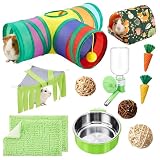
- Top Pick: PullCrease 34 Pcs Rabbit Starter Kit Rabbit Litter Box Small Animal Water Bottle Cups Bunny Tunnels Animal Grooming Kit Bowl Blanket with Cleaning Set for Guinea Pig Bunny Accessories(Style 1,Blue)
- Best Value: PullCrease 104 Pcs Rabbit Starter Kit Litter Box Bunny Tunnel Pet Playpen with Waterproof Mat Water Bottle Animal Grooming Kit Bowl Blankets with Cleaning Set for Guinea Pig Rabbit Accessories
- Premium Choice: Sonwyoung Guinea Pig Starter Kit, 12-Piece Cage Set,Stylish Style,Green
📅 Last updated:
As an Amazon Associate, All Ears Pet Care earns from qualifying purchases. This article contains affiliate links — if you buy through them we may earn a small commission at no extra cost to you. We only recommend products we believe in.

TL;DR: Guinea pigs need more space, companionship, and fresh vegetables than most starter kits provide — but the Living World Deluxe Habitat gives the right footprint, ventilation, and accessories to set a first-time owner up correctly. Best pick: ASIN B07NRFKQN8.
As an Amazon Associate we earn from qualifying purchases at no extra cost to you.




Best Guinea Pig Starter Kit: Cage, Bedding, and Food in 2026
Guinea pigs are often purchased with the assumption that they’re low-maintenance starter pets — small, easy, requiring minimal space and care. This assumption leads to undersized cages, inappropriate diets, and solo housing that causes chronic stress for social animals that evolved to live in groups. Getting a guinea pig off to the right start requires understanding what they actually need before the first day home: adequate square footage, a companion, vitamin C supplementation, daily fresh vegetables, and bedding that won’t damage their respiratory system. The right guinea pig starter kit gives you the physical infrastructure; this guide covers what the kit should include and what you need to add beyond it.
Guinea pigs are genuinely rewarding companion animals for owners who meet their real requirements — vocal, personable, and long-lived (5–8 years) compared to other small pets. If you’re already thinking about pet first aid preparedness or you’ve researched exotic pet lighting needs for another species, you’re the kind of owner who will do guinea pig care right.
🛒 Best Price Today on Amazon
Prime members get fast, free shipping on everything above, plus member-only deals. New members get a 30-day free trial — cancel anytime.
📋 Table of Contents
Top Pick: Living World Deluxe Habitat
Want to compare options? Browse guinea pig cages on Amazon — filter by floor space (minimum 7.5 sq ft for one pig, 10.5 sq ft for two), ventilation design, and included accessories.
Guinea Pig Housing: What the Numbers Actually Mean
See also: Best Litter for Bunnies in 2026: 7 Safe, Low-Dust Picks for Odor and Comfort • Litter Box Dimensions for Small Bathroom Size Guide With Measurements (2026)
| Housing Spec | Minimum (1 pig) | Recommended (1 pig) | Minimum (2 pigs) | Notes |
|---|---|---|---|---|
| Floor Space | 7.5 sq ft | 10.5 sq ft | 10.5 sq ft | Most pet store “starter” cages are 3–4 sq ft — undersized |
| Cage Height | 12 in minimum | 14+ in | 14+ in | Guinea pigs don’t climb; height matters less than floor area |
| Bar Spacing | 1 in max | 0.5–1 in | 0.5–1 in | Wider spacing risks head entrapment in young or small pigs |
| Ventilation | Wire top or sides required | Wire sides + top | Wire sides + top | Aquarium-style tanks have inadequate airflow — avoid |
| Solid Floor | Required | Required | Required | Wire floors cause pododermatitis (bumblefoot) — must be solid |
| Access Points | Top or front door | Both top + front | Both top + front | Front access makes daily interaction easier |
What a Good Starter Setup Actually Requires
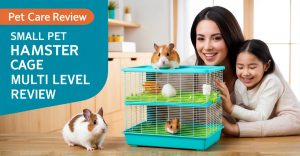
The cage: why the Living World Deluxe Habitat works. The Living World Deluxe Habitat in its large size provides approximately 8 square feet of floor space — adequate for one guinea pig, on the minimum end for two. The design combines a wire upper section for ventilation with a deep plastic base that contains bedding effectively and prevents scatter. The included balcony and ramp add vertical enrichment space while maintaining a practical primary floor footprint. The hinged top and front-opening access door make daily feeding, water changing, and interaction straightforward. For a first-time owner, the included water bottle, food dish, and hay guard provide the core accessories without requiring separate purchases on day one.
Bedding: what’s safe and what isn’t. Bedding choice is one of the most consequential decisions for guinea pig respiratory health. Cedar and pine shavings — still widely sold in pet stores — contain phenolic compounds that cause chronic respiratory irritation and liver damage in guinea pigs. Aspen shavings are safe but have moderate odor control. Paper-based bedding (Carefresh, Kaytee Clean & Cozy) is the current best practice recommendation: soft, low-dust, excellent odor absorption, and fully safe for sensitive guinea pig respiratory systems. Fleece liners are a popular reusable alternative that eliminates bedding cost over time — washable fabric fleece wicks moisture away from the pig while the absorbent layer underneath manages waste. For a starter setup, paper bedding is simpler; fleece becomes practical once you’re comfortable with the cleaning routine.
Diet: the vitamin C non-negotiable. Guinea pigs, like humans, cannot synthesize vitamin C internally — they require dietary vitamin C daily or develop scurvy, which causes joint pain, poor coat condition, and ultimately systemic illness. This is the single most commonly missed aspect of guinea pig care. The solution is simple: fresh leafy vegetables daily. Bell peppers (especially red and yellow — highest vitamin C content of common vegetables), romaine lettuce, cilantro, parsley, and kale all provide adequate vitamin C when fed consistently. Pellets alone are insufficient even if vitamin C-fortified — vitamin C oxidizes rapidly in pellet storage and may be largely degraded by the time the bag is opened. Plain Timothy hay should constitute 70–80% of total diet; the fiber is essential for dental wear and digestive health. Fresh water in a bottle (not an open dish, which gets contaminated) should be changed daily.
The companionship requirement. Guinea pigs are herd animals that experience measurable chronic stress when housed alone. A single guinea pig is genuinely worse off than a pair, even when given ample human interaction. Same-sex pairs (two females, or two neutered males) are the standard recommendation; male-female pairs require neutering to prevent rapid, unmanageable reproduction. Most rescue organizations and responsible breeders will not sell a single guinea pig without discussing the companionship requirement. If you’re considering a guinea pig, plan for two from the outset — the additional cost in food and a larger cage is modest relative to the welfare benefit for the animals.
First Week Home: Setting Up for Success
New guinea pigs need several days to acclimate before they display their full personality. The instinct to handle them frequently immediately after arrival is well-intentioned but counterproductive — the first 3–5 days should involve minimal handling, consistent feeding and water routines, and calm presence near the cage without reaching in. Once the pigs are eating, drinking, and moving normally without freezing in alarm when you approach, begin short daily handling sessions of 10–15 minutes on a safe surface (a couch with supervision, or a lap with a fleece blanket to catch waste). Guinea pigs that are handled consistently from early in their time with you become dramatically more interactive and social than those handled sporadically.
Frequently Asked Questions
Are guinea pigs good pets for young children?
Guinea pigs are better suited to children aged 8 and older who can handle them gently and consistently. Younger children often struggle with the grip control needed to safely hold a guinea pig without squeezing or dropping — both of which cause injury and make the pig fearful of handling long-term. Guinea pigs are not well-suited to rough or unpredictable handling. As pets supervised by adults with children as secondary caretakers, they work well; as independently managed children’s pets, they typically receive insufficient care. Adults should plan to be the primary caretakers and involve children in age-appropriate aspects of care (vegetable preparation, gentle observation) while managing feeding, cleaning, and handling themselves.
How often does a guinea pig cage need to be cleaned?
Spot cleaning daily — removing wet bedding patches and visible waste from high-traffic areas — keeps odor manageable between full cleans. Full bedding replacement should happen every 3–5 days for a standard cage with paper bedding and one or two pigs. Fleece setups require spot cleaning daily and full fleece washing every 3–4 days. The frequency that guinea pig housing requires cleaning surprises first-time owners who compare it to other small pets — guinea pigs produce significant waste relative to their body size, and ammonia from urine builds up quickly in inadequately ventilated or infrequently cleaned environments, causing respiratory problems.
What vegetables are safe vs. unsafe for guinea pigs?
Safe daily vegetables: romaine lettuce, green leaf lettuce, red leaf lettuce, cilantro, parsley, bell peppers (all colors), cucumber. Safe in smaller quantities (2–3 times per week): kale, spinach, dandelion greens, carrots, broccoli. Avoid: iceberg lettuce (no nutritional value, causes diarrhea), cabbage (gas), onion and garlic (toxic), potato (toxic), avocado (toxic), and any rhubarb. Fruit is safe in very small quantities as occasional treats (1–2 times per week, small pieces of apple or strawberry) but should not be a daily component due to sugar content.
Do guinea pigs need veterinary care and how often?
Guinea pigs benefit from at least one annual wellness exam with an exotic animal veterinarian — not all general practice vets have adequate guinea pig experience. Annual exams catch dental issues (guinea pig teeth grow continuously and can develop malocclusion that prevents eating), weight changes that indicate illness, and reproductive conditions in females (ovarian cysts are common in unspayed sows over 2 years). Finding an exotic vet before you need one urgently is essential — availability of exotic vets varies significantly by region, and emergency guinea pig care requires a vet who sees the species regularly, not one encountering them for the first time.
What’s the difference between American, Peruvian, and Teddy guinea pigs?
Breed differences are primarily cosmetic — all guinea pig breeds have the same care requirements, social needs, and health considerations. American (short-haired) guinea pigs require the least grooming. Peruvian and Silkie (long-haired) breeds need daily brushing and regular trimming to prevent mat formation and keep hair out of the pig’s food and water. Teddy breeds have a dense, crimped coat that stays shorter and requires moderate brushing. For first-time owners, a short-haired American or Abyssinian guinea pig is recommended simply because coat maintenance is simpler while you’re establishing the rest of the care routine.