📅 Last updated:


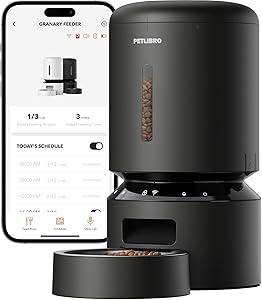
TL;DR: Feeding two or more pets with one automatic feeder almost always ends badly — the fast eater dominates, the shy one starves. This guide covers multi-pet feeder strategies, RFID-locked options, scheduling logic for mixed species, and the best budget pick for households with 2–4 cats or dogs.
Multi-Pet Automatic Feeder Guide: Solve the Food-Stealing Problem for Good
A single automatic feeder in a multi-pet feeder household is a ticking time bomb. Cat A inhales her portion in 90 seconds, then eats Cat B’s meal before the slow eater makes it to the bowl. Feeder B eats too fast, gets sick. The prescription-diet pet can’t have the other’s food. Sound familiar? Multi-pet feeding is one of the most common pain points we hear about at All Ears Pet Care — and the technology to solve it properly is finally affordable. Here’s what actually works.
As an Amazon Associate we earn from qualifying purchases at no extra cost to you.


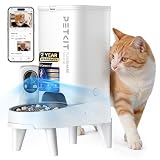

🛒 Best Price Today on Amazon
Prime members get fast, free shipping on everything above, plus member-only deals. New members get a 30-day free trial — cancel anytime.
📋 Table of Contents
- The Three Multi-Pet Feeding Scenarios (and Why Each Needs a Different Solution)
- Top Picks at a Glance
- PalNests Auto Cat Feeder: Best Budget Pick for Multi-Cat Homes
- Setting Up a Two-Feeder System: Step-by-Step
- Multi-Species Feeding: Cats and Dogs Under One Roof
- Wet Food in Automatic Feeders: What You Need to Know
- Water: The Overlooked Variable in Multi-Pet Feeding
- Frequently Asked Questions
- Related Guides
- Related Articles
- Related Guides
The Three Multi-Pet Feeding Scenarios (and Why Each Needs a Different Solution)
Scenario 1: Same food, different portions
Most common situation. Two cats eat the same kibble but one is overweight and needs half the other’s portion. Solution: individual feeders with separate schedules placed in different rooms or with a barrier. Simple, cheap, effective. No RFID required.
Scenario 2: Different foods (including prescription diets)
One pet needs prescription kidney diet, the other eats standard food. Cross-contamination is a medical risk. Solution: RFID/microchip-locked feeder that only opens for the registered pet’s chip. This is non-negotiable for prescription-diet situations.
Scenario 3: Fast eater / slow eater dynamics
One pet finishes and immediately goes for the other’s bowl. Solution: separate feeders in separate spaces, or a timed sequential feed where Feeder B dispenses 5 minutes after Feeder A — giving the slow eater time to eat undisturbed while the fast eater is still at their own station.
Top Picks at a Glance
See also: 7 Best Refillable Frozen Dog Treat Toys for Long-Lasting Licks • Best Dog Door Mat for Muddy Paws: Sizing, Materials and Picks by Entryway

31
Prime
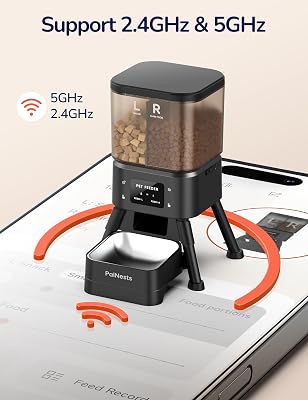
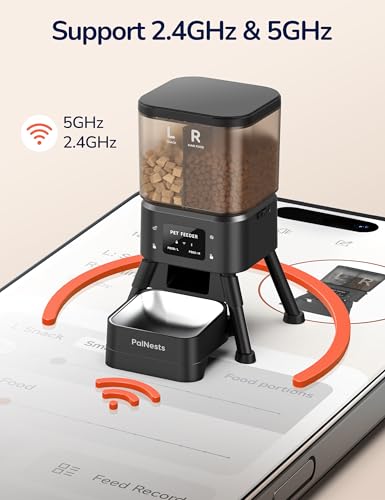
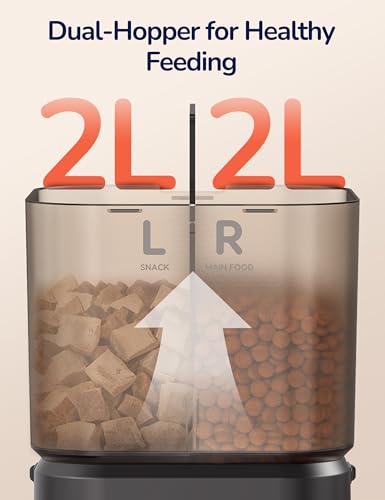
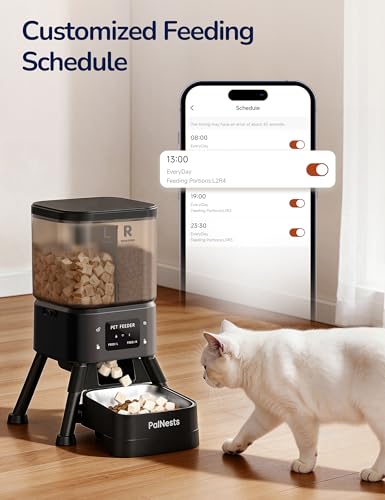
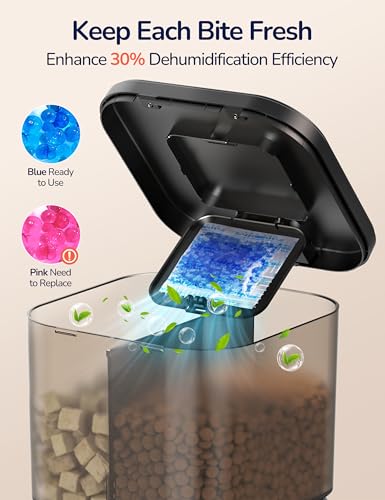
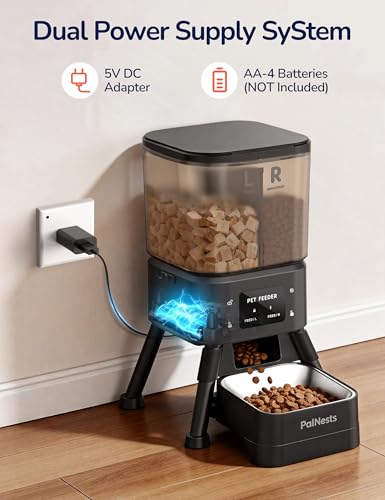
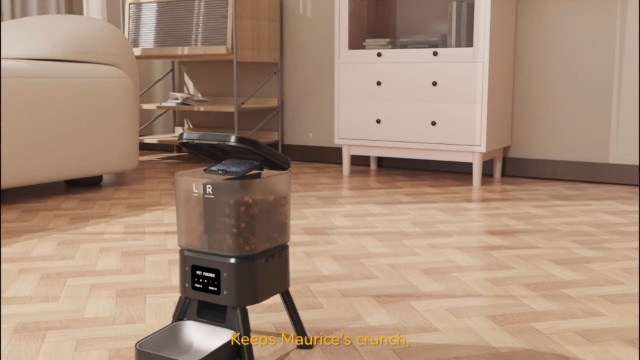
Dual Chamber Automatic Cat Feeder 4L, Dry/Treat Portion | Smart WiFi Pet Food Dispenser 4L with 2.4&5G WiFi App, Custom Schedule & Portion Control for Dry Food and Treats, Black
In Stock


As an Amazon Associate we earn from qualifying purchases. Product prices and availability are accurate as of the date/time indicated.

9
In Stock




As an Amazon Associate we earn from qualifying purchases. Product prices and availability are accurate as of the date/time indicated.

9
In Stock


As an Amazon Associate we earn from qualifying purchases. Product prices and availability are accurate as of the date/time indicated.
PalNests Auto Cat Feeder: Best Budget Pick for Multi-Cat Homes
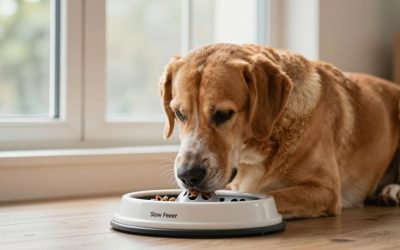
At $29.99, the PalNests Auto Cat Feeder delivers a feature set that competes with feeders 3× its price. For multi-pet setups, the key specs are: programmable meal schedules (up to 6 meals/day per unit), portion control in 5g increments, and a slow-feed distribution mode that trickles kibble over several seconds to prevent gulping. Buy two units and configure separate schedules for each pet — this is the most cost-effective multi-cat feeding solution under $100 total.
| Feature | PalNests Auto Feeder | RFID-Lock Feeder (mid-range) | Smart Feeder (premium) |
|---|---|---|---|
| Price (single unit) | $29.99 | $80–$120 | $130–$200 |
| Meals per day | Up to 6 | Up to 6 | Up to 10 |
| Portion precision | 5g increments | 5–10g increments | 1g increments |
| RFID/microchip lock | No | Yes | Some models |
| App control | Yes (Wi-Fi) | Some models | Yes |
| Slow-feed mode | Yes | Varies | Yes |
| Suitable for | Same-food multi-pet | Prescription diets | All scenarios |
Setting Up a Two-Feeder System: Step-by-Step
- Place feeders in separate locations — minimum 10 feet apart, ideally in different rooms or with a visual barrier. Cats are territorial; proximity triggers competition even when food is available.
- Program staggered schedules — set Feeder A to dispense at 7:00am, Feeder B at 7:05am. The 5-minute gap keeps the fast eater occupied at their own bowl during the slow eater’s dispensing window.
- Set equal or prescribed portions — use the gram-weight precision, not “portions,” to ensure medical accuracy for any pet on a calorie-restricted diet
- Run a 3-day observation period — watch for any pet successfully stealing from the other’s station and adjust placement or stagger timing accordingly
- Enable low-food alerts — PalNests and most Wi-Fi feeders send push notifications when the hopper is low; set thresholds individually per unit
Multi-Species Feeding: Cats and Dogs Under One Roof
Dogs eating cat food is a classic multi-species problem. Cat food is higher in protein and fat — a dog eating it regularly causes weight gain and digestive upset. Cat feeders placed on elevated surfaces (countertops, cat trees, dedicated shelving) solve this physically. Most medium-to-large dogs can’t access a feeder at 3+ feet off the ground. Small dogs require an RFID-lock feeder or a baby-gate separated space.
Conversely, cats eating dog food long-term creates taurine deficiency — a serious cardiac risk. Use dedicated feeders in spaces the other species can’t access, full stop.
Wet Food in Automatic Feeders: What You Need to Know
Most automatic feeders — including the PalNests — are designed for dry kibble. Wet food feeders exist but require rotating tray designs (like the PetSafe Six Meal or similar) that keep individual portions covered until dispensing time. Wet food in a standard hopper feeder goes rancid within 2–4 hours at room temperature. If your multi-pet household uses wet food:
- Use a feeder with a sealed rotating tray and ice pack compartment
- Schedule meals no more than 4–6 hours apart
- Clean wet food compartments daily — bacteria build-up in feeder trays is a genuine health risk
Water: The Overlooked Variable in Multi-Pet Feeding
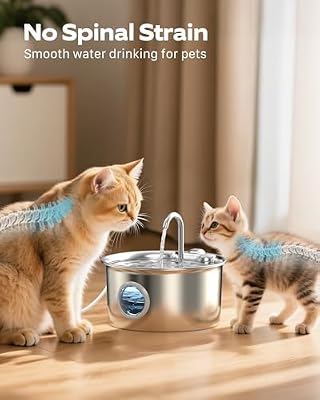
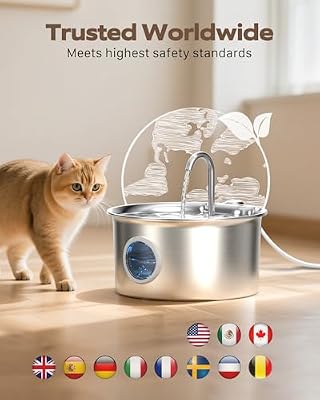
Multiple pets sharing one water bowl creates the same competition dynamics as a shared feeder. Cats in particular are stress-sensitive about water access — a dominant cat blocking the bowl can cause chronic under-hydration in submissive cats, contributing to kidney disease. The ATMZIQXR Cat Water Fountain ($19.99) provides continuous filtered flow that multiple cats can use simultaneously without territorial blocking. Running water also encourages higher water intake, directly supporting urinary tract health.
For more multi-pet household setup ideas, see our our palnests automatic cat feeder review, our multi cat household tech essentials, and our guide to cat water fountain stainless steel.
Frequently Asked Questions
Can one automatic feeder feed multiple cats?
Only if they eat the same food in the same portions and get along well enough not to compete at the bowl. For most multi-cat homes, individual feeders per cat give far better portion control and eliminate food-stealing entirely. At $29.99 per unit, two PalNests feeders cost less than most single premium RFID feeders.
What is an RFID cat feeder and do I need one?
RFID feeders use your cat’s microchip or an included collar tag to unlock the lid — only the registered pet can access the food. Essential if one pet is on a prescription diet or needs strict calorie control that another pet would sabotage. Overkill if both pets eat the same food; physical separation with individual feeders is simpler and cheaper.
How do I stop my dog from eating the cat’s automatic feeder food?
Elevation is the simplest solution — place the cat feeder on a surface the dog can’t reach. For small dogs this fails; use a microchip-locked cat feeder or feed the cat in a room with a cat flap that excludes the dog. Physical barriers beat tech solutions for this specific problem.
How many meals per day should I program for multiple cats?
Most veterinary nutritionists recommend 2–3 measured meals per day for adult cats rather than free-feeding. For weight management, 3–4 smaller meals reduces hunger between feedings. The PalNests supports up to 6 meals/day — useful for kittens or cats recovering from illness who need frequent small feedings.
What happens if the Wi-Fi goes down — does the automatic feeder still work?
Any feeder worth buying stores its programmed schedule locally on the device — Wi-Fi outages should not interrupt feeding times. The PalNests and most reputable smart feeders use onboard scheduling with Wi-Fi only for app control and notifications. Always verify local scheduling works offline before relying on any feeder for a multi-day trip.
All prices verified May 2026. As an Amazon Associate, All Ears Pet Care earns from qualifying purchases.