📅 Last updated:
Grooming a Saint Bernard is less about fancy styling and more about managing a lot of hair on a very big dog. Both coat varieties, short-haired and long-haired, have a dense undercoat that sheds moderately year-round and heavily in spring and fall. Long-haired Saints also have feathering on the legs, a bushy tail and a ruff that can mat. The right brushes make the job faster, keep the skin healthy and cut down on the fur drifting across your floors. This guide covers the tools and technique for both coat types.
📋 Table of Contents
Two coats, two brushing plans
Short-haired (smooth) Saints
The smooth coat is dense and lies close to the body, with a thick undercoat. It rarely mats, but it sheds steadily and blows heavily twice a year. Weekly brushing removes most loose hair, with daily sessions during a shed.

Maxpower Planet Hair Brush - Double Sided Shedding, Dematting Undercoat Rake for Dogs and Cats, Extra Wide Dog Grooming Brush, Reduce Shedding by 95%, Black
Included for 'Best dog grooming brush for saint bernard 2026' because the listing specifies Double Sided Shedding and Dematting Undercoat Rake for Dogs and Cats, details this guide uses to compare options.
View on Amazon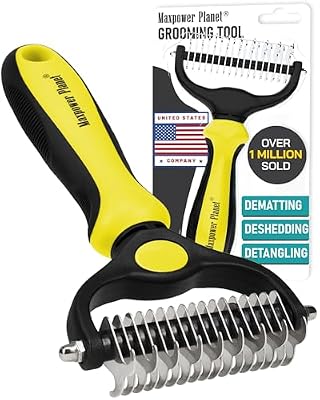
Maxpower Planet Pet Grooming Brush - Double Sided Shedding, Dematting Undercoat Rake for Dogs and Cats - Extra Wide Dog Grooming Brush - Yellow
Included for 'Best dog grooming brush for saint bernard 2026' because the listing specifies Double Sided Shedding and Dematting Undercoat Rake for Dogs and Cats, details this guide uses to compare options.
View on Amazon
Maxpower Planet Pet Grooming Brush - Double Sided, Extra Wide for Dogs and Cats - Dematting Undercoat Rake, Reduces Shedding by 95%, Purple
Included for 'Best dog grooming brush for saint bernard 2026' because the listing specifies Double Sided and Extra Wide for Dogs and Cats, details this guide uses to compare options.
View on AmazonLong-haired (rough) Saints
The rough coat is medium length, slightly wavy and has feathering on the legs, pants, tail and neck. Mats form behind the ears, in the armpits, under the collar and on the back of the legs. Brushing two or three times a week keeps these areas tangle-free, and daily brushing is needed during a coat blow.
Essential brushes for a Saint Bernard
See also: Best Electric Dog Fences for Reliable, Humane Containment • Best Dog Boots for Basset Hound
Undercoat rake
The most important tool for either coat type. An undercoat rake with long, rounded metal teeth reaches through the outer coat to remove dead undercoat. For a Saint, a rake with teeth around 1 in long works well. Use it in the direction of hair growth with light pressure.
Large slicker brush
A slicker brush with fine pins smooths the coat and removes loose surface hair. It is especially useful on the feathering and tail of long-haired Saints. Use a light touch to avoid scratching the skin.
Wide-toothed steel comb
A comb helps you find and work out tangles in the feathering, ruff and behind the ears. If it snags, go back with the slicker until it glides through.
Rubber curry brush
For short-haired Saints, a rubber curry brush or mitt used in circular motions loosens dead hair and distributes skin oils. It is also a good tool for grooming the face and head gently.
| Coat type | Normal brushing | During coat blow | Main tools |
|---|---|---|---|
| Short-haired | 1-2 times a week | Daily | Rubber curry, undercoat rake, slicker |
| Long-haired | 2-3 times a week | Daily | Undercoat rake, slicker, steel comb |
| Puppy (either coat) | 2-3 short sessions a week | – | Soft slicker, comb |
| Senior or arthritic | Short, frequent sessions | Daily, lying down | Rake, soft slicker |
How to brush a Saint Bernard
Work in sections, starting at the rear and moving forward. Rake the undercoat first, then follow with the slicker, and finish with the comb on long-haired dogs. Pay special attention to the pants, tail base, neck and behind the ears, where undercoat packs down. On a giant dog, grooming while the dog lies on its side on a non-slip mat is often easier and more comfortable, particularly for older Saints with sore joints.
A bath followed by a high-velocity pet dryer during a coat blow removes large amounts of loose undercoat quickly. Make sure the coat is dry to the skin, as damp undercoat can lead to hot spots.
Face, ears and drool areas
The Saint’s face needs extra attention. Wipe drool from the lips and jowls daily to prevent irritation and odor, and keep the fur around the mouth clean. Check the ears weekly, as the heavy ears trap moisture, and look at the eyes, since Saints are prone to eyelid problems like entropion and ectropion. If you see persistent redness or discharge, see your vet.
What to avoid
Do not shave a Saint Bernard’s coat to reduce shedding or keep it cool. Shaving damages the coat’s structure and removes its protection from sun and heat. Trimming around the feet and pads, and tidying the feathering, is fine. Avoid pressing brushes hard into the skin and overusing blade-type de-shedding tools, which can cut guard hairs.
FAQ
How often should I brush my Saint Bernard?
Short-haired Saints need brushing once or twice a week, long-haired Saints two or three times a week, and both need daily brushing during spring and fall coat blows.
Should I take my Saint Bernard to a groomer?
Many owners use a professional groomer during coat blows because of the size of the dog and the amount of undercoat. Groomers have large tubs and powerful dryers that make the job much faster, but regular brushing at home is still essential.
Bottom line
For a Saint Bernard, the core grooming kit is an undercoat rake, a large slicker brush and a wide-toothed comb, plus a rubber curry for short-haired dogs. Brush weekly or a few times a week depending on the coat, go daily during coat blows, keep the face and ears clean and never shave the coat. With a steady routine, your Saint stays comfortable and your house stays a little less furry.