Our Short List of 3

- Brand: WeatherBeeta
- Model: ComFiTec Essential Standard Neck Medium (1000417000)
- Outer: 1200 denier ripstop polyester, Guard-Tec coating
- Fill: 220g polyfill (medium weight)
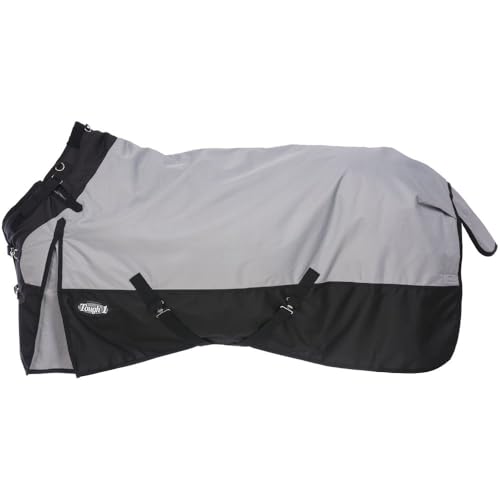
- Brand: Tough 1
- Model: 1200D Snuggit Turnout (32-2120S)
- Outer: 1200 denier polyester, taped seams, seamless spine
- Fill: 300g polyfill (heavy weight)

- Brand: HORZE
- Model: Nevada Heavy Weight (24571-BL-145)
- Outer: 1200 denier ripstop polyester
- Fill: 400g (heavy weight)
All 5 Picks at a Glance
| Product | Specs | Action |
|---|---|---|
| 1. WeatherBeeta ComFiTec Essential Standard Neck Medium — The Benchmark Medium Weight |
| Check price on Amazon |
| 2. Tough 1 1200D Snuggit Turnout 300g — The Heavyweight With an Adjustable Neck |
| Check price on Amazon |
| 3. HORZE Nevada Heavy Weight 1200D — The 400 Gram Deep-Winter Option |
| Check price on Amazon |
 4. Horseware Amigo Bravo 12 Original Turnout (0g Light) — The Rain Sheet Done Properly |
| Check price on Amazon |
 5. CHALLENGER 1200D Turnout Blanket 5B105 — The Heavy Weight in Smaller Sizes |
| Check price on Amazon |
📅 Last updated:
Start with the uncomfortable truth of this category: most horses, in most climates, need a blanket far less often than their owners think. A healthy, unclipped horse with a full winter coat, shelter, and plenty of hay is already wearing an excellent blanket — one that lofts when it is cold and flattens when it is warm. Piling a heavyweight turnout on that horse on a mild, wet night can leave it sweating under a layer it cannot shed, which chills faster than rain ever would.
Blankets earn their place in narrower situations: a clipped horse whose insulation was removed with the clippers, a senior or hard keeper burning calories it cannot spare, a fine-coated breed, or wet wind that strips heat faster than a coat can hold it. The five turnouts below span that range, from a no-fill rain sheet to a 400 gram heavyweight, and the honest way to choose among them is by fill weight matched to temperature and clip.
Disclosure: As an Amazon Associate, I earn from qualifying purchases.
Fit comes before warmth, and fit is a measurement, not a guess from breed or height. Stand the horse square and run a soft tape from the center of the chest, around the shoulder, to the center of the tail; that number, in inches, is the blanket size. Two inches small binds the shoulder; two inches large slides back and invites a leg through a surcingle.
📋 Table of Contents
How to Choose a Horse Blanket
First, decide whether the horse needs one at all
The default answer for a healthy, unclipped horse with shelter and forage is no blanket, and that answer survives most winter weather. Horses generate heat by fermenting fiber, so a steady supply of hay is a heating system; the winter coat, raised in cold air, traps that heat in still air. Rain changes the equation more than cold does: a soaked, flattened coat loses its loft, and wind on a wet coat genuinely chills. Blanketing decisions should follow the horse in front of you — clip, condition, age, coat, and shelter — rather than a calendar date.
Fill weight matched to temperature and clip
Fill is measured in grams of polyester insulation, and the bands are conventions, not laws: no fill (a sheet, 0g) for rain and wind only, light (50–100g) for cool nights, medium (150–250g) for cold weather on an unclipped horse, and heavy (300–400g) for hard cold or a fully clipped horse. The clip matters as much as the thermometer: a trace clip keeps most of the coat and needs one step less fill, while a full clip removes insulation exactly where the blanket sits. Over-blanketing is the quieter error — a horse that sweats under its blanket ends the night damp, and damp against skin in cold air is worse than no blanket at all. Slide a hand under the blanket at the shoulder: skin should feel warm and dry, never hot or clammy.
Denier is the durability dial
The outer shell is rated in denier, a measure of thread weight that tracks tear and abrasion resistance. A 600 denier shell serves a gentle horse turned out alone; 1200 denier is the working standard for group turnout, fences, and brush; higher ballistic weaves exist for confirmed blanket destroyers. Ripstop weaves add a grid of stronger threads that keep a small snag from running. Waterproofing lives in a coating under that shell, and it ages: a blanket that was waterproof three winters ago may only be water-resistant now.
Fit, closures, and the details that prevent rubs
Beyond the measurement, look at the shoulder: gussets let the leg reach forward without the blanket pulling across the chest, and a shaped shoulder suits a broad horse better than a straight cut. Front closures divide into buckles (secure, slower, adjustable in fine steps), quick clips (fast with gloves on), and hook-and-loop panels (easy, but they collect hay and weaken as they foul). Twin low cross surcingles and leg straps keep the blanket centered when the horse rolls. Check fit standing and walking: the blanket should sit forward of the withers without pressing on them, and the back seam should run straight down the spine.
The 5 Best Horse Blankets
See also: Best Automatic Transmission Floor Shifter: Ratchet, Gated and Detent Shifters Compared • Best Automatic Floor Shifter for Truck: Tall, Tough Picks for Pickups and Bench Seats
1. WeatherBeeta ComFiTec Essential Standard Neck Medium — The Benchmark Medium Weight
- Brand: WeatherBeeta
- Model: ComFiTec Essential Standard Neck Medium (1000417000)
- Outer: 1200 denier ripstop polyester, Guard-Tec coating
- Fill: 220g polyfill (medium weight)
WeatherBeeta’s ComFiTec Essential is the line most medium-weight comparisons start from, and the standard neck version in 220 grams of fill is its middle of the road: warm enough for cold nights on an unclipped horse, light enough not to overheat a clipped one in changeable weather. The 1200 denier ripstop shell carries a Guard-Tec waterproof, breathable coating, and the 210T lining is smooth against the coat to limit rubbing. A traditional side gusset keeps the shoulder moving freely, and twin low cross surcingles hold the blanket centered. For a one-blanket wardrobe in a temperate climate, this is the slot filled first.
2. Tough 1 1200D Snuggit Turnout 300g — The Heavyweight With an Adjustable Neck
- Brand: Tough 1
- Model: 1200D Snuggit Turnout (32-2120S)
- Outer: 1200 denier polyester, taped seams, seamless spine
- Fill: 300g polyfill (heavy weight)
The Tough 1 Snuggit is built for horses that are hard on blankets and winters that are hard on horses. Its 1200 denier polyester shell is waterproof and breathable with taped seams and a seamless spine, over 300 grams of polyfill — a genuine heavyweight for hard cold or a fully clipped horse. The detail that sets it apart is the Snuggit neck: an adjustable neckline that snugs down to close the gap at the chest where wind and rain enter, and lets out for a broader horse. A 210 denier lining keeps shavings from clinging, and double buckle closures with low cross surcingles keep everything shut.
3. HORZE Nevada Heavy Weight 1200D — The 400 Gram Deep-Winter Option
- Brand: HORZE
- Model: Nevada Heavy Weight (24571-BL-145)
- Outer: 1200 denier ripstop polyester
- Fill: 400g (heavy weight)
The Nevada is the blanket for the coldest slot in the wardrobe: 400 grams of fill behind a 1200 denier ripstop shell, aimed at severe cold, wind-exposed turnout, and clipped horses in northern winters. That much insulation has a narrow job — on a merely cold night it is too much blanket for an unclipped horse, and its honest use is the stretch of weather where a medium weight leaves a horse tight and tucked. Horze cuts it generously, with double front buckles placed for gloved hands.
4. Horseware Amigo Bravo 12 Original Turnout (0g Light) — The Rain Sheet Done Properly
- Brand: Horseware Ireland
- Model: Amigo Bravo 12 Original Turnout (AARA41-BBW0)
- Outer: 1200 denier polyester
- Fill: 0g (light turnout sheet)
A turnout sheet has one job: keep a horse dry without adding warmth, for wet spring and fall weather and for the clipped horse on a mild rainy day when fill would overheat it. The Amigo Bravo 12 Original does that job with a 1200 denier polyester outer — tougher than the shell on many filled blankets — over a shine-enhancing polyester lining with no fill at all. Horseware’s V-Front closure wraps the point of the shoulder instead of buckling flat against it, relieving pressure across the chest, and leg arches add the same freedom behind the shoulder. Sheets are where weak construction shows first, because there is no fill to hide behind; this one is built like a blanket that happens to be empty.
5. CHALLENGER 1200D Turnout Blanket 5B105 — The Heavy Weight in Smaller Sizes
- Brand: CHALLENGER (Challenger Horsewear)
- Model: 5B105 (5B105-66)
- Outer: 1200 denier polyester blend, ripstop
- Fill: Quilted polyfill, heavy weight (gram figure not published)
Challenger’s 5B105 covers a corner the bigger brands underserve: a 1200 denier heavyweight that starts down at 66 inches, in reach of ponies, Arabs, and compact horses that swim in standard size runs. The polyester blend shell is waterproof, breathable, and ripstop-woven, over quilted polyfill the maker classes as heavy weight — note that Challenger publishes no gram figure for this blanket, so judge it against the gram-rated picks above with that gap in mind. Availability on this listing runs thinner than the picks above it, so confirm size on the product page first.
Comparison Table
| Product | Outer | Fill | Weight class | Best for |
|---|---|---|---|---|
| WeatherBeeta ComFiTec Essential Standard Neck | 1200D ripstop | 220g | Medium | One-blanket wardrobes in temperate climates |
| Tough 1 1200D Snuggit Turnout | 1200D polyester | 300g | Heavy | Hard cold, clipped horses, rough turnout |
| HORZE Nevada Heavy Weight | 1200D ripstop | 400g | Heavy | Deep winter and wind-exposed fields |
| Horseware Amigo Bravo 12 Original | 1200D polyester | 0g | Sheet | Rain and wind without added warmth |
| CHALLENGER 1200D 5B105 | 1200D polyester blend | Quilted polyfill | Heavy | Ponies and compact horses from 66 in |
FAQ
How do I measure my horse for a blanket?
Stand the horse square and measure with a soft tape from the center of the chest, around the point of the shoulder and the widest part of the barrel, to the center of the tail. That measurement in inches is the blanket size. Measure the horse itself rather than copying a size from breed or height: two horses of the same height can differ by a full size through the shoulder.
At what temperature should a horse wear a blanket?
There is no single temperature, because the clip and the coat matter more than the thermometer. An unclipped horse with shelter and hay is comfortable well below freezing without help, and needs protection mainly from wet wind. A clipped horse starts needing fill in cool weather, with the fill weight rising as the temperature falls. Work from the horse: a tucked stance and shivering ask for more cover; sweating under the blanket asks for less.
What is the difference between a turnout blanket and a stable blanket?
A turnout blanket has a waterproof, durable outer shell built for outdoor weather, mud, and rolling in a field. A stable blanket is an indoor layer: warm, but its shell is not waterproof and it is not made to shed rain. A stable blanket can layer under a turnout shell for extra warmth, but worn alone outdoors it soaks through and stays soaked.
How should a turnout blanket be cleaned and stored?
Brush dried mud off before washing, fasten every closure so hooks do not snag the lining, and wash cool with a blanket-safe detergent — household detergents and heat strip the waterproof coating. Air dry, and reproof the shell when water stops beading. Store the blanket clean and fully dry, off the floor, where rodents cannot nest in the fill.
Conclusion
The right blanket wardrobe for most horses is small: a waterproof sheet for wet weather, a medium weight for cold, and a heavyweight only where climate or a full clip honestly demands one. The WeatherBeeta ComFiTec Essential fills the medium slot with the fewest compromises, the Tough 1 Snuggit and the HORZE Nevada cover the heavy end at 300 and 400 grams, the Amigo Bravo 12 is the sheet for horses that need dry without warm, and the Challenger 5B105 extends a heavyweight down to sizes the major lines skip. Measure center of chest to center of tail, match fill to clip and weather, and remember: an unclipped horse with shelter and hay is already wearing the best blanket it owns.