📅 Last updated:
As an Amazon Associate we earn from qualifying purchases.
Choosing the best automatic transmission floor shifter starts with understanding what the shifter actually does. It replaces a column selector, or an older floor unit, with a lever mounted on the transmission tunnel that moves a cable or linkage to change gears. Done well, the swap gives a more direct feel, a cleaner interior, and a level of control a column shifter never offered. Done badly, with the wrong mechanism or a mismatched transmission, it produces vague shifts and a gear indicator that cannot be trusted. This guide compares the main shifter types, explains how to match one to your transmission, and walks through the buying decisions that matter most.
📋 Table of Contents
What an Automatic Transmission Floor Shifter Does
Every automatic transmission has a selector shaft that moves through park, reverse, neutral, drive, and the lower gears. In a factory car, a column lever or a console selector moves that shaft through a linkage. A floor shifter does the same job from a lever mounted on the floor, usually through a flexible steel cable. The cable runs from the shifter base, along the tunnel, to a lever on the side of the transmission.
The shifter itself adds three things the raw linkage does not. First, it adds a mechanism, ratchet, detent, or gated, that controls how the lever moves between gears. Second, it adds safety devices: a neutral safety switch that stops the engine from starting in gear, a backup light switch, and a reverse lockout that prevents an accidental shift into reverse. Third, it adds the driver interface: the handle, the knob, the boot, and the gear indicator you look at every time you drive.
The Three Main Mechanisms
See also: Best Automatic Floor Shifter for Truck: Tall, Tough Picks for Pickups and Bench Seats • 4 Best Automatic Gate Openers for Farms (November 2026)
Ratchet Shifters
A ratchet shifter moves exactly one gear per pull or push of the lever. Pull back once and you drop from drive to second; pull again for first. Push forward to upshift one gear at a time. Because the mechanism only allows one step per movement, you cannot over-shift and skip a gear at a critical moment.
Ratchet shifters are the standard choice for performance builds and for drivers who manually shift an automatic at the track or on a winding road. They almost always include a reverse lockout that meets common racing safety rules, and many have a T-handle with an optional button for a trans-brake or nitrous. The trade-off is that a ratchet shifter is slower for a simple park-to-drive movement, since you step through the gears rather than sliding straight down the gate.
Detent Shifters
A detent shifter works in a straight line, following the transmission’s own gate pattern. You move the lever from park through reverse and neutral to drive in one smooth motion, just like a factory selector. Small detents, or notches, hold the lever in each gear.
Detent shifters are simple, familiar, and reliable. They are the best choice for a daily driver, a restoration that should feel stock, or any vehicle where the shifter mostly lives in drive. Their weakness is that a hurried movement can overshoot the intended gear, which is why a good detent shifter still needs a positive reverse lockout.
Gated Shifters
A gated shifter uses a shaped internal gate, often in a Z pattern, to guide the lever. The gate physically blocks the lever from moving where it should not go, so over-shifting is prevented by the shape of the mechanism itself rather than by a ratchet. Gated shifters have the fewest moving parts of the three types, which makes them durable and easy to maintain.
This style is popular for clean column-to-floor conversions and for classic builds where a simple mechanical feel suits the car. It is less suited to drivers who want to shift rapidly through the gears one at a time, since the gate pattern rewards deliberate movements.
Dual-Mode Shifters
Some shifters combine detent and ratchet action in one unit. In normal use they behave like a straight-line detent shifter. Drop the lever into low, lift a trigger, and pull back, and the same shifter becomes a ratchet shifter for manual gear changes. Dual-mode units cost more than single-mode ones, but they are a practical answer for a car that serves as both a daily driver and a weekend performance vehicle.
How to Choose the Right Floor Shifter
Match the Transmission Exactly
This is the first and most important step. Shifter fitment is defined by transmission family, not by vehicle make alone. Common families include GM TH200, TH250, TH350, TH400, 200-4R, 700R4, 4L60, 4L60E, and 4L80E; Ford C4, C6, AOD, AODE, 4R70W, E4OD, and 4R100; and Chrysler Torqueflite A727, A904, A500, and A518.
Find your transmission code on the case or the build plate, then read the shifter’s application chart. Many shifters cover a whole family with the brackets and levers in the box. Others need an extra kit for specific transmissions: Ford AOD, E4OD, and 4R100 units and GM 4L60E through 4L85E units with a PRNDL switch are the usual cases. A shifter labelled universal still has limits, and the application chart, not the headline, is what decides fitment.
Cable or Linkage
Most modern floor shifters are cable operated. A cable is easier to install because it bends around the tunnel and floor, and the same shifter can fit many vehicles with the same cable. The standard cable in many kits is five feet long, with two, three, four, eight, ten, and twelve-foot options available for unusual layouts.
Linkage-operated shifters use solid rods and levers instead of a cable. They give a very direct mechanical feel and are common on classic floor-mount designs, but they demand more precise alignment and more room under the car. For a first-time installation, a cable shifter is usually the easier and more forgiving choice.
Mount Style: Floor Mount or Transmission Mount
A floor-mount shifter bolts to the transmission tunnel and connects to the transmission by cable. It is the most common style and works in almost any vehicle with enough tunnel space. The mounting brackets often allow the shifter to sit above or below the floor line, which helps when fitting through an existing console.
A transmission-mount shifter, sometimes called a tail-mount or case-mount shifter, bolts directly to the transmission case. It gives a very solid feel and a short, direct connection, but it requires access to the transmission and the right mounting points on the case. Some makers offer the same shifter head in both floor-mount and transmission-mount versions, so choose the style that suits your vehicle’s layout.
Lever Length and Knob
Lever lengths on floor-mount shifters range from about four inches to more than thirty inches above the mount, and many kits include offset levers for clearance around seats and consoles. Measure from the floor to your hand in a normal driving position, and pick a lever that puts the knob within easy reach without leaning forward.
Knob style is part comfort and part character. A T-handle gives a firm grip for ratchet shifting and suits performance builds. A mushroom knob, usually polished or black billet aluminium, suits classic and hot-rod builds and is easy to grip. A ball knob is a simple, clean option for a restoration. Whatever you choose, confirm the knob thread matches the lever, since some shifters use a push-button knob that operates the reverse lockout.
Safety Features
Treat three safety features as mandatory. The neutral safety switch must prevent the engine from starting in any gear other than park or neutral. The backup light switch must turn on the reverse lights only in reverse. The reverse lockout must require a deliberate action, such as lifting a trigger, pushing a button, or moving the lever sideways, before the shifter can enter reverse. Reputable shifters include all three, and they are worth verifying on the specification sheet before you buy rather than discovering their absence during installation.
Comparison Table
| Shifter type | Best for | Shift feel | Key strength | Watch out for |
|---|---|---|---|---|
| Ratchet | Performance driving, manual shifting | One gear per pull | Cannot over-shift | Slower park-to-drive movement |
| Detent | Daily drivers, stock-feel builds | Smooth, straight-line | Simple and familiar | Can overshoot a gear if rushed |
| Gated | Conversions, classic builds | Guided, mechanical | Few moving parts | Less suited to rapid manual shifting |
| Dual-mode | Cars that do double duty | Switchable detent/ratchet | Flexible for street and track | Higher cost, more complex |
| Cable operated | Most installations | Light and consistent | Easy routing, wide fitment | Cable must avoid heat and sharp bends |
| Linkage operated | Classic floor-mount builds | Very direct | Solid mechanical feel | Needs precise alignment |
Installation and Adjustment
A floor shifter installation is a realistic weekend project for a home mechanic. Disconnect the battery, remove the old selector and linkage, and position the new shifter on the tunnel. Sit in the driving seat and check the reach before drilling any holes; a shifter that is comfortable on the bench can be awkward once the seat is in place.
Route the cable in smooth curves, away from the exhaust and any moving parts, and secure it with the supplied brackets. Connect the transmission lever and adjust the cable so that each position on the shifter matches the same gear in the transmission. This adjustment is the most important part of the job. A cable that is one notch off will make the gear indicator lie and can leave the transmission between gears, which causes wear and harsh engagement.
Wire the neutral safety switch and the backup light switch into the factory circuits, then test them before driving. The engine should crank only in park and neutral, the reverse lights should come on only in reverse, and the lockout should block an accidental move into reverse. Take a short test drive, shifting through every gear, and re-check the cable adjustment after the first drive, since new cables can settle slightly.
If your transmission needs a separate installation kit, read its instructions before starting and fit the kit’s brackets first. It is also worth checking local rules if the vehicle is used in competition, since some racing bodies require a reverse lockout and a neutral safety switch as a condition of entry.
Top Picks for Automatic Ratchet and Pro-Style Shifters
Choosing a shifter mostly comes down to your transmission and how much control you want. These ratchet-style units are among the common options for older automatics, so match each listing to your gearbox before buying.
Flynsu 80885 Hammer-Style Automatic Ratchet Shifter
A universal-style ratchet shifter listed for 3- and 4-speed automatics. Check the cable or linkage requirements against your transmission before ordering, since mounting details differ between builds.
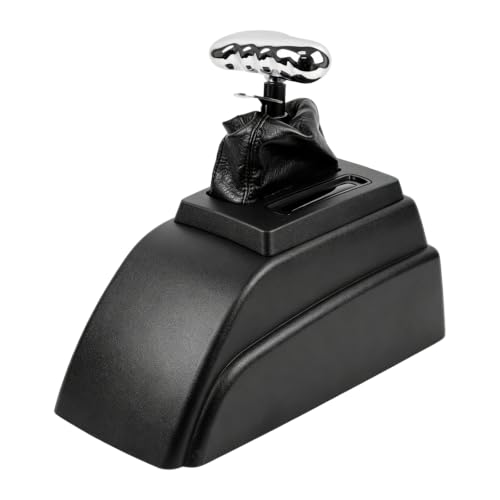
Fits B&M 80885 Hammer Automatic Ratchet Shifter | universal 3 & 4-speed automatic transmissions
Included for 'Best Automatic Transmission Floor Shifter: Ratchet, Gated and Detent Shifters Compared' as a representative home product in this roundup; selection reflects the product set returned for this topic.
View on AmazonXxamz 81120 Automatic Ratchet Shifter for 2, 3 and 4 Speed Transmissions
Listed for several GM transmission families, including popular older units. Matching the part number to your gearbox saves frustration at install time, and the broad listing suits mixed projects.

81120 Automatic Ratchet Shifter for 2&3&4 Speed Automatic Transmission, Performance Gear Shifter for GM TH350 TH400 700R4 4L60E, Ford C4 C5 C6, Chrysler A727 A904
Included for 'Best Automatic Transmission Floor Shifter: Ratchet, Gated and Detent Shifters Compared' as a representative home product in this roundup; selection reflects the product set returned for this topic.
View on AmazonRATCHROLL 80775 Automatic Ratchet Shifter for Ford and GM Transmissions
A ratchet design that lists compatibility with certain Ford and GM transmissions. It is worth a look if your project car mixes brands or you plan a future swap.

RATCHROLL 80775 Automatic Ratchet Shifter for Ford C4 C5 C6 AOD for GM 4L60 | for Most 3 & 4 Speed Transmission, for GM TH400 350 250 200 700R4 4L60 4L60E 4L65E 4L80E, for Chrysler Torqueflite A727 A904
Included for 'Best Automatic Transmission Floor Shifter: Ratchet, Gated and Detent Shifters Compared' as a representative home product in this roundup; selection reflects the product set returned for this topic.
View on AmazonHurst 3838500 Pro-Matic 2 Automatic Gear Shift Lever Kit
A well-known name in performance shifters, supplied as a lever kit. It is a classic choice for builders who prefer an established brand and a traditional feel.
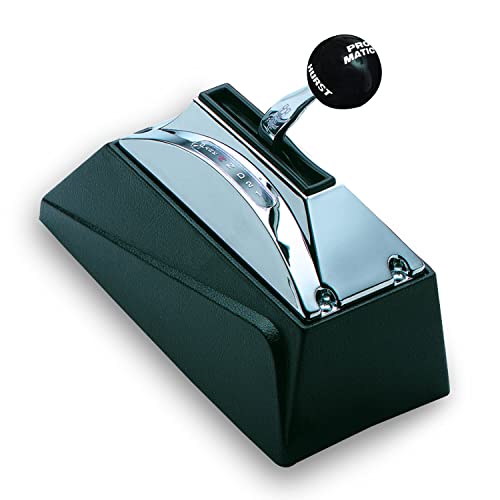
Hurst 3838500 Pro-Matic 2 Automatic Gear Shift Lever Kit
Included for 'Best Automatic Transmission Floor Shifter: Ratchet, Gated and Detent Shifters Compared' as a representative home product in this roundup; selection reflects the product set returned for this topic.
View on AmazonB&M 81683 Automatic Ratchet Shifter, Quicksilver Black
A branded ratchet shifter with a black finish. It sits at the higher end of this group, so it suits a more polished build where appearance counts alongside function.

B&M 81683 Automatic Ratchet Shifter - Quicksilver - Black
Included for 'Best Automatic Transmission Floor Shifter: Ratchet, Gated and Detent Shifters Compared' as a representative home product in this roundup; selection reflects the product set returned for this topic.
View on AmazonFrequently Asked Questions
What is the difference between a ratchet shifter and a detent shifter?
A ratchet shifter moves one gear per pull, so you cannot skip a gear, while a detent shifter slides in a straight line through the factory gate pattern like a stock selector. Ratchet shifters suit performance driving and manual shifting; detent shifters suit daily drivers and stock-feel builds. Some shifters combine both modes with a trigger.
Will a universal floor shifter fit my transmission?
A universal label means the shifter fits many transmissions, not all of them. Check the application chart for your exact transmission family and year. Some transmissions, such as Ford AOD and E4OD or GM 4L60E units with a PRNDL switch, need an additional installation kit. Confirm the kit before ordering.
Do I need a longer cable for my vehicle?
Most kits include a five-foot cable, which suits most cars and short-wheelbase trucks. Longer cables are available up to twelve feet for long vehicles or unusual layouts. Measure the route from the shifter to the transmission lever, allowing for gentle curves, and order the longer cable if the standard one would run tight.
Can I install a floor shifter myself?
Yes, if you are comfortable with basic hand tools, drilling, and simple wiring. Plan on an afternoon for the job, with extra time for cable adjustment and testing the safety switches. If the vehicle has an electronic transmission or the floor needs significant trimming, a professional installation may be the better choice.
How do I know the cable adjustment is correct?
Shift slowly through every position and confirm the gear indicator matches the gear the transmission actually engages. Park should hold the vehicle on a slope, reverse should light the backup lights, and neutral should allow the engine to crank while drive engages smoothly. If any position feels vague or the indicator disagrees with the transmission, re-adjust the cable before driving further.
Conclusion
The best automatic transmission floor shifter is the one that matches your transmission, suits the way you drive, and includes the safety features that protect you and the vehicle. Choose a ratchet mechanism for performance use, a detent mechanism for a daily driver, or a gated mechanism for a simple, durable conversion, and consider a dual-mode unit if one car has to do two jobs. Verify fitment on the application chart, pick a cable long enough for a smooth route, and take time over the adjustment and the safety-switch tests. A well-chosen and well-adjusted floor shifter transforms the driving experience and, installed properly, feels like it was part of the car from the start.