Our Short List of 3

- Form: uniform crunchy kibble, coconut flavor
- Bag size: 1.75 lb
- Crude protein: 31% minimum
- Crude fat: 14% minimum

- Form: powder, mixed with water before serving
- Bag size: 1 lb
- Mix ratio: 1 part powder to 1.5 parts water
- Crude protein: 39% minimum (published Instant-HPW powder analysis)
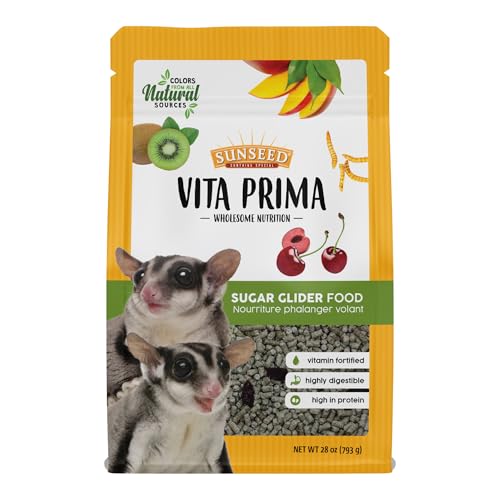
- Form: fortified pellets with dried fruit pieces
- Bag size: 1.75 lb
- Crude protein: 25% minimum
- Crude fat: 6% minimum
All 4 Picks at a Glance
| Product | Specs | Action |
|---|---|---|
| 2. Exotic Nutrition ZooPro Glider Essential, Coconut, 1.75 lb |
| Check price on Amazon |
| 3. Exotic Nutrition Instant-HPW Honey & Fruit, 1 lb |
| Check price on Amazon |
| 4. Sunseed Vita Prima Wholesome Nutrition Sugar Glider Food, 1.75 lb |
| Check price on Amazon |
 5. Exotic Nutrition ZooPro High Protein Supplement, 8.82 oz |
| Check price on Amazon |
📅 Last updated:
Feeding a sugar glider well starts with an uncomfortable truth: there is no settled answer. Keeper communities argue for named recipe plans such as HPW, BML and TPG, while other owners lean on commercial pellets and kibbles, and published feeding trials have found shortcomings in every approach measured. What nearly everyone accepts is the framework. A glider needs a dependable staple, a nectar-style component that echoes the sap and nectar it would lick from trees, fresh produce, and insects or another concentrated protein. Calcium matters out of proportion to everything else, because gliders lose bone density quickly when calcium runs short against phosphorus.

This guide compares five packaged staples and diet components that can anchor that framework: two pellet diets, a chicken-based kibble, a just-add-water HPW nectar mix, and the protein supplement powder used to build homemade HPW batches. Four of the five come from one maker, Exotic Nutrition, which simply reflects how concentrated this small market is; the fifth is the Sunseed pellet sold in most pet stores. Every figure below comes from a maker’s published guaranteed analysis. Treat each product as one piece of a feeding plan, because no single bag or powder replaces the whole plan.
Disclosure: As an Amazon Associate, I earn from qualifying purchases.
📋 Table of Contents
- How to Choose a Sugar Glider Staple
- 1. Exotic Nutrition Glider Complete, 2 lb
- 2. Exotic Nutrition ZooPro Glider Essential, Coconut, 1.75 lb
- 3. Exotic Nutrition Instant-HPW Honey & Fruit, 1 lb
- 4. Sunseed Vita Prima Wholesome Nutrition Sugar Glider Food, 1.75 lb
- 5. Exotic Nutrition ZooPro High Protein Supplement, 8.82 oz
- Comparison Table
- FAQ
- Conclusion
How to Choose a Sugar Glider Staple
Decide the plan before the product. Most accepted feeding systems pair a staple with fresh food. A common pattern is a measured serving of a nectar mix or pellet each night, a tablespoon or two of chopped fruits and vegetables, and insects several times a week. Pick products that fill a defined slot in that pattern rather than three bags that all do the same job.
Read the guaranteed analysis, not the front of the bag. Look for the protein source and level first. Glider staples in this guide run from 25% to 39% protein as published, and the source matters: chicken meal, egg and whey deliver the amino acids an insect-eating marsupial uses best, while grain-led panels lean on oat meal, corn and soybean meal. Neither style is automatically wrong, but you should know which one you are buying.
Do the calcium math yourself. Divide the label calcium figure by the phosphorus figure. Keeper guidance commonly cites a calcium-to-phosphorus balance near 2:1, and the panels below land anywhere from about 1.5:1 to 2.5:1, so the arithmetic is worth the ten seconds it takes. Be wary of any staple whose label omits calcium or phosphorus entirely; with minerals this important, an unpublished panel is a real gap, and fresh foods with inverted ratios, such as corn and peas, pull the overall balance the wrong way.
Match the texture to the selective feeding problem. Gliders are notorious for eating the sweet pieces and leaving the rest. Loose blends with fruit chunks invite that behavior, uniform kibble and pellets reduce it, and a mixed powder removes it entirely because every spoonful is the same. If your glider already sorts its food, form may matter more than small differences in the analysis.
Plan for freshness. Dry pellets keep for weeks in a cool, sealed container, and one maker advises refrigeration to protect nutrient value. A nectar mix is served fresh each evening, leftovers come out in the morning, and keepers who batch homemade HPW usually freeze it in small portions and thaw a few days at a time.
1. Exotic Nutrition Glider Complete, 2 lb
See also: Best Automatic Transmission Floor Shifter: Ratchet, Gated and Detent Shifters Compared • Best Automatic Floor Shifter for Truck: Tall, Tough Picks for Pickups and Bench Seats
Glider Complete is the pellet many new owners meet first: a fortified pellet blended with chunks of eight real fruits, including papaya, pineapple, apple, peach, pear, blueberries, apricots and golden raisins. The maker positions it as the daily base of its own feeding system, suggesting roughly two tablespoons per glider per day alongside a half tablespoon of an HPW supplement, and states that added vitamins are unnecessary when the diet is at least 75 percent Glider Complete. The published panel is respectable, with protein led by soybean meal and dried fruit near the top of the ingredient list. Its honest weakness is built into the format: fruit chunks in a loose blend are exactly what a selective glider eats first, so some of the pellet, and its minerals, can be left behind.
Specs
- Form: fortified pellet mixed with dried fruit chunks
- Bag size: 2 lb (maker model EN1718)
- Crude protein: 31.5% minimum
- Crude fat: 3.5% minimum
- Crude fiber: 3.6% maximum
- Calcium: 1.83% minimum, 2.3% maximum
- Phosphorus: 1.16% minimum
- Label calcium-to-phosphorus balance: about 1.6:1 to 2.0:1
- Feeding guide: about 2 tablespoons daily, plus a small HPW serving
- View on Amazon
2. Exotic Nutrition ZooPro Glider Essential, Coconut, 1.75 lb
- Form: uniform crunchy kibble, coconut flavor
- Bag size: 1.75 lb
- Crude protein: 31% minimum
- Crude fat: 14% minimum
Glider Essential takes the opposite route from fruit blends: a uniform, crunchy, chicken-based kibble with no loose pieces to sort through. Chicken meal and whitefish meal lead the ingredient list, egg product adds further animal protein, and coconut flavoring persuades picky animals to eat plain kibble. The maker also leaves corn, wheat and soy out of the recipe. Protein and fat both run high on the published panel. The trade-off sits in the minerals: calcium of 1.55 percent against phosphorus of 1.06 percent works out near 1.5:1, the softest balance in this guide, so this kibble pairs best with calcium-rich produce or a nectar mix carrying a stronger ratio rather than standing alone.
3. Exotic Nutrition Instant-HPW Honey & Fruit, 1 lb
- Form: powder, mixed with water before serving
- Bag size: 1 lb
- Mix ratio: 1 part powder to 1.5 parts water
- Crude protein: 39% minimum (published Instant-HPW powder analysis)
Instant-HPW turns the best-known glider recipe plan into a scoop-and-stir powder. The HPW plan, built on a high protein supplement plus eggs, honey and bee pollen, normally means cooking and blending a batch; this version folds those elements into a dry mix you combine with water, at one part powder to one and a half parts water, to a soft pudding texture. The Honey & Fruit recipe adds apple to the egg, honey and whey base. Serve about two tablespoons per glider each evening and remove what is left in the morning. Because the food is homogeneous, selective feeding is impossible, and the published Instant-HPW powder analysis carries the strongest mineral balance here, with calcium running at roughly twice the phosphorus figure.
4. Sunseed Vita Prima Wholesome Nutrition Sugar Glider Food, 1.75 lb
- Form: fortified pellets with dried fruit pieces
- Bag size: 1.75 lb
- Crude protein: 25% minimum
- Crude fat: 6% minimum
Vita Prima is the mainstream pet store option, a vitamin-fortified pellet with a sprinkle of dried fruit, and it publishes the most detailed mineral panel of any pellet in this guide. Calcium is guaranteed at 2.0 to 2.5 percent against phosphorus of 1.1 percent, a balance of roughly 1.8:1 to 2.3:1, and the label also guarantees vitamins A, D3 and E, vitamin C, omega-3 fatty acids and a probiotic blend. Read the ingredient list with clear eyes, though: feeding oat meal, porcine meal and cereal food fines lead it, with poultry meal and soybean meal behind them, so this is a grain-led recipe with a modest 25 percent protein floor. It earns its place as a widely available staple with a strong mineral panel, best served alongside fresh produce and insects rather than as the whole menu.
5. Exotic Nutrition ZooPro High Protein Supplement, 8.82 oz
- Form: powdered protein supplement, not a complete food
- Bag size: 8.82 oz
- Crude protein: 52% minimum
- Crude fat: 12% minimum
This powder is not a food, and the guide includes it because so many glider diets are built on it. The original Australian HPW recipe calls for a high protein supplement blended with water, honey, eggs and bee pollen; this is the maker’s United States version of that supplement, with the same ingredient approach. Its panel is concentrated: 52 percent protein from whey and soy, with added amino acids, omega-3 and omega-6 fatty acids and a full vitamin and mineral list. The label gives two uses: sprinkle two teaspoons over 100 grams of fresh fruit and vegetables, or mix a quarter cup into a homemade HPW batch. Fed alone it would be an unbalanced mistake; used as directed, it is the protein backbone of the most widely followed glider feeding plan.
Comparison Table
| Product | Form | Protein (min) | Calcium | Phosphorus | Label Ca:P |
|---|---|---|---|---|---|
| Glider Complete | Pellet with fruit chunks | 31.5% | 1.83–2.3% | 1.16% | 1.6:1–2.0:1 |
| ZooPro Glider Essential | Uniform kibble | 31% | 1.55% | 1.06% | about 1.5:1 |
| Instant-HPW Honey & Fruit | Powder, served wet | 39% | 0.80–1.00% | 0.40% | 2:1–2.5:1 |
| Sunseed Vita Prima | Fortified pellet | 25% | 2.0–2.5% | 1.1% | 1.8:1–2.3:1 |
| ZooPro High Protein Supplement | Supplement powder | 52% | Not published | Not published | Not published |
FAQ
Can a sugar glider eat only pellets and nothing else?
A pellet can be the backbone of the diet, and one maker here states that its pellet covers vitamin needs when it makes up at least 75 percent of what is fed. Even so, most keepers and care guides still add fresh fruits and vegetables nightly and insects several times a week, for nutrients and because foraging and variety are part of normal glider behavior. A single dry food also does nothing to provide the nectar-style component glider diets are built around.
What calcium-to-phosphorus balance should I aim for?
Keeper guidance commonly cites about 2:1 in favor of calcium across the whole diet, not just in one product. Work it out from label figures where they exist, as the table above does, and remember that fresh foods shift the total: leafy greens and calcium-dusted insects push it up, while corn, peas and many fruits pull it down. A staple near 1.5:1 is not automatically a failure, but it leaves less room for low-calcium extras.
What is the difference between the HPW, BML and TPG diets?
They are three named recipe systems rather than brands. HPW is built on a high protein supplement mixed with eggs, honey and bee pollen, served as a nectar-like portion beside produce and a staple. BML, Bourbon’s Modified Leadbeater’s, blends baby food, juice, yogurt and supplement powders into a frozen mixture with its own strict produce pairings. TPG, The Pet Glider diet, centers on fresh chopped fruits, vegetables and protein sprinkled with that system’s multivitamin. Commercial mixes such as Instant-HPW exist to shortcut the first of these.
How should I switch my glider to a new staple food?
Change gradually over one to two weeks, mixing a little more of the new food into the old each night, and offer food in the evening when gliders wake. Watch what is actually eaten rather than what was served, and keep an eye on weight and droppings. Never let a refusing glider simply go hungry while you wait it out; restore the familiar food and try a slower transition or a different form, such as a wet nectar mix instead of a dry kibble.
Conclusion
Build the plan first and the shopping list second. A keeper who wants the least daily work can anchor on Glider Complete or the Glider Essential kibble, knowing the first invites fruit-first sorting and the second wants calcium support from the rest of the menu. A keeper willing to mix nightly gets the cleanest mineral arithmetic and no selective feeding from Instant-HPW. Vita Prima is the easy-to-find pellet with the most complete published panel, and the ZooPro supplement is the ingredient to reach for when you would rather blend HPW yourself. Whichever staple you choose, weigh your glider, watch the bowl in the morning, and let the label figures, not the bag art, make the argument.