Our Short List of 3

- Capacity: 3 quarts
- Material: High-impact plastic
- Dimensions: 6 x 6 x 8.5 inches
- Weight: 8.8 ounces

- Capacity: 2 quarts
- Material: Clear, high-quality plastic
- Markings: Pounds on one side, grams and kilograms on the other; calibrated for pellets, sweet feed, and oats
- Color: Light blue

- Markings: Graduated in 1/4, 1/2, 3/4, and 1 pound increments
- Material: Durable plastic
- Made in: United States
- Marking style: Color-coded calibration lines
All 4 Picks at a Glance
| Product | Specs | Action |
|---|---|---|
| 2. Jeffers Super Scoop, 3 Quart, Red |
| Check price on Amazon |
| 3. Tough 1 Feed Scoop with Measurements, Light Blue |
| Check price on Amazon |
| 4. Whirley SureScoop Feed Measuring Scoop |
| Check price on Amazon |
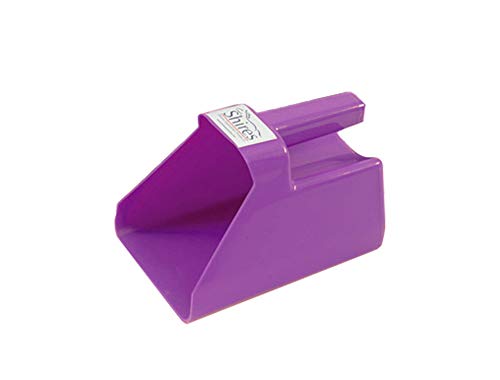 5. Shires Plastic Large Feed Scoop, 2 Quart, Purple |
| Check price on Amazon |
📅 Last updated:
Disclosure: As an Amazon Associate, I earn from qualifying purchases.

A feed scoop is one of the smallest tools in the feed room, and one of the most used. Every morning and evening, the same scoop dips into the grain bin, carries a ration across the aisle, and tips it into the bucket. When the scoop holds a known amount, every horse gets the ration the feeding plan calls for. When the scoop is a random container with no markings, portions drift from one feeding to the next.
Horse feed scoops differ from kitchen scoops. Grain is heavy, dusty, and abrasive, so a scoop that works for flour can crack under a bin full of pellets, and a short handle leaves knuckles scraping a deep barrel. The five scoops below are all plastic models made for barn work, from a one-pound measuring scoop to three quarts of grain. This guide covers plastic scoops only. Metal scoops have their place where rodents chew plastic, but plastic is lighter, quieter, and easier to read.
📋 Table of Contents
- How to Choose a Horse Feed Scoop
- 1. Little Giant Plastic Enclosed Feed Scoop, 3 Quart
- 2. Jeffers Super Scoop, 3 Quart, Red
- 3. Tough 1 Feed Scoop with Measurements, Light Blue
- 4. Whirley SureScoop Feed Measuring Scoop
- 5. Shires Plastic Large Feed Scoop, 2 Quart, Purple
- Comparison Table
- FAQ
- Conclusion
How to Choose a Horse Feed Scoop
Capacity comes first. A three-quart scoop carries a full ration for many horses in one pass. A two-quart scoop suits smaller rations, ponies, and horses on restricted grain. A one-pound measuring scoop is a portioning tool for supplements and horses on veterinary diets, not a ration scoop.
Material decides how long the scoop lasts. Heavy-duty polyethylene and polypropylene are the barn standards because they resist cracking in cold weather and flex instead of shattering when dropped on concrete. Food-grade plastic matters for a scoop that lives in the bin, and thicker walls hold up better against scraping at the bottom of a metal bin.
Markings turn a scoop into a measuring tool. Molded-in marks in quarts and liters let anyone on the yard serve the same portion. Some scoops go further, with markings calibrated for pellets, sweet feed, and oats. Pounds measure weight, quarts measure volume, and the two are not interchangeable.
Handle design affects comfort more than most buyers expect. An enclosed handle protects the knuckles from the bin walls and grips well with gloved hands in winter. A loop handle hangs on a hook beside the bin, a longer handle reaches into deep barrels, and a rubberized grip stays secure when hands are wet. Over dozens of scoops a day, a comfortable handle prevents a sore wrist.
Shape and storage matter in a crowded feed room. A flat bottom lets the scoop stand upright on a shelf without tipping and spilling grain. An enclosed or hooded top keeps pellets from bouncing out on the way down the aisle. Stackable scoops nest together when each grain bin gets its own scoop to prevent cross-contamination, and a scoop hung beside its bin stays clean and dry.
Cleaning is simple but worth doing. Plastic scoops rinse clean with warm water and mild soap, and many are dishwasher safe. Sweet feed leaves a sticky residue, so a quick rinse after sticky rations keeps the scoop accurate and hygienic. Check it for cracks and faded markings; a cracked scoop can shed plastic into the feed.
1. Little Giant Plastic Enclosed Feed Scoop, 3 Quart
See also: Best Automatic Transmission Floor Shifter: Ratchet, Gated and Detent Shifters Compared • Best Automatic Floor Shifter for Truck: Tall, Tough Picks for Pickups and Bench Seats
The Little Giant enclosed scoop is the standard other barn scoops are judged against. Three quarts is the classic ration size, large enough for a full grain feeding in one pass. The enclosed top keeps pellets inside while the scoop is carried across the aisle, and the flat bottom lets it stand upright on a shelf or on the bin lid.
Heavy-duty polyethylene gives the scoop the toughness a feed room demands, and the food-grade plastic matters when the scoop lives inside the grain bin. Built-in marks show quarts and liters, so portions stay consistent even when different people handle the feeding. The enclosed handle protects the knuckles and fits gloved hands, and the scoop stacks neatly with others of the same design.
This is the scoop to choose when one tool must handle the daily ration for most horses on the yard. It suits grain, pellets, sweet feed, and supplements, and the enclosed top is especially useful for pellets that bounce and roll.
Specs
- Capacity: 3 quarts (96 fluid ounces)
- Material: Heavy-duty, food-grade polyethylene plastic
- Markings: Built-in graduation marks in quarts and liters
- Design: Enclosed top, flat bottom, enclosed handle, stackable
- Dishwasher safe: Yes
- Model number: 150439
- Target audience: Horses and livestock
2. Jeffers Super Scoop, 3 Quart, Red
- Capacity: 3 quarts
- Material: High-impact plastic
- Dimensions: 6 x 6 x 8.5 inches
- Weight: 8.8 ounces
The Jeffers Super Scoop brings the same three-quart capacity as the classic enclosed scoop in a lighter, open design with an ergonomic handle. At under nine ounces, it is easy to lift and pour even when the feed is dense, and the high-impact plastic resists cracking through daily use in the barn. The open bowl loads quickly and releases grain smoothly, which suits a fast feeding routine.
The listing describes the scoop as suitable for horses and livestock, and the three-quart size matches a full ration for many horses. A 2.5-quart size exists for yards that want a slightly smaller option. The bright red color is easy to spot on a crowded shelf, and the ergonomic handle gives a secure grip during repetitive scooping.
This scoop fits yards that prefer an open, lightweight scoop over an enclosed design. It is a good match for grain, pellets, and sweet feed, and the simple shape rinses clean easily after sticky rations.
3. Tough 1 Feed Scoop with Measurements, Light Blue
- Capacity: 2 quarts
- Material: Clear, high-quality plastic
- Markings: Pounds on one side, grams and kilograms on the other; calibrated for pellets, sweet feed, and oats
- Color: Light blue
The Tough 1 measuring scoop solves a different problem from the ration scoops above: it measures feed by type, not just by volume. One side of the scoop lists pounds, while the other shows grams and kilograms, and the markings are tailored for pellets, sweet feed, and oats. That matters because a quart of oats weighs less than a quart of pellets.
The two-quart capacity suits smaller rations, ponies, and horses on restricted grain, and it also works well for measuring supplements added to a larger ration. The transparent light blue plastic makes the feed level easy to see, and the markings will not wear off with abrasive use. The enclosed handle protects the knuckles, and the scoop is dishwasher safe.
This is the scoop to choose when accuracy matters more than capacity. It is the right tool for a horse on a managed diet and for a yard that feeds several different grains. For a full three-quart ration it takes more than one scoop, but for measured feeding it is the most precise plastic scoop in this guide.
4. Whirley SureScoop Feed Measuring Scoop
- Markings: Graduated in 1/4, 1/2, 3/4, and 1 pound increments
- Material: Durable plastic
- Made in: United States
- Marking style: Color-coded calibration lines
The Whirley SureScoop is a pound-calibrated measuring scoop built for horses, goats, and sheep on measured rations. Instead of quarts or liters, its graduated markings read in quarter-pound steps up to one pound, which is the unit that feeding plans and veterinary diets actually use. That makes it the most direct tool for following a ration written in pounds.
The scoop is made in the United States from durable plastic, and the markings are color-coded so the right line is easy to find in a dim feed room. The shape is calibrated to the markings, so a pound line means a pound of feed rather than an estimate. It is a compact tool, meant for measuring rather than hauling bulk grain, and it earns its place beside the larger ration scoops.
This scoop belongs in a feed room where any horse is on a strict diet, recovering condition, or holding weight for competition. It is also useful for measuring supplements in pound fractions and for checking that a volume scoop is still serving the amount it should.
5. Shires Plastic Large Feed Scoop, 2 Quart, Purple
- Best for: Ponies, reduced rations, and dedicated per-bin scoops Suits: Horse feed and pet kibble Check on Amazon
- Capacity: 2 quarts
- Material: Heavy-duty plastic
- Design: Deep bowl, classic loop handle
- Color: Purple
Ponies, reduced rations, and dedicated per-bin scoops Suits: Horse feed and pet kibble Check on Amazon
The Shires large feed scoop is a straightforward, deep-bowled two-quart scoop between a full ration scoop and a measuring scoop. Two quarts is the right size for many ponies, for horses on reduced grain, and for the second scoop in a feeding routine where a larger scoop handles the bulk ration and a smaller one handles the top-up or the supplement. The deep bowl holds grain securely and prevents it from blowing out in windy outdoor feeding areas.
A classic loop handle makes the scoop easy to hang on a hook beside the feed bin, and the loop is large enough to use with bulky mittens in winter. The heavy-duty plastic stands up to daily scraping, and the simple shape has no corners where damp feed can lodge. Many yards buy several and dedicate one to each grain bin, which prevents cross-contamination between feeds.
This is the scoop to choose when the yard needs a reliable second scoop, a dedicated scoop for a particular bin, or a well-sized scoop for smaller horses. It does not carry the detailed markings of the measuring scoops, so it is best paired with a known ration.
Comparison Table
| Scoop | Capacity | Material | Markings | Best For |
|---|---|---|---|---|
| Little Giant Enclosed, 3 Quart | 3 quarts | Heavy-duty polyethylene | Quarts and liters | Full daily rations |
| Jeffers Super Scoop, 3 Quart | 3 quarts | High-impact plastic | None listed | Fast, lightweight scooping |
| Tough 1 with Measurements | 2 quarts | Clear plastic | Pounds, grams, kilograms by feed type | Accurate measured rations |
| Whirley SureScoop | To 1 pound | Durable plastic | Quarter-pound steps | Strict diets and supplements |
| Shires Large, 2 Quart | 2 quarts | Heavy-duty plastic | None listed | Ponies and per-bin scoops |
FAQ
What size feed scoop suits one horse on a standard grain ration?
A three-quart scoop covers a full grain ration for many horses in a single pass, while a two-quart scoop suits ponies and horses on reduced grain. The right size holds the ration the feeding plan calls for without a partial second scoop, since partial scoops are where portions drift.
Are plastic feed scoops durable enough for daily barn use?
Heavy-duty polyethylene and polypropylene scoops are made for daily barn use and resist cracking in cold weather, unlike thin kitchen plastics. Check the scoop now and then for cracks and worn edges, and replace any scoop that is cracked or has unreadable markings, since a damaged scoop can shed plastic into the feed.
Do the markings on a feed scoop measure weight or volume?
It depends on the scoop. Markings in quarts and liters measure volume, while markings in pounds and grams measure weight, and the two are not interchangeable because different feeds weigh different amounts at the same volume. A scoop marked for pellets, sweet feed, and oats accounts for that difference.
How should horse feed scoops be cleaned and stored between feedings?
Rinse the scoop with warm water and mild soap after sticky rations such as sweet feed or molasses-coated grain, and let it dry before it goes back in the bin. Many plastic scoops are dishwasher safe. Store each scoop hanging beside its own bin or standing upright on a shelf.
Conclusion
A good feed scoop is a measuring tool before it is a container, and the best choice depends on how the yard feeds. The Little Giant enclosed three-quart scoop is the reliable default for full rations, the Jeffers Super Scoop offers the same capacity in a lighter open design, and the Shires two-quart scoop covers ponies and per-bin use. When accuracy matters, the Tough 1 measuring scoop reads portions by feed type, and the Whirley SureScoop measures by the pound for strict diets. Together, a ration scoop and a measuring scoop cover nearly every job in the feed room. Choose the size that matches the ration and replace a worn scoop before it starts guessing.