📅 Last updated:
📋 Table of Contents
Quick answer: Our top pick in 2026 is the Basic open litter pan — our #1 rated choice. See the full ranked comparison, alternatives and buying advice below.
The Short Answer
It depends—but the one condition is that your cat must use it consistently. Cats do not need covered litter boxes for health or happiness, and many are perfectly content with an open pan. A covered box can contain some litter and reduce the visual impact of waste, but it can also trap odors, feel cramped, and make a nervous cat avoid the litter area altogether.
For most households, an uncovered box is the safer starting point. Consider a covered model if your cat already shows a preference for privacy, your home needs better litter containment, and you can choose a box large enough for comfortable movement. The goal is not to make the box look tidier for people; it is to create a bathroom your cat will reliably use.
As an Amazon Associate we earn from qualifying purchases at no extra cost to you.


What You Actually Get
See also: Most Trusted Cat Litter Brands in 2026 and What Each Does Best • How to Introduce a Carrier to Cats (2026): Step-by-Step
A covered litter box is usually a plastic pan with a removable hood. Some models have a swinging or flexible entrance door, while others leave the front open. The hood may include a handle, clips, ventilation openings, or a filter compartment intended to reduce odor. These features vary widely, so “covered” does not automatically mean odor-proof or mess-proof.
The biggest practical benefit is containment. A hood can help keep urine spray, loose litter, and feces from being visible and may reduce the distance litter travels when a cat exits. It can also make a box more discreet in a small apartment, bathroom, laundry room, or bedroom. However, the hood does not eliminate cleaning. Waste still needs to be scooped at least once daily, and the entire box should be washed regularly with unscented soap and water.
Size matters more than the presence of a lid. A useful rule is to choose a box approximately 1.5 times your cat’s body length, measured from the nose to the base of the tail. Your cat should be able to turn around, squat without touching the sides, and dig without repeatedly hitting the hood. A box listed as “large” can still be too small for a long-bodied cat.
Entry height matters, too. A tall step-over entrance may be difficult for kittens, senior cats, or cats with arthritis. A swinging door can be especially intimidating if it is heavy, noisy, or difficult to push. If you are testing a covered box, remove the door first and allow your cat to investigate the hood before expecting regular use.
Pros
- Better visual privacy: The hood hides the litter and waste from view, which can be useful in shared living spaces.
- More litter containment: Enclosed sides and a roof can reduce scatter, particularly for cats that dig vigorously or kick litter toward the wall.
- Some urine-spray protection: A taller enclosure may protect nearby walls and floors from cats that urinate while standing or back up to the edge.
- Less disruptive appearance: A covered box can blend more easily into a laundry room or bathroom than an open pan.
- Potentially less frequent sweeping: A hood may reduce the amount of litter that escapes directly from the top, although a litter mat is still worthwhile.
- Useful for cautious cats: Some cats prefer a more sheltered bathroom, especially when the box is placed in a quiet, low-traffic location.
Cons
- Odors can build up inside: A hood contains smells for people but also concentrates them in the cat’s small bathroom. A dirty covered box may become unpleasant faster than an open one.
- Some cats feel trapped: A cat may reject a box if the entrance is narrow, the door swings shut, or another pet can block the exit.
- Cleaning can be less convenient: You may need to remove the hood to scoop thoroughly, check the corners, or wash the pan.
- Filters are not magic: Charcoal filters may help with some odor, but they require replacement and cannot compensate for infrequent scooping.
- Many are too small: Compact designs save floor space but can force a cat to crouch, twist, or step in waste while turning around.
- Doors can create resistance: A timid cat may dislike pushing through a flap. A broken or noisy door can also discourage use.
- They can hide warning signs: A covered box makes it harder to notice changes in urine volume, stool, or blood that could signal a health problem.
Who Should Buy It
A covered litter box may be a good fit for a cat that already uses enclosed spaces confidently and has no trouble entering, turning, digging, and exiting. It is also worth considering when litter scatter or urine spray is your main problem and you have enough room for a genuinely spacious model.
For a budget-conscious buyer, the IRIS USA Large Front Door Cat Litter Box is listed at about $25.49. Its walk-in style avoids a swinging door, which may be easier for cats that dislike flaps. Before buying, check the assembled dimensions against your cat’s size and measure the space where it will sit.
The Amazon Basics No-Mess Hooded Enclosed Cat Litter Box is listed at about $37.87 and measures 21 by 16 by 15 inches. It includes a swinging door and an odor-control feature. That footprint may work for a small or average-sized cat, but larger cats should be measured carefully; a 21-inch length is not generous for every adult cat.
Whichever model you choose, place it somewhere quiet but not isolated, with an unobstructed exit. Keep it away from food and water, noisy appliances, and locations where a dog or another cat can ambush the user.
Who Should Skip It
Skip a covered box if your cat has ever eliminated beside an enclosed pan, refuses doors or flaps, or becomes anxious when another animal approaches. Cats with arthritis, limited mobility, or poor balance may need a low-entry open box. Kittens may also do better with a simple pan until they are reliably using the litter area.
Multiple-cat homes require extra caution. The standard recommendation is one box per cat, plus one extra, placed in separate locations. A single covered box in a hallway is not an adequate solution for several cats. Even friendly cats may avoid a box if they cannot see an approaching animal or if another cat controls the only exit.
Cheaper Alternatives
| Option | Cost | Trade-off |
|---|---|---|
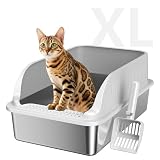
| Basic open litter pan | $8–$20 | Cheapest and easiest to clean, but offers less privacy and litter containment. |
| Large storage tote with a low entry cutout | $10–$25 | Can provide high sides for scatter control, but requires careful cutting and smooth edge finishing. |
| Disposable cardboard litter box | $10–$25 for a multipack | Lightweight and convenient for travel or temporary use, but less durable and not suitable for repeated wet cleaning. |
| Open pan plus high-sided litter mat | $15–$35 | Improves litter control without a hood, but does not conceal waste or contain standing urine spray. |
| Covered box with the door removed | $25–$40 | Offers some side and top containment, but retains more odor than an open pan and still needs frequent cleaning. |
FAQ
Are covered litter boxes better for odor?
Not automatically. A cover can contain odor briefly, but it also reduces airflow and concentrates smells inside the box. Odor control depends more on the litter, box size, daily scooping, and the cat’s diet and health. If the box smells strongly soon after cleaning, increase scooping frequency, replace saturated litter, wash the pan, and consider whether your cat is producing unusually large amounts of urine.
Do cats prefer open or covered litter boxes?
There is no universal preference. Some cats like the privacy of a hood, while others want a wide view and multiple escape routes. When introducing a covered box, leave the door off or remove the hood initially. If your cat uses the box comfortably, add the hood later and watch for changes in digging, hesitation, accidents, or attempts to eliminate elsewhere.
How often should you clean a covered litter box?
Scoop solid waste and clumps at least once a day; twice daily is better for many cats. Empty, wash, and dry the box on a regular schedule based on the litter and number of cats, often every one to four weeks. Replace filters according to the manufacturer’s directions. Avoid scented cleaners, bleach mixtures, and strong fragrances that can repel cats.
Can a covered litter box cause accidents?
It can contribute to accidents if the cat dislikes the confined space, cannot enter easily, or feels cornered by another pet. Medical problems such as urinary pain can also cause a cat to avoid the box, whether it is covered or open. If your cat suddenly stops using the box, strains, cries, urinates repeatedly, or produces little urine, contact a veterinarian promptly.
The bottom line in 2026 is simple: buy a covered litter box for a specific containment or privacy problem, not because every cat needs one. Choose generous dimensions, make entry easy, keep the door removable when possible, and let your cat’s behavior decide whether the design stays.
Ready to decide? Our #1 pick for 2026 is the Basic open litter pan.
Live price & availability on Amazon.