📅 Last updated:
The best dog door mat for muddy paws is a large, low-pile microfiber or chenille “noodle” mat with a rubber or latex-free non-slip backing, sized so your dog takes at least two full strides on it before reaching bare floor. Coir scrapers and thin cotton rugs look tidy, but they cannot hold enough water to stop the paw-print trail on a wet day. Below is how to pick the right material, size and backing for your entryway, plus what wears out first and how to keep a mat working for years.
📋 Table of Contents
Why Most Door Mats Fail Against Muddy Paws
A standard welcome mat is built to scrape shoe soles. Dog paws work differently: the pads are soft, the fur between the toes acts like a sponge, and a dog walks across the mat in two or three quick steps instead of wiping deliberately. A mat that only scrapes leaves the water and fine silt sitting in the paw fur, and it all ends up on your floor three steps later.

Soggy Doggy Absorbent Dog Door Mat, Gray, 36"x60"
Included for 'Best Dog Door Mat for Muddy Paws: Sizing, Materials and Picks by Entryway' because the listing specifies Gray and 36"x60", details this guide uses to compare options.
View on Amazon
OLANLY Dog Door Mat for Muddy Paws 30x20, Super Absorbent Chenille Mud Mat
Included for 'Best Dog Door Mat for Muddy Paws: Sizing, Materials and Picks by Entryway' because the listing specifies Super Absorbent Chenille Mud Mat, details this guide uses to compare options.
View on AmazonAn absorbent dog door mat solves this with long, dense fibers that wick moisture away from the paw on contact. The two features that matter most are how much water the fibers can hold and how much surface the dog actually walks across. Everything else, including color, pattern and thickness for its own sake, is secondary.
Material Comparison: What Holds the Most Water
See also: 7 Best Refillable Frozen Dog Treat Toys for Long-Lasting Licks • How to Remove Litter Box Odor Buildup (2026): Step-by-Step
The table below compares the common mat materials using typical figures for a 24 x 36 inch mat. Water-holding numbers are approximate and vary with pile density, but the ranking between material types is consistent.
| Material | Typical pile height | Approx. water held (24 x 36 in) | Dry time indoors | Machine washable | Best use |
|---|---|---|---|---|---|
| Microfiber chenille “noodle” | 0.5–0.8 in | 1.5–2.5 cups | 6–12 hours | Yes, cold cycle | Main indoor entry for muddy paws |
| Microfiber flat-weave | 0.2–0.3 in | 0.75–1.25 cups | 3–6 hours | Yes | Low-clearance doors, crate floors |
| Cotton loop rug | 0.25–0.4 in | 0.75–1 cup | 12–24 hours | Yes, shrinks | Light dust, dry climates |
| Polypropylene indoor/outdoor | 0.25 in | Under 0.5 cup | 1–2 hours | Hose off | Outdoor first-stage scraper |
| Coir (coconut fiber) | 0.6–1 in | Minimal | Fast | No | Outside the door only, scraping clumps |
The takeaway: microfiber chenille holds roughly three to five times more water than a cotton or polypropylene mat of the same size. That is why the “noodle” style has become the default washable dog mat for wet climates.
Sizing: The Two-Stride Rule
Size is where most people go wrong. A 20 x 30 inch mat is fine for a cat or a toy breed, but a Labrador will step over most of it. The goal is for each paw to land on the mat at least twice. You can estimate this with a simple calculation.
Worked example
- Measure your dog’s walking stride: the distance from where a front paw lands to where the same paw lands next. Medium dogs average 14–18 inches; large dogs 20–26 inches.
- Multiply that stride by 2 to get the minimum mat length in the direction your dog walks.
- A 22 inch stride x 2 = 44 inches. That points to a mat at least 36 x 48 inches, or a runner of 24 x 60 inches if your hallway is narrow.
| Dog size | Typical weight | Stride | Minimum mat size |
|---|---|---|---|
| Toy / small | Under 20 lb | 8–12 in | 20 x 30 in |
| Medium | 20–50 lb | 14–18 in | 24 x 36 in |
| Large | 50–90 lb | 20–26 in | 36 x 48 in or 24 x 60 in runner |
| Giant | 90 lb and up | 26–32 in | Two mats end to end, or a 30 x 72 in runner |
Picks by Situation
Main front or back door, rainy climate
Choose a thick microfiber chenille mat in the largest size that fits the entry, with a rubberized dot or full-coverage backing. Soggy Doggy is a well-known brand built around exactly this style, and many generic chenille mats use the same construction. Look for a dense pile where the fingers sink in rather than spreading the strands apart easily, since sparse pile holds far less water.
Mudroom or garage entry
Use a two-stage setup: a coir or polypropylene scraper outside to knock off clumps, then an indoor door mat for dogs made of microfiber just inside. The scraper takes the grit that would otherwise grind the microfiber and shorten its life.
Low-clearance doors
If your door sweeps less than half an inch above the floor, a thick noodle mat will jam it. Pick a flat-weave microfiber mat around 0.25 inches thick, and accept that you will need to wash it more often because it saturates sooner.
Hard floors and senior dogs
Backing matters more than pile here. A mat that slides on tile or laminate is a fall risk for older dogs with weak hips. Choose a mat with full-coverage rubber or TPR backing, and check that the edges lie flat so nobody catches a toe.
Tight budget
Two cheaper mats you can rotate often beat one premium mat that stays damp, since a wet mat stops absorbing.
Backing Types and Floor Safety
- Rubber dot backing: good grip, flexible, and dries quickly. The most common choice on washable mats.
- Full TPR or rubber sheet: best grip on smooth floors and stops water soaking through, but can trap moisture against wood floors if left down for days while wet. Lift and air the mat occasionally.
- Latex backing: grips well when new but tends to crack and flake after 20–40 hot washes. Avoid high dryer heat.
- No backing: only suitable on carpet or with a separate rug gripper underneath.
Ownership Realities: What Wears First
Even a good washable dog mat has a predictable life cycle. Knowing it helps you wash it correctly and replace it at the right time.
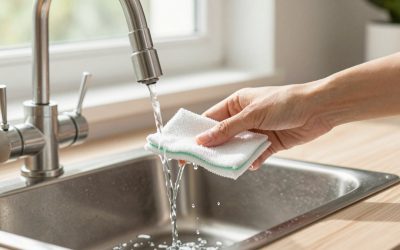
- Backing goes first. Hot water and high-heat drying break down rubber and latex. Wash cold, tumble dry low or air dry.
- Fabric softener kills absorbency. Softener coats microfiber and stops it wicking water. Skip it entirely, along with dryer sheets.
- Grit flattens the pile. Shake the mat outside every few days between washes. Embedded sand acts like sandpaper on the fibers.
- Wash with similar items only. Microfiber grabs lint from cotton towels, which clogs the fibers. Wash mats alone or with other microfiber.
- Odor means it is staying wet. If the mat smells sour, it is not drying fully between uses. Rotate two mats so each gets a full day to dry.
With weekly washing in a rainy season, most chenille mats last one to two years before the pile mats down and stops absorbing well.
A Quick Paw-Wiping Routine That Helps Any Mat
A mat does most of the work, but on very muddy days a 30-second routine finishes the job. Keep a microfiber towel on a hook by the door, ask your dog to sit on the mat, and wipe each paw from the top down, then squeeze the fur between the toes. Trimming the fur between paw pads short also reduces how much mud your dog carries inside. If you notice redness, cracking or limping after walks, have a vet take a look, since those signs are not something a mat can fix.
Frequently Asked Questions
How often should I wash a dog door mat?
Weekly during wet months, every two to three weeks in dry weather. Shake it out every few days in between.
Can I put a dog mat in the dryer?
Yes on low heat for most microfiber mats, but air drying extends the life of the backing noticeably.
Is one big mat better than two small ones?
One continuous mat is better for absorbing, since small mats leave gaps. Owning a second identical mat for rotation is the ideal setup.