- Top Pick: Outward Hound Fun Feeder Slo Bowl – Large 4‑Cup Capacity, Slow Feeding, Medium to Large Dogs, Non‑Slip, Turquoise, Drop Pattern
- Best Value: Outward Hound Fun Feeder Slo Bowl – Large 4‑Cup Capacity, Slow Feeding, Medium to Large Dogs, Non‑Slip, Blue, Notch Pattern
- Premium Choice: Outward Hound Fun Feeder Slo Bowl – Large 4‑Cup Capacity, Slow Feeding, Medium to Large Dogs, Non‑Slip, Purple, Flower Pattern
📅 Last updated:
📋 Table of Contents
The Short Answer
For most large dogs, choose a slow feeder with an 11- to 14-inch outside diameter or width, a 2- to 3-inch rim height, and a capacity that holds your dog’s normal meal without filling the maze to the top. A 4-cup slow feeder is a common starting point for medium-to-large dogs, but capacity alone is not enough: the bowl’s footprint, maze depth, and your dog’s muzzle size matter just as much.
As a practical rule, a dog weighing 50 to 75 pounds usually does well with an 11- to 12-inch feeder. Dogs over 75 pounds, broad-faced breeds, and dogs eating more than 2 cups per meal often need a 12- to 14-inch model with wider channels. Giant breeds may need an extra-large slow feeder, a raised feeder stand with a wide bowl opening, or two smaller servings in a large feeder.
As an Amazon Associate we earn from qualifying purchases at no extra cost to you.


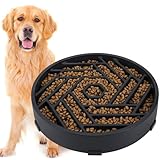
For example, large 4-cup maze bowls such as the Outward Hound Fun Feeder Slo Bowl styles are generally sized for medium and large dogs. These models commonly sell from about $9 to $13, while larger generic non-slip maze bowls are often around $12 to $20. In 2026, the best value is usually a sturdy, dishwasher-safe bowl that fits both your dog’s meal portion and the place where you feed them.
Standard Sizes
See also: How to Remove Litter Box Odor Buildup (2026): Step-by-Step • How to Fix a Jammed Automatic Feeder (2026): Step-by-Step
Slow-feeder sizing is usually described by capacity, but use the outside footprint and internal eating area to make the final choice. The measurements below are practical standard ranges for round, square, and flower-style maze bowls. Individual designs vary, especially around the rim and non-slip base.
| Slow Feeder Size | Typical Outside Dimensions | Typical Capacity | Best For | Dog Weight Guide |
|---|---|---|---|---|
| Small | 7 to 9 in. wide x 1.5 to 2 in. high 17.8 to 22.9 cm wide x 3.8 to 5.1 cm high |
1 to 2 cups | Small meals, puppies, compact snouts | Up to 25 lb. |
| Medium | 9 to 11 in. wide x 2 to 2.5 in. high 22.9 to 27.9 cm wide x 5.1 to 6.4 cm high |
2 to 3 cups | Moderate portions and medium dogs | 25 to 50 lb. |
| Large | 11 to 12.5 in. wide x 2.25 to 3 in. high 27.9 to 31.8 cm wide x 5.7 to 7.6 cm high |
3 to 4 cups | Most large dogs and standard daily meals | 50 to 85 lb. |
| Extra Large | 12.5 to 15 in. wide x 2.5 to 3.5 in. high 31.8 to 38.1 cm wide x 6.4 to 8.9 cm high |
4 to 6 cups | Giant breeds, wide muzzles, larger portions | 85 lb. and up |
A large dog does not automatically need the deepest maze. Deep, narrow grooves can frustrate a Labrador, German Shepherd, Golden Retriever, Boxer, or pit bull-type dog with a broad muzzle. Look for channels at least 1 to 1.5 inches wide for most large breeds. Dogs with longer, narrower faces, such as Greyhounds and Collies, can often manage more detailed maze patterns, provided the bowl is wide enough for comfortable access.
Also consider meal volume. A 4-cup bowl should not be treated as a 4-cup serving bowl in every pattern. Kibble sits differently around ridges, and wet food may spread across the maze. For easy cleanup and less spilling, keep the meal at roughly two-thirds to three-quarters of the bowl’s stated capacity. If your dog eats 3.5 to 4 cups at one sitting, move up to an extra-large feeder or split the food between two courses.
How to Measure Your Space
- Measure the feeding spot’s usable width and depth. Use a tape measure to find the clear floor area, not the entire room. Include walls, cabinet kick plates, furniture legs, and door swings. For an 11-inch feeder, allow at least a 14-inch by 14-inch clear area.
- Add a spill margin. Large dogs often push a bowl while eating, even when it has a rubberized base. Add 2 to 3 inches of clearance around the bowl, or use a feeding mat that extends at least 2 inches beyond every edge.
- Measure the dog’s muzzle width. When your dog is relaxed, measure across the widest part of the muzzle, usually just behind the nose. Choose maze lanes that are comfortably wider than the front of the muzzle. For a 3-inch-wide muzzle, favor channels around 1.25 inches wide rather than tight, intricate grooves.
- Check the bowl height against your dog’s eating posture. A standard floor bowl is suitable for many healthy dogs. If you use a raised stand, measure from the floor to the top of the bowl rim. The feeder should sit securely in the stand without rocking or leaving a gap that traps crumbs.
- Confirm cabinet and dishwasher clearance. Before buying a 12- to 14-inch feeder, check the interior width of your dishwasher’s lower rack and the storage cabinet. A wide square bowl can take more room than a round bowl of the same stated width.
By Room or Use Case
Kitchen Feeding Station
For a kitchen corner, an 11- to 12-inch large slow feeder is usually the most manageable choice. Place it on a washable mat measuring about 16 by 20 inches or larger. This gives a large dog room to eat without pushing kibble under cabinets. Choose a low-profile bowl under 3 inches high if the feeding area sits near a walkway; tall rims can be kicked or stepped on in a busy kitchen.
Laundry Room or Mudroom
These spaces are useful for messy eaters because hard floors are easy to clean, but they are often narrow. Measure carefully between appliances or benches. A round 11-inch bowl needs less corner clearance than a 12-inch square or rectangular puzzle feeder. Keep the bowl away from dryer vents, cleaning supplies, and doors. If space is limited, a 3-cup large bowl may work better than an oversized 6-cup design, even for a 70-pound dog.
Open-Plan Living Area
If the feeder will stay visible in a living room or dining area, prioritize a stable base and a mat that coordinates with the room while still being functional. A feeder with a non-slip ring is helpful, but it should not replace a mat on slick hardwood or tile. Plan for a mat at least 18 by 24 inches for dogs above 70 pounds. This size catches scattered kibble and keeps the bowl from sliding into furniture.
Crate, Pen, or Apartment Setup
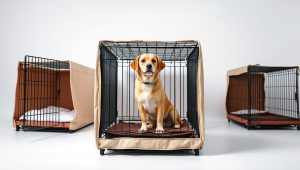
Do not choose a large slow feeder solely because your dog is large if the feeder must fit in a crate or exercise pen. Measure the interior floor after bedding is in place. A 12-inch bowl can consume a surprising amount of usable room in a 36-inch crate. For supervised feeding in a compact area, a 9- to 11-inch slow feeder and a split meal may be safer and more practical than one oversized bowl.
Travel, Camping, and Temporary Feeding
For travel, select a rigid feeder that is no wider than the storage space available, commonly 10 to 12 inches for a large dog’s travel kit. Silicone slow feeders fold down, but check that the sides stay firm enough for a strong eater. A bowl with a broad, weighted base is generally better for hotel rooms and RVs, where flooring may be slick and space is tight.
Common Sizing Mistakes
Buying by dog weight alone: Two 70-pound dogs can have very different muzzle shapes and meal portions. Use weight as a starting point, then compare the dog’s muzzle width and actual serving size.
Filling the bowl to its advertised capacity: A 4-cup capacity is often the bowl’s maximum volume, not its ideal daily fill line. Overfilling lets food bridge across the maze, reducing the slow-feeding effect and increasing spills.
Choosing a maze that is too intricate: A feeder should slow eating, not make meals inaccessible. If your dog paws, flips the bowl, whines persistently, or walks away hungry, try a wider, shallower pattern.
Ignoring the outside footprint: The eating area may look modest online, while the rim and anti-slip base add 1 to 2 inches overall. Always size the feeding station around the listed exterior measurement.
Using a raised stand that does not fit the bowl: A slow feeder with a tapered base may wobble in a stand designed for a standard stainless-steel bowl. Measure both the stand opening and the bowl’s widest base point.
FAQ
What size slow feeder for a 70-pound dog?
Most 70-pound dogs need a large slow feeder measuring about 11 to 12.5 inches across, with a 3- to 4-cup capacity. If the dog has a broad muzzle or eats more than 3 cups per meal, choose a 12.5- to 14-inch extra-large model with wider maze lanes.
Is a 4-cup slow feeder large enough for a big dog?
It can be. A 4-cup feeder is suitable for many dogs between 50 and 85 pounds when their meal is 3 cups or less. For a dog receiving 4 cups in one meal, choose a larger bowl or divide the portion so food does not sit above the maze ridges.
Should a large dog use a raised slow feeder?
Not necessarily. Many large dogs eat comfortably from a floor-level slow feeder. A raised setup can be useful when recommended by your veterinarian or when it helps an individual dog maintain a comfortable posture. The stand must hold the feeder securely and should not let the bowl tip or rotate.
How wide should slow-feeder channels be for a large dog?
For most large dogs, look for channels approximately 1 to 1.5 inches wide. Wide-faced breeds often do best toward the upper end of that range. Narrow channels may slow food intake, but they can be too difficult for a broad muzzle and may encourage bowl flipping instead of calm eating.
Ready to decide? Our #1 pick for 2026 is the Small.
Live price & availability on Amazon.