📅 Last updated:
Litter box odor buildup is rarely caused by one missed scoop. It usually develops when urine residue dries on plastic, litter dust settles into seams, and the box or surrounding floor absorbs odor over time. Covering the smell with a heavily scented deodorizer may make the room more tolerable for a day, but it does not remove the source—and some cats dislike strong fragrances enough to avoid the box altogether.
A proper reset removes the residue that keeps reactivating with humidity and warmth. In 2026, the basic method is still simple: empty the box fully, wash it with mild soap, treat lingering odor safely, dry every surface, and restart with fresh litter. Plan on about 30 to 45 minutes of hands-on work, plus drying time.
As an Amazon Associate we earn from qualifying purchases at no extra cost to you.

📋 Table of Contents
Quick answer: Our top pick in 2026 is the Unscented dish soap — our #1 rated choice. See the full ranked comparison, alternatives and buying advice below.
What You Need
| Item | Why | Optional? |
|---|---|---|
| Unscented dish soap | Breaks down residue without leaving a harsh perfume that may deter cats. | No |
| Warm water | Helps loosen dried litter dust and urine film. | No |
| White vinegar | Useful for a light deodorizing rinse on plastic boxes and nearby hard floors. | Yes |
| Baking soda | Can help absorb residual odor after the box is dry. | Yes |
| Nonabrasive scrub brush or sponge | Reaches corners, rims, handles, and textured plastic without deep scratches. | No |
| Paper towels or clean microfiber cloths | Drying the box thoroughly prevents dampness and odor from returning quickly. | No |
| Trash bags and disposable gloves | Make litter removal and cleanup more sanitary. | No |
| Litter box deodorizer | Provides extra odor control between full cleanings when used sparingly. | Yes |
| Replacement litter box | Needed if scratched plastic or seams retain odor after deep cleaning. | Only if needed |
Step-by-Step
See also: How to Fix a Jammed Automatic Feeder (2026): Step-by-Step • How to Stop Water Fountain Slime (2026): Step-by-Step
-
Move your cat to a comfortable temporary area — 2 minutes
Before cleaning, make sure your cat has access to water and a quiet room away from the work area. If you have only one box, a large disposable pan or a second clean box can serve as a temporary bathroom during the cleaning process. Avoid leaving your cat without a litter option for several hours, especially in a multi-cat household.
-
Empty all litter and remove loose debris — 5 to 10 minutes
Put on gloves and scoop the entire contents of the box into a sturdy trash bag. Do not save old litter after a deep cleaning; even litter that looks clean can carry odor-causing residue. Tap the empty box over the bag to dislodge litter trapped beneath the rim, inside the pour spout, or in molded corners.
If you use a litter mat, shake it outdoors or vacuum it with a hose attachment. Wipe or vacuum the floor around the box, including the wall edge behind it. A 24-by-36-inch mat can trap a surprising amount of damp litter dust, which may be contributing to the smell in the room.
-
Wash the box with warm water and mild soap — 10 minutes
Take the box to a bathtub, utility sink, or outdoor hose area. Rinse it with warm—not hot—water. Very hot water can warp thin plastic pans. Add a small amount of unscented dish soap and scrub the inside, outside, rim, handles, bottom, and any detachable hood or grate.
Use a nonabrasive sponge or soft brush. Skip steel wool, scouring powder, and rough scrub pads. They create tiny scratches that hold urine residue and make future odor buildup harder to remove. Pay special attention to the upper inside walls, where cats may spray or urine can splash above the litter line.
-
Deodorize lingering odor safely — 5 to 15 minutes
If the box still smells after washing, apply a simple vinegar solution: mix equal parts white vinegar and water in a spray bottle or bowl. Coat the affected areas and let the solution sit for 5 to 10 minutes. Then rinse thoroughly with clean water.
Never mix vinegar with bleach, ammonia, or other cleaners. Do not use ammonia-based products on litter boxes; the smell can resemble urine to cats and may encourage repeat marking. Skip essential oils as well, since concentrated oils can be irritating or unsafe around pets.
For stubborn residue, repeat the soap wash after the vinegar rinse rather than escalating to harsh chemicals. If the plastic has a permanent urine smell even when wet and freshly washed, replacement is usually more effective than another cleaning product.
-
Clean the surrounding surfaces — 5 to 10 minutes
Odor can remain in the room even when the box is clean. Wipe hard flooring, baseboards, wall corners, and the outside of the litter mat with warm soapy water. Follow with a clean damp cloth to remove soap residue. For sealed tile, vinyl, or laminate, a light vinegar-and-water wipe is generally fine, but avoid vinegar on natural stone such as marble, travertine, or limestone.
If urine has reached carpet, grout, unfinished wood, or a fabric-covered enclosure, use a pet-safe enzymatic urine cleaner according to its label. These materials can hold odor below the visible surface, and soap alone may not solve the problem.
-
Dry the box completely — 15 to 30 minutes
Towel-dry every surface, then let the box air-dry until no moisture remains in seams or under the rim. A small fan can speed the process; a typical 20- to 40-watt tabletop fan is sufficient. Do not refill a damp box, because damp litter clumps prematurely and can create a musty smell.
-
Refill with fresh litter and use deodorizer sparingly — 5 minutes
Add 2 to 3 inches of fresh litter, or enough to match your cat’s normal digging preference. For most standard pans measuring roughly 18 by 14 inches, that is often 8 to 12 pounds of clumping litter. Do not overfill: deep litter can make scooping less effective and encourages waste to collect along the edges.
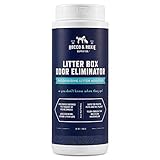
If you want extra odor control, choose a cat-friendly deodorizer and start with less than the package maximum. Rocco & Roxie Litter Box Odor Eliminator is sold in a 12-ounce container, commonly around $10 to $14, while Nature’s Miracle Cat Litter Box Odor Deodorizer Powder comes in a 20-ounce container and often costs about $8 to $12. Sprinkle deodorizer evenly through the litter rather than creating a heavily scented layer on top. Stop using it if your cat begins avoiding the box.
Mistakes to Avoid
- Cleaning only the visible interior. The underside, rim, lid, mat, wall, and floor may be holding the odor.
- Using bleach or ammonia. These cleaners can create unsafe fumes when mixed with other products, and ammonia odors may be confusing or unpleasant for cats.
- Scrubbing plastic with abrasive tools. Scratches provide more places for odor residue to lodge.
- Adding too much fragrance. A strong perfume can mask the problem for people while making the box unacceptable to a sensitive cat.
- Refilling before the box is dry. Moisture causes litter to cake and encourages odor to return faster.
- Using too little litter. Less than about 2 inches may leave urine sitting against the bottom or sides of the pan.
How Often
Scoop clumping litter at least once daily; twice daily is better for two or more cats sharing a box. Remove solid waste promptly. Fully replace litter and wash the box every 2 to 4 weeks for a single cat using a standard plastic pan. Shorten that schedule to every 1 to 2 weeks for multiple cats, a small box, non-clumping litter, or cats that produce strong-smelling urine.
Wipe the floor and litter mat weekly. Replace disposable liners whenever they tear, and wash reusable mats every 1 to 2 weeks. A useful rule is one box per cat, plus one extra. Two cats should ideally have three boxes placed in separate, easy-to-reach locations.
When to Call a Pro or Replace
Replace a plastic litter box when it has deep scratches, cracks, warped edges, damaged seams, or a persistent urine smell after a thorough wash. Many basic open pans cost roughly $10 to $30; a new box is often the practical solution when odor has penetrated old plastic. Stainless-steel boxes, often priced around $40 to $100, are less porous and can be easier to keep odor-free, though they still need routine cleaning.
Call a professional carpet or upholstery cleaner if urine odor persists in carpeting, padding, subflooring, or fabric furniture after repeated enzyme-cleaner treatments. If your cat suddenly produces unusually strong-smelling urine, strains to urinate, urinates outside the box, or changes litter-box habits, contact a veterinarian promptly. Odor can sometimes be an early sign of a health issue rather than a cleaning failure.
FAQ
Can I use baking soda directly in cat litter?
Yes, in a small amount. Start with 1 to 2 tablespoons mixed into fresh litter in a standard-size box. Too much powder can become dusty or alter the texture enough that some cats object. Baking soda helps with mild odor but does not replace scooping and full litter changes.
Why does my clean litter box still smell like ammonia?
The odor may be in scratched plastic, the litter mat, nearby flooring, walls, or hidden urine outside the box. It can also signal that the litter needs more frequent scooping. If the smell is new or unusually sharp, consider whether your cat may need veterinary attention.
Is vinegar safe for cleaning a litter box?
A diluted white-vinegar solution is generally useful for deodorizing a plastic litter box after washing. Rinse it well and let the box dry completely before adding litter. Never combine vinegar with bleach or other cleaning products.
Will a covered litter box reduce odor buildup?
A cover may contain some odor in the short term, but it can also trap humidity and concentrate smells inside the box. It does not reduce the need for daily scooping and regular washing. If using a covered box, clean the lid, filter area, and interior walls as carefully as the pan.
Ready to decide? Our #1 pick for 2026 is the Unscented dish soap.
Live price & availability on Amazon.