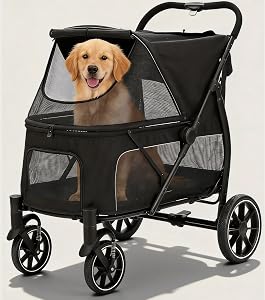
- Top Pick: MekkMomo Pet Stroller for Large Dogs, All Terrain 4 Wheels for Jogging Running, Dog Stroller for Large Dogs Up to 88lbs, Foldable Dog Strollers with Adjustable Handle & Breathable Mesh
- Best Value: 4 Wheels Pet Stroller for Small/Medium Dogs and Cats,Dog Stroller with Detachable Carrier and Storage Basket,One Click Folding,Compact Portable,Up to 50lbs,3 in1 Multifunctional(Khaki)
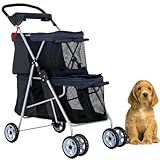
- Premium Choice: Pet Stroller for Small/Med Dogs & Cats | 4-Wheel Foldable Pet Stroller
📅 Last updated:
As an Amazon Associate, All Ears Pet Care earns from qualifying purchases. This article contains affiliate links — if you buy through them we may earn a small commission at no extra cost to you. We only recommend products we believe in.
TL;DR: A jogging pet stroller lets you bring your dog or cat on runs and active outdoor trips without taxing their joints. This guide covers weight capacity, wheel systems, safety harness points, and what separates a genuine jogging stroller from a walk-only model.
As an Amazon Associate we earn from qualifying purchases at no extra cost to you.


Best Pet Stroller for Jogging: Top Picks for Active Owners and Large Breeds in 2026
A pet stroller for jogging fills a specific gap: it lets senior pets, post-surgery dogs, or cats that refuse to walk stay outdoors and active alongside their owners, even when they can’t keep up on their own four legs. They are also invaluable for large breed owners who run but have dogs that overheat quickly or have orthopedic limitations.
Not all pet strollers are built for jogging. Standard walk-only strollers use small, fixed front wheels that become dangerous at running speeds. True jogging strollers use larger pneumatic tires, a lockable front wheel, and reinforced frames that absorb trail and pavement vibration safely.
🛒 Best Price Today on Amazon
Prime members get fast, free shipping on everything above, plus member-only deals. New members get a 30-day free trial — cancel anytime.
Start 30-Day Prime Free Trial →See Today’s Amazon Deals📋 Table of Contents
Walk-Only vs. Jogging Pet Strollers: What’s Different
The critical design differences between jogging and standard pet strollers center on three elements. First, wheel size — jogging strollers use 12–16 inch pneumatic (air-filled) tires that absorb impact and roll smoothly over uneven terrain. Second, front wheel locking — at speeds above 5 mph, a swivel front wheel becomes a steering hazard; jogging strollers lock the front wheel straight for stability. Third, frame strength — aluminum or steel alloy frames rated for running loads versus the lightweight polymer frames of walk-only models.
If you plan to run even occasionally with your pet stroller, do not compromise on these features. The safety difference is significant.
Our Top Pet Jogging Stroller Picks
See also: 7 Best Refillable Frozen Dog Treat Toys for Long-Lasting Licks • Best Dog Door Mat for Muddy Paws: Sizing, Materials and Picks by Entryway
![Furbo Mini 360° Pet Camera [No Monthly Fee]](https://m.media-amazon.com/images/I/31jeSEKyrQL._SL400_.jpg)


As an Amazon Associate we earn from qualifying purchases. Product prices and availability are accurate as of the date/time indicated.




As an Amazon Associate we earn from qualifying purchases. Product prices and availability are accurate as of the date/time indicated.






As an Amazon Associate we earn from qualifying purchases. Product prices and availability are accurate as of the date/time indicated.
Pet Jogging Stroller Spec Comparison
| Feature | Basic Jogger | Mid-Range Jogger | Premium Jogger |
|---|---|---|---|
| Weight Capacity | 30–45 lbs | 50–65 lbs | 75–100 lbs |
| Wheel Size | 12 inch | 14 inch | 16 inch |
| Tire Type | EVA foam | Pneumatic (air) | Pneumatic + suspension |
| Front Wheel Lock | No | Yes | Yes + swivel |
| Safety Leash Port | No | Yes | Yes |
| Ventilation | 1 mesh panel | 2–3 mesh panels | Full mesh canopy |
| Folded Size | Compact | Medium | Large |
| Wrist Strap | No | Yes | Yes |
Key Buying Factors for Jogging Pet Strollers
Weight Capacity for Large Breeds
This is where most people make a mistake. Verify the stroller’s weight capacity against your pet’s full weight, not just their healthy weight — a limping or recovering dog may be slightly heavier with their harness and any gear. For large breeds (50–90 lbs), you need a stroller rated for at least 75 lbs to have a safe margin. Most “large breed” strollers cap at 60–65 lbs; genuine large breed jogging models start at 75 lbs capacity.
Pneumatic vs. Foam-Filled Tires
Pneumatic (air-filled) tires absorb road and trail vibration, providing a smoother ride — critical for pets with joint pain. They do require occasional inflation and can get punctures, but the ride quality difference is significant. Foam-filled (EVA) tires are maintenance-free and puncture-proof but transmit considerably more vibration, which matters most for senior or post-surgery pets.
Interior Space and Ventilation
Measure your dog in a comfortable lying position and compare to the stroller’s interior dimensions — length, width, and headroom. A dog that cannot lie down comfortably will not stay in the stroller. Ventilation is critical for jogging use — mesh panels on multiple sides allow airflow, preventing overheating during runs. Sun canopy coverage is equally important for UV protection in bright conditions.
Safety Features for Jogging
A jogging stroller should have a wrist safety strap (arrests the stroller if you release the handle), a front wheel lock, and an internal leash or safety tether to prevent your pet from jumping out. Reflective trim is valuable for early-morning or evening runs. Check that the brake system (usually a foot pedal) is reliable and holds on downhill grades — test it before your first run.
Portability and Storage
Jogging strollers with large wheels fold larger than walk-only models. Verify the folded dimensions fit in your vehicle’s trunk or cargo area. Quick-fold mechanisms (single-hand fold) are convenient for loading at trailheads. Storage baskets under the cabin are useful for carrying water, waste bags, and gear on longer runs.
Frequently Asked Questions
What speed is safe for jogging with a pet stroller?
For a quality jogging pet stroller with locked front wheel and pneumatic tires, speeds up to 8–10 mph (moderate jogging pace) are generally safe on paved surfaces. On trails or uneven terrain, reduce speed to 5–6 mph. Never jog at speed with a swivel-wheel walk-only stroller — the unstable steering at speed creates a fall and injury risk for both you and your pet.
Can cats use jogging pet strollers?
Yes, and many cats enjoy the stimulation of outdoor stroller rides. For jogging with cats, prioritize a fully enclosed cabin with secure zipper closures rather than open-top designs — a startled cat can jump out at exactly the wrong moment. Introduce the stroller gradually at home before attempting any outdoor runs, and always use the internal safety tether.
Is a pet stroller good for post-surgery dog recovery?
Pet strollers are ideal for post-surgery recovery — they allow pets to get fresh air and mental stimulation without any load-bearing exercise. Veterinarians frequently recommend stroller use during TPLO, hip replacement, and spinal recovery periods. Use a stroller with pneumatic tires for the smoothest ride and minimise vibration transmission to the healing joints. Consult your vet for any specific restrictions on movement or positioning.
How do I get my dog used to a pet stroller?
Start with the stroller open and stationary in a familiar room. Let your dog investigate and reward any positive interaction with treats. Once comfortable inside, zip them in briefly, still stationary. Progress to short indoor rolls, then a short outdoor walk before attempting any jogging. Dogs that are reluctant indoors will often accept the stroller more readily in the excitement of going outside — use their walk motivation to your advantage.
What is the weight limit for large breed pet strollers?
Standard large breed jogging strollers handle 50–65 lbs. Models specifically engineered for very large breeds — Giant Schnauzers, large Labradors, German Shepherds — need 75–100 lb capacity. At this weight range, frame material matters: look for aircraft-grade aluminum or reinforced steel alloy construction. Plastic-heavy frames are not rated for both heavy loads and jogging forces simultaneously.
Related Guides
- Hands-Free Dog Leashes for Running
- Dog Stairs and Ramps for Easy Access
- Orthopedic Memory Foam Dog Beds
- Best Dog Cooling Vests for Summer
- Dog GPS Collar Comparison
Final Verdict
A quality pet stroller for jogging opens up active outdoor life to pets that can’t keep up on their own — seniors, post-surgery dogs, anxious cats, and large breeds in heat. Prioritize genuine jogging specs: locked front wheel, pneumatic tires, weight capacity matched to your pet, and full-mesh ventilation. The models featured here cover the range from mid-weight dogs to large breeds, all with the safety features jogging demands.