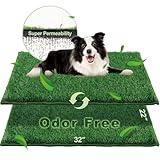
- Top Pick: HQ4US 4LEGS Grass Pee Pads for Dogs Potty, Artificial Grass Patch Odor Free
- Best Value: Fake Grass Pad for Dogs Potty Training Artificial Turf, 39.3×31.5in
- Premium Choice: Fresh Patch Real Grass Patch for Dogs, Cats, and Small-Medium Pets Under 15 Pounds – Disposable Pet Grass Pee Pads – Indoor and Outdoor Potty Training Mat (16 Inches x 24 Inches)
📅 Last updated:
For apartment dwellers, high-rise residents, and anyone with a puppy who cannot yet hold it through a long workday, an indoor potty patch can be a genuine lifesaver. These grass pads, whether real, artificial, or disposable, give your dog a consistent, appropriate spot to relieve themselves without a frantic dash to the elevator. The trick is that the pad itself does not train the dog; a clear, patient routine does.
This guide walks you through choosing the right potty patch and then teaching your dog to use it reliably, step by step. With consistent timing, the right placement, and a little help from a training scent spray, most dogs catch on within one to two weeks in 2026.
As an Amazon Associate we earn from qualifying purchases at no extra cost to you.


⚡ Save on Your Next PC — Amazon Prime
Prime members get fast free shipping on the systems above, plus early access to Prime Day & Black Friday PC deals. New members get a 30-day free trial.
📋 Table of Contents
Watch: How to Train Your Dog to Use a Potty Patch Indoors — Video Review
Choosing the Right Potty Patch
See also: Air Filter For Cat Allergies • Best Pet Odor Eliminator Air Purifier
Your first decision is real grass versus artificial turf versus disposable pads. Real-grass options like the Fresh Patch feel natural and are the easiest transition for dogs used to going outside, but they need replacing. Artificial turf pads such as the HQ4US or Hompet grass pad with tray are reusable and cost-effective long term, requiring only regular rinsing. Match the pad size to your dog: a small breed needs roughly a 20-inch pad, while a larger dog is more comfortable on a 27-by-41-inch tray so they do not overshoot the edges.
Setting Up the Space
Placement makes or breaks potty-patch training. Choose a spot that is easy for your dog to reach at all times, away from their food and bed, since dogs instinctively avoid soiling where they eat and sleep. A tray-based pad like the Dog Grass Pad with Tray contains liquid and protects your floor, which matters on carpet or wood. Keep the location consistent; moving the patch around confuses the dog and slows progress.
Building the Routine
- Take your dog to the patch first thing in the morning, after meals, after naps, after play, and before bed.
- Use a consistent cue word such as “go potty” every single time so the dog links the word to the action.
- Reward immediately with a treat and praise the moment they finish on the patch, not after they walk away.
- Watch for pre-potty signals like circling or sniffing, and calmly guide them to the pad before an accident happens.
Using a Training Scent Aid
A potty training spray such as NaturVet Potty Here can speed things up considerably. A few sprays on the patch create an attractant scent that signals to the dog “this is the spot.” Reapply as directed, especially in the first week. Combined with consistent timing, the scent cue helps dogs generalize the behavior faster and reduces confusion about where they are allowed to go.
Handling Accidents
Accidents are part of the process, not a failure. Never punish after the fact; dogs cannot connect a scolding to something they did minutes earlier. Instead, clean accidents thoroughly with an enzyme cleaner to remove the scent that would otherwise draw them back to the same spot, and tighten your supervision and timing. If accidents cluster at a certain time of day, add a scheduled patch visit right before it.
Tips
- Rinse artificial turf pads regularly and let them dry to prevent odor buildup that discourages use.
- Keep a treat jar near the patch so rewards are instant and consistent.
- Confine a new puppy to a small pad-accessible area when unsupervised to prevent roaming accidents.
- Stay consistent across everyone in the household so the dog gets one clear set of rules.
Frequently Asked Questions
How long does it take to potty-patch train a dog?
Most dogs learn within one to two weeks with consistent timing and rewards. Puppies and dogs with prior habits may take a little longer, so patience and routine are key.
Real grass or artificial turf, which is easier to train?
Real grass transitions most naturally for dogs used to going outdoors, but artificial turf is more economical over time. Both work well; consistency matters more than the material.
Where should I put the potty patch?
In a consistent, easy-to-reach spot away from food and sleeping areas, ideally on an easy-clean surface with a tray underneath to catch liquid.
My dog keeps having accidents nearby. What should I do?
Clean the accident spot with an enzyme cleaner to erase the scent, increase supervision, and use a scent attractant on the patch to redirect them to the correct spot.
Conclusion
An indoor potty patch works beautifully when paired with a consistent routine, the right size pad, smart placement, and a scent attractant to guide your dog. Stay patient through the inevitable early accidents, reward every success instantly, and by the end of a couple of weeks in 2026 your dog will have a reliable indoor bathroom you can both count on.