📅 Last updated:
⚡ Key Takeaways
- In the wild, a den offers security, warmth, and a place to rest away from threats.
- Size matters more than most new owners realize.
- Begin by placing the crate in a room where your family spends time, with the door propped open so it can't accidentally swing shut and startle your puppy.
- Once your puppy tolerates the closed door with you present, start stepping away.
Learning how to crate train a puppy is one of the most valuable skills you can develop as a new dog owner. A crate, when introduced thoughtfully, becomes your puppy’s safe den rather than a punishment. It speeds up house training, prevents destructive chewing while you’re away, and gives your dog a calm retreat when the world feels overwhelming. The key to success is patience: crate training is a gradual process built on positive associations, never on force. This guide walks you through every stage, from picking the right crate to handling those first noisy nights, so both you and your puppy can settle into a confident routine.
As an Amazon Associate we earn from qualifying purchases at no extra cost to you.







🛒 Best Price Today on Amazon
Prime members get fast, free shipping on everything above, plus member-only deals. New members get a 30-day free trial — cancel anytime.
📋 Table of Contents
Why Crate Training Works
Dogs are naturally den animals. In the wild, a den offers security, warmth, and a place to rest away from threats. A crate taps into that instinct, giving your puppy a defined space that feels protective rather than confining. Beyond comfort, crate training has practical benefits. Puppies instinctively avoid soiling their sleeping area, which makes the crate a powerful house-training tool. It also keeps your puppy safe from electrical cords, toxic plants, and household hazards during the months when curiosity outpaces judgment.
A crate also helps with travel, vet visits, and recovery from illness or surgery, since a crate-trained dog handles confinement far more calmly. The goal is never to lock your puppy away for long stretches but to build a positive, lifelong relationship with a space that is genuinely theirs.
Choosing the Right Crate
See also: Best Rabbit Repellents for Vegetable Gardens • Clumping vs Crystal vs Pine Cat Litter: Which One Fits Your Cat and Your Home?
Size matters more than most new owners realize. The crate should be large enough for your puppy to stand up, turn around, and lie down comfortably, but not so large that they can soil one corner and sleep in another. For growing breeds, buy a crate sized for the adult dog and use a divider panel to adjust the interior as your puppy grows.
You’ll generally choose between wire crates, which offer ventilation and visibility, and plastic travel crates, which feel more enclosed and den-like. Many anxious puppies prefer the cozy feel of plastic, while others appreciate being able to see the room around them. Whichever you choose, add a washable bed or blanket and keep the crate in a low-traffic but not isolated corner of the home.
| Adult Dog Weight | Recommended Crate Length | Best For |
|---|---|---|
| Up to 25 lbs | 24 inches | Small breeds, toy breeds |
| 26–40 lbs | 30 inches | Beagles, Cocker Spaniels |
| 41–70 lbs | 36 inches | Bulldogs, Border Collies |
| 71–90 lbs | 42 inches | Labradors, German Shepherds |
| 91+ lbs | 48 inches | Great Danes, Mastiffs |
Introducing the Crate Step by Step
Never rush the introduction. Begin by placing the crate in a room where your family spends time, with the door propped open so it can’t accidentally swing shut and startle your puppy. Toss a few treats just inside the entrance and let your puppy explore at their own pace. Praise any voluntary investigation, but resist the urge to push them inside.
Once your puppy walks in willingly, start feeding meals near and then inside the crate. This builds a strong association between the crate and something your puppy already loves. Over several days, place the food bowl progressively deeper until they eat comfortably at the back. A favorite chew or a stuffed toy can extend their comfortable time inside.
After your puppy eats and relaxes in the crate without hesitation, begin closing the door for a few seconds while you sit nearby, then open it before any whining begins. Gradually lengthen these intervals. The golden rule is to always end on a calm, positive note rather than waiting for distress.
Building Duration and Distance
Once your puppy tolerates the closed door with you present, start stepping away. Leave the room briefly, then return calmly without making a fuss. Slowly increase how long you’re gone and how far you go. Some owners find that a long-lasting chew or a treat-dispensing toy keeps a puppy happily occupied during these absences, much like a favorite item from a trusted selection of durable dog toys can hold attention during longer stretches.
Keep crate sessions matched to your puppy’s age. A general guideline is that a puppy can hold their bladder for about one hour per month of age, plus one, up to a maximum of around six to eight hours for adults. A two-month-old puppy should not be crated for more than two to three hours during the day.
Surviving the First Nights
The first few nights are often the hardest. A puppy separated from littermates may whine, and it can be tempting to give in. Placing the crate in or near your bedroom for the first week reassures your puppy that you’re close. A soft blanket and a low-ticking clock or white noise can mimic the comfort of the litter.
If your puppy whines at night, consider whether they need a bathroom break versus simply seeking attention. Take them out quietly on a leash, let them relieve themselves, and return them to the crate without play. This teaches them that nighttime is for sleeping, not socializing. Setting up a calm evening routine with a final potty trip and a quick wind-down walk using a comfortable well-fitted leash can help signal that the day is ending.
Common Crate Training Mistakes
The biggest mistake is using the crate as punishment. If your puppy associates the crate with anger or banishment, they’ll resist it for life. Always keep crate time neutral or positive. Another common error is leaving a puppy crated too long, which can cause accidents and anxiety. Finally, avoid dramatic, emotional goodbyes and reunions; a calm departure and return keeps your puppy from spiraling into separation distress.
Be patient with setbacks. Teething, fear periods, and changes in routine can temporarily disrupt progress. If your puppy suddenly resists the crate after weeks of success, scale back to easier steps rather than forcing the issue.
When to Consult a Professional
Most puppies adapt to a crate within a few weeks of consistent, gentle training. However, if your puppy shows extreme panic, injures themselves trying to escape, or develops persistent separation anxiety, it’s wise to seek help. A certified trainer or veterinary behaviorist can identify whether the issue is training-related or rooted in a deeper anxiety disorder. Always consult your veterinarian for any medical concerns, including signs of distress that don’t improve with patient training.
Top-Rated Picks


| Product | Brand | Rating | Reviews | Price |
|---|---|---|---|---|
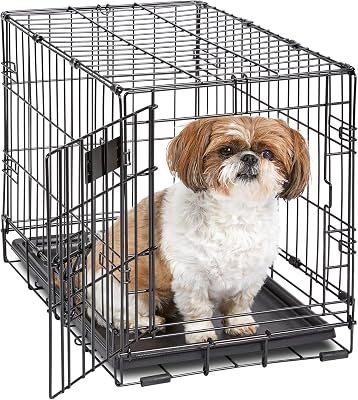
| MidWest Homes for Pets 22-Inch iCrate for Extra-Small… | MidWestHomesForPets | ★ 4.7 | 191.2k | Varies |
| FDW Extra Large Dog Crate Dog Kennel Cage with Double… | FDW | ★ 4.5 | 6.2k | Varies |
| Hiwokk 48 Inch Heavy Duty Dog Crate, Indestructible E… | HIWOKK | ★ 4.5 | 1.7k | Varies |
| Feandrea 24 Inches Collapsible Soft Dog Crate, Portab… | FeandreabySONGMICSHOME | ★ 4.4 | 1.1k | Varies |
| Oranland 38 inch Heavy Duty Indestructible Dog Crate,… | ProfessionalCageManufacturer | ★ 4.5 | 761 | Varies |
Frequently Asked Questions
How long does it take to crate train a puppy?
Most puppies become comfortable in a crate within two to four weeks, though full reliability for overnight and daytime stays can take a couple of months. Consistency and positive reinforcement speed the process considerably.
Should I cover my puppy’s crate with a blanket?
Many puppies feel calmer in a covered crate because it creates a darker, den-like space. Make sure airflow remains good and the cover can’t be pulled inside and chewed. Watch your puppy’s response; some prefer an open view.
Is it cruel to crate a puppy at night?
No, when done correctly. A properly sized, comfortable crate gives your puppy a secure place to sleep and prevents nighttime accidents and hazards. The crate should never be used for excessively long periods or as punishment.
What should I do if my puppy cries in the crate?
First rule out a bathroom need. If the crying is for attention, wait for a brief pause before opening the door so you don’t reward the noise. Build up duration slowly and end sessions on a calm note.
Can an older dog be crate trained?
Absolutely. The same step-by-step, reward-based approach works for adult dogs, though it may take a little longer to overcome established habits. Patience and positive associations remain the foundation.
Conclusion
Crate training is a gift you give your puppy: a personal sanctuary and a foundation for good behavior. Move at your puppy’s pace, keep every interaction positive, and celebrate small wins along the way. With consistency and compassion, your crate will become the cozy den your dog chooses on their own. If you ever encounter persistent anxiety or health concerns, lean on your veterinarian and a qualified trainer for guidance.