- Top Pick: Outward Hound Fun Feeder Slo Bowl – Medium 2‑Cup Capacity, Slow Feeding, Small to Medium Dogs & Cats, Non-Slip, Blue, Notch Pattern
- Best Value: Outward Hound Fun Feeder Slo Bowl – Large 4‑Cup Capacity, Slow Feeding, Medium to Large Dogs, Non‑Slip, Turquoise, Drop Pattern
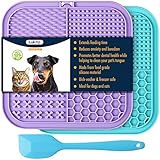
- Premium Choice: ChefAide 2 Pack Lick Mat for Dogs, Cats & Puppies with Suction Cups
📅 Last updated:
Choosing between a slow feeder bowl and a lick mat is less about which product is universally better and more about how your pet eats, where you feed, and how much cleanup your home can tolerate. A bowl is designed to replace a regular food dish while slowing down meals with raised channels or patterns. A lick mat spreads soft food across a textured surface, turning eating into a longer, more hands-on activity.
The real buyer decision is whether you need a dependable everyday feeding dish or an enrichment tool that can occupy your pet during stressful or inconvenient moments. A slow feeder bowl generally makes more sense for dry kibble and routine meals. A lick mat is usually more useful for wet food, treats, grooming distractions, and boredom relief. Some homes will benefit from owning both, but most buyers should start with the format that solves their biggest daily problem.
As an Amazon Associate we earn from qualifying purchases at no extra cost to you.


📋 Table of Contents
Quick Verdict
Choose a slow feeder bowl if your dog or cat gulps meals, needs a dedicated dish, or eats mostly dry food. Its familiar footprint and measured capacity make it an easy replacement for a standard bowl. The Outward Hound Fun Feeder Slo Bowl, for example, is available in a 2-cup medium size for small to medium dogs and cats and a 4-cup large size for medium to large dogs.
Choose a lick mat if your priority is enrichment, calming, or keeping a pet occupied during bathing, grooming, crate time, or visitors. Lick mats work especially well with wet food, canned food, yogurt made for pets, or other spreadable treats. Products such as the ChefAide 2 Pack and LUKITO 2 Pack include multiple mats, which can be convenient for rotation and cleaning.
In short: a slow feeder bowl is the better everyday meal solution, while a lick mat is the more flexible occasional activity. For a fast eater who also gets anxious or bored, using a bowl for meals and a mat for enrichment may be the most practical setup.
Side by Side
See also: How to Remove Litter Box Odor Buildup (2026): Step-by-Step • How to Fix a Jammed Automatic Feeder (2026): Step-by-Step
| Factor | Slow feeder bowl | Lick mat |
|---|---|---|
| Comfort | Easy for most pets to understand; choose a height and pattern that do not force awkward neck angles | Comfortable for licking, but some pets dislike lying or standing over a flat surface |
| Durability | Rigid construction usually resists folding, though chewing can damage some materials | Flexible and easy to store, but determined chewers may puncture or tear it |
| Price range | About $8.40–$8.63 for the listed Outward Hound sizes; broader market prices vary | About $5.99–$8.99 for the listed two-packs; broader market prices vary |
| Maintenance | Wash after meals; deep grooves can trap crumbs and residue | Needs prompt rinsing because food sticks in the texture; check whether it is dishwasher-safe |
| Space needed | Requires a stable feeding area; allow room for the bowl and your pet’s stance | Needs a flat surface and may require extra space around suction cups |
| Look | Resembles a conventional pet dish and is easier to leave out | Looks more like a training or enrichment accessory when left on the floor |
| Resale | Limited resale appeal after use because of hygiene concerns | Similarly low resale value; condition and cleanliness matter even more |
| Best for | Daily kibble meals, portion control, and pets that eat too quickly | Wet-food enrichment, distraction, anxiety support, and grooming sessions |
| Portion capacity | Often clearly defined; the referenced options hold 2 or 4 cups | Capacity depends on the thickness of the spread and is harder to measure |
Where Slow Feeder Bowl Wins
A slow feeder bowl wins when the main issue is speed. Raised ridges, channels, notches, or drops break up a pile of kibble, requiring a pet to work around the pattern rather than swallow a meal in seconds. That can reduce frantic eating and make a normal portion last longer, although it is not a guarantee against digestive problems or choking. Pets that continue to inhale food should still be supervised.
The bowl format is also better for routine. You can measure the meal directly into a 2-cup or 4-cup vessel, place it in the usual feeding location, and use it every day. The medium Outward Hound Fun Feeder Slo Bowl is sized for small to medium dogs and cats, while the large version is intended for medium to large dogs. Capacity matters: a bowl that is too small may overflow, while an oversized bowl can make a small pet work unnecessarily hard.
Rigid bowls are generally easier to position than flexible mats. They are less likely to bunch up, curl at the edges, or move when a pet noses the food. A non-slip base helps, but it is still wise to place the bowl on a washable mat, especially with enthusiastic eaters.
The main drawback is that patterns can be difficult to clean. Fine food particles collect in corners, and wet food may dry inside channels. Use warm water promptly after feeding and inspect the grooves rather than rinsing only the visible surface.
Where Lick Mat Wins
A lick mat wins when you want to occupy your pet, not simply serve dinner. Spreading a thin layer of wet food across the textured surface encourages repeated licking and can create a slower, quieter activity. That makes a mat useful while trimming nails, bathing, brushing, grooming, working from home, or helping a pet settle during a short stressful event.
Lick mats are particularly adaptable for cats and dogs with different appetites because you control the amount and thickness of the food. A thin coating provides a brief activity; a thicker layer or frozen portion can last longer. The tradeoff is that a mat does not offer the same clear portion capacity as a bowl. Calories from spreads and treats should be counted as part of the daily diet.
Suction cups can help keep a mat attached to a smooth floor, tile wall, bathtub, or other suitable surface. The ChefAide 2 Pack is listed at $5.99, while the LUKITO 2 Pack is listed at $8.99 and is marketed for anxiety relief, boredom reduction, bathing, and grooming. A two-pack also lets you use one mat while the other is being washed.
Flat mats do demand more attention to placement. Carpet, textured flooring, and dusty surfaces can reduce grip. A pet that chews silicone or rubber should not be left alone with the mat, particularly if an edge lifts or the material becomes damaged.
Cost Over 5 Years
At the listed prices, the initial difference is small. The medium 2-cup Outward Hound bowl costs about $8.40, and the large 4-cup version costs about $8.63. The ChefAide two-pack costs $5.99, while the LUKITO two-pack costs $8.99. Prices can change, so treat these as purchase examples rather than a guaranteed five-year cost.
If one bowl remains usable for five years, its product cost works out to roughly $1.68–$1.73 per year. If a two-pack of mats also lasts the full five years, the annualized cost is about $1.20–$1.80 per year. In real homes, replacement timing is more likely to depend on chewing, cracking, staining, and loss of suction than on normal wear alone.
A reasonable planning range is one bowl replacement during five years, putting the bowl total around $16.80–$17.26. For mats, replacing one two-pack once would bring the total to about $11.98–$17.98. These figures exclude water, detergent, food, and any separate feeding mat used to protect the floor. The cheapest option is the one your pet will use safely and consistently; buying both formats and abandoning one is more expensive than choosing correctly at the start.
Which One for Your Home
Small apartment
Start with a slow feeder bowl if floor space is limited and you need one compact item to replace a standard dish. Choose the smallest suitable capacity and store it in the same feeding zone. A lick mat is worthwhile if barking, boredom, or grooming is a bigger concern, but plan for a washable surface and a storage spot where the flexible mat can dry fully.
Family with kids and pets
A slow feeder bowl is usually the better everyday choice because it creates a predictable feeding routine and a clear boundary between pet food and children’s snack areas. Add a lick mat for supervised enrichment, especially during busy family moments. Teach children not to touch either item while the pet is eating or licking.
Rental
Pick the format that protects floors and walls. A bowl on a washable floor mat is generally the lower-risk arrangement. Lick mats can work well in a bathtub or on tile, but suction cups should not be treated as permanent wall mounts. Clean spills quickly, and avoid using sticky food on surfaces that could stain grout, paint, or flooring.
Long-term home
If you expect to live with the same pet setup for years, buy based on routine rather than the lowest sticker price. A durable slow feeder bowl can handle daily meals, while a two-pack of lick mats supports rotation and special occasions. Keep both only if each has a clear job: bowl for measured meals, mat for enrichment and calming.
FAQ
Can a lick mat replace a slow feeder bowl?
Sometimes, but not for every pet or every meal. A lick mat can slow wet food and provide enrichment, yet it is less convenient for measuring dry kibble and may be harder to keep in one place. It is best viewed as an alternative for selected meals or activities rather than an automatic replacement.
Which is easier to clean?
Neither is maintenance-free. A bowl is usually quicker for dry food, while a lick mat can require more rinsing because food spreads into the texture. In both cases, wash promptly, inspect grooves or ridges, and follow the manufacturer’s cleaning instructions.
Are slow feeder bowls safe for cats?
They can be, provided the pattern is not too deep or frustrating and the bowl is appropriately sized. Watch your cat’s posture and behavior during the first meals. If your cat paws aggressively, chews the dish, or stops eating, switch to a gentler design and consult a veterinarian if eating problems continue.
Should I buy a bowl, a lick mat, or both?
Buy a bowl for a fast eater’s regular meals. Buy a lick mat for grooming, travel, boredom, or stress-related situations. If your budget allows and you have space to clean and store both, the combination is practical: one manages feeding speed, and the other adds controlled enrichment.
Ready to decide? Our #1 pick for 2026 is the Comfort.
Live price & availability on Amazon.