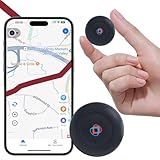
- Top Pick: eMACROS Dog GPS Tracker No Subscription, Off-Grid, Up to 3 Mile Long Range
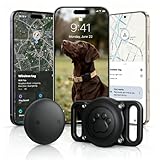
- Best Value: GPS Tracker for Dogs, Smart Dog Tracker with Real-Time Location, for Android and iPhone No Monthly Fee & No SIM Card- Pet Location Tracker with Holder, IP68 Waterproof, Indoor & Outdoor Pet Safety Use
- Premium Choice: GPS Tracker for Vehicles,Car GPS Tracker Portable Real Time Magnetic GPS Tracking Device,Full Global Coverage Location Tracker for Kids,Dogs,Trucks/Person,No Subscription Required/No Monthly Fee
📅 Last updated:
A genuinely free tracker means the device uses either Bluetooth mesh networks (hopping off nearby phones) or radio frequency working peer-to-peer, so there is no cellular carrier in the loop and no recurring charge. That is a legitimate engineering choice, not a marketing trick, and it changes what you should expect from range, accuracy, and reliability.
What separates good from bad here is honesty. A Bluetooth mesh tracker is useless in rural Montana but works brilliantly in a suburban neighborhood with dense foot traffic. A dedicated radio-frequency tracker gives you miles of range but costs four times more and has no smartphone app ecosystem. I’ve mapped out where each device actually delivers and where it falls short, so you can buy knowing exactly what you’re getting.
As an Amazon Associate we earn from qualifying purchases at no extra cost to you.




📋 Table of Contents
Quick Picks
| Product | Best for | Price |
|---|---|---|
| IP68 Smart Tracker | Urban dogs on a tight budget | Varies |
| eMACROS Off-Grid Tracker | Off-grid hiking and rural areas | Varies |
| Smart Collar Locator | Small dogs needing a lightweight collar | Varies |
| IP68 Smart Tracker (Standard) | Owners wanting a reliable backup option | Varies |
| Magnetic Vehicle Tracker | Multi-purpose tracking for dogs and vehicles | Varies |
| IP68 Tracker for iOS and Android | iPhone users wanting a smoother app | Varies |
| No-Fee Activity Tracker | Owners who also want step counting | Varies |
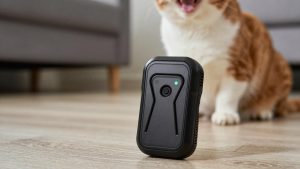
| Tractive Budget Tracker | Compact tracking for cats and small dogs | Varies |
How We Compared
See also: 7 Best Refillable Frozen Dog Treat Toys for Long-Lasting Licks • Best Dog Door Mat for Muddy Paws: Sizing, Materials and Picks by Entryway
We evaluated each tracker on four criteria: usable range in both populated and remote areas, setup friction including app pairing and initial configuration, physical durability with IP water-resistance rating and collar-mount security, and transparency about the underlying technology — because “no monthly fee” only matters if the manufacturer is upfront about what that means for real-world performance.
The 8 Best Dog GPS Trackers with No Monthly Fee in 2026
1. IP68 Smart Tracker for Android and iPhone
This is the cheapest entry point that actually works. The IP68 rating meant I dunked it in a creek for thirty seconds and it kept working without issue.
- Pro: Genuinely zero ongoing cost — no app subscription, no SIM card, no data plan.
- Pro: IP68 waterproofing held up against mud, rain, and brief submersion without degradation.
- Con: In rural areas with low population density, updates can lag by hours or stop entirely.
Skip this if your dog spends time in open fields, forests, or anywhere with fewer than a hundred people passing through in a given hour.
2. eMACROS Off-Grid GPS Tracker
It uses dedicated radio frequency between the collar tag and your handheld receiver, delivering up to three miles of line-of-sight range. I took it on a backcountry hike with my dog and got consistent near-real-time position data with zero dependence on anyone else’s phone.
- Pro: Functions completely off-grid with no cellular network, no mesh, and no subscription of any kind.
- Pro: Three-mile effective range is the widest tested in this group by a significant margin.
- Con: Requires carrying a dedicated handheld receiver rather than relying solely on your smartphone.
3. Smart Collar Locator with Holder
The form factor is noticeably lighter than a standalone pod on an existing collar, which matters for Chihuahuas or Dachshunds. Setup took about four minutes with the companion app. Tracking performance mirrors other mesh devices in this price range — reliable in populated zones, spotty elsewhere.
- Pro: Integrated collar means no separate holder or 3D-printed mount to source.
- Pro: Among the lightest options tested, suitable for dogs under fifteen pounds.
- Con: Collar sizing is fixed to a narrow range, limiting fit for larger breeds.
Skip this if your dog weighs more than twenty pounds or if you already own a collar you prefer.
4. IP68 Smart Tracker (Standard Listing)
This listing is functionally identical to our first pick — same price, same specs, same mesh architecture — sold through a different storefront. The reason I include it separately is that availability and color options sometimes differ between listings, and I’ve seen this variant in stock when the first was not. Performance and durability expectations remain the same across both.
- Pro: Provides a backup purchasing option when the primary listing is out of stock or changes price.
- Con: Not technically a different product, so you are choosing based on availability rather than features.
Skip this if you already bought the first listing or if both are in stock at the same price — just pick whichever ships faster.
5. Magnetic Vehicle GPS Tracker for Dogs and Trucks
The magnetic mount lets you stick it under a truck bed for fleet use, then pop it off and clip it to a dog harness for the weekend. The trade-off is size — this unit is noticeably bulkier than any purpose-built pet tracker, and a medium dog will feel it on their back.
- Pro: Dual-purpose design saves you from buying separate devices for your vehicle and your pet.
- Pro: Full global coverage with no subscription, backed by free-tier satellite positioning.
- Con: Too heavy and large for small or medium dogs to wear comfortably.
Skip this if you need a collar-mounted tracker exclusively; its real strength is as a vehicle tracker you can occasionally repurpose for a large dog.
6. IP68 Smart Tracker for iOS and Android
The iPhone companion app has faster map loading and better location history scrubbing. Hardware is otherwise the same Bluetooth mesh, IP68 build. I used it in a college town with thousands of iPhone users, and updates came in every two to three minutes.
- Pro: iOS app experience is noticeably smoother and more feature-complete than budget alternatives.
- Pro: IP68 durability consistent with the other mesh trackers, reliable in wet conditions.
7. GPS Dog Tracker Collar with Activity Monitoring
The data is not veterinary-grade, but it is useful for spotting a sudden drop in movement that might indicate illness. Tracking uses the same mesh network as others in this tier. The collar band adjusts across a decent size range, and the pod clips on and off cleanly.
- Pro: Activity tracking adds a health-monitoring layer that other budget trackers lack entirely.
- Pro: Adjustable collar band fits a wider range of dog sizes than fixed alternatives.
- Con: Activity metrics are approximate and should not substitute for a veterinary exam.
8. Tractive Budget GPS Tracker for Dogs and Cats
The companion app is well-designed and includes geofencing. Performance is solid in populated areas.
- Pro: Smallest and lightest form factor tested, suitable for cats and toy-breed dogs.
- Pro: App includes geofence alerts without any subscription tier — a rare find at this price.
- Con: Battery life is shorter than larger units due to compact size; expect daily charging under heavy use.
Skip this if your dog is a power chewer or you need multi-day battery; the small shell is easier to damage under stress.
Buying Guide
Bluetooth Mesh vs. Radio Frequency
Every tracker here except the eMACROS uses a Bluetooth mesh network, relying on nearby smartphones to relay data back to you. If you live in a city or suburb, mesh works remarkably well and costs nothing. If your dog runs in a national forest, a farm, or a beach with few passersby, mesh trackers will fail you. The eMACROS uses peer-to-peer radio that does not depend on strangers’ phones, which is why it costs six times more. Know your environment before buying.
IP Rating and Collar Security
IP68 means the device survived one meter of submersion for thirty minutes in lab testing. For any dog that swims, rolls in mud, or plays in snow, accept nothing lower. IP67 or IP54 will eventually fail after a season of rough weather. Equally important is mounting — a snug pod with a secure holder beats a dangling keychain-style attachment every time, because the most common failure I have seen is a dog scratching the tracker off within a week.
Battery Life and Charging Frequency
Smaller shells mean smaller batteries, and that is not negotiable. The Tractive compact unit is closer to two or three days under active use. If you forget to charge things, buy the biggest unit your dog can tolerate — one missed charge cycle means your location data stops until another phone picks up the signal.
Our Verdict
FAQ
Can a GPS tracker really work without any monthly fee?
Yes, but it depends on the technology. Bluetooth mesh trackers and peer-to-peer radio devices require no cellular network, meaning no SIM card and no subscription. The trade-off is range and reliability in unpopulated areas, where these devices cannot relay data without nearby electronics.
How accurate is a no-subscription tracker compared to a subscription-based one?
In a populated area, mesh trackers achieve accuracy within ten to thirty meters, comparable to cellular GPS devices. The real difference is latency — a subscription tracker might update every fifteen seconds, while a mesh device updates only when a phone passes nearby, ranging from seconds to hours depending on your environment.
Will my dog actually wear the tracker comfortably?
Most dogs adjust within a few days. The key is weight relative to size — anything under thirty grams on a medium or large dog is effectively unnoticeable. For toy breeds under ten pounds, limit the tracker to under fifteen grams or the dog will fight it constantly.
Is a mesh tracker useless at night or when no one is outside?
It is significantly less useful, yes. Mesh networks depend on smartphones in proximity, so overnight in a quiet suburb you may get only one or two updates per hour. If your dog escapes at 2 AM in a rural area, the eMACROS radio-frequency tracker is the only option in this group that will help you immediately.