📅 Last updated:
Here is an honest starting point: most healthy adult Bernese Mountain Dogs do not need a winter coat. They were bred in the Swiss Alps, and their thick double coat, with a dense woolly undercoat under a longer outer layer, is designed for snow and cold. Many Berners are happiest at temperatures that send other dogs indoors. But there are real situations where a coat helps, and choosing the wrong one can make a Berner overheat. This guide explains when to use a coat and what kind makes sense.
📋 Table of Contents
When a Bernese actually benefits from a coat
- Puppies under about 6 months, whose adult coat has not fully come in and who lose heat faster.
- Seniors and dogs with arthritis, since cold stiff joints ache more. A light layer on a very cold walk can help mobility.
- Dogs recovering from illness or surgery, or with a shaved patch from a procedure.
- A Berner that has been shaved. Shaving a double coat is not recommended, but if it has been done, the dog has lost its insulation until the coat regrows, which can take many months.
- Freezing rain and wet sleet. Dry snow rolls off a Berner’s coat. Cold rain soaking through to the skin is a different story, and a waterproof shell keeps the dog dry and makes clean-up easier.
If your dog is a healthy adult with a full coat walking in dry cold, skip the coat and watch for signs of cold instead: lifting paws, shivering, slowing down, or trying to turn home.

Kuoser Dog Winter Coat, Reversible Waterproof Dog Jacket with Reflective Strip, Warm Dogs Fleece Vest Adjustable Doggy Cold Weather Clothes Plaid Christmas Outfit Pet Apparel for Large Dogs, Black L
Included for 'Best Dog Winter Coat for Bernese Mountain Dog' because the listing specifies Reversible Waterproof Dog Jacket with Reflective Strip and Black L, details this guide uses to compare options.
View on Amazon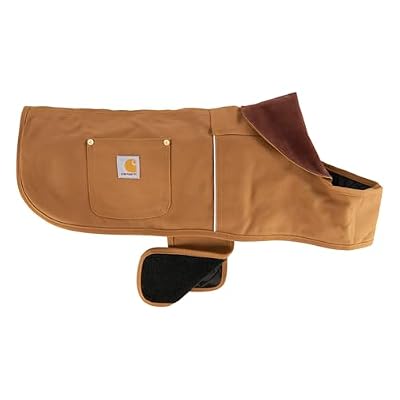
Carhartt Firm Duck Dog Chore Coat, Insulated Weather Resistant Jacket for Cold and Windy Conditions, Carhartt Brown, Medium
Included for 'Best Dog Winter Coat for Bernese Mountain Dog' because the listing specifies Carhartt Brown and Medium, details this guide uses to compare options.
View on AmazonWhat to look for in a coat for a Berner
See also: Best Electric Dog Fences for Reliable, Humane Containment • Best Dog Boots for Basset Hound
Shell over insulation
For this breed the most useful garment is usually a waterproof, windproof shell with little or no insulation. The dog’s own undercoat is the insulation; the shell’s job is keeping it dry. Heavy padded parkas often make Berners overheat within 15 minutes of walking.
Breathability
Look for breathable fabrics and vents. A Berner working hard in snow produces a lot of heat, and non-breathable coats trap moisture against the coat.
Belly coverage for wet conditions
Berners have deep chests that plough through snow and slush. A coat with belly coverage keeps road spray and salty slush off the underside.
Fit over a big, fluffy frame
Measure chest girth at the widest point and back length from the base of the neck to the base of the tail. Adult Berners usually need chest sizes around 32 to 40 inches and back lengths of 24 to 30 inches. Choose a design with adjustable straps so it does not compress the coat, since flattened fur loses insulation.
Harness compatibility
A leash port in the back lets you clip to a harness underneath, which is the better setup for a strong-pulling giant breed.
Coat types compared for Bernese
| Coat type | When it suits a Berner | Watch out for |
|---|---|---|
| Waterproof rain shell, no lining | Cold rain, sleet, wet slush | Choose breathable fabric |
| Light fleece or softshell | Seniors, puppies, post-surgery | Can overheat on active walks |
| Insulated parka | Shaved or ill dogs in deep cold | Too warm for most healthy adults |
| Reflective safety vest | Dark winter mornings and evenings | Adds visibility, not warmth |
| Cooling vest | Summer, not winter | Different job entirely |
Mistakes to avoid
- Dressing a healthy adult Berner in a thick parka because it is snowing. You will likely see heavy panting and a dog trying to lie down in the snow.
- Leaving a coat on indoors. Take it off the moment you get home.
- Putting a coat on a damp dog, which traps moisture against the skin and encourages hot spots.
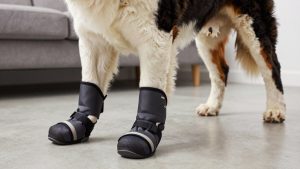
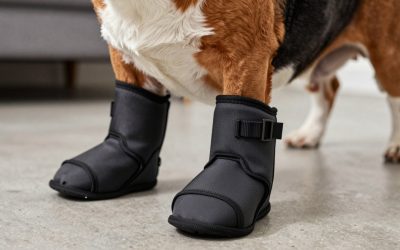
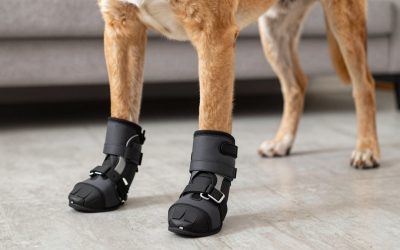
- Forgetting the feet. For many Berners the real winter problem is not the body but the paws: ice balls between the toes and road salt. Trim the fur between the pads and consider boots or paw wax.
FAQ
How cold is too cold for a Bernese Mountain Dog?
Healthy adults usually tolerate well below freezing comfortably, especially when moving. Puppies, seniors, and dogs with health conditions have much lower tolerance. Watch your dog rather than a thermometer, and cut the walk short if it shivers or lifts its paws.
Should I shave my Berner so a coat fits better?
No. The double coat insulates against both cold and heat, and shaving can cause patchy or slow regrowth. Brush out the undercoat instead.
Bottom line
Most Bernese Mountain Dogs do not need a winter coat. When one does, because it is a puppy, a senior, recovering, shaved, or out in cold rain, the best choice is usually a breathable waterproof shell sized for a 32 to 40 inch chest, with a harness port and belly coverage, rather than a heavy insulated parka.