Our Short List of 3

- Brand: ExionPro (Exion International)
- Model: Exion VT-1191 hunter bridle, fancy stitched
- Material: Leather
- Hardware: Stainless steel
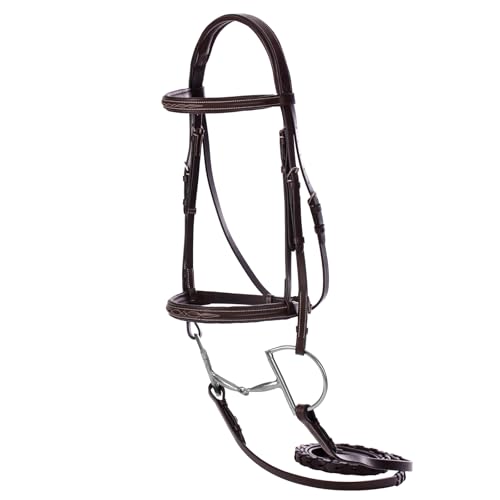
- Brand: Equinavia
- Model: Saga E10007 hunter bridle
- Material: Indian leather
- Hardware: Stainless steel, roller buckle noseband

- Brand: CHALLENGER (Challenger Horsewear)
- Model: 77RS12BK bitless sidepull bridle
- Material: Leather with steel hardware
- Design: Bitless sidepull, nose pressure, no bit used
All 5 Picks at a Glance
| Product | Specs | Action |
|---|---|---|
| 1. ExionPro Hunter Bridle with Laced Reins |
| Check price on Amazon |
| 2. Equinavia Saga Padded Fancy Stitched Hunter Bridle with Reins |
| Check price on Amazon |
| 3. CHALLENGER Bitless Sidepull Bridle with Split Reins |
| Check price on Amazon |
 4. Weaver Leather Latigo Leather Browband Headstall |
| Check price on Amazon |
 5. Showman Beaded Arrow Design Headstall, Breast Collar, Reins and Wither Strap Set |
| Check price on Amazon |
📅 Last updated:
Disclosure: As an Amazon Associate, I earn from qualifying purchases.
A bridle is a fit product before it is a leather product. Plainly: a bridle sitting two holes off presses the wrong points no matter how fine the leather is, because the noseband lands on softer bone, the browband drags the crown into the ears, and the bit hangs where the cheekpieces put it, not where the mouth needs it. The five bridles below cover the honest spread of the class: two complete English hunter bridles with reins included, a bitless sidepull for horses that go better without a bit, a plain Western headstall that is exactly one component and nothing more, and a matched Western set that bundles the extras.
Two things deserve saying first. Almost every bridle ships without a bit, and reins range from properly included to an obvious afterthought, so read what is actually in the box rather than assuming a complete setup. And anatomical, padded crowns genuinely help some horses, particularly those that resent poll pressure, while remaining pure decoration on others that never objected to a plain crown. Fit first, leather second, marketing last.
📋 Table of Contents
How to Choose a Horse Bridle
Measure the head you have, not the size you expect. Bridle sizes run pony, cob, full and oversize, but the labels are not standardized between makers, and a cob from one brand can overlap a full from another. The measurements that matter are the crown-to-bit length on each side, the browband length, and the noseband circumference, taken on the horse itself — not copied from a previous bridle that may itself have fit badly.
Fit decides where pressure lands. The checks are simple and unforgiving. The browband should sit flat without pulling the crownpiece forward. The noseband belongs roughly two fingers below the cheekbone, never down on the soft part of the nose. The throatlatch needs a hand’s width of slack. Cheekpieces set the bit height, and one hole of difference between sides tilts the bit in the mouth.
Decide what must be in the box before ordering. A complete English bridle normally means headstall, noseband, browband and reins, with the bit always separate. A Western headstall is a component: it holds a bit the rider already owns, and reins, curb strap and bit are all separate purchases. Bitless designs replace the bit entirely with nose pressure, making them a training and comfort choice rather than a shortcut. Confusing these formats is how riders end up with a box that cannot be ridden in on the day it arrives.
Read leather claims skeptically. Vegetable-tanned and full-grain are meaningful terms: they describe slower tanning and the strongest part of the hide, and bridles built from them usually soften with oiling and outlast cheaper stock. Much of the class is built from Indian leather, which varies widely — some schools daily for years, some arrives stiff and needs patient conditioning.
Treat crown design as a fit tool, not a badge. A single or monocrown design routes the noseband straps over or through the crown so nothing stacks under it, and cutaway shapes clear the ears. For a horse that shakes its head or rubs at the poll, that geometry can be a real fix. For a horse that has worn a plain crown happily for a decade, the same shaping changes nothing except the silhouette.
The 5 Best Horse Bridles
See also: Best Automatic Transmission Floor Shifter: Ratchet, Gated and Detent Shifters Compared • Best Automatic Floor Shifter for Truck: Tall, Tough Picks for Pickups and Bench Seats
1. ExionPro Hunter Bridle with Laced Reins
- Brand: ExionPro (Exion International)
- Model: Exion VT-1191 hunter bridle, fancy stitched
- Material: Leather
- Hardware: Stainless steel
The Exion hunter bridle is the traditional entry here: a fancy stitched English snaffle bridle in the raised, padded style the hunter ring expects, sold complete with laced reins. The stitching is not decoration for its own sake — the raised, padded profile is what reads correctly in that discipline, and stitching doubles as a quality tell, since crooked work on a raised piece shows immediately.
The variant referenced is black in the pony size; the Exion line also runs through cob, full and oversize, so measure against the maker’s chart rather than assuming its labels match another brand’s. Like every English bridle here, it ships without a bit, and the laced reins are the correct traditional pairing — grippy without rubber, finished enough for the ring.
2. Equinavia Saga Padded Fancy Stitched Hunter Bridle with Reins
- Brand: Equinavia
- Model: Saga E10007 hunter bridle
- Material: Indian leather
- Hardware: Stainless steel, roller buckle noseband
The Saga is Equinavia’s value hunter bridle, and its details show a maker thinking about daily use. The raised, padded noseband and browband carry the same fancy stitching as the Exion, but the noseband closes with a stainless steel roller buckle and a leather paddle behind it to prevent pinching — a small feature that matters on a bridle adjusted every ride. The single crown keeps strap bulk off the poll, and hook stud closures on the cheeks and reins make bit changes fast.
The referenced variant is chocolate brown in cob size, model E10007, built from Indian leather. That deserves honesty rather than apology: Indian leather at this level schools perfectly well once conditioned, and the Saga is aimed at riders who need a correct-looking bridle for regular work rather than an heirloom. Flat-front laced reins are included; the bit is separate.
3. CHALLENGER Bitless Sidepull Bridle with Split Reins
- Brand: CHALLENGER (Challenger Horsewear)
- Model: 77RS12BK bitless sidepull bridle
- Material: Leather with steel hardware
- Design: Bitless sidepull, nose pressure, no bit used
The Challenger sidepull removes the bit from the conversation entirely. Rein pressure acts on the noseband through rings at the sides of the nose, giving direct, non-leverage cues — why sidepulls are a common choice for starting young horses, for horses with mouth injuries or dental work in progress, and for riders who simply prefer bitless on the trail. The communication is honest but different: there is no refinement of signal through a mouthpiece, and a horse that leans will lean on a noseband just as happily as on a bit, so the design rewards light hands rather than replacing training.
This model, part 77RS12BK in black, is built from leather with steel hardware and a padded crown, browband and nose, and arrives with split reins included, so the box genuinely is ride-ready — the only pick here that needs nothing else added. Sizing is a single full or average horse fit, the real limitation: riders with ponies or large warmbloods have no range to move within, and a bitless bridle that fits badly concentrates pressure in exactly the wrong place.
4. Weaver Leather Latigo Leather Browband Headstall
- Brand: Weaver Leather
- Model: 10-0335 latigo browband headstall
- Material: Latigo leather
- Width: 5/8 inch
The Weaver entry is deliberately the least complete product here, and that is its point. A browband headstall is one component — the frame that carries a bit — and this one is built from latigo leather, the heavily oiled, durable stock Western working tack favors because it tolerates weather, sweat and neglect better than finer leathers. Weaver’s model 10-0335 is a 5/8-inch browband headstall in brown, from a maker known for working tack built to be used rather than displayed.
What is in the box is the headstall alone. No bit, no reins, no curb strap. For a rider replacing a worn headstall on an existing setup, that is exactly right and nothing is wasted. For a rider assembling a first Western bridle from nothing, this purchase starts a list rather than finishing one. Latigo also asks for a different expectation: it arrives workmanlike rather than fine, darkens with use, and is chosen for toughness.
5. Showman Beaded Arrow Design Headstall, Breast Collar, Reins and Wither Strap Set
- Brand: Showman
- Model: 13850 beaded arrow tack set
- Material: Leather
- Style: Single-ear headstall
The Showman set answers the Weaver’s component approach with a bundle: a single-ear headstall, a breast collar, reins and a wither strap, matched in leather with a beaded arrow design across the pieces. For a rider building a Western setup in one purchase, the coordination is the value — the pieces share leather tone and beadwork, which is hard to achieve buying parts across months.
The honest caveats are about decoration and discipline. Beaded overlays are embellishment on a working base; they hold up to ordinary trail and arena use, but a set like this is bought for looks as much as function, and riders in judged classes should check tack conventions before assuming a beaded pattern reads as correct. The breast collar and wither strap are genuinely useful on trails and hill work, where saddles drift. As with the Weaver, the bit is not included — that remains a separate, fit-critical purchase.
Comparison Table
| Product | Type | Reins Included | Bit Included | Material | Best For |
|---|---|---|---|---|---|
| ExionPro Hunter Bridle | English snaffle | Yes, laced | No | Leather | Hunter ring and schooling |
| Equinavia Saga Hunter Bridle | English snaffle | Yes, laced | No | Indian leather | Everyday hunter work |
| CHALLENGER Sidepull | Bitless | Yes, split | None used | Leather, steel | Bitless riding and starting |
| Weaver Latigo Headstall | Western component | No | No | Latigo leather | Working tack setups |
| Showman Beaded Arrow Set | Western set | Yes | No | Leather | Matched trail and arena set |
FAQ
How do I know what size bridle my horse needs?
Measure the horse rather than trusting the size label. The three measurements that decide fit are the crown-to-bit length on each side, the browband length across the forehead, and the noseband circumference. Compare those numbers against the maker’s own chart for that model, because pony, cob, full and oversize are not standardized across brands.
Why does no bridle in this guide include a bit?
Because bits are fitted to the individual mouth, not to the bridle. Mouth width, palate shape and the horse’s training all decide the mouthpiece, and a bundled bit would be the wrong one for most horses. The exception is the bitless sidepull, which uses no bit at all and works from nose pressure instead. Budget and plan for a bit as its own purchase whenever a bridle or headstall is bought.
Are anatomical crowns worth choosing over a plain crown?
For some horses, genuinely yes; for most, the difference is small. A cutaway or single crown helps a horse that has shown poll sensitivity — head shaking, ear shyness when bridling, rubs behind the ears. A horse that has worn a plain crown without complaint gains little from the shaping. Treat crown geometry as a response to something the horse has demonstrated, not as a default upgrade.
What is the difference between a bridle and a headstall?
A bridle usually means the complete arrangement: headstall, noseband where the style uses one, browband and reins. A headstall is the frame alone — the straps that hold a bit — with reins, curb strap and bit all separate. Western tack is commonly sold as headstalls and components, while English tack is commonly sold as complete bridles minus the bit.
Conclusion
The right bridle here depends on the job. English riders wanting a complete, ring-correct setup have two honest options: the Exion for traditional fancy stitched presentation, and the Equinavia Saga for the same job with more daily-use thinking in its buckles and closures. Riders going bitless get the only genuinely ride-ready box in the group from the Challenger sidepull. Western riders choose between Weaver’s plain latigo component, bought to slot into an existing setup, and Showman’s matched set, bought to build one in a single step. Across all five, the same rule holds: measure the head, adjust hole by hole, and let fit — not leather grade or beadwork — make the decision.