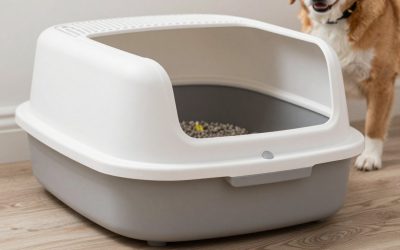
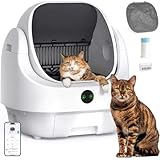
- Top Pick: Automatic Litter Box Self Cleaning, FeelNeedy Open-Top Smart Cat Litter Box with App Control, Odor-Control Safety Sensor Design for Multiple Cats, with Waste Bags
- Best Value: Cumrige Automatic Litter Box,Safety Sensor,App Control,95L Large Capacity
- Premium Choice: Automatic Litter Box, Self Cleaning Litter Box, Odor Control, 90L Capacity
📅 Last updated:
A multi-cat household can generate waste faster than most owners manage to scoop, and the resulting ammonia smell spreads into furniture, carpets, and clothing within days. A robot cat litter box addresses this by automating the sifting cycle on a timer, trapping clumps in a sealed drawer, and in some models neutralizing odor with carbon filters or UV treatment.
What separates the genuinely useful machines from mediocre ones comes down to three things: internal drum or tray design that prevents clumps from sticking, a safety sensor robust enough to stop the cycle if a cat enters during rotation, and a waste-bin capacity that matches your household’s output without requiring daily emptying. Open-top versus enclosed-hood designs also matter for cats with arthritis or shoulder mobility issues. This guide compares published specs, current pricing, and aggregated owner feedback to help you narrow the field in 2026.
As an Amazon Associate we earn from qualifying purchases at no extra cost to you.




📋 Table of Contents
Quick Picks
| Product | Best for | Price |
|---|---|---|
| FeelNeedy Open-Top | Multi-cat households needing easy access | Varies |
| Cumrige | Larger cats and high-volume waste | Varies |
| Odor Control 90L | Smell-sensitive apartments | Varies |
| Cavrtbany | App features on a tight budget | Varies |
| Litter-Robot 4 Bundle | Long-term durability and brand ecosystem | Check on Amazon |
| Basic Self Cleaning | Lowest entry price | Varies |
| Neakasa M1 Plus | Warranty coverage and mid-range balance | Varies |
| Open-Top Ready to Use | Minimal assembly, quick setup |
How We Compared
See also: Washable Kitten Bed With Removable Cover: 7 Easy-Wash Picks • Cat House for Outdoor Cats: Insulated Shelters and Straw Bedding
We filtered these eight products against four criteria drawn from spec sheets and recurring themes in owner reviews. First, capacity: a unit under 75 liters will require very frequent bag changes for two or more cats. Second, safety architecture: a weight sensor or infrared interrupt that halts the cycle when a cat approaches is non-negotiable after early-generation models caused injuries. Third, odor management: sealed waste drawers, replaceable carbon filters, or active air purification noticeably reduce room smell. Fourth, app reliability and accessory cost: some machines advertise connectivity but require subscription plans or proprietary liners that inflate long-term ownership expense.
The 8 Best Robot Cat Litter Box in 2026
FeelNeedy Open-Top Smart Cat Litter Box
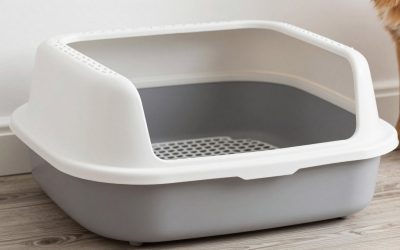
Owners with senior cats or kittens that cannot navigate enclosed hoods consistently mention this open-top design as a comfort factor. The safety sensor system stops the rake cycle when a cat enters the perimeter, and the included waste bags reduce the need for custom refills in the first weeks of use.
- Pro: Open-top entry lowers the barrier for cats with joint stiffness or very young kittens still learning litter habits.
- Pro: App control lets you adjust cycle timing remotely, useful for households where cats use the box at different hours.
- Con: The open design allows some litter scatter and odor to escape more easily than a fully enclosed drum.
Skip it if your apartment already has a strong ventilation issue or if you need maximum smell containment in a small closed room.
Cumrige Automatic Litter Box
The 95-liter internal chamber is one of the largest in this roundup, which matters if you have two or more heavy-producing cats or if you travel and cannot empty the waste drawer daily.
- Pro: 95L capacity reduces emptying frequency compared to smaller units in the same price tier.
- Pro: App control and safety sensor included without upsell to a subscription plan.
- Con: Owner feedback notes the interior drum finish can show wear after several months of heavy use.
Skip it if you need a compact footprint for a narrow hallway or bathroom floor where the extra width is a constraint.
Odor Control Automatic Litter Box
This unit leans on its 90-liter capacity and dedicated odor-control mechanism as its primary selling points. Listings emphasize the sealed approach to trapping smell, which appeals to renters and apartment dwellers who cannot add a dedicated exhaust fan near the litter area.
- Pro: 90L chamber accommodates multi-cat households without daily waste-drawer emptying.
- Pro: Odor-control system is the central design priority rather than an afterthought.
- Con: No brand-specific accessory ecosystem, meaning replacement parts may require generic sourcing.
Skip it if you want long-term parts availability backed by an established company with a dedicated support website.
Cavrtbany Automatic Litter Box
Self-cleaning cycle and basic odor management are present, though the capacity is not specified beyond the listing title.
- Pro: Lowest price with app connectivity, reducing the financial risk of trying the category.
- Pro: Self-cleaning function works without requiring a Wi-Fi-dependent hub to operate.
- Con: Published capacity details are thin, making it harder to judge waste-drawer frequency for multi-cat setups.
Skip it if you have more than two cats or need precise capacity information before committing floor space.
Whisker Litter-Robot 4 Supply & Accessory Bundle
The Litter-Robot line has the longest track record in this category, and the black finish plus bundled accessories (liners, scoop, mat, and cleaning supplies) removes the guesswork about what you need on day one. The premium price reflects a mature firmware ecosystem, widely available replacement parts, and a design refined over multiple iterations.
- Pro: Strong brand reputation with a large user community, making troubleshooting and parts sourcing straightforward.
- Pro: Bundle includes consumables so the total first-year cost gap versus cheaper models narrows.
Basic Self Cleaning Robot Litter Box
Self-cleaning functionality is present, and the minimal listing suggests a no-frills design focused on the core sifting mechanism. It suits a cautious buyer who wants to verify that their cat will tolerate automated rotation before investing more.
- Pro: Lowest price point removes hesitation for a first-time robot litter box purchase.
- Pro: Simple mechanical design means fewer electronic components to fail over time.
- Con: Sparse published specifications make it difficult to compare capacity, sensor type, or odor features against competitors.
Skip it if you need documented safety certifications or multi-cat capacity before placing the machine in a shared living space.
Neakasa M1 Plus Automatic Cat Litter Box
The standout feature here is the included two-year protection plan, which addresses a common complaint about budget units that fail after six months with no recourse. The M1 Plus sits at a mid-range price and benefits from Neakasa’s growing accessory catalog, including compatible deodorizers and liners.
- Pro: Two-year protection plan bundled at purchase reduces long-term ownership anxiety.
- Pro: Established brand with an accessory ecosystem for filters, liners, and replacement drums.
- Con: Price is double the entry-level options, so the value depends on whether you would actually use the warranty.
Skip it if you already have a reliable extended warranty through a credit card or retailer protection plan that covers electronics.
Open-Top Ready to Use Automatic Litter Box
This unit emphasizes a zero-assembly, straight-from-box experience. For renters or people in temporary housing who cannot commit to complex setups, the “ready to use” claim and open-top entry style make it a low-friction option. Odor control is listed as a feature, and self-cycling handles the daily maintenance burden.
- Pro: Minimal assembly means you can have it operational within minutes of delivery.
- Pro: Open-top design accommodates cats that refuse enclosed spaces.
- Con: Limited published detail on capacity and sensor type compared to branded competitors at similar prices.
Skip it if you need a documented safety sensor mechanism and prefer verifiable spec data before placing a device your cat enters unsupervised.
Buying Guide
Internal Capacity and Waste-Drawer Frequency
The single most practical number in a product listing is the internal chamber volume in liters. Anything under 70L will fill its waste drawer within a day or two for a single cat, and within hours for two. If you travel for weekends or simply want to empty the drawer weekly rather than daily, target 85L or more. The Cumrige at 95L and the Odor Control model at 90L are the only units here that explicitly clear that threshold.
Safety Sensors and Cycle Interruption
Enclosed drum designs rotate to sift clumps, which creates a pinch hazard if a cat enters mid-cycle. Look for units that list both a weight-based trigger and an infrared beam as independent stopping mechanisms. Open-top designs with a perimeter rake reduce this risk mechanically because the cat always has a clear exit path. The FeelNeedy and the ready-to-use open-top models take this approach, while the Cumrige and Litter-Robot rely on electronic sensors inside enclosed chambers.
Total Cost of Ownership Over Two Years
Advertised price covers only the hardware. Proprietary liners, carbon filters, and deodorizer cartridges add recurring cost. Cheaper units may have no proprietary consumables, but generic liners that fit poorly cause leaks and odors that defeat the purpose of buying an automatic box in the first place.
Our Verdict
The FeelNeedy Open-Top is the strongest all-around choice for most multi-cat households because it balances app control, safety design, and accessible entry at a mid-range price. If you own a single cat, live in a small enclosed apartment where odor containment is the top priority, and want a warranty-backed experience, the Neakasa M1 Plus wins on long-term value despite its higher sticker price.
FAQ
Do robot cat litter boxes work for kittens?
Most enclosed drum models are not recommended for kittens under four months because the weight threshold for auto-cycling may not register their small mass, and the confined space can startle them. Open-top designs like the FeelNeedy reduce risk because the kitten can exit freely and the rake operates on a slower, perimeter-based path.
How often do I need to replace carbon filters or liners?
Typical replacement intervals range from monthly to quarterly depending on usage and brand. Units that bundle accessories upfront, such as the Litter-Robot 4 Supply Bundle, remove this variable for the first few months. Check whether the model uses proprietary cartridges or accepts standard activated-charcoal sheets you can buy in bulk.
Will my cat accept an automated box immediately?
Owner feedback consistently suggests a transition period. Cats that are scent-driven may reject a new box that smells of plastic or shipping materials. Leaving the old manual box beside the new unit for one to two weeks, and placing the automatic box on its quietest manual-delay cycle initially, improves acceptance rates.
Are these boxes safe if a cat enters during a cycle?
Safety-certified models halt rotation within one to two seconds of detecting weight or infrared interruption. Open-top designs add a structural safety layer because the cat can step out at any moment without being enclosed. If you have an anxious or slow-moving cat, prioritize units with both sensor types and an open entry profile.