📅 Last updated:
The best unscented cat litter for odor control is a zeolite or activated-carbon-boosted clumping clay or sodium bentonite litter used at a 3-inch depth, because those two minerals trap ammonia molecules chemically instead of masking them with fragrance, and 3 inches gives enough volume for the clumping action to fully isolate waste from air exposure. Below, the breakdown of which additives genuinely work, how depth changes performance, and why a closed bathroom behaves nothing like an open hallway when it comes to smell.
📋 Table of Contents
- Why "unscented" doesn't mean "no odor control"
- Closed bathroom vs. open hallway: why location changes which litter wins
- Depth matters more than most owners think
- Decision guide: matching litter type to your situation
- Maintenance realities that affect odor more than brand choice
- Quick reference: what to buy based on budget
Why “unscented” doesn’t mean “no odor control”
Fragrance-free litters get a bad reputation because people assume no perfume means no odor fighting. That’s backwards. Perfumed litters often smell fine for the first day because the fragrance covers ammonia, but the ammonia is still being produced and the scent fades faster than the smell underneath builds. Unscented litters that rely on zeolite, activated carbon, or baking soda (sodium bicarbonate) target the actual chemistry of urine breakdown rather than layering a competing smell on top. For households with sensitive noses, asthma, or multiple cats, this distinction matters more than branding suggests.

ARM & Hammer Ultra Last Clumping Cat Litter, Unscented, MultiCat, 18 Lbs
Included for 'Best Unscented Cat Litter for Odor Control (No Perfume, No Cover-Up)' because the listing specifies Unscented and MultiCat, details this guide uses to compare options.
View on Amazon
Dr. Elsey's Ultra UnScented Clumping Clay Cat Litter 40 lb. Bag
Included for 'Best Unscented Cat Litter for Odor Control (No Perfume, No Cover-Up)' as a relevant option in this category; details come from the product listing.
View on Amazon
Cat's Pride Total Odor Control, Max Power, Clumping Litter Unscented 15lb
Included for 'Best Unscented Cat Litter for Odor Control (No Perfume, No Cover-Up)' because the listing specifies Max Power and Clumping Litter Unscented 15lb, details this guide uses to compare options.
View on AmazonWhat actually neutralizes ammonia (and what doesn’t)
- Zeolite: A porous volcanic mineral that physically absorbs ammonia gas into its molecular structure. This is the most consistently effective fragrance-free additive and is often listed as “natural odor control” on clay litters.
- Activated carbon: Common in plant-based litters (corn, wheat, tofu, wood). Carbon adsorbs odor compounds onto its surface area. It works well for the first several days but loses capacity faster than zeolite once saturated.
- Baking soda: Reacts with acidic odor compounds but has limited effect on ammonia specifically, which is alkaline. It’s a mild helper, not a primary odor fighter.
- Fragrance (for comparison): Does nothing to ammonia chemically. It raises the scent threshold needed before a human notices the smell, which is why scented litters feel like they “work” shorter-term and then fail abruptly once fragrance volatilizes off.
Closed bathroom vs. open hallway: why location changes which litter wins
See also: Washable Kitten Bed With Removable Cover: 7 Easy-Wash Picks • Cat House for Outdoor Cats: Insulated Shelters and Straw Bedding
Ammonia odor is a function of air exchange. In a small, closed bathroom with the door shut and no fan running, ammonia concentration builds in still air, so even a strong zeolite litter can smell noticeable by day 2 or 3 simply because nothing is diluting the air. In an open hallway or a room with cross-ventilation, the same litter box can go 4-5 days before odor is noticeable, because ambient air movement constantly dilutes the ammonia before it reaches nose-detectable levels.
This means the “best” litter is partly location-dependent:
- Closed, small bathrooms: prioritize zeolite-heavy clumping litters and pair with a vent fan or a small box fan run periodically. No litter additive fully compensates for zero air exchange.
- Open hallways or laundry rooms: activated-carbon plant-based litters perform nearly as well as zeolite clay because ambient airflow is doing part of the work.
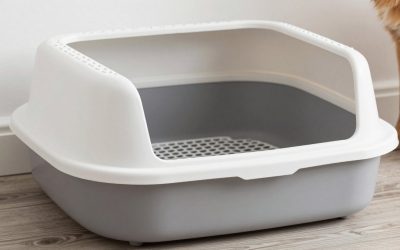
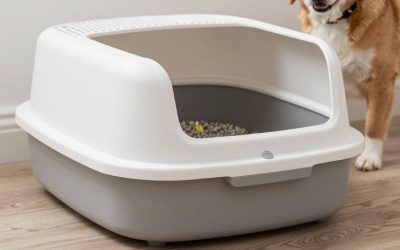
- Covered boxes in any location: odor control additive matters most here, since the hood traps gas near the litter surface. See the depth section below for how this compounds.
Depth matters more than most owners think
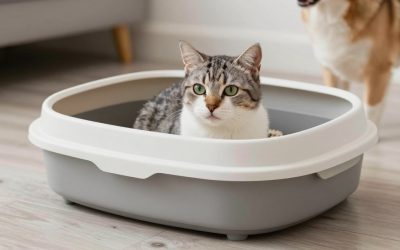
Litter depth changes how much absorptive material is available to isolate waste and how quickly clumps fully encapsulate urine before ammonia escapes into the air. Too shallow and urine hits the bottom of the box and spreads sideways under a thin clump, exposing more surface area to air. Too deep wastes litter without meaningfully improving odor control past a certain point.
| Depth | Uncovered box odor control | Covered box odor control | Litter use (40 lb cat, per week) |
|---|---|---|---|
| 2 inches | Weak — urine often reaches the pan bottom, clumps form thin and crack, odor escapes within 1-2 days | Poor — hood traps odor from shallow, incomplete clumps | ~3-4 lbs |
| 3 inches | Good — clumps form fully, most odor contained until next scoop | Good — sufficient absorption to offset the hood’s trapping effect | ~5-6 lbs |
| 4 inches | Marginally better than 3 inches, diminishing returns | Best — extra buffer compensates for low airflow under the hood | ~7-8 lbs |
Covered boxes consistently need the deeper end of this range because the hood keeps odor concentrated near the litter surface rather than letting it dissipate upward and outward the way an uncovered box allows.
Decision guide: matching litter type to your situation
| Your situation | Recommended approach | Why |
|---|---|---|
| One cat, open hallway, uncovered box | Activated-carbon plant-based litter, 3-inch depth | Ambient airflow plus moderate carbon capacity is enough; lighter litter is easier to scoop and carry |
| One or two cats, small closed bathroom | Zeolite-boosted clumping clay, 3-inch depth, run a fan daily | Still air needs the strongest chemical absorption available; ventilation does the rest |
| Multi-cat household, covered box | Zeolite clay, 4-inch depth, scoop twice daily | Covered boxes trap gas and multiple cats generate more ammonia volume; depth and scoop frequency both need to increase |
| Kitten or cat prone to tracking litter everywhere | Zeolite or carbon litter at 2.5-3 inches, lighter clay granule | Full depth still needed for odor, but a finer or lighter granule reduces tracking without sacrificing absorption |
| Sensitive respiratory household (asthma, newborns) | Low-dust unscented clay or plant-based litter with zeolite, 3 inches | Avoids both perfume irritants and silica dust; zeolite handles odor without airborne fragrance compounds |
Maintenance realities that affect odor more than brand choice
- Scoop frequency beats litter chemistry. Any additive saturates eventually. Scooping once daily for a single cat, twice daily for two or more, resets the clock on odor buildup regardless of which mineral is doing the absorbing.
- Full litter changes every 2-3 weeks (clumping) are non-negotiable. Zeolite and carbon both lose absorptive capacity as pores fill with ammonia and bacteria. A box that smells fine on fresh litter and sour by week two usually needs a full dump-and-refill cycle, not more scooping.
- Plastic boxes absorb odor over time. Scratched or porous plastic holds onto ammonia smell that no litter can fix. Boxes older than 12-18 months with visible scratching are often the real odor source, not the litter inside them.
- Covered boxes need more frequent scooping than uncovered ones, roughly 30-50% more often, to offset the trapped-gas effect, even with a strong zeolite litter.
- Baking soda sprinkled under the litter (a thin layer at the pan bottom, litter on top) is a low-cost supplemental step that mildly extends time between full changes but shouldn’t be relied on as the primary odor control method.
Quick reference: what to buy based on budget
- Budget-conscious: Unscented clumping clay without added zeolite, used at 3 inches with daily scooping. General market range for a 20-25 lb bag runs modest; it works adequately in well-ventilated spaces but needs more frequent full changes.
- Mid-range: Zeolite or activated-carbon clumping clay, 3-4 inch depth. Costs somewhat more per bag but extends time between full changes and performs better in closed rooms or covered boxes.
- Premium: Plant-based litter (tofu, walnut, or wood) with activated carbon, lightweight and lower dust, best for sensitive households and easier disposal, at a higher per-pound price point.
None of these require a scented formula to perform well. The combination that actually controls ammonia odor without perfume is the right mineral additive, matched depth for the box style, and a scooping schedule that doesn’t let waste sit long enough to saturate the litter’s absorptive capacity. If a cat shows sudden litter box avoidance alongside odor changes, that can also signal a urinary health issue worth checking with a veterinarian rather than a litter problem alone.