📅 Last updated:
📋 Table of Contents
Quick answer: Our top pick in 2026 is the Large open plastic litter pan — our #1 rated choice. See the full ranked comparison, alternatives and buying advice below.
The Short Answer
Yes—most multi-cat homes need multiple litter boxes, with one important condition: the cats must have easy, low-stress access to every box. The longtime guideline is one box per cat, plus one extra. That means two cats should ideally have three boxes; three cats should have four.
That rule is not about being fussy. Cats may avoid a box because another cat is guarding it, because it is dirty, because they dislike the location, or because they simply do not want to use the same bathroom immediately after another cat. A home can have a very clean single box and still have a cat that starts urinating on rugs, bedding, or laundry.
As an Amazon Associate we earn from qualifying purchases at no extra cost to you.

Some bonded pairs will peacefully share two boxes, especially in a small household with frequent scooping. But “they share one box without complaints” is not the same as “one box is enough.” More than one option gives cats room to avoid conflict and gives you an early warning if one cat’s bathroom habits change.
What You Actually Get
See also: Most Trusted Cat Litter Brands in 2026 and What Each Does Best • How to Introduce a Carrier to Cats (2026): Step-by-Step
Adding litter boxes gives a multi-cat household more than extra places to scoop. It creates a bathroom setup that is easier for cats to use on their own terms. In practical terms, you get cleaner surfaces between scooping sessions, less competition around one high-traffic box, and a better chance of preventing litter-box avoidance before it becomes a frustrating household problem.
For two average-size adult cats, a sensible starting setup is three boxes placed in at least two separate areas. Do not line up all three boxes side by side in the laundry room; from a cat’s perspective, that can function like one large shared bathroom. Put boxes in distinct, quiet locations where a cat cannot be cornered by another pet.
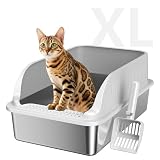
Box size matters as much as box count. A useful target is a pan about 1.5 times the cat’s body length, nose to tail base. Many adult cats are most comfortable in open boxes around 24 to 30 inches long and 16 to 20 inches wide. High-sided pans, commonly 10 to 13 inches tall, can help reduce scatter, although elderly cats, kittens, and cats with mobility problems may need a lower entry of about 3 to 5 inches.
Most homes do well with 2 to 3 inches of unscented clumping litter. Deeper litter is not automatically better: some cats dislike sinking into it, while a shallow layer may leave more waste stuck to the bottom. Scoop solid waste and clumps at least once daily; with three or more cats sharing boxes, twice daily is often more realistic.
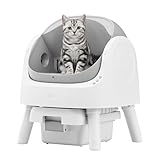
Automatic boxes can reduce the daily workload, but they do not erase the need for enough stations. The Cumrige Automatic Litter Box listed at $199.93 and an open-top self-cleaning box listed at $99.99 may appeal to busy homes, particularly where one or two cats use a box frequently. Still, a self-cleaning unit should count as one box, not as a replacement for every backup box. Keep at least one conventional open pan available, especially while cats are adjusting to a new machine.
For 2026 buyers, the best setup is usually a mix: a convenient primary box or automatic unit in a well-used area, plus simple, roomy backup pans elsewhere in the home. This approach costs less than buying several machines and gives cautious cats a familiar option.
Pros
- Less territorial pressure: Multiple stations make it harder for one confident cat to control bathroom access.
- Cleaner options for cats: A second or third box remains available when another box has just been used.
- Fewer accidents outside the box: Extra boxes can help prevent avoidance caused by crowding, dirty litter, or blocked access.
- Better health monitoring: Separate or strategically placed boxes make it easier to notice diarrhea, constipation, unusually large urine clumps, or a cat that is not eliminating normally.
- Useful during introductions: New cats need their own resources while they settle in, even if they eventually become friendly.
- More resilient routine: If you are late scooping one day, cats still have acceptable alternatives.
- Lower cost than solving behavior problems later: Basic litter pans are inexpensive compared with repeated carpet cleaning, replacement rugs, or veterinary and behavior consultations.
Cons
- More floor space is required: Three full-size pans can be difficult to place in a studio, small apartment, or single-bathroom home.
- More litter and supplies: Each box needs enough litter to feel usable, and more boxes mean more liners, mats, filters, or waste bags if you use them.
- Cleaning still matters: Extra boxes are not permission to leave waste for days. Neglected boxes can make the problem worse.
- Placement takes planning: A box beside a loud furnace, washer, dryer, or frequently slammed door may go unused.
- Automatic boxes cost more upfront: Self-cleaning models in the roughly $100 to $200 range can be convenient, but they require power, replacement parts or liners in some cases, and a gradual introduction.
- Some cats reject covered or automated designs: An open, ordinary pan may be the preferred option even in a home with premium equipment.
Who Should Buy It
Multiple litter boxes are the right choice for nearly every household with two or more cats. They are especially worthwhile if your cats are not closely bonded, if one cat is shy, if a cat has previously had accidents, or if one cat tends to wait outside the box while another is using it.
You should also prioritize extra boxes in multi-level homes. A cat should not have to travel down a flight of stairs, cross a busy room, or pass another cat’s favorite sleeping spot to reach the only box. Put at least one box on each floor that cats can access.
Older cats, cats with arthritis, kittens, and cats recovering from illness benefit from nearby, easy-entry boxes. If a cat suddenly starts avoiding the litter box, straining, vocalizing, producing only tiny amounts of urine, or eliminating outside the box, contact a veterinarian promptly. Do not assume a behavior issue is just a box-count problem.
Automatic litter boxes make the most sense for owners who already know their cats tolerate enclosed or mechanical products, scoop consistently, and want less daily maintenance. They are a convenience upgrade, not a substitute for sensible box numbers, good placement, and regular inspection.
Who Should Skip It
Very few multi-cat households should skip multiple boxes entirely. The exception is temporary: for example, two cats may share a single box for a short supervised period during travel or while one cat is confined for medical recovery under veterinary guidance. That is not an ideal long-term arrangement.
You may also skip buying several expensive automatic boxes. If budget or space is limited, choose inexpensive open pans first. A $15 to $30 large plastic box in a quiet location is often more useful than one elaborate unit that a cat is afraid to enter.
If you have one cat, you do not necessarily need two boxes—but a second box is still helpful in larger homes, for senior cats, or when your schedule sometimes makes immediate scooping difficult.
Cheaper Alternatives
| Option | Cost | Trade-off |
|---|---|---|
| Large open plastic litter pan | $15–$30 each | Lowest cost and easy for cats to accept, but requires daily scooping and may allow litter scatter. |
| High-sided storage tote conversion | $12–$25 plus a cut entry | Offers generous interior space and high walls, but needs a smooth, low entrance for safe access. |
| Extra standard pan in a second location | $10–$20 | Improves access quickly, though smaller pans may not suit large cats. |
| Large litter mat and better scooping routine | $15–$40 | Helps control tracking and cleanliness, but does not solve territorial blocking or insufficient box count. |
| One automatic box plus conventional backup pans | About $120–$260 total | Reduces some scooping while keeping familiar alternatives, but still needs monitoring and periodic deep cleaning. |
FAQ
How many litter boxes do I need for two cats?
The ideal recommendation is three boxes: one per cat, plus one extra. If space is genuinely tight, start with two large boxes in separate locations and add a third as soon as possible. Scoop at least once daily, preferably twice daily if both cats use the same boxes heavily.
Can multiple cats share one litter box?
They can, but it is rarely the best long-term plan. Cats may tolerate sharing until a change in routine, illness, stress, aging, or a conflict between cats makes the arrangement fail. Multiple boxes provide insurance against those problems.
Should litter boxes be next to each other?
Not usually. Boxes placed directly beside each other may feel like a single bathroom station, especially if one cat can block the entrance. Spread them across separate rooms or at least separate areas with different entry paths. Avoid isolated closets where a cat can feel trapped.
Do automatic litter boxes count toward the one-per-cat-plus-one rule?
Yes, an automatic box counts as one box if your cats use it comfortably and it is kept operational and clean. However, keep a traditional backup pan available. Mechanical boxes can be temporarily unavailable during cleaning, power interruptions, or adjustment periods, and some cats simply prefer an open pan.
Ready to decide? Our #1 pick for 2026 is the Large open plastic litter pan.
Live price & availability on Amazon.