📅 Last updated:
As an Amazon Associate, All Ears Pet Care earns from qualifying purchases. This article contains affiliate links — if you buy through them we may earn a small commission at no extra cost to you. We only recommend products we believe in.

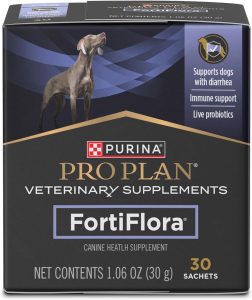
TL;DR: Dog probiotics restore gut microbiome balance after antibiotics, illness, or diet changes — reducing loose stools, gas, and digestive discomfort. Purina Pro Plan FortiFlora is vet-recommended, single-dose sachets, and palatable for picky dogs. Best pick: ASIN B01NAVBFBS.
As an Amazon Associate we earn from qualifying purchases at no extra cost to you.


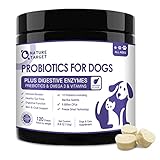

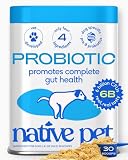


Best Dog Probiotic Supplement for Digestive Health in 2026
A dog’s digestive system hosts trillions of bacteria that regulate everything from nutrient absorption and immune response to stool consistency and energy levels. When that microbial balance is disrupted — by a course of antibiotics, a sudden food change, stress, or illness — the result is often visible and immediate: loose stools, excessive gas, reduced appetite, and general digestive upset. Dog probiotic supplements introduce beneficial bacterial strains to help restore that balance faster than the gut can recover on its own, reducing the duration and severity of digestive disruption.
This guide covers what probiotic strains actually matter for dogs (not all human probiotics transfer), how to choose between powder, chew, and capsule formats, and when probiotics are genuinely useful versus when they’re marketing. If your dog is already on dental chews or calming supplements, probiotics fit naturally into the same daily supplement routine — and the combination approach addresses gut-brain axis connections that matter for anxious dogs.
🛒 Best Price Today on Amazon
Prime members get fast, free shipping on everything above, plus member-only deals. New members get a 30-day free trial — cancel anytime.
📋 Table of Contents
Top Pick: Purina Pro Plan Veterinary FortiFlora
Want to compare options? Browse dog probiotics on Amazon — filter by format (powder, chew, capsule), CFU count, and strain specificity.
Dog Probiotic Formats Compared
See also: 7 Best Refillable Frozen Dog Treat Toys for Long-Lasting Licks • Best Dog Door Mat for Muddy Paws: Sizing, Materials and Picks by Entryway
| Format | Administration | Palatability | Shelf Stability | Best For |
|---|---|---|---|---|
| Powder Sachet (FortiFlora) | Sprinkle over food | High — enhances food aroma | Excellent — individually sealed | Picky eaters; precise daily dosing; acute digestive upset |
| Soft Chew | Given as treat | Very high — treat-like texture | Good — resealable bag | Dogs that resist food toppers; maintenance supplementation |
| Hard Chew / Dental Probiotic | Given as treat | High | Good | Dual-function gut + oral microbiome support |
| Capsule / Tablet | Hidden in food or pilled | Neutral — depends on hiding | Excellent — moisture-protected | Dogs with treat allergies; flexible dosing |
| Liquid / Paste | Mixed in food or syringe | Variable | Refrigeration often required | Post-surgical recovery; dogs unable to chew |
What to Look for in a Dog Probiotic
Species-specific bacterial strains matter. Human probiotics typically feature Lactobacillus acidophilus and Bifidobacterium strains optimized for the human gut — a longer, more alkaline environment than a dog’s shorter, more acidic digestive tract. The canine gut favors different strain profiles. FortiFlora’s active strain, Enterococcus faecium SF68, has decades of published veterinary research behind it specifically for dogs and cats — it’s the most studied canine probiotic strain available and the reason veterinarians reach for this product specifically rather than generic human-formulated alternatives.
CFU count tells you the dose, not the quality. Colony-forming units measure the number of live bacteria per dose. A probiotic with 500 million CFU of a well-researched strain outperforms one with 10 billion CFU of a strain with no canine research behind it. FortiFlora delivers a precisely calibrated dose of its specific strain rather than competing on raw CFU numbers — a legitimate clinical approach versus marketing-driven formulations.
Guaranteed analysis and expiration dating. Probiotic bacteria are alive and die over time. A product that guaranteed 5 billion CFU at manufacture may have a fraction of that at the time of use if stored poorly or past expiration. Quality probiotic products guarantee CFU count at time of use (not just at manufacture) and carry clear expiration dates. Individually sealed sachets like FortiFlora protect each dose until the moment of use — far superior to a shared powder container that gets moisture exposure every time it’s opened.
Palatability is a practical requirement. A probiotic your dog refuses to eat is a probiotic that doesn’t work. FortiFlora has the unusual quality of being genuinely palatable to even picky dogs — it’s often recommended as a food topper for dogs in recovery from illness who have reduced appetite, because the liver-based flavoring encourages eating. This is not a trivial feature; it’s the reason the product has maintained veterinary recommendation status for over two decades despite the proliferation of alternative formulations.
When Dog Probiotics Are Genuinely Useful
Probiotics are most clearly supported by evidence in three specific canine situations. First, during and after antibiotic treatment: antibiotics indiscriminately kill both pathogenic and beneficial bacteria, causing the microbial disruption that produces antibiotic-associated diarrhea. Administering probiotics during and for 1–2 weeks after a course of antibiotics significantly reduces the duration of digestive upset — though timing matters (give 2–3 hours after the antibiotic dose to avoid killing the probiotic bacteria before they can colonize).
Second, during diet transitions: switching food brands or formulas is a common trigger for digestive upset even when the new food is nutritionally superior. A probiotic given during the 7–10 day transition period buffers the microbial adjustment the gut has to make. Third, for dogs with recurring loose stools or diagnosed irritable bowel conditions — here, probiotics function as a long-term maintenance supplement rather than an acute intervention, with benefits accumulating over weeks of consistent use.
Probiotics are less clearly indicated for perfectly healthy dogs with no digestive symptoms — the gut of a healthy dog self-regulates effectively, and the research on preventive daily probiotic use in asymptomatic dogs is thinner than the acute intervention evidence. That said, the safety profile of well-formulated dog probiotics is excellent, so if your vet recommends maintenance use, there is no meaningful downside. Pair with our dental chew guide and pet first aid kit essentials for a complete preventive health routine.
Choosing the Right Probiotic Format for Your Dog’s Routine
The best probiotic is the one your dog reliably receives every day. Consistency matters far more than formulation details for long-term gut microbiome support — a moderately effective product given daily outperforms the most research-backed formula given sporadically. With that principle in mind, format selection becomes primarily a palatability and routine question rather than a technical one.
For dogs already accustomed to having supplements mixed into their food — fish oil, joint support powders, calming supplements — a powder sachet like FortiFlora integrates invisibly into the existing routine. The sachet format also eliminates the measurement uncertainty of shared-container powders; each sachet delivers a precisely calibrated dose with no scooping or guessing. For households with multiple dogs on different supplement regimens, individual sachets prevent cross-contamination and accidental double-dosing far more reliably than a shared jar.
Soft chew formats suit dogs that are treat-motivated and would notice and reject a food topper. Given as a standalone reward — after a walk, during a training session, or as a post-meal treat — they build consistent daily administration without requiring food preparation. The trade-off is caloric load: most probiotic chews are 10–25 calories per serving, which matters for weight-managed dogs already on a calorie-controlled diet. For those dogs, the powder sachet with near-zero caloric contribution is the more appropriate choice.
Frequently Asked Questions
How long does it take for dog probiotics to work?
For acute digestive upset (antibiotic-associated diarrhea, sudden food change), most dogs show improvement within 3–5 days of consistent probiotic use. Full microbial reestablishment after significant disruption takes 2–4 weeks. For chronic conditions like irritable bowel, meaningful improvement may take 6–8 weeks of consistent daily supplementation before a fair assessment can be made. Inconsistent administration — giving probiotics only on days you remember — significantly reduces effectiveness compared to daily routine dosing.
Can I give my dog human probiotics instead?
Human probiotics are not harmful to dogs and may provide some benefit, but they’re not optimized for canine gut conditions. The bacterial strains most researched for human gut health (L. acidophilus, B. longum) have limited published data in dogs. More importantly, many human probiotic products contain xylitol as a sweetener — xylitol is severely toxic to dogs, causing life-threatening hypoglycemia. Always check the ingredient list of any human probiotic before giving it to your dog, and default to veterinary-specific formulations to avoid this risk entirely.
Should I give probiotics with or without food?
With food is generally better for probiotic bacteria survival. Food buffers stomach acid, creating a more hospitable transit environment for live bacteria to reach the intestine. For dogs on antibiotics, give the probiotic at mealtime but at least 2 hours after the antibiotic dose — this separation minimizes direct antibiotic-probiotic contact. FortiFlora sachets are specifically designed to be sprinkled over food, making mealtime dosing seamless.
Are there any side effects from dog probiotics?
Mild and temporary digestive adjustment — slightly looser stools or increased gas — in the first 2–3 days of use is the most common reported response and typically resolves without intervention. Genuine adverse reactions to well-formulated veterinary probiotics are rare. Dogs with compromised immune systems (those on immunosuppressant medications or with certain immune conditions) should only receive probiotics under veterinary guidance, as live bacterial supplementation carries a small theoretical risk in severely immunocompromised patients.
Do probiotics help with dog allergies or skin conditions?
The gut-skin axis — the relationship between gut microbiome health and skin barrier function and inflammatory response — is an active area of veterinary research. Some studies suggest probiotic supplementation may reduce the severity of atopic dermatitis (environmental allergies) in predisposed dogs, likely through modulation of immune response rather than direct skin effects. The evidence is promising but not yet definitive enough to recommend probiotics as a primary allergy treatment. As a supportive measure alongside veterinary allergy management, probiotics present low risk and potential benefit worth discussing with your vet.