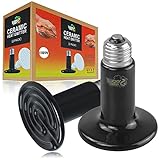
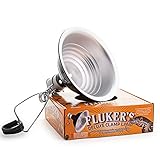
- Top Pick: ReptiKing Reptile Light Fixture, 5.5'' Standard Dome for Reptile Basking Bulb Light/Heat Lamp/Ceramic Heat Emitter, 5.5 Inch Light Dome
- Best Value: Dual Reptile Light Fixture with Switches, Reptile Heat Lamp Fixture, Reptiles Terrarium UVB Bulb Fixture for Bearded Dragon, Max 160W Each (Bulb Not Included)
- Premium Choice: TFNN Reptile Heat Lamp, Heat Lamp with Clamp, UVA UVB Reptile Light with Intelligent Cycle Timer for Turtle, Bearded Dragon, Lizard and More, 2 Bulbs 50W+75W
📅 Last updated:
As an Amazon Associate, All Ears Pet Care earns from qualifying purchases. This article contains affiliate links — if you buy through them we may earn a small commission at no extra cost to you. We only recommend products we believe in.
🛒 Best Price Today on Amazon
Prime members get fast, free shipping on everything above, plus member-only deals. New members get a 30-day free trial — cancel anytime.
As an Amazon Associate we earn from qualifying purchases at no extra cost to you.



📋 Table of Contents
- Quick Comparison
- Best Reptile Heat Lamps for Healthy Reptiles
- Top Reptile Heat Lamp Picks
- Types of Reptile Heat Sources
- Buying Guide: Reptile Heat Lamps
- Related Guides
- Frequently Asked Questions
- Common Reptile Heat Lamp Mistakes to Avoid
- What to Look for in a Good Reptile Heat Lamp
- Caring for Your Pet Beyond the Reptile Heat Lamp
- Related Articles
- Related Guides
Quick Comparison
| Product | Brand | Price | Rating | Availability |
|---|---|---|---|---|
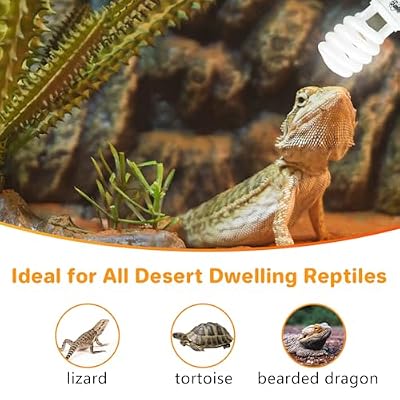
| LUCKY HERP UVA UVB Reptile Light 10.0, Desert UVB 150 Compact Fluoresc | LUCKYHERP | $14.99 | 4.4★ (2,885) | In stock |
| — | Check price | — | Limited |
Best Reptile Heat Lamps for Healthy Reptiles
See also: How to Remove Litter Box Odor Buildup (2026): Step-by-Step • How to Fix a Jammed Automatic Feeder (2026): Step-by-Step
Reptiles are ectotherms — they cannot regulate their own body temperature and depend entirely on their environment for thermoregulation. The right heat lamp is not a luxury; it’s a survival necessity. Incorrect temperatures lead to digestive failure, immune suppression, and ultimately death. Choosing the right heat source and setting it up correctly is the most critical aspect of reptile husbandry.
Top Reptile Heat Lamp Picks
Zoo Med Repti Basking Spot Bulb
The Zoo Med Repti Basking Spot Bulb is the industry standard for reptile basking zones. It produces a concentrated beam of heat and visible light that creates a well-defined warm basking area with a natural temperature gradient. Available in wattages from 25W to 150W to accommodate different enclosure sizes and species requirements. Use with a quality thermostat for precise temperature control.

7
In Stock
Updated: 22 hours ago


As an Amazon Associate we earn from qualifying purchases. Product prices and availability are accurate as of the date/time indicated.
Arcadia Deep Heat Projector
The Arcadia Deep Heat Projector (DHP) is a newer technology that uses infrared A and B wavelengths to deeply penetrate tissue and warm reptiles from the inside out — the same way solar radiation does in nature. Unlike traditional basking bulbs, it produces no visible light, making it ideal for nocturnal species or as a 24-hour heat source. It’s increasingly the preferred choice among expert reptile keepers.
REPTI ZOO Reptile Heat Lamp with Dimmer Switch
The REPTI ZOO heat lamp kit includes a 100W ceramic heat emitter (produces heat but no light — excellent for 24-hour heating without disrupting day/night cycles), a dome fixture with built-in dimmer switch, and a thermometer. It’s a complete, affordable heating solution for beginners setting up their first enclosure for bearded dragons, leopard geckos, or ball pythons.
Types of Reptile Heat Sources
- Incandescent basking bulbs: Provide heat and visible light — for diurnal species needing a defined basking spot.
- Ceramic heat emitters (CHE): Produce heat without light — ideal for 24-hour heating and nocturnal species.
- Halogen flood bulbs: Produce a broader, more natural beam of heat — increasingly preferred over incandescent for basking.
- Deep heat projectors: Infrared A&B heating — closest to natural solar heating; best for species requiring deep tissue warming.
- Under-tank heaters (UTH): Supplemental belly heat — useful for species like corn snakes and leopard geckos that thermoregulate via substrate contact.
Buying Guide: Reptile Heat Lamps
- Research your species first: Temperature requirements vary dramatically between species. A bearded dragon needs a 95–110°F basking spot; a ball python needs 85–95°F. Know your animal’s needs before buying any heating equipment.
- Always use a thermostat: Heat lamps without thermostats can fatally overheat enclosures. A quality thermostat (dimming thermostat for basking bulbs; on/off for CHEs) is non-negotiable.
- Temperature gradient: Every enclosure needs a warm side, cool side, and basking spot. Measure temperatures with an infrared temperature gun, not a dial thermometer.
- UVB is separate: A basking heat lamp does not provide UVB radiation. Most diurnal reptiles also require a separate UVB lamp — this is equally critical and often overlooked by beginners.
- Wattage sizing: The larger the enclosure, the higher the wattage needed. Under-powered bulbs won’t reach target temperatures; over-powered bulbs without a thermostat will overheat the enclosure.
Related Guides
Frequently Asked Questions
How do I choose the best reptile heat lamps?
Focus on build quality, safety, the right size for your pet, and verified owner reviews. Compare the picks in the table above on price, rating, and availability, then match the features to your pet’s specific needs and your budget.
How much does a good reptile heat lamps cost?
In this guide prices range from about $14.99 to $14.99, with most quality options around $14.99. Spending a little more usually buys better durability and safety.
Which reptile heat lamps is the highest rated?
LUCKY HERP UVA UVB Reptile Light 10.0, Desert UVB 150 Compac is among the top rated here at 4.4★ from 2,885 reviews, making it a reliable pick for most owners.
Common Reptile Heat Lamp Mistakes to Avoid
Many pet owners make avoidable mistakes when buying a reptile heat lamp. The most common is choosing on price alone — the cheapest option often costs more over time through replacements or poor performance. Another is ignoring your pet’s specific size, age, and temperament, which can make an otherwise good reptile heat lamp a poor fit. Skipping the product details and warranty information is also risky; knowing what is covered protects your purchase. Some owners overlook safety certifications or material quality, which matters most for anything your pet contacts daily. Finally, don’t assume more features always means better — extra complexity can mean more parts to break or clean. Focus on the features you will genuinely use and the ones that improve your pet’s comfort and safety.
What to Look for in a Good Reptile Heat Lamp
Choosing the right reptile heat lamp comes down to a few practical factors that matter for everyday use. Start with build quality and materials — durable, non-toxic construction lasts longer and is safer for your pet. Size and fit are next: a reptile heat lamp that is too small or too large will be frustrating to use and may not suit your pet’s needs. Look closely at ease of cleaning and maintenance, since a product you can keep hygienic with minimal effort is one you will actually keep using. Finally, weigh verified owner reviews over flashy marketing claims; real-world feedback from other pet owners is the most reliable signal of long-term satisfaction. Balancing these factors against your budget helps you avoid both overspending and buying a cheap option you will need to replace within months.
Caring for Your Pet Beyond the Reptile Heat Lamp
A good reptile heat lamp is one part of responsible pet care. Pair it with regular attention to your pet’s overall health — consistent feeding, fresh water, exercise, and routine veterinary checkups. Watch for changes in behaviour or appetite, which are often the first signs something needs attention. Keep your pet’s environment clean and enriching, with safe spaces to rest and play. Products like a quality reptile heat lamp support these basics, but they work best as part of a broader routine. When in doubt about your pet’s specific needs, your veterinarian remains the best source of personalised advice.
Ready to decide? Our #1 pick for 2026 is the LUCKY HERP UVA UVB Reptile Light 10.0, Desert UVB 150 Compact Fluoresc.
Live price & availability on Amazon.