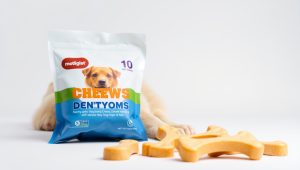
- Top Pick: Jeefome Dog Toys for Aggressive Chewers
- Best Value: Frienhund Tough Dog Toys for Aggressive Chewers 3 Pack, Indestructible Dog Toys for Large Dogs, Dog Chew Toys, Aggressive Chew Toys to Keep Them Busy, Dog Toy for 30-75lbs Medium/Large Breeds
- Premium Choice: DinoBone 2-Pack Tough Dog Chew Toys for Aggressive Chewers, Rock-Hard Nylon
📅 Last updated:
Buying a toy for a destructive chewer is less about finding something labeled “indestructible” and more about matching the toy to your dog’s jaw strength, chewing style, and daily routine. The biggest mistake is treating all aggressive chewers alike. A 12-pound dog that shreds plush toys has different needs from a 75-pound dog that crushes nylon bones in minutes.
Another common error is choosing the hardest available toy. Extremely rigid products can be difficult for dogs to use comfortably and may create dental risks if your dog bites down with force. Size is also easy to get wrong: a toy that is too small can become a choking hazard, while an oversized toy may be frustrating rather than enriching.
As an Amazon Associate we earn from qualifying purchases at no extra cost to you.




Use the product label as a starting point, not a guarantee. Terms such as “tough,” “heavy duty,” and “almost indestructible” are marketing language, not standardized performance ratings. Inspect every toy before use, supervise chewing sessions, and remove any item that develops sharp edges, cracks, loose pieces, or a size small enough to swallow.
📋 Table of Contents
Decide These 3 Things First
- How does your dog chew? Gnawers work steadily on one area, shredders tear at seams and corners, and power chewers clamp down and attempt to crush the toy. Some dogs switch between all three styles.
- What is your dog’s actual size? Measure body weight, jaw width, and the length of toys your dog can comfortably carry. Breed labels are less useful than these measurements.
- What job should the toy perform? A toy for 10-minute supervised chewing can be lighter than one intended to occupy a dog for an hour. Decide whether you need chewing, fetching, food dispensing, dental texture, or mental stimulation.
Choose the Right Size
See also: How to Remove Litter Box Odor Buildup (2026): Step-by-Step • How to Fix a Jammed Automatic Feeder (2026): Step-by-Step
Size is the first safety filter. For a chew toy, the dog should not be able to fit the entire item behind the front teeth. As a practical starting point, choose a toy at least 1.25 to 1.5 times the width of your dog’s mouth at its widest comfortable opening. For a 30- to 50-pound dog, that often means a toy measuring roughly 5 to 7 inches long; dogs from 50 to 75 pounds may need approximately 7 to 9 inches. These are starting ranges, not universal rules.
Look for a visible handle, ring, or broad end that prevents the toy from sliding deep into the mouth. Avoid small balls, short bones, and narrow sticks for dogs that can swallow them whole. If your dog weighs under 20 pounds, do not automatically select a large-dog toy simply because it is tougher. A dense, oversized chew can be awkward and may encourage excessive jaw strain.
For multi-dog homes, size the toy for the largest dog when the dogs share access, or separate them during chewing. Weigh the finished toy as well: a 6-ounce rubber toy may be manageable for a medium dog, while a 1-pound nylon toy can be cumbersome for a smaller one.
Compare Materials, Not Just Marketing Claims
Rubber is usually the most versatile material for destructive chewers. Dense natural or synthetic rubber can flex under pressure, bounce for fetch, and accept treats in a hollow center. Choose a thick-walled product with no thin tabs or easily peeled surface. Softer rubber may suit moderate chewers, while heavy chewers generally need a firm rubber compound that still has some give when pressed with a fingernail.
Nylon is hard, long-lasting, and often less expensive than premium rubber. It works well for dogs that enjoy methodical gnawing, but it should not be treated as risk-free. If your dog can break off large chunks, stop using the toy. A nylon chew should have rounded edges rather than sharp ridges, and the texture should not be so abrasive that it cuts the gums.
Rope can provide texture and interactive play, but it is not a reliable unsupervised option for dogs that ingest fibers. Plush is best reserved for dogs that do not immediately rip open seams. Thermoplastic rubber and similar molded materials can offer a middle ground, but inspect them for thin flashing, seams, and detachable pieces.
Products such as the Jeefome Dog Toys for Aggressive Chewers, Frienhund Tough Dog Toys 3 Pack, DinoBone 2-Pack Rock-Hard Nylon toys, and SIHRMIU 2 Pack are examples of the common rubber-and-nylon formats shoppers will encounter. Compare their dimensions, material disclosures, and replacement policy rather than relying on the word “aggressive” in the name.
Inspect Construction and Failure Points
A durable material cannot compensate for weak construction. For molded toys, examine the seam around the perimeter. It should be even, fully fused, and free of thin lips that a dog can peel away. On treat-dispensing toys, the opening should be large enough to clean thoroughly but not so large that food falls out immediately.
For rings and tug toys, favor continuous one-piece construction over glued or screwed connections. Handles should be thick enough to resist twisting; a flexible handle around 0.5 inch thick may suit a medium dog, while larger dogs often need a broader grip of approximately 0.75 inch or more. Do not use a tug toy as a chew toy if your dog tears off fibers or rubber fragments during play.
Check corners and ends before purchase. Rounded transitions are generally preferable to thin points, which concentrate pressure and fail sooner. A toy with several raised ridges may look stimulating, but those ridges are also potential break points. Keep a simple replacement rule: if a piece larger than a pea comes off, retire the toy immediately; for a toy used by a large dog, remove it even sooner if the fragment could be swallowed.
Balance Comfort With Performance
The toughest toy is not automatically the best toy. Your dog should be able to pick it up, reposition it, and chew without repeatedly banging teeth against a hard floor. For food toys, a hollow cavity that holds 2 to 6 ounces of kibble, wet food, or frozen filling can extend playtime without requiring a very hard exterior.
Texture should match the goal. Moderate nubs can massage the gums and add interest, but sharp or deeply cut ridges are not a substitute for dental care. A toy designed for fetch should bounce predictably and remain visible outdoors; a chew designed for quiet occupation can be heavier and less aerodynamic.
Rotate three to five toys instead of leaving every toy available every day. Offer one chew, one food puzzle, and one interactive toy, then switch them every 24 to 48 hours. Rotation preserves novelty and makes it less likely that your dog will focus relentlessly on one damaged area.
Set a Realistic Price Tier
Budget options generally cost about $8 to $15 per toy or $12 to $20 for a two- or three-pack. Examples in this range include the $9.98 Jeefome toy, the $13.99 Frienhund three-pack, the $14.99 DinoBone two-pack, and the $12.99 SIHRMIU two-pack. These prices can be attractive for rotation, but inspect each piece individually because a multi-pack may contain different shapes and failure points.
Midrange toys commonly cost $15 to $30 each. This tier often adds a thicker rubber body, a better food cavity, a more useful handle, or a clearer size chart. Premium options may cost $30 to $50 or more, particularly when they combine a specialized design with replacement support.
Calculate cost per usable month rather than cost per item. A $10 toy that lasts one week costs more over time than a $25 toy that remains safe for three months. Avoid paying extra for a vague “extreme” label; pay for measurable dimensions, a disclosed material, thoughtful construction, and a credible return or replacement policy.
Check Warranty and Replacement Terms
A warranty is useful only when its exclusions are clear. Look for the coverage period, proof-of-purchase requirements, and whether the company covers normal chewing damage or only manufacturing defects. A 30-day satisfaction guarantee is different from a one-year replacement promise, and neither means a toy is safe to use after it begins breaking apart.
Before buying, confirm whether replacement applies to the complete toy, one component, or only a future discount. Some policies exclude damage caused by aggressive chewing, which may make them less valuable for this category. Save the receipt and photograph the toy when it arrives if the construction appears flawed.
Evaluate Delivery and Assembly Details
Most chew toys require no assembly, but “multi-part” products may include removable plugs, ropes, clips, or treat inserts. Count all pieces before giving the toy to your dog and test whether each part can be detached by hand. Any accessory that comes loose should be used only during supervised play or discarded.
For online orders, confirm the delivered size, pack quantity, and expected arrival date. A product listed as a “three-pack” may contain three small toys rather than three full-size toys. Check dimensions in inches and weight in ounces or pounds, not just the recommended breed size. Let rubber toys air out after unboxing if they have a strong odor, and wash them according to the manufacturer’s instructions before first use.
Spec Checklist
| Spec | Budget | Mid | Premium |
|---|---|---|---|
| Typical price | $8–$20 | $15–$30 | $30–$50+ |
| Best use | Rotation and supervised chewing | Daily chewing and food enrichment | Specialized, high-use routines |
| Typical length | 4–8 inches | 5–10 inches | 6–12 inches |
| Material | Rubber, nylon, or mixed materials | Dense rubber or thicker nylon | Specialized molded rubber or reinforced construction |
| Food capacity | 0–3 ounces | 2–6 ounces | 4–10 ounces |
| Warranty target | Return window of at least 30 days | 30- to 90-day guarantee | 90 days to one year, with clear terms |
Red Flags
- “Indestructible” claims with no material, dimensions, or size chart.
- A toy small enough to fit entirely behind your dog’s front teeth.
- Sharp corners, thin tabs, exposed glue, loose stitching, or deep cracks.
- Rock-hard material with no guidance for dogs prone to tooth damage.
- A strong chemical odor that does not fade after airing out.
- Multi-packs that do not list the dimensions of each piece.
- Warranty language that excludes normal use while advertising the toy for aggressive chewers.
- Reviews describing swallowed fragments, broken teeth, or detached components.
FAQ
What is the safest toy material for a destructive chewer?
Dense, flexible rubber is often the most adaptable choice because it can withstand chewing while offering some give. Nylon can last longer for certain dogs but is harder and may splinter or shed chunks when damaged. No material is safe for every dog, so supervision and frequent inspection matter more than the label.
How long should a tough chew toy last?
There is no dependable universal lifespan. A moderate chewer may use a quality toy for several months, while a powerful chewer may damage it in days. Replace it as soon as pieces break off, the surface becomes sharp, or the toy shrinks enough to swallow, regardless of how recently you bought it.
Should I buy a toy larger than my dog needs?
Choose a size that your dog can carry and chew comfortably, with enough width and length to prevent swallowing. Going slightly larger can be sensible for a powerful dog, but an oversized, very heavy toy can be awkward and may discourage play. Follow the manufacturer’s weight range, then compare it with your dog’s mouth size.
Can a chew toy clean my dog’s teeth?
Textured toys may help remove some surface debris, but they do not replace brushing, professional cleaning, or veterinary dental care. Avoid toys with sharp ridges or abrasive surfaces marketed as dental solutions. If your dog has broken teeth, bleeding gums, or difficulty chewing, ask a veterinarian before introducing a hard chew.
Ready to decide? Our #1 pick for 2026 is the Typical price.
Live price & availability on Amazon.