📅 Last updated:
As an Amazon Associate, All Ears Pet Care earns from qualifying purchases. This article contains affiliate links — if you buy through them we may earn a small commission at no extra cost to you. We only recommend products we believe in.

TL;DR: Dog calming chews use ingredients like L-theanine, melatonin, chamomile, and valerian root to reduce anxiety-driven behaviors without sedation. The best formulas are vet-formulated, third-party tested, and dosed by weight — not guesswork. They work best for situational triggers: storms, travel, vet visits, fireworks.
As an Amazon Associate we earn from qualifying purchases at no extra cost to you.


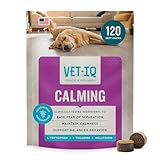


Best Dog Calming Chews: Supplements That Actually Reduce Anxiety Without Sedating
Anxiety in dogs manifests as destructive chewing, excessive barking, panting without exertion, pacing, house soiling, and aggression — behaviors that frustrate owners and cause real suffering in the dog. Dog calming chews offer a non-prescription option for reducing the intensity of anxiety responses, particularly for situational triggers like thunderstorms, fireworks, car travel, boarding, or vet visits. Unlike pharmaceutical anxiolytics, quality calming chews work through nutritional and herbal pathways that reduce stress without heavy sedation.
This guide breaks down the active ingredient science, what to expect from realistic use, and how to evaluate quality across a crowded supplement market with inconsistent labeling standards.
🛒 Best Price Today on Amazon
Prime members get fast, free shipping on everything above, plus member-only deals. New members get a 30-day free trial — cancel anytime.
📋 Table of Contents
- Top Dog Calming Chew Pick
- Active Ingredient Breakdown: What the Science Shows
- Dog Calming Supplement Spec Comparison
- Situational vs. Chronic Anxiety: Choosing the Right Protocol
- Quality Markers to Verify Before Buying
- FAQ: Dog Calming Chews
- Complementary Anxiety Management Strategies
- Final Verdict
- Related Guides
- Frequently Asked Questions
- Related Articles
Top Dog Calming Chew Pick
Active Ingredient Breakdown: What the Science Shows
See also: 7 Best Refillable Frozen Dog Treat Toys for Long-Lasting Licks • Best Dog Door Mat for Muddy Paws: Sizing, Materials and Picks by Entryway
The calming supplement market is flooded with products making identical claims using wildly different formulas. Understanding what each active ingredient does — and what evidence supports it — lets you read labels critically rather than taking marketing copy at face value.
- L-Theanine — an amino acid found naturally in green tea. Crosses the blood-brain barrier and promotes alpha-wave brain activity associated with calm alertness without drowsiness. Multiple peer-reviewed studies in dogs show measurable reductions in anxiety markers at 20–200mg doses. One of the best-supported ingredients in canine calming supplements.
- Melatonin — a hormone that regulates sleep-wake cycles. Useful for noise phobias (thunderstorms, fireworks) due to its mild sedative effect at higher doses. Less appropriate for travel anxiety where alertness is still needed. Dose matters significantly — too low has minimal effect; too high causes prolonged grogginess.
- Chamomile (Matricaria recutita) — contains apigenin, which binds to GABA receptors similarly to anxiolytic medications, producing mild calming without receptor downregulation at low supplemental doses. Primarily useful as a supporting ingredient rather than a primary active.
- Valerian root — increases GABA availability in the brain. More sedating than chamomile; better suited for severe phobic responses. Can cause digestive upset in sensitive dogs at higher doses.
- Ashwagandha (Withania somnifera) — adaptogenic herb with evidence in humans for cortisol reduction under chronic stress. Canine-specific studies are limited but emerging; often used in formulas targeting chronic anxiety rather than situational triggers.
- Thiamine (Vitamin B1) — involved in neurotransmitter synthesis. Deficiency exacerbates anxiety. Supplementing in calming chews provides insurance but is not a primary anxiolytic mechanism.
Dog Calming Supplement Spec Comparison
| Feature | Basic Formula | Mid-Range Formula | Vet-Grade Formula |
|---|---|---|---|
| Primary Active | Chamomile only | L-Theanine + chamomile | L-Theanine + melatonin + valerian |
| Dose Calibration | Fixed (all sizes) | 2 tiers (small/large) | Weight-based dosing chart |
| Third-Party Testing | Rarely | Sometimes | COA available on request |
| NASC Seal | Uncommon | Common | Standard |
| Onset Time | 30–60 min | 30–45 min | 30–45 min |
| Best For | Mild situational stress | Moderate anxiety events | Severe phobias + chronic anxiety |
| Palatability | Variable | Good (chicken/bacon) | High (tested formulas) |
Situational vs. Chronic Anxiety: Choosing the Right Protocol
Dog calming chews are not a one-size-fits-all solution. Matching the product to the anxiety type dramatically affects outcomes:
Situational anxiety (specific triggers: thunder, fireworks, car rides, vet visits) responds best to fast-onset formulas given 30–60 minutes before the anticipated trigger. L-theanine-forward formulas are preferred here because they reduce reactivity without causing the drowsiness that makes travel uncomfortable. Dosing before the trigger — not after anxiety is already escalated — is critical. An already-panicking dog is biochemically harder to calm than one that receives support preemptively.
Chronic generalized anxiety (persistent hypervigilance, separation anxiety, chronic destructive behavior) responds better to daily supplementation protocols rather than as-needed dosing. Adaptogenic ingredients like ashwagandha and consistent L-theanine support work cumulatively to shift baseline cortisol levels over 4–6 weeks. Expect minimal effect from single doses when addressing chronic patterns.
For dogs with severe separation anxiety that includes destructive behavior, calming chews alone are rarely sufficient. They work best combined with behavioral modification — see our guide on anxiety-reducing dog beds for how environmental management and supplementation work together to lower baseline stress levels.
Quality Markers to Verify Before Buying
The pet supplement market operates under lighter regulatory oversight than human pharmaceuticals. These verification steps separate credible products from ineffective or potentially unsafe ones:
- NASC (National Animal Supplement Council) Quality Seal — requires adherence to manufacturing standards, adverse event reporting, and facility audits. Not FDA approval, but meaningful quality signal.
- Certificate of Analysis (COA) — third-party lab test results confirming ingredient identity and concentration. Reputable brands publish COAs or provide them on request. Absent COA = no verification that the label is accurate.
- Weight-based dosing — a product that gives the same dose to a 10-pound Chihuahua and a 90-pound Labrador is not formulated responsibly. Look for weight-calibrated dosing charts.
- No proprietary blends hiding individual doses — “proprietary calming blend 250mg” tells you nothing about how much L-theanine is actually present. Transparent labeling lists each active ingredient and its dose.
- Palatability tested — a calming chew a dog refuses to eat is a waste. Look for brands that test acceptance rates across breeds and mention palatability specifically.
FAQ: Dog Calming Chews
How long do dog calming chews take to work?
Most L-theanine and herbal-based chews reach peak effect 30–60 minutes after ingestion. Melatonin-containing formulas may act slightly faster (20–30 minutes) at effective doses. Give the chew at least 45 minutes before the anticipated trigger event — not when the dog is already showing anxiety signs. For maximum effectiveness, pair the chew with other pre-trigger management strategies like exercise an hour before the stressor and a calm, low-stimulation environment during onset.
Can I give my dog calming chews every day long-term?
Most quality calming chews are formulated for daily use without dependency risk. L-theanine does not cause receptor downregulation or withdrawal effects. Melatonin given daily long-term can theoretically affect the body’s natural melatonin production in some dogs — for daily use protocols, choose formulas that rely primarily on L-theanine and herbal ingredients rather than melatonin. Always consult your vet before starting any long-term supplementation protocol, particularly for dogs on existing medications.
Are dog calming chews safe alongside prescription anxiety medications?
Some combinations require veterinary oversight. Valerian root and melatonin can potentiate the sedative effects of drugs like trazodone, gabapentin, or acepromazine — the combination may cause excessive sedation. L-theanine is generally considered safe alongside most veterinary anxiolytics, but always disclose all supplements to your vet so they can account for interactions in their prescribing. Never use calming chews as a substitute for a vet-prescribed anxiety protocol without professional guidance.
My dog ate the whole bag of calming chews. Is that dangerous?
Contact your veterinarian or the ASPCA Animal Poison Control Center (888-426-4435) immediately. Most calming chew ingredients at overdose doses cause excessive sedation, gastrointestinal upset (vomiting, diarrhea), and lethargy rather than acute toxicity — but the specific formula and your dog’s size and health status determine actual risk. Melatonin overdose can cause vomiting, incoordination, and hypotension in some dogs. Always store supplements in a secure location inaccessible to dogs.
Do calming chews work for all breeds, or are some breeds more responsive?
Response varies by individual dog rather than breed as a consistent predictor, though breed-linked anxiety tendencies (Border Collies and noise sensitivity, Vizslas and separation anxiety, German Shepherds and general vigilance) mean some breeds present more frequently in severe anxiety categories. Neurochemistry varies between individuals regardless of breed — some dogs show dramatic improvement on calming chews while others show minimal response. A 4–6 week trial at correct dosing is the only reliable way to assess your individual dog’s response.
Complementary Anxiety Management Strategies
Calming chews are most effective as one component of a broader anxiety management approach. Environmental enrichment, predictable daily routines, adequate physical exercise, and mental stimulation all reduce baseline anxiety levels — making the supplementation more effective and potentially reducing the dose needed. For interactive mental engagement that burns nervous energy, our review of dog interactive treat dispenser toys covers designs that give anxious dogs a productive outlet before anticipated stress events. Dogs that have worked mentally for 20 minutes before a storm starts are measurably easier to calm than those that haven’t.
Final Verdict
Dog calming chews are a legitimate, evidence-supported tool for managing anxiety in dogs when formulated with effective ingredients at clinically relevant doses. Prioritize products with L-theanine as a primary active, transparent ingredient labeling, third-party testing, and weight-based dosing. Set realistic expectations: calming chews reduce anxiety intensity and physiological stress response — they are not a cure for severe behavioral anxiety disorders, which require veterinary behavioral consultation and often pharmaceutical support. Used correctly, they are a valuable complement to behavioral management and environmental enrichment strategies.
Related Guides
Frequently Asked Questions
How long do calming chews take to work?
Fast-acting ingredients often show some effect within thirty to ninety minutes, which is why many owners give a chew before a car trip, thunderstorm, or fireworks. Ingredients that build up in the system may need two to four weeks of daily use before you see a steady change in baseline anxiety. Give the product a fair trial at the labeled dose before deciding it does not help.
How do I dose calming chews by size?
Follow the weight bands printed on the label rather than estimating, since active ingredient amounts vary widely between brands. Small dogs frequently need only half a chew, while large breeds may need two or three. Do not stack multiple calming products at once, because overlapping ingredients can add up to an unintentionally high dose of the same compound.
Are calming chews safe for puppies and senior dogs?
Many formulas are labeled for dogs over twelve weeks, but puppies, seniors, pregnant dogs, and dogs on medication deserve a conversation with your vet first. Some ingredients interact with sedatives, antidepressants, seizure medication, or anesthesia. Seniors with liver or kidney disease process supplements differently, so a dose that suits a healthy adult may be too much for them.
Can calming chews replace training for anxiety?
No. Supplements can lower arousal enough that a dog is able to learn, but the lasting change comes from behavior work such as desensitization, counter-conditioning, crate training, and building a predictable routine. Use the chew to take the edge off during a planned training session or a known trigger, then pair it with calm handling, enrichment, and a safe retreat space.
When should I see a vet instead of using a supplement?
See your veterinarian if your dog panics when left alone, destroys doors or crates, injures itself, stops eating, or shows sudden anxiety that was not there before. Sudden behavior change can stem from pain, thyroid disease, or cognitive decline rather than stress. This article is general information, not veterinary advice, and severe anxiety often needs prescription treatment alongside behavior therapy.