Table of Contents

57 sections 61 min read
⏱ 97 min read  ·  ✅ Updated Jun 2026
⚠️ Affiliate Disclosure: As an Amazon Associate, we earn from qualifying purchases. Links marked with "Check on Amazon" are affiliate links — learn more.

📅 Last updated:

As an Amazon Associate, All Ears Pet Care earns from qualifying purchases. This article contains affiliate links — if you buy through them we may earn a small commission at no extra cost to you. We only recommend products we believe in.

Is a dog treadmill appropriate for a dog recovering from surgery?

Controlled treadmill walking is widely used in veterinary rehabilitation for post-surgical recovery — it provides precise speed control and flat, predictable surface conditions that outdoor terrain cannot offer. However, use during recovery must be explicitly cleared and often directed by a veterinary rehabilitation specialist. The appropriate speed, duration, and incline for a post-surgical dog depends entirely on the surgery type, healing stage, and individual assessment. Do not introduce a recovering dog to treadmill exercise without veterinary guidance.

Will a dog treadmill fit in an apartment?

Medium dog treadmills typically measure 48–56 inches long by 20–24 inches wide when in use — comparable to a compact human treadmill. Most fold or store upright for apartment living. The DogTread medium folds to a significantly smaller footprint for storage. Noise level is the more practical apartment concern: operation during early morning or late evening hours in thin-walled buildings may disturb neighbors. DC motor models running at walking speeds (1–2 mph) produce approximately 45–55 dB — quieter than a dishwasher and generally acceptable for apartment use during daytime hours.

Noise level is a breed-specific concern. Terriers, hounds, and herding breeds with high sound sensitivity may refuse a loud treadmill entirely. DC motors run significantly quieter than AC motors at low speeds — the 0.5–3 mph range where dogs spend most of their treadmill time. Look for decibel ratings or owner reviews specifically mentioning noise level, and plan the initial introduction session during a calm, quiet period in your home rather than alongside other household noise sources.

Incline capability for fitness progression. Flat treadmill walking is easier than outdoor walking on varied terrain — useful for introduction and recovery, but limiting for fitness maintenance in athletic breeds. Some dog treadmills offer 0–5% manual incline adjustment, which increases cardiovascular demand without increasing speed. For working breeds (Border Collies, Australian Shepherds, Labs) that need genuine aerobic challenge, incline capability is worth prioritizing.

📋 Table of Contents

  1. Training Your Dog to Use a Treadmill
  2. Maintenance, Safety, and Long-Term Use
  3. Frequently Asked Questions
  4. Training Your Dog to Use a Treadmill
  5. Maintenance, Safety, and Long-Term Use
  6. Frequently Asked Questions
  7. Training Your Dog to Use a Treadmill
  8. Maintenance, Safety, and Long-Term Use
  9. Frequently Asked Questions
  10. Top Pick: DogTread Medium Dog Treadmill
  11. Dog Treadmill vs. Human Treadmill: Key Differences
  12. Choosing the Right Dog Treadmill for Your Breed
  13. Training Your Dog to Use a Treadmill
  14. Maintenance, Safety, and Long-Term Use
  15. Frequently Asked Questions
  16. Training Your Dog to Use a Treadmill
  17. Maintenance, Safety, and Long-Term Use
  18. Frequently Asked Questions
  19. Training Your Dog to Use a Treadmill
  20. Maintenance, Safety, and Long-Term Use
  21. Frequently Asked Questions
  22. Training Your Dog to Use a Treadmill
  23. Maintenance, Safety, and Long-Term Use
  24. Frequently Asked Questions
  25. Top Pick: DogTread Medium Dog Treadmill
  26. Dog Treadmill vs. Human Treadmill: Key Differences
  27. Choosing the Right Dog Treadmill for Your Breed
  28. Training Your Dog to Use a Treadmill
  29. Maintenance, Safety, and Long-Term Use
  30. Frequently Asked Questions
  31. Training Your Dog to Use a Treadmill
  32. Maintenance, Safety, and Long-Term Use
  33. Frequently Asked Questions
  34. Top Pick: DogTread Medium Dog Treadmill
  35. Dog Treadmill vs. Human Treadmill: Key Differences
  36. Choosing the Right Dog Treadmill for Your Breed
  37. Training Your Dog to Use a Treadmill
  38. Maintenance, Safety, and Long-Term Use
  39. Frequently Asked Questions
  40. Training Your Dog to Use a Treadmill
  41. Maintenance, Safety, and Long-Term Use
  42. Frequently Asked Questions
  43. Training Your Dog to Use a Treadmill
  44. Maintenance, Safety, and Long-Term Use
  45. Frequently Asked Questions
  46. Training Your Dog to Use a Treadmill
  47. Maintenance, Safety, and Long-Term Use
  48. Frequently Asked Questions
  49. Top Pick: DogTread Medium Dog Treadmill
  50. Dog Treadmill vs. Human Treadmill: Key Differences
  51. Choosing the Right Dog Treadmill for Your Breed
  52. Training Your Dog to Use a Treadmill
  53. Maintenance, Safety, and Long-Term Use
  54. Frequently Asked Questions
  55. Training Your Dog to Use a Treadmill
  56. Maintenance, Safety, and Long-Term Use
  57. Frequently Asked Questions

Training Your Dog to Use a Treadmill

The training process follows the same desensitization and counter-conditioning principles used for any novel equipment. Week one: let the dog investigate the stationary, unplugged treadmill at their own pace. Reward sniffing and pawing the belt with high-value treats. Do not pressure the dog onto the belt. Week two: turn the treadmill on at the lowest possible speed (0.5 mph) while the dog is beside it, not on it. Let them hear and feel the vibration without pressure. Continue rewarding calm investigation.

Week three: guide the dog onto the moving belt with a treat lure, keeping a leash attached and the speed at 0.5 mph. Stand beside or slightly ahead of the dog — never behind — and use continuous treat delivery for the first 30–60 seconds. Keep sessions to 2–3 minutes maximum at this stage. Gradually increase duration by 1–2 minutes per session as confidence builds. Most dogs reach comfortable 10–15 minute sessions within 3–4 weeks of consistent positive-reinforcement training.

Never leave a dog unsupervised on a treadmill, regardless of training level. The safety key should be attached to your wrist or a fixed point that detaches if you move away — this is the design intention, not an optional feature. Dogs cannot signal distress the same way humans can, and a dog that stumbles, gets a paw caught, or becomes anxious needs immediate handler intervention. Pair treadmill sessions with clicker training for the fastest and most positive training outcomes.

Maintenance, Safety, and Long-Term Use

See also: Best Dog Nail Grinders: Top Picks Reviewed and Compared (2026)Best Dog Leashes: Top Picks Reviewed and Compared (2026)

Dog treadmills require minimal but consistent maintenance to remain safe and functional. After each session, wipe the belt surface with a dry cloth to remove any hair or debris that accumulates at the belt edges — hair buildup around the drive rollers is the primary cause of motor strain and premature belt wear. Monthly, apply a silicone-based treadmill belt lubricant under the belt according to the manufacturer’s instructions. Do not use WD-40 or petroleum-based lubricants — these degrade the belt material. A well-maintained belt lasts 3–5 years under regular use.

Check the belt tension periodically by lifting the center of the belt — it should lift approximately one inch from the deck with moderate pressure. A belt that lifts more than two inches has stretched and needs tightening via the rear roller adjustment bolts; a belt with no give at all is over-tightened and strains the motor. These adjustments require a standard Allen wrench and take under five minutes when done regularly rather than waiting for visible wear symptoms.

Long-term, a dog treadmill is one of the higher-value investments in pet care equipment for households where outdoor exercise is consistently unreliable. Unlike enrichment toys that lose novelty and get rotated out, a treadmill provides daily functional exercise for the dog’s entire adult life once training is established. Dogs that learn treadmill use as young adults typically maintain the habit into senior years, where controlled low-impact treadmill walking becomes especially valuable for dogs with arthritis or post-surgical mobility restrictions that make outdoor terrain difficult. Pair with our orthopedic dog bed guide for the full senior dog comfort setup.

Frequently Asked Questions

Can a dog treadmill replace outdoor walks entirely?

For physical exercise, yes — treadmill walking provides equivalent cardiovascular and muscular benefit to outdoor walking at the same pace and duration. For mental enrichment, no. Outdoor walks provide olfactory stimulation, environmental novelty, and social exposure (other dogs, people, sounds) that treadmill sessions cannot replicate. The recommended approach is to use treadmill sessions as a supplement or weather/schedule substitute, not a full outdoor walk replacement. Dogs need both physical exercise and environmental enrichment for complete behavioral wellbeing.

What speed should I use for my dog?

Start at 0.5–1 mph regardless of your dog’s fitness level — this is slower than a natural walk and builds confidence on the moving surface. A comfortable walking pace for most small-medium dogs is 1.5–2.5 mph; a brisk trot is 3–4 mph. Never push a dog to maintain a speed they’re clearly uncomfortable with — a dog that’s lurching, panting excessively, or trying to stop is being worked too hard. Build speed gradually over weeks, not days.

How long should a dog treadmill session be?

For a conditioned adult dog, 15–30 minutes at a brisk walk provides meaningful aerobic benefit. Puppies under 12 months, senior dogs, brachycephalic breeds (Bulldogs, Pugs, Shih Tzus), and dogs new to treadmill exercise should start with 5–10 minute sessions and increase gradually. Watch for fatigue signs: excessive panting, lagging behind the belt’s front edge, wide-set or stumbling gait. End sessions before fatigue, not at it — this preserves positive association with the equipment.

Is a dog treadmill appropriate for a dog recovering from surgery?

Controlled treadmill walking is widely used in veterinary rehabilitation for post-surgical recovery — it provides precise speed control and flat, predictable surface conditions that outdoor terrain cannot offer. However, use during recovery must be explicitly cleared and often directed by a veterinary rehabilitation specialist. The appropriate speed, duration, and incline for a post-surgical dog depends entirely on the surgery type, healing stage, and individual assessment. Do not introduce a recovering dog to treadmill exercise without veterinary guidance.

Will a dog treadmill fit in an apartment?

Medium dog treadmills typically measure 48–56 inches long by 20–24 inches wide when in use — comparable to a compact human treadmill. Most fold or store upright for apartment living. The DogTread medium folds to a significantly smaller footprint for storage. Noise level is the more practical apartment concern: operation during early morning or late evening hours in thin-walled buildings may disturb neighbors. DC motor models running at walking speeds (1–2 mph) produce approximately 45–55 dB — quieter than a dishwasher and generally acceptable for apartment use during daytime hours.

Noise level is a breed-specific concern. Terriers, hounds, and herding breeds with high sound sensitivity may refuse a loud treadmill entirely. DC motors run significantly quieter than AC motors at low speeds — the 0.5–3 mph range where dogs spend most of their treadmill time. Look for decibel ratings or owner reviews specifically mentioning noise level, and plan the initial introduction session during a calm, quiet period in your home rather than alongside other household noise sources.

Incline capability for fitness progression. Flat treadmill walking is easier than outdoor walking on varied terrain — useful for introduction and recovery, but limiting for fitness maintenance in athletic breeds. Some dog treadmills offer 0–5% manual incline adjustment, which increases cardiovascular demand without increasing speed. For working breeds (Border Collies, Australian Shepherds, Labs) that need genuine aerobic challenge, incline capability is worth prioritizing.

Training Your Dog to Use a Treadmill

The training process follows the same desensitization and counter-conditioning principles used for any novel equipment. Week one: let the dog investigate the stationary, unplugged treadmill at their own pace. Reward sniffing and pawing the belt with high-value treats. Do not pressure the dog onto the belt. Week two: turn the treadmill on at the lowest possible speed (0.5 mph) while the dog is beside it, not on it. Let them hear and feel the vibration without pressure. Continue rewarding calm investigation.

Week three: guide the dog onto the moving belt with a treat lure, keeping a leash attached and the speed at 0.5 mph. Stand beside or slightly ahead of the dog — never behind — and use continuous treat delivery for the first 30–60 seconds. Keep sessions to 2–3 minutes maximum at this stage. Gradually increase duration by 1–2 minutes per session as confidence builds. Most dogs reach comfortable 10–15 minute sessions within 3–4 weeks of consistent positive-reinforcement training.

Never leave a dog unsupervised on a treadmill, regardless of training level. The safety key should be attached to your wrist or a fixed point that detaches if you move away — this is the design intention, not an optional feature. Dogs cannot signal distress the same way humans can, and a dog that stumbles, gets a paw caught, or becomes anxious needs immediate handler intervention. Pair treadmill sessions with clicker training for the fastest and most positive training outcomes.

Maintenance, Safety, and Long-Term Use

Dog treadmills require minimal but consistent maintenance to remain safe and functional. After each session, wipe the belt surface with a dry cloth to remove any hair or debris that accumulates at the belt edges — hair buildup around the drive rollers is the primary cause of motor strain and premature belt wear. Monthly, apply a silicone-based treadmill belt lubricant under the belt according to the manufacturer’s instructions. Do not use WD-40 or petroleum-based lubricants — these degrade the belt material. A well-maintained belt lasts 3–5 years under regular use.

Check the belt tension periodically by lifting the center of the belt — it should lift approximately one inch from the deck with moderate pressure. A belt that lifts more than two inches has stretched and needs tightening via the rear roller adjustment bolts; a belt with no give at all is over-tightened and strains the motor. These adjustments require a standard Allen wrench and take under five minutes when done regularly rather than waiting for visible wear symptoms.

Long-term, a dog treadmill is one of the higher-value investments in pet care equipment for households where outdoor exercise is consistently unreliable. Unlike enrichment toys that lose novelty and get rotated out, a treadmill provides daily functional exercise for the dog’s entire adult life once training is established. Dogs that learn treadmill use as young adults typically maintain the habit into senior years, where controlled low-impact treadmill walking becomes especially valuable for dogs with arthritis or post-surgical mobility restrictions that make outdoor terrain difficult. Pair with our orthopedic dog bed guide for the full senior dog comfort setup.

Frequently Asked Questions

Can a dog treadmill replace outdoor walks entirely?

For physical exercise, yes — treadmill walking provides equivalent cardiovascular and muscular benefit to outdoor walking at the same pace and duration. For mental enrichment, no. Outdoor walks provide olfactory stimulation, environmental novelty, and social exposure (other dogs, people, sounds) that treadmill sessions cannot replicate. The recommended approach is to use treadmill sessions as a supplement or weather/schedule substitute, not a full outdoor walk replacement. Dogs need both physical exercise and environmental enrichment for complete behavioral wellbeing.

What speed should I use for my dog?

Start at 0.5–1 mph regardless of your dog’s fitness level — this is slower than a natural walk and builds confidence on the moving surface. A comfortable walking pace for most small-medium dogs is 1.5–2.5 mph; a brisk trot is 3–4 mph. Never push a dog to maintain a speed they’re clearly uncomfortable with — a dog that’s lurching, panting excessively, or trying to stop is being worked too hard. Build speed gradually over weeks, not days.

How long should a dog treadmill session be?

For a conditioned adult dog, 15–30 minutes at a brisk walk provides meaningful aerobic benefit. Puppies under 12 months, senior dogs, brachycephalic breeds (Bulldogs, Pugs, Shih Tzus), and dogs new to treadmill exercise should start with 5–10 minute sessions and increase gradually. Watch for fatigue signs: excessive panting, lagging behind the belt’s front edge, wide-set or stumbling gait. End sessions before fatigue, not at it — this preserves positive association with the equipment.

Is a dog treadmill appropriate for a dog recovering from surgery?

Controlled treadmill walking is widely used in veterinary rehabilitation for post-surgical recovery — it provides precise speed control and flat, predictable surface conditions that outdoor terrain cannot offer. However, use during recovery must be explicitly cleared and often directed by a veterinary rehabilitation specialist. The appropriate speed, duration, and incline for a post-surgical dog depends entirely on the surgery type, healing stage, and individual assessment. Do not introduce a recovering dog to treadmill exercise without veterinary guidance.

Will a dog treadmill fit in an apartment?

Medium dog treadmills typically measure 48–56 inches long by 20–24 inches wide when in use — comparable to a compact human treadmill. Most fold or store upright for apartment living. The DogTread medium folds to a significantly smaller footprint for storage. Noise level is the more practical apartment concern: operation during early morning or late evening hours in thin-walled buildings may disturb neighbors. DC motor models running at walking speeds (1–2 mph) produce approximately 45–55 dB — quieter than a dishwasher and generally acceptable for apartment use during daytime hours.

Is a dog treadmill appropriate for a dog recovering from surgery?

Controlled treadmill walking is widely used in veterinary rehabilitation for post-surgical recovery — it provides precise speed control and flat, predictable surface conditions that outdoor terrain cannot offer. However, use during recovery must be explicitly cleared and often directed by a veterinary rehabilitation specialist. The appropriate speed, duration, and incline for a post-surgical dog depends entirely on the surgery type, healing stage, and individual assessment. Do not introduce a recovering dog to treadmill exercise without veterinary guidance.

Will a dog treadmill fit in an apartment?

Medium dog treadmills typically measure 48–56 inches long by 20–24 inches wide when in use — comparable to a compact human treadmill. Most fold or store upright for apartment living. The DogTread medium folds to a significantly smaller footprint for storage. Noise level is the more practical apartment concern: operation during early morning or late evening hours in thin-walled buildings may disturb neighbors. DC motor models running at walking speeds (1–2 mph) produce approximately 45–55 dB — quieter than a dishwasher and generally acceptable for apartment use during daytime hours.

Noise level is a breed-specific concern. Terriers, hounds, and herding breeds with high sound sensitivity may refuse a loud treadmill entirely. DC motors run significantly quieter than AC motors at low speeds — the 0.5–3 mph range where dogs spend most of their treadmill time. Look for decibel ratings or owner reviews specifically mentioning noise level, and plan the initial introduction session during a calm, quiet period in your home rather than alongside other household noise sources.

Incline capability for fitness progression. Flat treadmill walking is easier than outdoor walking on varied terrain — useful for introduction and recovery, but limiting for fitness maintenance in athletic breeds. Some dog treadmills offer 0–5% manual incline adjustment, which increases cardiovascular demand without increasing speed. For working breeds (Border Collies, Australian Shepherds, Labs) that need genuine aerobic challenge, incline capability is worth prioritizing.

Training Your Dog to Use a Treadmill

The training process follows the same desensitization and counter-conditioning principles used for any novel equipment. Week one: let the dog investigate the stationary, unplugged treadmill at their own pace. Reward sniffing and pawing the belt with high-value treats. Do not pressure the dog onto the belt. Week two: turn the treadmill on at the lowest possible speed (0.5 mph) while the dog is beside it, not on it. Let them hear and feel the vibration without pressure. Continue rewarding calm investigation.

Week three: guide the dog onto the moving belt with a treat lure, keeping a leash attached and the speed at 0.5 mph. Stand beside or slightly ahead of the dog — never behind — and use continuous treat delivery for the first 30–60 seconds. Keep sessions to 2–3 minutes maximum at this stage. Gradually increase duration by 1–2 minutes per session as confidence builds. Most dogs reach comfortable 10–15 minute sessions within 3–4 weeks of consistent positive-reinforcement training.

Never leave a dog unsupervised on a treadmill, regardless of training level. The safety key should be attached to your wrist or a fixed point that detaches if you move away — this is the design intention, not an optional feature. Dogs cannot signal distress the same way humans can, and a dog that stumbles, gets a paw caught, or becomes anxious needs immediate handler intervention. Pair treadmill sessions with clicker training for the fastest and most positive training outcomes.

Maintenance, Safety, and Long-Term Use

Dog treadmills require minimal but consistent maintenance to remain safe and functional. After each session, wipe the belt surface with a dry cloth to remove any hair or debris that accumulates at the belt edges — hair buildup around the drive rollers is the primary cause of motor strain and premature belt wear. Monthly, apply a silicone-based treadmill belt lubricant under the belt according to the manufacturer’s instructions. Do not use WD-40 or petroleum-based lubricants — these degrade the belt material. A well-maintained belt lasts 3–5 years under regular use.

Check the belt tension periodically by lifting the center of the belt — it should lift approximately one inch from the deck with moderate pressure. A belt that lifts more than two inches has stretched and needs tightening via the rear roller adjustment bolts; a belt with no give at all is over-tightened and strains the motor. These adjustments require a standard Allen wrench and take under five minutes when done regularly rather than waiting for visible wear symptoms.

Long-term, a dog treadmill is one of the higher-value investments in pet care equipment for households where outdoor exercise is consistently unreliable. Unlike enrichment toys that lose novelty and get rotated out, a treadmill provides daily functional exercise for the dog’s entire adult life once training is established. Dogs that learn treadmill use as young adults typically maintain the habit into senior years, where controlled low-impact treadmill walking becomes especially valuable for dogs with arthritis or post-surgical mobility restrictions that make outdoor terrain difficult. Pair with our orthopedic dog bed guide for the full senior dog comfort setup.

Frequently Asked Questions

Can a dog treadmill replace outdoor walks entirely?

For physical exercise, yes — treadmill walking provides equivalent cardiovascular and muscular benefit to outdoor walking at the same pace and duration. For mental enrichment, no. Outdoor walks provide olfactory stimulation, environmental novelty, and social exposure (other dogs, people, sounds) that treadmill sessions cannot replicate. The recommended approach is to use treadmill sessions as a supplement or weather/schedule substitute, not a full outdoor walk replacement. Dogs need both physical exercise and environmental enrichment for complete behavioral wellbeing.

What speed should I use for my dog?

Start at 0.5–1 mph regardless of your dog’s fitness level — this is slower than a natural walk and builds confidence on the moving surface. A comfortable walking pace for most small-medium dogs is 1.5–2.5 mph; a brisk trot is 3–4 mph. Never push a dog to maintain a speed they’re clearly uncomfortable with — a dog that’s lurching, panting excessively, or trying to stop is being worked too hard. Build speed gradually over weeks, not days.

How long should a dog treadmill session be?

For a conditioned adult dog, 15–30 minutes at a brisk walk provides meaningful aerobic benefit. Puppies under 12 months, senior dogs, brachycephalic breeds (Bulldogs, Pugs, Shih Tzus), and dogs new to treadmill exercise should start with 5–10 minute sessions and increase gradually. Watch for fatigue signs: excessive panting, lagging behind the belt’s front edge, wide-set or stumbling gait. End sessions before fatigue, not at it — this preserves positive association with the equipment.

Is a dog treadmill appropriate for a dog recovering from surgery?

Controlled treadmill walking is widely used in veterinary rehabilitation for post-surgical recovery — it provides precise speed control and flat, predictable surface conditions that outdoor terrain cannot offer. However, use during recovery must be explicitly cleared and often directed by a veterinary rehabilitation specialist. The appropriate speed, duration, and incline for a post-surgical dog depends entirely on the surgery type, healing stage, and individual assessment. Do not introduce a recovering dog to treadmill exercise without veterinary guidance.

Will a dog treadmill fit in an apartment?

Medium dog treadmills typically measure 48–56 inches long by 20–24 inches wide when in use — comparable to a compact human treadmill. Most fold or store upright for apartment living. The DogTread medium folds to a significantly smaller footprint for storage. Noise level is the more practical apartment concern: operation during early morning or late evening hours in thin-walled buildings may disturb neighbors. DC motor models running at walking speeds (1–2 mph) produce approximately 45–55 dB — quieter than a dishwasher and generally acceptable for apartment use during daytime hours.

Indoor Dog Treadmill Small Medium Breeds

TL;DR: An indoor dog treadmill solves the exercise gap when weather, schedules, or mobility issues prevent regular walks. DogTread’s medium model is purpose-built for dogs up to 45 lbs with dog-safe speed controls and a compact footprint. Best pick: ASIN B09G5YT3MF.

Best Indoor Dog Treadmill for Small and Medium Breeds in 2026

Dogs need 30–60 minutes of sustained aerobic exercise daily to maintain healthy weight, muscle tone, cardiovascular function, and behavioral stability. Most pet owners manage this through walks — but weather extremes, injuries, long work hours, apartment living, and mobility limitations in the owner can make consistent daily walking impossible. An indoor dog treadmill provides a reliable exercise alternative that doesn’t depend on outdoor conditions, neighborhood safety, or the owner’s own physical capacity to walk briskly for an extended period.

This guide covers what makes dog treadmills different from human treadmills, how to match equipment to your dog’s size and exercise needs, and how to train a reluctant dog to use one. If your dog already engages with enrichment equipment like an automatic ball launcher or puzzle feeders, treadmill training follows similar positive-reinforcement principles and typically takes 1–2 weeks to establish as a comfortable routine.

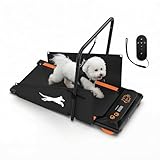
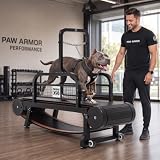
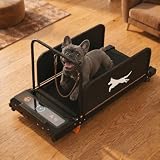
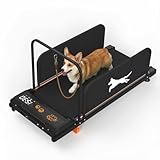
Top Pick: DogTread Medium Dog Treadmill

amazon.com
In Stock
Updated: never
Price as of . We earn from qualifying purchases.

As an Amazon Associate we earn from qualifying purchases. Product prices and availability are accurate as of the date/time indicated.

amazon.com
In Stock
Updated: never
Price as of . We earn from qualifying purchases.

As an Amazon Associate we earn from qualifying purchases. Product prices and availability are accurate as of the date/time indicated.

amazon.com
In Stock
Updated: never
Price as of . We earn from qualifying purchases.

As an Amazon Associate we earn from qualifying purchases. Product prices and availability are accurate as of the date/time indicated.

Want to compare options? Browse indoor dog treadmills on Amazon — filter by weight capacity, belt width, speed range, and noise level.

Dog Treadmill vs. Human Treadmill: Key Differences

FeatureHuman TreadmillDog-Specific Treadmill
Belt Length54–60″ — calibrated for human stride36–48″ — matched to dog gait length
Belt Width18–22″ — designed for bipedal stance14–18″ — channels dog’s natural four-paw track
Side RailsHorizontal rails at hip height for human handsVertical side panels that prevent dogs stepping off sideways
Speed Range0.5–12+ mph — high end for human running0.5–6 mph — appropriate for dog walking and trotting
Control PanelAt standing human height; touchscreenAt handler height for supervision; simple controls
Emergency StopClip-on safety key for human userSafety key plus handler-accessible stop; no unsupervised use
Noise LevelModerate to high — dogs may be frightenedQuieter motor designed to minimize dog anxiety

Choosing the Right Dog Treadmill for Your Breed

Belt length must accommodate your dog’s full stride. A dog’s stride length — the distance between consecutive placements of the same paw — scales with leg length and speed. A medium-sized dog (25–45 lbs) walking at 2 mph has a stride length of roughly 18–24 inches; trotting at 4 mph extends that to 28–36 inches. A belt that’s too short causes dogs to crowd toward the front, creating an anxious, unnatural gait. The DogTread medium provides a 40-inch belt length, which comfortably accommodates medium breeds at both walking and trotting speeds.

Weight capacity with safety margin. Always choose a treadmill rated for at least 20–30% more than your dog’s current weight. A 35-lb dog on a treadmill rated for exactly 35 lbs is running the motor at maximum load continuously — motor wear is significantly accelerated at or near capacity limits. For a 30-lb Beagle, a treadmill rated for 45–50 lbs provides headroom for safe extended use and leaves room as the dog ages or gains weight.

Will a dog treadmill fit in an apartment?

Medium dog treadmills typically measure 48–56 inches long by 20–24 inches wide when in use — comparable to a compact human treadmill. Most fold or store upright for apartment living. The DogTread medium folds to a significantly smaller footprint for storage. Noise level is the more practical apartment concern: operation during early morning or late evening hours in thin-walled buildings may disturb neighbors. DC motor models running at walking speeds (1–2 mph) produce approximately 45–55 dB — quieter than a dishwasher and generally acceptable for apartment use during daytime hours.

Is a dog treadmill appropriate for a dog recovering from surgery?

Controlled treadmill walking is widely used in veterinary rehabilitation for post-surgical recovery — it provides precise speed control and flat, predictable surface conditions that outdoor terrain cannot offer. However, use during recovery must be explicitly cleared and often directed by a veterinary rehabilitation specialist. The appropriate speed, duration, and incline for a post-surgical dog depends entirely on the surgery type, healing stage, and individual assessment. Do not introduce a recovering dog to treadmill exercise without veterinary guidance.

Will a dog treadmill fit in an apartment?

Medium dog treadmills typically measure 48–56 inches long by 20–24 inches wide when in use — comparable to a compact human treadmill. Most fold or store upright for apartment living. The DogTread medium folds to a significantly smaller footprint for storage. Noise level is the more practical apartment concern: operation during early morning or late evening hours in thin-walled buildings may disturb neighbors. DC motor models running at walking speeds (1–2 mph) produce approximately 45–55 dB — quieter than a dishwasher and generally acceptable for apartment use during daytime hours.

Noise level is a breed-specific concern. Terriers, hounds, and herding breeds with high sound sensitivity may refuse a loud treadmill entirely. DC motors run significantly quieter than AC motors at low speeds — the 0.5–3 mph range where dogs spend most of their treadmill time. Look for decibel ratings or owner reviews specifically mentioning noise level, and plan the initial introduction session during a calm, quiet period in your home rather than alongside other household noise sources.

Incline capability for fitness progression. Flat treadmill walking is easier than outdoor walking on varied terrain — useful for introduction and recovery, but limiting for fitness maintenance in athletic breeds. Some dog treadmills offer 0–5% manual incline adjustment, which increases cardiovascular demand without increasing speed. For working breeds (Border Collies, Australian Shepherds, Labs) that need genuine aerobic challenge, incline capability is worth prioritizing.

Training Your Dog to Use a Treadmill

The training process follows the same desensitization and counter-conditioning principles used for any novel equipment. Week one: let the dog investigate the stationary, unplugged treadmill at their own pace. Reward sniffing and pawing the belt with high-value treats. Do not pressure the dog onto the belt. Week two: turn the treadmill on at the lowest possible speed (0.5 mph) while the dog is beside it, not on it. Let them hear and feel the vibration without pressure. Continue rewarding calm investigation.

Week three: guide the dog onto the moving belt with a treat lure, keeping a leash attached and the speed at 0.5 mph. Stand beside or slightly ahead of the dog — never behind — and use continuous treat delivery for the first 30–60 seconds. Keep sessions to 2–3 minutes maximum at this stage. Gradually increase duration by 1–2 minutes per session as confidence builds. Most dogs reach comfortable 10–15 minute sessions within 3–4 weeks of consistent positive-reinforcement training.

Never leave a dog unsupervised on a treadmill, regardless of training level. The safety key should be attached to your wrist or a fixed point that detaches if you move away — this is the design intention, not an optional feature. Dogs cannot signal distress the same way humans can, and a dog that stumbles, gets a paw caught, or becomes anxious needs immediate handler intervention. Pair treadmill sessions with clicker training for the fastest and most positive training outcomes.

Maintenance, Safety, and Long-Term Use

Dog treadmills require minimal but consistent maintenance to remain safe and functional. After each session, wipe the belt surface with a dry cloth to remove any hair or debris that accumulates at the belt edges — hair buildup around the drive rollers is the primary cause of motor strain and premature belt wear. Monthly, apply a silicone-based treadmill belt lubricant under the belt according to the manufacturer’s instructions. Do not use WD-40 or petroleum-based lubricants — these degrade the belt material. A well-maintained belt lasts 3–5 years under regular use.

Check the belt tension periodically by lifting the center of the belt — it should lift approximately one inch from the deck with moderate pressure. A belt that lifts more than two inches has stretched and needs tightening via the rear roller adjustment bolts; a belt with no give at all is over-tightened and strains the motor. These adjustments require a standard Allen wrench and take under five minutes when done regularly rather than waiting for visible wear symptoms.

Long-term, a dog treadmill is one of the higher-value investments in pet care equipment for households where outdoor exercise is consistently unreliable. Unlike enrichment toys that lose novelty and get rotated out, a treadmill provides daily functional exercise for the dog’s entire adult life once training is established. Dogs that learn treadmill use as young adults typically maintain the habit into senior years, where controlled low-impact treadmill walking becomes especially valuable for dogs with arthritis or post-surgical mobility restrictions that make outdoor terrain difficult. Pair with our orthopedic dog bed guide for the full senior dog comfort setup.

Frequently Asked Questions

Can a dog treadmill replace outdoor walks entirely?

For physical exercise, yes — treadmill walking provides equivalent cardiovascular and muscular benefit to outdoor walking at the same pace and duration. For mental enrichment, no. Outdoor walks provide olfactory stimulation, environmental novelty, and social exposure (other dogs, people, sounds) that treadmill sessions cannot replicate. The recommended approach is to use treadmill sessions as a supplement or weather/schedule substitute, not a full outdoor walk replacement. Dogs need both physical exercise and environmental enrichment for complete behavioral wellbeing.

What speed should I use for my dog?

Start at 0.5–1 mph regardless of your dog’s fitness level — this is slower than a natural walk and builds confidence on the moving surface. A comfortable walking pace for most small-medium dogs is 1.5–2.5 mph; a brisk trot is 3–4 mph. Never push a dog to maintain a speed they’re clearly uncomfortable with — a dog that’s lurching, panting excessively, or trying to stop is being worked too hard. Build speed gradually over weeks, not days.

How long should a dog treadmill session be?

For a conditioned adult dog, 15–30 minutes at a brisk walk provides meaningful aerobic benefit. Puppies under 12 months, senior dogs, brachycephalic breeds (Bulldogs, Pugs, Shih Tzus), and dogs new to treadmill exercise should start with 5–10 minute sessions and increase gradually. Watch for fatigue signs: excessive panting, lagging behind the belt’s front edge, wide-set or stumbling gait. End sessions before fatigue, not at it — this preserves positive association with the equipment.

Is a dog treadmill appropriate for a dog recovering from surgery?

Controlled treadmill walking is widely used in veterinary rehabilitation for post-surgical recovery — it provides precise speed control and flat, predictable surface conditions that outdoor terrain cannot offer. However, use during recovery must be explicitly cleared and often directed by a veterinary rehabilitation specialist. The appropriate speed, duration, and incline for a post-surgical dog depends entirely on the surgery type, healing stage, and individual assessment. Do not introduce a recovering dog to treadmill exercise without veterinary guidance.

Will a dog treadmill fit in an apartment?

Medium dog treadmills typically measure 48–56 inches long by 20–24 inches wide when in use — comparable to a compact human treadmill. Most fold or store upright for apartment living. The DogTread medium folds to a significantly smaller footprint for storage. Noise level is the more practical apartment concern: operation during early morning or late evening hours in thin-walled buildings may disturb neighbors. DC motor models running at walking speeds (1–2 mph) produce approximately 45–55 dB — quieter than a dishwasher and generally acceptable for apartment use during daytime hours.

Is a dog treadmill appropriate for a dog recovering from surgery?

Controlled treadmill walking is widely used in veterinary rehabilitation for post-surgical recovery — it provides precise speed control and flat, predictable surface conditions that outdoor terrain cannot offer. However, use during recovery must be explicitly cleared and often directed by a veterinary rehabilitation specialist. The appropriate speed, duration, and incline for a post-surgical dog depends entirely on the surgery type, healing stage, and individual assessment. Do not introduce a recovering dog to treadmill exercise without veterinary guidance.

Will a dog treadmill fit in an apartment?

Medium dog treadmills typically measure 48–56 inches long by 20–24 inches wide when in use — comparable to a compact human treadmill. Most fold or store upright for apartment living. The DogTread medium folds to a significantly smaller footprint for storage. Noise level is the more practical apartment concern: operation during early morning or late evening hours in thin-walled buildings may disturb neighbors. DC motor models running at walking speeds (1–2 mph) produce approximately 45–55 dB — quieter than a dishwasher and generally acceptable for apartment use during daytime hours.

Noise level is a breed-specific concern. Terriers, hounds, and herding breeds with high sound sensitivity may refuse a loud treadmill entirely. DC motors run significantly quieter than AC motors at low speeds — the 0.5–3 mph range where dogs spend most of their treadmill time. Look for decibel ratings or owner reviews specifically mentioning noise level, and plan the initial introduction session during a calm, quiet period in your home rather than alongside other household noise sources.

Incline capability for fitness progression. Flat treadmill walking is easier than outdoor walking on varied terrain — useful for introduction and recovery, but limiting for fitness maintenance in athletic breeds. Some dog treadmills offer 0–5% manual incline adjustment, which increases cardiovascular demand without increasing speed. For working breeds (Border Collies, Australian Shepherds, Labs) that need genuine aerobic challenge, incline capability is worth prioritizing.

Training Your Dog to Use a Treadmill

The training process follows the same desensitization and counter-conditioning principles used for any novel equipment. Week one: let the dog investigate the stationary, unplugged treadmill at their own pace. Reward sniffing and pawing the belt with high-value treats. Do not pressure the dog onto the belt. Week two: turn the treadmill on at the lowest possible speed (0.5 mph) while the dog is beside it, not on it. Let them hear and feel the vibration without pressure. Continue rewarding calm investigation.

Week three: guide the dog onto the moving belt with a treat lure, keeping a leash attached and the speed at 0.5 mph. Stand beside or slightly ahead of the dog — never behind — and use continuous treat delivery for the first 30–60 seconds. Keep sessions to 2–3 minutes maximum at this stage. Gradually increase duration by 1–2 minutes per session as confidence builds. Most dogs reach comfortable 10–15 minute sessions within 3–4 weeks of consistent positive-reinforcement training.

Never leave a dog unsupervised on a treadmill, regardless of training level. The safety key should be attached to your wrist or a fixed point that detaches if you move away — this is the design intention, not an optional feature. Dogs cannot signal distress the same way humans can, and a dog that stumbles, gets a paw caught, or becomes anxious needs immediate handler intervention. Pair treadmill sessions with clicker training for the fastest and most positive training outcomes.

Maintenance, Safety, and Long-Term Use

Dog treadmills require minimal but consistent maintenance to remain safe and functional. After each session, wipe the belt surface with a dry cloth to remove any hair or debris that accumulates at the belt edges — hair buildup around the drive rollers is the primary cause of motor strain and premature belt wear. Monthly, apply a silicone-based treadmill belt lubricant under the belt according to the manufacturer’s instructions. Do not use WD-40 or petroleum-based lubricants — these degrade the belt material. A well-maintained belt lasts 3–5 years under regular use.

Check the belt tension periodically by lifting the center of the belt — it should lift approximately one inch from the deck with moderate pressure. A belt that lifts more than two inches has stretched and needs tightening via the rear roller adjustment bolts; a belt with no give at all is over-tightened and strains the motor. These adjustments require a standard Allen wrench and take under five minutes when done regularly rather than waiting for visible wear symptoms.

Long-term, a dog treadmill is one of the higher-value investments in pet care equipment for households where outdoor exercise is consistently unreliable. Unlike enrichment toys that lose novelty and get rotated out, a treadmill provides daily functional exercise for the dog’s entire adult life once training is established. Dogs that learn treadmill use as young adults typically maintain the habit into senior years, where controlled low-impact treadmill walking becomes especially valuable for dogs with arthritis or post-surgical mobility restrictions that make outdoor terrain difficult. Pair with our orthopedic dog bed guide for the full senior dog comfort setup.

Frequently Asked Questions

Can a dog treadmill replace outdoor walks entirely?

For physical exercise, yes — treadmill walking provides equivalent cardiovascular and muscular benefit to outdoor walking at the same pace and duration. For mental enrichment, no. Outdoor walks provide olfactory stimulation, environmental novelty, and social exposure (other dogs, people, sounds) that treadmill sessions cannot replicate. The recommended approach is to use treadmill sessions as a supplement or weather/schedule substitute, not a full outdoor walk replacement. Dogs need both physical exercise and environmental enrichment for complete behavioral wellbeing.

What speed should I use for my dog?

Start at 0.5–1 mph regardless of your dog’s fitness level — this is slower than a natural walk and builds confidence on the moving surface. A comfortable walking pace for most small-medium dogs is 1.5–2.5 mph; a brisk trot is 3–4 mph. Never push a dog to maintain a speed they’re clearly uncomfortable with — a dog that’s lurching, panting excessively, or trying to stop is being worked too hard. Build speed gradually over weeks, not days.

How long should a dog treadmill session be?

For a conditioned adult dog, 15–30 minutes at a brisk walk provides meaningful aerobic benefit. Puppies under 12 months, senior dogs, brachycephalic breeds (Bulldogs, Pugs, Shih Tzus), and dogs new to treadmill exercise should start with 5–10 minute sessions and increase gradually. Watch for fatigue signs: excessive panting, lagging behind the belt’s front edge, wide-set or stumbling gait. End sessions before fatigue, not at it — this preserves positive association with the equipment.

Is a dog treadmill appropriate for a dog recovering from surgery?

Controlled treadmill walking is widely used in veterinary rehabilitation for post-surgical recovery — it provides precise speed control and flat, predictable surface conditions that outdoor terrain cannot offer. However, use during recovery must be explicitly cleared and often directed by a veterinary rehabilitation specialist. The appropriate speed, duration, and incline for a post-surgical dog depends entirely on the surgery type, healing stage, and individual assessment. Do not introduce a recovering dog to treadmill exercise without veterinary guidance.

Will a dog treadmill fit in an apartment?

Medium dog treadmills typically measure 48–56 inches long by 20–24 inches wide when in use — comparable to a compact human treadmill. Most fold or store upright for apartment living. The DogTread medium folds to a significantly smaller footprint for storage. Noise level is the more practical apartment concern: operation during early morning or late evening hours in thin-walled buildings may disturb neighbors. DC motor models running at walking speeds (1–2 mph) produce approximately 45–55 dB — quieter than a dishwasher and generally acceptable for apartment use during daytime hours.

Noise level is a breed-specific concern. Terriers, hounds, and herding breeds with high sound sensitivity may refuse a loud treadmill entirely. DC motors run significantly quieter than AC motors at low speeds — the 0.5–3 mph range where dogs spend most of their treadmill time. Look for decibel ratings or owner reviews specifically mentioning noise level, and plan the initial introduction session during a calm, quiet period in your home rather than alongside other household noise sources.

Incline capability for fitness progression. Flat treadmill walking is easier than outdoor walking on varied terrain — useful for introduction and recovery, but limiting for fitness maintenance in athletic breeds. Some dog treadmills offer 0–5% manual incline adjustment, which increases cardiovascular demand without increasing speed. For working breeds (Border Collies, Australian Shepherds, Labs) that need genuine aerobic challenge, incline capability is worth prioritizing.

Training Your Dog to Use a Treadmill

The training process follows the same desensitization and counter-conditioning principles used for any novel equipment. Week one: let the dog investigate the stationary, unplugged treadmill at their own pace. Reward sniffing and pawing the belt with high-value treats. Do not pressure the dog onto the belt. Week two: turn the treadmill on at the lowest possible speed (0.5 mph) while the dog is beside it, not on it. Let them hear and feel the vibration without pressure. Continue rewarding calm investigation.

Week three: guide the dog onto the moving belt with a treat lure, keeping a leash attached and the speed at 0.5 mph. Stand beside or slightly ahead of the dog — never behind — and use continuous treat delivery for the first 30–60 seconds. Keep sessions to 2–3 minutes maximum at this stage. Gradually increase duration by 1–2 minutes per session as confidence builds. Most dogs reach comfortable 10–15 minute sessions within 3–4 weeks of consistent positive-reinforcement training.

Never leave a dog unsupervised on a treadmill, regardless of training level. The safety key should be attached to your wrist or a fixed point that detaches if you move away — this is the design intention, not an optional feature. Dogs cannot signal distress the same way humans can, and a dog that stumbles, gets a paw caught, or becomes anxious needs immediate handler intervention. Pair treadmill sessions with clicker training for the fastest and most positive training outcomes.

Maintenance, Safety, and Long-Term Use

Dog treadmills require minimal but consistent maintenance to remain safe and functional. After each session, wipe the belt surface with a dry cloth to remove any hair or debris that accumulates at the belt edges — hair buildup around the drive rollers is the primary cause of motor strain and premature belt wear. Monthly, apply a silicone-based treadmill belt lubricant under the belt according to the manufacturer’s instructions. Do not use WD-40 or petroleum-based lubricants — these degrade the belt material. A well-maintained belt lasts 3–5 years under regular use.

Check the belt tension periodically by lifting the center of the belt — it should lift approximately one inch from the deck with moderate pressure. A belt that lifts more than two inches has stretched and needs tightening via the rear roller adjustment bolts; a belt with no give at all is over-tightened and strains the motor. These adjustments require a standard Allen wrench and take under five minutes when done regularly rather than waiting for visible wear symptoms.

Long-term, a dog treadmill is one of the higher-value investments in pet care equipment for households where outdoor exercise is consistently unreliable. Unlike enrichment toys that lose novelty and get rotated out, a treadmill provides daily functional exercise for the dog’s entire adult life once training is established. Dogs that learn treadmill use as young adults typically maintain the habit into senior years, where controlled low-impact treadmill walking becomes especially valuable for dogs with arthritis or post-surgical mobility restrictions that make outdoor terrain difficult. Pair with our orthopedic dog bed guide for the full senior dog comfort setup.

Frequently Asked Questions

Can a dog treadmill replace outdoor walks entirely?

For physical exercise, yes — treadmill walking provides equivalent cardiovascular and muscular benefit to outdoor walking at the same pace and duration. For mental enrichment, no. Outdoor walks provide olfactory stimulation, environmental novelty, and social exposure (other dogs, people, sounds) that treadmill sessions cannot replicate. The recommended approach is to use treadmill sessions as a supplement or weather/schedule substitute, not a full outdoor walk replacement. Dogs need both physical exercise and environmental enrichment for complete behavioral wellbeing.

What speed should I use for my dog?

Start at 0.5–1 mph regardless of your dog’s fitness level — this is slower than a natural walk and builds confidence on the moving surface. A comfortable walking pace for most small-medium dogs is 1.5–2.5 mph; a brisk trot is 3–4 mph. Never push a dog to maintain a speed they’re clearly uncomfortable with — a dog that’s lurching, panting excessively, or trying to stop is being worked too hard. Build speed gradually over weeks, not days.

How long should a dog treadmill session be?

For a conditioned adult dog, 15–30 minutes at a brisk walk provides meaningful aerobic benefit. Puppies under 12 months, senior dogs, brachycephalic breeds (Bulldogs, Pugs, Shih Tzus), and dogs new to treadmill exercise should start with 5–10 minute sessions and increase gradually. Watch for fatigue signs: excessive panting, lagging behind the belt’s front edge, wide-set or stumbling gait. End sessions before fatigue, not at it — this preserves positive association with the equipment.

Is a dog treadmill appropriate for a dog recovering from surgery?

Controlled treadmill walking is widely used in veterinary rehabilitation for post-surgical recovery — it provides precise speed control and flat, predictable surface conditions that outdoor terrain cannot offer. However, use during recovery must be explicitly cleared and often directed by a veterinary rehabilitation specialist. The appropriate speed, duration, and incline for a post-surgical dog depends entirely on the surgery type, healing stage, and individual assessment. Do not introduce a recovering dog to treadmill exercise without veterinary guidance.

Will a dog treadmill fit in an apartment?

Medium dog treadmills typically measure 48–56 inches long by 20–24 inches wide when in use — comparable to a compact human treadmill. Most fold or store upright for apartment living. The DogTread medium folds to a significantly smaller footprint for storage. Noise level is the more practical apartment concern: operation during early morning or late evening hours in thin-walled buildings may disturb neighbors. DC motor models running at walking speeds (1–2 mph) produce approximately 45–55 dB — quieter than a dishwasher and generally acceptable for apartment use during daytime hours.

Is a dog treadmill appropriate for a dog recovering from surgery?

Controlled treadmill walking is widely used in veterinary rehabilitation for post-surgical recovery — it provides precise speed control and flat, predictable surface conditions that outdoor terrain cannot offer. However, use during recovery must be explicitly cleared and often directed by a veterinary rehabilitation specialist. The appropriate speed, duration, and incline for a post-surgical dog depends entirely on the surgery type, healing stage, and individual assessment. Do not introduce a recovering dog to treadmill exercise without veterinary guidance.

Will a dog treadmill fit in an apartment?

Medium dog treadmills typically measure 48–56 inches long by 20–24 inches wide when in use — comparable to a compact human treadmill. Most fold or store upright for apartment living. The DogTread medium folds to a significantly smaller footprint for storage. Noise level is the more practical apartment concern: operation during early morning or late evening hours in thin-walled buildings may disturb neighbors. DC motor models running at walking speeds (1–2 mph) produce approximately 45–55 dB — quieter than a dishwasher and generally acceptable for apartment use during daytime hours.

Noise level is a breed-specific concern. Terriers, hounds, and herding breeds with high sound sensitivity may refuse a loud treadmill entirely. DC motors run significantly quieter than AC motors at low speeds — the 0.5–3 mph range where dogs spend most of their treadmill time. Look for decibel ratings or owner reviews specifically mentioning noise level, and plan the initial introduction session during a calm, quiet period in your home rather than alongside other household noise sources.

Incline capability for fitness progression. Flat treadmill walking is easier than outdoor walking on varied terrain — useful for introduction and recovery, but limiting for fitness maintenance in athletic breeds. Some dog treadmills offer 0–5% manual incline adjustment, which increases cardiovascular demand without increasing speed. For working breeds (Border Collies, Australian Shepherds, Labs) that need genuine aerobic challenge, incline capability is worth prioritizing.

Training Your Dog to Use a Treadmill

The training process follows the same desensitization and counter-conditioning principles used for any novel equipment. Week one: let the dog investigate the stationary, unplugged treadmill at their own pace. Reward sniffing and pawing the belt with high-value treats. Do not pressure the dog onto the belt. Week two: turn the treadmill on at the lowest possible speed (0.5 mph) while the dog is beside it, not on it. Let them hear and feel the vibration without pressure. Continue rewarding calm investigation.

Week three: guide the dog onto the moving belt with a treat lure, keeping a leash attached and the speed at 0.5 mph. Stand beside or slightly ahead of the dog — never behind — and use continuous treat delivery for the first 30–60 seconds. Keep sessions to 2–3 minutes maximum at this stage. Gradually increase duration by 1–2 minutes per session as confidence builds. Most dogs reach comfortable 10–15 minute sessions within 3–4 weeks of consistent positive-reinforcement training.

Never leave a dog unsupervised on a treadmill, regardless of training level. The safety key should be attached to your wrist or a fixed point that detaches if you move away — this is the design intention, not an optional feature. Dogs cannot signal distress the same way humans can, and a dog that stumbles, gets a paw caught, or becomes anxious needs immediate handler intervention. Pair treadmill sessions with clicker training for the fastest and most positive training outcomes.

Maintenance, Safety, and Long-Term Use

Dog treadmills require minimal but consistent maintenance to remain safe and functional. After each session, wipe the belt surface with a dry cloth to remove any hair or debris that accumulates at the belt edges — hair buildup around the drive rollers is the primary cause of motor strain and premature belt wear. Monthly, apply a silicone-based treadmill belt lubricant under the belt according to the manufacturer’s instructions. Do not use WD-40 or petroleum-based lubricants — these degrade the belt material. A well-maintained belt lasts 3–5 years under regular use.

Check the belt tension periodically by lifting the center of the belt — it should lift approximately one inch from the deck with moderate pressure. A belt that lifts more than two inches has stretched and needs tightening via the rear roller adjustment bolts; a belt with no give at all is over-tightened and strains the motor. These adjustments require a standard Allen wrench and take under five minutes when done regularly rather than waiting for visible wear symptoms.

Long-term, a dog treadmill is one of the higher-value investments in pet care equipment for households where outdoor exercise is consistently unreliable. Unlike enrichment toys that lose novelty and get rotated out, a treadmill provides daily functional exercise for the dog’s entire adult life once training is established. Dogs that learn treadmill use as young adults typically maintain the habit into senior years, where controlled low-impact treadmill walking becomes especially valuable for dogs with arthritis or post-surgical mobility restrictions that make outdoor terrain difficult. Pair with our orthopedic dog bed guide for the full senior dog comfort setup.

Frequently Asked Questions

Can a dog treadmill replace outdoor walks entirely?

For physical exercise, yes — treadmill walking provides equivalent cardiovascular and muscular benefit to outdoor walking at the same pace and duration. For mental enrichment, no. Outdoor walks provide olfactory stimulation, environmental novelty, and social exposure (other dogs, people, sounds) that treadmill sessions cannot replicate. The recommended approach is to use treadmill sessions as a supplement or weather/schedule substitute, not a full outdoor walk replacement. Dogs need both physical exercise and environmental enrichment for complete behavioral wellbeing.

What speed should I use for my dog?

Start at 0.5–1 mph regardless of your dog’s fitness level — this is slower than a natural walk and builds confidence on the moving surface. A comfortable walking pace for most small-medium dogs is 1.5–2.5 mph; a brisk trot is 3–4 mph. Never push a dog to maintain a speed they’re clearly uncomfortable with — a dog that’s lurching, panting excessively, or trying to stop is being worked too hard. Build speed gradually over weeks, not days.

How long should a dog treadmill session be?

For a conditioned adult dog, 15–30 minutes at a brisk walk provides meaningful aerobic benefit. Puppies under 12 months, senior dogs, brachycephalic breeds (Bulldogs, Pugs, Shih Tzus), and dogs new to treadmill exercise should start with 5–10 minute sessions and increase gradually. Watch for fatigue signs: excessive panting, lagging behind the belt’s front edge, wide-set or stumbling gait. End sessions before fatigue, not at it — this preserves positive association with the equipment.

Is a dog treadmill appropriate for a dog recovering from surgery?

Controlled treadmill walking is widely used in veterinary rehabilitation for post-surgical recovery — it provides precise speed control and flat, predictable surface conditions that outdoor terrain cannot offer. However, use during recovery must be explicitly cleared and often directed by a veterinary rehabilitation specialist. The appropriate speed, duration, and incline for a post-surgical dog depends entirely on the surgery type, healing stage, and individual assessment. Do not introduce a recovering dog to treadmill exercise without veterinary guidance.

Will a dog treadmill fit in an apartment?

Medium dog treadmills typically measure 48–56 inches long by 20–24 inches wide when in use — comparable to a compact human treadmill. Most fold or store upright for apartment living. The DogTread medium folds to a significantly smaller footprint for storage. Noise level is the more practical apartment concern: operation during early morning or late evening hours in thin-walled buildings may disturb neighbors. DC motor models running at walking speeds (1–2 mph) produce approximately 45–55 dB — quieter than a dishwasher and generally acceptable for apartment use during daytime hours.

Indoor Dog Treadmill Small Medium Breeds

TL;DR: An indoor dog treadmill solves the exercise gap when weather, schedules, or mobility issues prevent regular walks. DogTread’s medium model is purpose-built for dogs up to 45 lbs with dog-safe speed controls and a compact footprint. Best pick: ASIN B09G5YT3MF.

Best Indoor Dog Treadmill for Small and Medium Breeds in 2026

Dogs need 30–60 minutes of sustained aerobic exercise daily to maintain healthy weight, muscle tone, cardiovascular function, and behavioral stability. Most pet owners manage this through walks — but weather extremes, injuries, long work hours, apartment living, and mobility limitations in the owner can make consistent daily walking impossible. An indoor dog treadmill provides a reliable exercise alternative that doesn’t depend on outdoor conditions, neighborhood safety, or the owner’s own physical capacity to walk briskly for an extended period.

This guide covers what makes dog treadmills different from human treadmills, how to match equipment to your dog’s size and exercise needs, and how to train a reluctant dog to use one. If your dog already engages with enrichment equipment like an automatic ball launcher or puzzle feeders, treadmill training follows similar positive-reinforcement principles and typically takes 1–2 weeks to establish as a comfortable routine.

Top Pick: DogTread Medium Dog Treadmill

amazon.com
In Stock
Updated: never
Price as of . We earn from qualifying purchases.

As an Amazon Associate we earn from qualifying purchases. Product prices and availability are accurate as of the date/time indicated.

amazon.com
In Stock
Updated: never
Price as of . We earn from qualifying purchases.

As an Amazon Associate we earn from qualifying purchases. Product prices and availability are accurate as of the date/time indicated.

amazon.com
In Stock
Updated: never
Price as of . We earn from qualifying purchases.

As an Amazon Associate we earn from qualifying purchases. Product prices and availability are accurate as of the date/time indicated.

Want to compare options? Browse indoor dog treadmills on Amazon — filter by weight capacity, belt width, speed range, and noise level.

Dog Treadmill vs. Human Treadmill: Key Differences

FeatureHuman TreadmillDog-Specific Treadmill
Belt Length54–60″ — calibrated for human stride36–48″ — matched to dog gait length
Belt Width18–22″ — designed for bipedal stance14–18″ — channels dog’s natural four-paw track
Side RailsHorizontal rails at hip height for human handsVertical side panels that prevent dogs stepping off sideways
Speed Range0.5–12+ mph — high end for human running0.5–6 mph — appropriate for dog walking and trotting
Control PanelAt standing human height; touchscreenAt handler height for supervision; simple controls
Emergency StopClip-on safety key for human userSafety key plus handler-accessible stop; no unsupervised use
Noise LevelModerate to high — dogs may be frightenedQuieter motor designed to minimize dog anxiety

Choosing the Right Dog Treadmill for Your Breed

Belt length must accommodate your dog’s full stride. A dog’s stride length — the distance between consecutive placements of the same paw — scales with leg length and speed. A medium-sized dog (25–45 lbs) walking at 2 mph has a stride length of roughly 18–24 inches; trotting at 4 mph extends that to 28–36 inches. A belt that’s too short causes dogs to crowd toward the front, creating an anxious, unnatural gait. The DogTread medium provides a 40-inch belt length, which comfortably accommodates medium breeds at both walking and trotting speeds.

Weight capacity with safety margin. Always choose a treadmill rated for at least 20–30% more than your dog’s current weight. A 35-lb dog on a treadmill rated for exactly 35 lbs is running the motor at maximum load continuously — motor wear is significantly accelerated at or near capacity limits. For a 30-lb Beagle, a treadmill rated for 45–50 lbs provides headroom for safe extended use and leaves room as the dog ages or gains weight.

Will a dog treadmill fit in an apartment?

Medium dog treadmills typically measure 48–56 inches long by 20–24 inches wide when in use — comparable to a compact human treadmill. Most fold or store upright for apartment living. The DogTread medium folds to a significantly smaller footprint for storage. Noise level is the more practical apartment concern: operation during early morning or late evening hours in thin-walled buildings may disturb neighbors. DC motor models running at walking speeds (1–2 mph) produce approximately 45–55 dB — quieter than a dishwasher and generally acceptable for apartment use during daytime hours.

Is a dog treadmill appropriate for a dog recovering from surgery?

Controlled treadmill walking is widely used in veterinary rehabilitation for post-surgical recovery — it provides precise speed control and flat, predictable surface conditions that outdoor terrain cannot offer. However, use during recovery must be explicitly cleared and often directed by a veterinary rehabilitation specialist. The appropriate speed, duration, and incline for a post-surgical dog depends entirely on the surgery type, healing stage, and individual assessment. Do not introduce a recovering dog to treadmill exercise without veterinary guidance.

Will a dog treadmill fit in an apartment?

Medium dog treadmills typically measure 48–56 inches long by 20–24 inches wide when in use — comparable to a compact human treadmill. Most fold or store upright for apartment living. The DogTread medium folds to a significantly smaller footprint for storage. Noise level is the more practical apartment concern: operation during early morning or late evening hours in thin-walled buildings may disturb neighbors. DC motor models running at walking speeds (1–2 mph) produce approximately 45–55 dB — quieter than a dishwasher and generally acceptable for apartment use during daytime hours.

Noise level is a breed-specific concern. Terriers, hounds, and herding breeds with high sound sensitivity may refuse a loud treadmill entirely. DC motors run significantly quieter than AC motors at low speeds — the 0.5–3 mph range where dogs spend most of their treadmill time. Look for decibel ratings or owner reviews specifically mentioning noise level, and plan the initial introduction session during a calm, quiet period in your home rather than alongside other household noise sources.

Incline capability for fitness progression. Flat treadmill walking is easier than outdoor walking on varied terrain — useful for introduction and recovery, but limiting for fitness maintenance in athletic breeds. Some dog treadmills offer 0–5% manual incline adjustment, which increases cardiovascular demand without increasing speed. For working breeds (Border Collies, Australian Shepherds, Labs) that need genuine aerobic challenge, incline capability is worth prioritizing.

Training Your Dog to Use a Treadmill

The training process follows the same desensitization and counter-conditioning principles used for any novel equipment. Week one: let the dog investigate the stationary, unplugged treadmill at their own pace. Reward sniffing and pawing the belt with high-value treats. Do not pressure the dog onto the belt. Week two: turn the treadmill on at the lowest possible speed (0.5 mph) while the dog is beside it, not on it. Let them hear and feel the vibration without pressure. Continue rewarding calm investigation.

Week three: guide the dog onto the moving belt with a treat lure, keeping a leash attached and the speed at 0.5 mph. Stand beside or slightly ahead of the dog — never behind — and use continuous treat delivery for the first 30–60 seconds. Keep sessions to 2–3 minutes maximum at this stage. Gradually increase duration by 1–2 minutes per session as confidence builds. Most dogs reach comfortable 10–15 minute sessions within 3–4 weeks of consistent positive-reinforcement training.

Never leave a dog unsupervised on a treadmill, regardless of training level. The safety key should be attached to your wrist or a fixed point that detaches if you move away — this is the design intention, not an optional feature. Dogs cannot signal distress the same way humans can, and a dog that stumbles, gets a paw caught, or becomes anxious needs immediate handler intervention. Pair treadmill sessions with clicker training for the fastest and most positive training outcomes.

Maintenance, Safety, and Long-Term Use

Dog treadmills require minimal but consistent maintenance to remain safe and functional. After each session, wipe the belt surface with a dry cloth to remove any hair or debris that accumulates at the belt edges — hair buildup around the drive rollers is the primary cause of motor strain and premature belt wear. Monthly, apply a silicone-based treadmill belt lubricant under the belt according to the manufacturer’s instructions. Do not use WD-40 or petroleum-based lubricants — these degrade the belt material. A well-maintained belt lasts 3–5 years under regular use.

Check the belt tension periodically by lifting the center of the belt — it should lift approximately one inch from the deck with moderate pressure. A belt that lifts more than two inches has stretched and needs tightening via the rear roller adjustment bolts; a belt with no give at all is over-tightened and strains the motor. These adjustments require a standard Allen wrench and take under five minutes when done regularly rather than waiting for visible wear symptoms.

Long-term, a dog treadmill is one of the higher-value investments in pet care equipment for households where outdoor exercise is consistently unreliable. Unlike enrichment toys that lose novelty and get rotated out, a treadmill provides daily functional exercise for the dog’s entire adult life once training is established. Dogs that learn treadmill use as young adults typically maintain the habit into senior years, where controlled low-impact treadmill walking becomes especially valuable for dogs with arthritis or post-surgical mobility restrictions that make outdoor terrain difficult. Pair with our orthopedic dog bed guide for the full senior dog comfort setup.

Frequently Asked Questions

Can a dog treadmill replace outdoor walks entirely?

For physical exercise, yes — treadmill walking provides equivalent cardiovascular and muscular benefit to outdoor walking at the same pace and duration. For mental enrichment, no. Outdoor walks provide olfactory stimulation, environmental novelty, and social exposure (other dogs, people, sounds) that treadmill sessions cannot replicate. The recommended approach is to use treadmill sessions as a supplement or weather/schedule substitute, not a full outdoor walk replacement. Dogs need both physical exercise and environmental enrichment for complete behavioral wellbeing.

What speed should I use for my dog?

Start at 0.5–1 mph regardless of your dog’s fitness level — this is slower than a natural walk and builds confidence on the moving surface. A comfortable walking pace for most small-medium dogs is 1.5–2.5 mph; a brisk trot is 3–4 mph. Never push a dog to maintain a speed they’re clearly uncomfortable with — a dog that’s lurching, panting excessively, or trying to stop is being worked too hard. Build speed gradually over weeks, not days.

How long should a dog treadmill session be?

For a conditioned adult dog, 15–30 minutes at a brisk walk provides meaningful aerobic benefit. Puppies under 12 months, senior dogs, brachycephalic breeds (Bulldogs, Pugs, Shih Tzus), and dogs new to treadmill exercise should start with 5–10 minute sessions and increase gradually. Watch for fatigue signs: excessive panting, lagging behind the belt’s front edge, wide-set or stumbling gait. End sessions before fatigue, not at it — this preserves positive association with the equipment.

Is a dog treadmill appropriate for a dog recovering from surgery?

Controlled treadmill walking is widely used in veterinary rehabilitation for post-surgical recovery — it provides precise speed control and flat, predictable surface conditions that outdoor terrain cannot offer. However, use during recovery must be explicitly cleared and often directed by a veterinary rehabilitation specialist. The appropriate speed, duration, and incline for a post-surgical dog depends entirely on the surgery type, healing stage, and individual assessment. Do not introduce a recovering dog to treadmill exercise without veterinary guidance.

Will a dog treadmill fit in an apartment?

Medium dog treadmills typically measure 48–56 inches long by 20–24 inches wide when in use — comparable to a compact human treadmill. Most fold or store upright for apartment living. The DogTread medium folds to a significantly smaller footprint for storage. Noise level is the more practical apartment concern: operation during early morning or late evening hours in thin-walled buildings may disturb neighbors. DC motor models running at walking speeds (1–2 mph) produce approximately 45–55 dB — quieter than a dishwasher and generally acceptable for apartment use during daytime hours.

Is a dog treadmill appropriate for a dog recovering from surgery?

Controlled treadmill walking is widely used in veterinary rehabilitation for post-surgical recovery — it provides precise speed control and flat, predictable surface conditions that outdoor terrain cannot offer. However, use during recovery must be explicitly cleared and often directed by a veterinary rehabilitation specialist. The appropriate speed, duration, and incline for a post-surgical dog depends entirely on the surgery type, healing stage, and individual assessment. Do not introduce a recovering dog to treadmill exercise without veterinary guidance.

Will a dog treadmill fit in an apartment?

Medium dog treadmills typically measure 48–56 inches long by 20–24 inches wide when in use — comparable to a compact human treadmill. Most fold or store upright for apartment living. The DogTread medium folds to a significantly smaller footprint for storage. Noise level is the more practical apartment concern: operation during early morning or late evening hours in thin-walled buildings may disturb neighbors. DC motor models running at walking speeds (1–2 mph) produce approximately 45–55 dB — quieter than a dishwasher and generally acceptable for apartment use during daytime hours.

Noise level is a breed-specific concern. Terriers, hounds, and herding breeds with high sound sensitivity may refuse a loud treadmill entirely. DC motors run significantly quieter than AC motors at low speeds — the 0.5–3 mph range where dogs spend most of their treadmill time. Look for decibel ratings or owner reviews specifically mentioning noise level, and plan the initial introduction session during a calm, quiet period in your home rather than alongside other household noise sources.

Incline capability for fitness progression. Flat treadmill walking is easier than outdoor walking on varied terrain — useful for introduction and recovery, but limiting for fitness maintenance in athletic breeds. Some dog treadmills offer 0–5% manual incline adjustment, which increases cardiovascular demand without increasing speed. For working breeds (Border Collies, Australian Shepherds, Labs) that need genuine aerobic challenge, incline capability is worth prioritizing.

Training Your Dog to Use a Treadmill

The training process follows the same desensitization and counter-conditioning principles used for any novel equipment. Week one: let the dog investigate the stationary, unplugged treadmill at their own pace. Reward sniffing and pawing the belt with high-value treats. Do not pressure the dog onto the belt. Week two: turn the treadmill on at the lowest possible speed (0.5 mph) while the dog is beside it, not on it. Let them hear and feel the vibration without pressure. Continue rewarding calm investigation.

Week three: guide the dog onto the moving belt with a treat lure, keeping a leash attached and the speed at 0.5 mph. Stand beside or slightly ahead of the dog — never behind — and use continuous treat delivery for the first 30–60 seconds. Keep sessions to 2–3 minutes maximum at this stage. Gradually increase duration by 1–2 minutes per session as confidence builds. Most dogs reach comfortable 10–15 minute sessions within 3–4 weeks of consistent positive-reinforcement training.

Never leave a dog unsupervised on a treadmill, regardless of training level. The safety key should be attached to your wrist or a fixed point that detaches if you move away — this is the design intention, not an optional feature. Dogs cannot signal distress the same way humans can, and a dog that stumbles, gets a paw caught, or becomes anxious needs immediate handler intervention. Pair treadmill sessions with clicker training for the fastest and most positive training outcomes.

Maintenance, Safety, and Long-Term Use

Dog treadmills require minimal but consistent maintenance to remain safe and functional. After each session, wipe the belt surface with a dry cloth to remove any hair or debris that accumulates at the belt edges — hair buildup around the drive rollers is the primary cause of motor strain and premature belt wear. Monthly, apply a silicone-based treadmill belt lubricant under the belt according to the manufacturer’s instructions. Do not use WD-40 or petroleum-based lubricants — these degrade the belt material. A well-maintained belt lasts 3–5 years under regular use.

Check the belt tension periodically by lifting the center of the belt — it should lift approximately one inch from the deck with moderate pressure. A belt that lifts more than two inches has stretched and needs tightening via the rear roller adjustment bolts; a belt with no give at all is over-tightened and strains the motor. These adjustments require a standard Allen wrench and take under five minutes when done regularly rather than waiting for visible wear symptoms.

Long-term, a dog treadmill is one of the higher-value investments in pet care equipment for households where outdoor exercise is consistently unreliable. Unlike enrichment toys that lose novelty and get rotated out, a treadmill provides daily functional exercise for the dog’s entire adult life once training is established. Dogs that learn treadmill use as young adults typically maintain the habit into senior years, where controlled low-impact treadmill walking becomes especially valuable for dogs with arthritis or post-surgical mobility restrictions that make outdoor terrain difficult. Pair with our orthopedic dog bed guide for the full senior dog comfort setup.

Frequently Asked Questions

Can a dog treadmill replace outdoor walks entirely?

For physical exercise, yes — treadmill walking provides equivalent cardiovascular and muscular benefit to outdoor walking at the same pace and duration. For mental enrichment, no. Outdoor walks provide olfactory stimulation, environmental novelty, and social exposure (other dogs, people, sounds) that treadmill sessions cannot replicate. The recommended approach is to use treadmill sessions as a supplement or weather/schedule substitute, not a full outdoor walk replacement. Dogs need both physical exercise and environmental enrichment for complete behavioral wellbeing.

What speed should I use for my dog?

Start at 0.5–1 mph regardless of your dog’s fitness level — this is slower than a natural walk and builds confidence on the moving surface. A comfortable walking pace for most small-medium dogs is 1.5–2.5 mph; a brisk trot is 3–4 mph. Never push a dog to maintain a speed they’re clearly uncomfortable with — a dog that’s lurching, panting excessively, or trying to stop is being worked too hard. Build speed gradually over weeks, not days.

How long should a dog treadmill session be?

For a conditioned adult dog, 15–30 minutes at a brisk walk provides meaningful aerobic benefit. Puppies under 12 months, senior dogs, brachycephalic breeds (Bulldogs, Pugs, Shih Tzus), and dogs new to treadmill exercise should start with 5–10 minute sessions and increase gradually. Watch for fatigue signs: excessive panting, lagging behind the belt’s front edge, wide-set or stumbling gait. End sessions before fatigue, not at it — this preserves positive association with the equipment.

Is a dog treadmill appropriate for a dog recovering from surgery?

Controlled treadmill walking is widely used in veterinary rehabilitation for post-surgical recovery — it provides precise speed control and flat, predictable surface conditions that outdoor terrain cannot offer. However, use during recovery must be explicitly cleared and often directed by a veterinary rehabilitation specialist. The appropriate speed, duration, and incline for a post-surgical dog depends entirely on the surgery type, healing stage, and individual assessment. Do not introduce a recovering dog to treadmill exercise without veterinary guidance.

Will a dog treadmill fit in an apartment?

Medium dog treadmills typically measure 48–56 inches long by 20–24 inches wide when in use — comparable to a compact human treadmill. Most fold or store upright for apartment living. The DogTread medium folds to a significantly smaller footprint for storage. Noise level is the more practical apartment concern: operation during early morning or late evening hours in thin-walled buildings may disturb neighbors. DC motor models running at walking speeds (1–2 mph) produce approximately 45–55 dB — quieter than a dishwasher and generally acceptable for apartment use during daytime hours.

Indoor Dog Treadmill Small Medium Breeds

TL;DR: An indoor dog treadmill solves the exercise gap when weather, schedules, or mobility issues prevent regular walks. DogTread’s medium model is purpose-built for dogs up to 45 lbs with dog-safe speed controls and a compact footprint. Best pick: ASIN B09G5YT3MF.

Best Indoor Dog Treadmill for Small and Medium Breeds in 2026

Dogs need 30–60 minutes of sustained aerobic exercise daily to maintain healthy weight, muscle tone, cardiovascular function, and behavioral stability. Most pet owners manage this through walks — but weather extremes, injuries, long work hours, apartment living, and mobility limitations in the owner can make consistent daily walking impossible. An indoor dog treadmill provides a reliable exercise alternative that doesn’t depend on outdoor conditions, neighborhood safety, or the owner’s own physical capacity to walk briskly for an extended period.

This guide covers what makes dog treadmills different from human treadmills, how to match equipment to your dog’s size and exercise needs, and how to train a reluctant dog to use one. If your dog already engages with enrichment equipment like an automatic ball launcher or puzzle feeders, treadmill training follows similar positive-reinforcement principles and typically takes 1–2 weeks to establish as a comfortable routine.

Top Pick: DogTread Medium Dog Treadmill

amazon.com
In Stock
Updated: never
Price as of . We earn from qualifying purchases.

As an Amazon Associate we earn from qualifying purchases. Product prices and availability are accurate as of the date/time indicated.

amazon.com
In Stock
Updated: never
Price as of . We earn from qualifying purchases.

As an Amazon Associate we earn from qualifying purchases. Product prices and availability are accurate as of the date/time indicated.

amazon.com
In Stock
Updated: never
Price as of . We earn from qualifying purchases.

As an Amazon Associate we earn from qualifying purchases. Product prices and availability are accurate as of the date/time indicated.

Want to compare options? Browse indoor dog treadmills on Amazon — filter by weight capacity, belt width, speed range, and noise level.

Dog Treadmill vs. Human Treadmill: Key Differences

FeatureHuman TreadmillDog-Specific Treadmill
Belt Length54–60″ — calibrated for human stride36–48″ — matched to dog gait length
Belt Width18–22″ — designed for bipedal stance14–18″ — channels dog’s natural four-paw track
Side RailsHorizontal rails at hip height for human handsVertical side panels that prevent dogs stepping off sideways
Speed Range0.5–12+ mph — high end for human running0.5–6 mph — appropriate for dog walking and trotting
Control PanelAt standing human height; touchscreenAt handler height for supervision; simple controls
Emergency StopClip-on safety key for human userSafety key plus handler-accessible stop; no unsupervised use
Noise LevelModerate to high — dogs may be frightenedQuieter motor designed to minimize dog anxiety

Choosing the Right Dog Treadmill for Your Breed

Belt length must accommodate your dog’s full stride. A dog’s stride length — the distance between consecutive placements of the same paw — scales with leg length and speed. A medium-sized dog (25–45 lbs) walking at 2 mph has a stride length of roughly 18–24 inches; trotting at 4 mph extends that to 28–36 inches. A belt that’s too short causes dogs to crowd toward the front, creating an anxious, unnatural gait. The DogTread medium provides a 40-inch belt length, which comfortably accommodates medium breeds at both walking and trotting speeds.

Weight capacity with safety margin. Always choose a treadmill rated for at least 20–30% more than your dog’s current weight. A 35-lb dog on a treadmill rated for exactly 35 lbs is running the motor at maximum load continuously — motor wear is significantly accelerated at or near capacity limits. For a 30-lb Beagle, a treadmill rated for 45–50 lbs provides headroom for safe extended use and leaves room as the dog ages or gains weight.

Will a dog treadmill fit in an apartment?

Medium dog treadmills typically measure 48–56 inches long by 20–24 inches wide when in use — comparable to a compact human treadmill. Most fold or store upright for apartment living. The DogTread medium folds to a significantly smaller footprint for storage. Noise level is the more practical apartment concern: operation during early morning or late evening hours in thin-walled buildings may disturb neighbors. DC motor models running at walking speeds (1–2 mph) produce approximately 45–55 dB — quieter than a dishwasher and generally acceptable for apartment use during daytime hours.

Is a dog treadmill appropriate for a dog recovering from surgery?

Controlled treadmill walking is widely used in veterinary rehabilitation for post-surgical recovery — it provides precise speed control and flat, predictable surface conditions that outdoor terrain cannot offer. However, use during recovery must be explicitly cleared and often directed by a veterinary rehabilitation specialist. The appropriate speed, duration, and incline for a post-surgical dog depends entirely on the surgery type, healing stage, and individual assessment. Do not introduce a recovering dog to treadmill exercise without veterinary guidance.

Will a dog treadmill fit in an apartment?

Medium dog treadmills typically measure 48–56 inches long by 20–24 inches wide when in use — comparable to a compact human treadmill. Most fold or store upright for apartment living. The DogTread medium folds to a significantly smaller footprint for storage. Noise level is the more practical apartment concern: operation during early morning or late evening hours in thin-walled buildings may disturb neighbors. DC motor models running at walking speeds (1–2 mph) produce approximately 45–55 dB — quieter than a dishwasher and generally acceptable for apartment use during daytime hours.

Noise level is a breed-specific concern. Terriers, hounds, and herding breeds with high sound sensitivity may refuse a loud treadmill entirely. DC motors run significantly quieter than AC motors at low speeds — the 0.5–3 mph range where dogs spend most of their treadmill time. Look for decibel ratings or owner reviews specifically mentioning noise level, and plan the initial introduction session during a calm, quiet period in your home rather than alongside other household noise sources.

Incline capability for fitness progression. Flat treadmill walking is easier than outdoor walking on varied terrain — useful for introduction and recovery, but limiting for fitness maintenance in athletic breeds. Some dog treadmills offer 0–5% manual incline adjustment, which increases cardiovascular demand without increasing speed. For working breeds (Border Collies, Australian Shepherds, Labs) that need genuine aerobic challenge, incline capability is worth prioritizing.

Training Your Dog to Use a Treadmill

The training process follows the same desensitization and counter-conditioning principles used for any novel equipment. Week one: let the dog investigate the stationary, unplugged treadmill at their own pace. Reward sniffing and pawing the belt with high-value treats. Do not pressure the dog onto the belt. Week two: turn the treadmill on at the lowest possible speed (0.5 mph) while the dog is beside it, not on it. Let them hear and feel the vibration without pressure. Continue rewarding calm investigation.

Week three: guide the dog onto the moving belt with a treat lure, keeping a leash attached and the speed at 0.5 mph. Stand beside or slightly ahead of the dog — never behind — and use continuous treat delivery for the first 30–60 seconds. Keep sessions to 2–3 minutes maximum at this stage. Gradually increase duration by 1–2 minutes per session as confidence builds. Most dogs reach comfortable 10–15 minute sessions within 3–4 weeks of consistent positive-reinforcement training.

Never leave a dog unsupervised on a treadmill, regardless of training level. The safety key should be attached to your wrist or a fixed point that detaches if you move away — this is the design intention, not an optional feature. Dogs cannot signal distress the same way humans can, and a dog that stumbles, gets a paw caught, or becomes anxious needs immediate handler intervention. Pair treadmill sessions with clicker training for the fastest and most positive training outcomes.

Maintenance, Safety, and Long-Term Use

Dog treadmills require minimal but consistent maintenance to remain safe and functional. After each session, wipe the belt surface with a dry cloth to remove any hair or debris that accumulates at the belt edges — hair buildup around the drive rollers is the primary cause of motor strain and premature belt wear. Monthly, apply a silicone-based treadmill belt lubricant under the belt according to the manufacturer’s instructions. Do not use WD-40 or petroleum-based lubricants — these degrade the belt material. A well-maintained belt lasts 3–5 years under regular use.

Check the belt tension periodically by lifting the center of the belt — it should lift approximately one inch from the deck with moderate pressure. A belt that lifts more than two inches has stretched and needs tightening via the rear roller adjustment bolts; a belt with no give at all is over-tightened and strains the motor. These adjustments require a standard Allen wrench and take under five minutes when done regularly rather than waiting for visible wear symptoms.

Long-term, a dog treadmill is one of the higher-value investments in pet care equipment for households where outdoor exercise is consistently unreliable. Unlike enrichment toys that lose novelty and get rotated out, a treadmill provides daily functional exercise for the dog’s entire adult life once training is established. Dogs that learn treadmill use as young adults typically maintain the habit into senior years, where controlled low-impact treadmill walking becomes especially valuable for dogs with arthritis or post-surgical mobility restrictions that make outdoor terrain difficult. Pair with our orthopedic dog bed guide for the full senior dog comfort setup.

Frequently Asked Questions

Can a dog treadmill replace outdoor walks entirely?

For physical exercise, yes — treadmill walking provides equivalent cardiovascular and muscular benefit to outdoor walking at the same pace and duration. For mental enrichment, no. Outdoor walks provide olfactory stimulation, environmental novelty, and social exposure (other dogs, people, sounds) that treadmill sessions cannot replicate. The recommended approach is to use treadmill sessions as a supplement or weather/schedule substitute, not a full outdoor walk replacement. Dogs need both physical exercise and environmental enrichment for complete behavioral wellbeing.

What speed should I use for my dog?

Start at 0.5–1 mph regardless of your dog’s fitness level — this is slower than a natural walk and builds confidence on the moving surface. A comfortable walking pace for most small-medium dogs is 1.5–2.5 mph; a brisk trot is 3–4 mph. Never push a dog to maintain a speed they’re clearly uncomfortable with — a dog that’s lurching, panting excessively, or trying to stop is being worked too hard. Build speed gradually over weeks, not days.

How long should a dog treadmill session be?

For a conditioned adult dog, 15–30 minutes at a brisk walk provides meaningful aerobic benefit. Puppies under 12 months, senior dogs, brachycephalic breeds (Bulldogs, Pugs, Shih Tzus), and dogs new to treadmill exercise should start with 5–10 minute sessions and increase gradually. Watch for fatigue signs: excessive panting, lagging behind the belt’s front edge, wide-set or stumbling gait. End sessions before fatigue, not at it — this preserves positive association with the equipment.

Is a dog treadmill appropriate for a dog recovering from surgery?

Controlled treadmill walking is widely used in veterinary rehabilitation for post-surgical recovery — it provides precise speed control and flat, predictable surface conditions that outdoor terrain cannot offer. However, use during recovery must be explicitly cleared and often directed by a veterinary rehabilitation specialist. The appropriate speed, duration, and incline for a post-surgical dog depends entirely on the surgery type, healing stage, and individual assessment. Do not introduce a recovering dog to treadmill exercise without veterinary guidance.

Will a dog treadmill fit in an apartment?

Medium dog treadmills typically measure 48–56 inches long by 20–24 inches wide when in use — comparable to a compact human treadmill. Most fold or store upright for apartment living. The DogTread medium folds to a significantly smaller footprint for storage. Noise level is the more practical apartment concern: operation during early morning or late evening hours in thin-walled buildings may disturb neighbors. DC motor models running at walking speeds (1–2 mph) produce approximately 45–55 dB — quieter than a dishwasher and generally acceptable for apartment use during daytime hours.

Is a dog treadmill appropriate for a dog recovering from surgery?

Controlled treadmill walking is widely used in veterinary rehabilitation for post-surgical recovery — it provides precise speed control and flat, predictable surface conditions that outdoor terrain cannot offer. However, use during recovery must be explicitly cleared and often directed by a veterinary rehabilitation specialist. The appropriate speed, duration, and incline for a post-surgical dog depends entirely on the surgery type, healing stage, and individual assessment. Do not introduce a recovering dog to treadmill exercise without veterinary guidance.

Will a dog treadmill fit in an apartment?

Medium dog treadmills typically measure 48–56 inches long by 20–24 inches wide when in use — comparable to a compact human treadmill. Most fold or store upright for apartment living. The DogTread medium folds to a significantly smaller footprint for storage. Noise level is the more practical apartment concern: operation during early morning or late evening hours in thin-walled buildings may disturb neighbors. DC motor models running at walking speeds (1–2 mph) produce approximately 45–55 dB — quieter than a dishwasher and generally acceptable for apartment use during daytime hours.

Noise level is a breed-specific concern. Terriers, hounds, and herding breeds with high sound sensitivity may refuse a loud treadmill entirely. DC motors run significantly quieter than AC motors at low speeds — the 0.5–3 mph range where dogs spend most of their treadmill time. Look for decibel ratings or owner reviews specifically mentioning noise level, and plan the initial introduction session during a calm, quiet period in your home rather than alongside other household noise sources.

Incline capability for fitness progression. Flat treadmill walking is easier than outdoor walking on varied terrain — useful for introduction and recovery, but limiting for fitness maintenance in athletic breeds. Some dog treadmills offer 0–5% manual incline adjustment, which increases cardiovascular demand without increasing speed. For working breeds (Border Collies, Australian Shepherds, Labs) that need genuine aerobic challenge, incline capability is worth prioritizing.

Training Your Dog to Use a Treadmill

The training process follows the same desensitization and counter-conditioning principles used for any novel equipment. Week one: let the dog investigate the stationary, unplugged treadmill at their own pace. Reward sniffing and pawing the belt with high-value treats. Do not pressure the dog onto the belt. Week two: turn the treadmill on at the lowest possible speed (0.5 mph) while the dog is beside it, not on it. Let them hear and feel the vibration without pressure. Continue rewarding calm investigation.

Week three: guide the dog onto the moving belt with a treat lure, keeping a leash attached and the speed at 0.5 mph. Stand beside or slightly ahead of the dog — never behind — and use continuous treat delivery for the first 30–60 seconds. Keep sessions to 2–3 minutes maximum at this stage. Gradually increase duration by 1–2 minutes per session as confidence builds. Most dogs reach comfortable 10–15 minute sessions within 3–4 weeks of consistent positive-reinforcement training.

Never leave a dog unsupervised on a treadmill, regardless of training level. The safety key should be attached to your wrist or a fixed point that detaches if you move away — this is the design intention, not an optional feature. Dogs cannot signal distress the same way humans can, and a dog that stumbles, gets a paw caught, or becomes anxious needs immediate handler intervention. Pair treadmill sessions with clicker training for the fastest and most positive training outcomes.

Maintenance, Safety, and Long-Term Use

Dog treadmills require minimal but consistent maintenance to remain safe and functional. After each session, wipe the belt surface with a dry cloth to remove any hair or debris that accumulates at the belt edges — hair buildup around the drive rollers is the primary cause of motor strain and premature belt wear. Monthly, apply a silicone-based treadmill belt lubricant under the belt according to the manufacturer’s instructions. Do not use WD-40 or petroleum-based lubricants — these degrade the belt material. A well-maintained belt lasts 3–5 years under regular use.

Check the belt tension periodically by lifting the center of the belt — it should lift approximately one inch from the deck with moderate pressure. A belt that lifts more than two inches has stretched and needs tightening via the rear roller adjustment bolts; a belt with no give at all is over-tightened and strains the motor. These adjustments require a standard Allen wrench and take under five minutes when done regularly rather than waiting for visible wear symptoms.

Long-term, a dog treadmill is one of the higher-value investments in pet care equipment for households where outdoor exercise is consistently unreliable. Unlike enrichment toys that lose novelty and get rotated out, a treadmill provides daily functional exercise for the dog’s entire adult life once training is established. Dogs that learn treadmill use as young adults typically maintain the habit into senior years, where controlled low-impact treadmill walking becomes especially valuable for dogs with arthritis or post-surgical mobility restrictions that make outdoor terrain difficult. Pair with our orthopedic dog bed guide for the full senior dog comfort setup.

Frequently Asked Questions

Can a dog treadmill replace outdoor walks entirely?

For physical exercise, yes — treadmill walking provides equivalent cardiovascular and muscular benefit to outdoor walking at the same pace and duration. For mental enrichment, no. Outdoor walks provide olfactory stimulation, environmental novelty, and social exposure (other dogs, people, sounds) that treadmill sessions cannot replicate. The recommended approach is to use treadmill sessions as a supplement or weather/schedule substitute, not a full outdoor walk replacement. Dogs need both physical exercise and environmental enrichment for complete behavioral wellbeing.

What speed should I use for my dog?

Start at 0.5–1 mph regardless of your dog’s fitness level — this is slower than a natural walk and builds confidence on the moving surface. A comfortable walking pace for most small-medium dogs is 1.5–2.5 mph; a brisk trot is 3–4 mph. Never push a dog to maintain a speed they’re clearly uncomfortable with — a dog that’s lurching, panting excessively, or trying to stop is being worked too hard. Build speed gradually over weeks, not days.

How long should a dog treadmill session be?

For a conditioned adult dog, 15–30 minutes at a brisk walk provides meaningful aerobic benefit. Puppies under 12 months, senior dogs, brachycephalic breeds (Bulldogs, Pugs, Shih Tzus), and dogs new to treadmill exercise should start with 5–10 minute sessions and increase gradually. Watch for fatigue signs: excessive panting, lagging behind the belt’s front edge, wide-set or stumbling gait. End sessions before fatigue, not at it — this preserves positive association with the equipment.

Is a dog treadmill appropriate for a dog recovering from surgery?

Controlled treadmill walking is widely used in veterinary rehabilitation for post-surgical recovery — it provides precise speed control and flat, predictable surface conditions that outdoor terrain cannot offer. However, use during recovery must be explicitly cleared and often directed by a veterinary rehabilitation specialist. The appropriate speed, duration, and incline for a post-surgical dog depends entirely on the surgery type, healing stage, and individual assessment. Do not introduce a recovering dog to treadmill exercise without veterinary guidance.

Will a dog treadmill fit in an apartment?

Medium dog treadmills typically measure 48–56 inches long by 20–24 inches wide when in use — comparable to a compact human treadmill. Most fold or store upright for apartment living. The DogTread medium folds to a significantly smaller footprint for storage. Noise level is the more practical apartment concern: operation during early morning or late evening hours in thin-walled buildings may disturb neighbors. DC motor models running at walking speeds (1–2 mph) produce approximately 45–55 dB — quieter than a dishwasher and generally acceptable for apartment use during daytime hours.

Noise level is a breed-specific concern. Terriers, hounds, and herding breeds with high sound sensitivity may refuse a loud treadmill entirely. DC motors run significantly quieter than AC motors at low speeds — the 0.5–3 mph range where dogs spend most of their treadmill time. Look for decibel ratings or owner reviews specifically mentioning noise level, and plan the initial introduction session during a calm, quiet period in your home rather than alongside other household noise sources.

Incline capability for fitness progression. Flat treadmill walking is easier than outdoor walking on varied terrain — useful for introduction and recovery, but limiting for fitness maintenance in athletic breeds. Some dog treadmills offer 0–5% manual incline adjustment, which increases cardiovascular demand without increasing speed. For working breeds (Border Collies, Australian Shepherds, Labs) that need genuine aerobic challenge, incline capability is worth prioritizing.

Training Your Dog to Use a Treadmill

The training process follows the same desensitization and counter-conditioning principles used for any novel equipment. Week one: let the dog investigate the stationary, unplugged treadmill at their own pace. Reward sniffing and pawing the belt with high-value treats. Do not pressure the dog onto the belt. Week two: turn the treadmill on at the lowest possible speed (0.5 mph) while the dog is beside it, not on it. Let them hear and feel the vibration without pressure. Continue rewarding calm investigation.

Week three: guide the dog onto the moving belt with a treat lure, keeping a leash attached and the speed at 0.5 mph. Stand beside or slightly ahead of the dog — never behind — and use continuous treat delivery for the first 30–60 seconds. Keep sessions to 2–3 minutes maximum at this stage. Gradually increase duration by 1–2 minutes per session as confidence builds. Most dogs reach comfortable 10–15 minute sessions within 3–4 weeks of consistent positive-reinforcement training.

Never leave a dog unsupervised on a treadmill, regardless of training level. The safety key should be attached to your wrist or a fixed point that detaches if you move away — this is the design intention, not an optional feature. Dogs cannot signal distress the same way humans can, and a dog that stumbles, gets a paw caught, or becomes anxious needs immediate handler intervention. Pair treadmill sessions with clicker training for the fastest and most positive training outcomes.

Maintenance, Safety, and Long-Term Use

Dog treadmills require minimal but consistent maintenance to remain safe and functional. After each session, wipe the belt surface with a dry cloth to remove any hair or debris that accumulates at the belt edges — hair buildup around the drive rollers is the primary cause of motor strain and premature belt wear. Monthly, apply a silicone-based treadmill belt lubricant under the belt according to the manufacturer’s instructions. Do not use WD-40 or petroleum-based lubricants — these degrade the belt material. A well-maintained belt lasts 3–5 years under regular use.

Check the belt tension periodically by lifting the center of the belt — it should lift approximately one inch from the deck with moderate pressure. A belt that lifts more than two inches has stretched and needs tightening via the rear roller adjustment bolts; a belt with no give at all is over-tightened and strains the motor. These adjustments require a standard Allen wrench and take under five minutes when done regularly rather than waiting for visible wear symptoms.

Long-term, a dog treadmill is one of the higher-value investments in pet care equipment for households where outdoor exercise is consistently unreliable. Unlike enrichment toys that lose novelty and get rotated out, a treadmill provides daily functional exercise for the dog’s entire adult life once training is established. Dogs that learn treadmill use as young adults typically maintain the habit into senior years, where controlled low-impact treadmill walking becomes especially valuable for dogs with arthritis or post-surgical mobility restrictions that make outdoor terrain difficult. Pair with our orthopedic dog bed guide for the full senior dog comfort setup.

Frequently Asked Questions

Can a dog treadmill replace outdoor walks entirely?

For physical exercise, yes — treadmill walking provides equivalent cardiovascular and muscular benefit to outdoor walking at the same pace and duration. For mental enrichment, no. Outdoor walks provide olfactory stimulation, environmental novelty, and social exposure (other dogs, people, sounds) that treadmill sessions cannot replicate. The recommended approach is to use treadmill sessions as a supplement or weather/schedule substitute, not a full outdoor walk replacement. Dogs need both physical exercise and environmental enrichment for complete behavioral wellbeing.

What speed should I use for my dog?

Start at 0.5–1 mph regardless of your dog’s fitness level — this is slower than a natural walk and builds confidence on the moving surface. A comfortable walking pace for most small-medium dogs is 1.5–2.5 mph; a brisk trot is 3–4 mph. Never push a dog to maintain a speed they’re clearly uncomfortable with — a dog that’s lurching, panting excessively, or trying to stop is being worked too hard. Build speed gradually over weeks, not days.

How long should a dog treadmill session be?

For a conditioned adult dog, 15–30 minutes at a brisk walk provides meaningful aerobic benefit. Puppies under 12 months, senior dogs, brachycephalic breeds (Bulldogs, Pugs, Shih Tzus), and dogs new to treadmill exercise should start with 5–10 minute sessions and increase gradually. Watch for fatigue signs: excessive panting, lagging behind the belt’s front edge, wide-set or stumbling gait. End sessions before fatigue, not at it — this preserves positive association with the equipment.

Is a dog treadmill appropriate for a dog recovering from surgery?

Controlled treadmill walking is widely used in veterinary rehabilitation for post-surgical recovery — it provides precise speed control and flat, predictable surface conditions that outdoor terrain cannot offer. However, use during recovery must be explicitly cleared and often directed by a veterinary rehabilitation specialist. The appropriate speed, duration, and incline for a post-surgical dog depends entirely on the surgery type, healing stage, and individual assessment. Do not introduce a recovering dog to treadmill exercise without veterinary guidance.

Will a dog treadmill fit in an apartment?

Medium dog treadmills typically measure 48–56 inches long by 20–24 inches wide when in use — comparable to a compact human treadmill. Most fold or store upright for apartment living. The DogTread medium folds to a significantly smaller footprint for storage. Noise level is the more practical apartment concern: operation during early morning or late evening hours in thin-walled buildings may disturb neighbors. DC motor models running at walking speeds (1–2 mph) produce approximately 45–55 dB — quieter than a dishwasher and generally acceptable for apartment use during daytime hours.

Is a dog treadmill appropriate for a dog recovering from surgery?

Controlled treadmill walking is widely used in veterinary rehabilitation for post-surgical recovery — it provides precise speed control and flat, predictable surface conditions that outdoor terrain cannot offer. However, use during recovery must be explicitly cleared and often directed by a veterinary rehabilitation specialist. The appropriate speed, duration, and incline for a post-surgical dog depends entirely on the surgery type, healing stage, and individual assessment. Do not introduce a recovering dog to treadmill exercise without veterinary guidance.

Will a dog treadmill fit in an apartment?

Medium dog treadmills typically measure 48–56 inches long by 20–24 inches wide when in use — comparable to a compact human treadmill. Most fold or store upright for apartment living. The DogTread medium folds to a significantly smaller footprint for storage. Noise level is the more practical apartment concern: operation during early morning or late evening hours in thin-walled buildings may disturb neighbors. DC motor models running at walking speeds (1–2 mph) produce approximately 45–55 dB — quieter than a dishwasher and generally acceptable for apartment use during daytime hours.

Noise level is a breed-specific concern. Terriers, hounds, and herding breeds with high sound sensitivity may refuse a loud treadmill entirely. DC motors run significantly quieter than AC motors at low speeds — the 0.5–3 mph range where dogs spend most of their treadmill time. Look for decibel ratings or owner reviews specifically mentioning noise level, and plan the initial introduction session during a calm, quiet period in your home rather than alongside other household noise sources.

Incline capability for fitness progression. Flat treadmill walking is easier than outdoor walking on varied terrain — useful for introduction and recovery, but limiting for fitness maintenance in athletic breeds. Some dog treadmills offer 0–5% manual incline adjustment, which increases cardiovascular demand without increasing speed. For working breeds (Border Collies, Australian Shepherds, Labs) that need genuine aerobic challenge, incline capability is worth prioritizing.

Training Your Dog to Use a Treadmill

The training process follows the same desensitization and counter-conditioning principles used for any novel equipment. Week one: let the dog investigate the stationary, unplugged treadmill at their own pace. Reward sniffing and pawing the belt with high-value treats. Do not pressure the dog onto the belt. Week two: turn the treadmill on at the lowest possible speed (0.5 mph) while the dog is beside it, not on it. Let them hear and feel the vibration without pressure. Continue rewarding calm investigation.

Week three: guide the dog onto the moving belt with a treat lure, keeping a leash attached and the speed at 0.5 mph. Stand beside or slightly ahead of the dog — never behind — and use continuous treat delivery for the first 30–60 seconds. Keep sessions to 2–3 minutes maximum at this stage. Gradually increase duration by 1–2 minutes per session as confidence builds. Most dogs reach comfortable 10–15 minute sessions within 3–4 weeks of consistent positive-reinforcement training.

Never leave a dog unsupervised on a treadmill, regardless of training level. The safety key should be attached to your wrist or a fixed point that detaches if you move away — this is the design intention, not an optional feature. Dogs cannot signal distress the same way humans can, and a dog that stumbles, gets a paw caught, or becomes anxious needs immediate handler intervention. Pair treadmill sessions with clicker training for the fastest and most positive training outcomes.

Maintenance, Safety, and Long-Term Use

Dog treadmills require minimal but consistent maintenance to remain safe and functional. After each session, wipe the belt surface with a dry cloth to remove any hair or debris that accumulates at the belt edges — hair buildup around the drive rollers is the primary cause of motor strain and premature belt wear. Monthly, apply a silicone-based treadmill belt lubricant under the belt according to the manufacturer’s instructions. Do not use WD-40 or petroleum-based lubricants — these degrade the belt material. A well-maintained belt lasts 3–5 years under regular use.

Check the belt tension periodically by lifting the center of the belt — it should lift approximately one inch from the deck with moderate pressure. A belt that lifts more than two inches has stretched and needs tightening via the rear roller adjustment bolts; a belt with no give at all is over-tightened and strains the motor. These adjustments require a standard Allen wrench and take under five minutes when done regularly rather than waiting for visible wear symptoms.

Long-term, a dog treadmill is one of the higher-value investments in pet care equipment for households where outdoor exercise is consistently unreliable. Unlike enrichment toys that lose novelty and get rotated out, a treadmill provides daily functional exercise for the dog’s entire adult life once training is established. Dogs that learn treadmill use as young adults typically maintain the habit into senior years, where controlled low-impact treadmill walking becomes especially valuable for dogs with arthritis or post-surgical mobility restrictions that make outdoor terrain difficult. Pair with our orthopedic dog bed guide for the full senior dog comfort setup.

Frequently Asked Questions

Can a dog treadmill replace outdoor walks entirely?

For physical exercise, yes — treadmill walking provides equivalent cardiovascular and muscular benefit to outdoor walking at the same pace and duration. For mental enrichment, no. Outdoor walks provide olfactory stimulation, environmental novelty, and social exposure (other dogs, people, sounds) that treadmill sessions cannot replicate. The recommended approach is to use treadmill sessions as a supplement or weather/schedule substitute, not a full outdoor walk replacement. Dogs need both physical exercise and environmental enrichment for complete behavioral wellbeing.

What speed should I use for my dog?

Start at 0.5–1 mph regardless of your dog’s fitness level — this is slower than a natural walk and builds confidence on the moving surface. A comfortable walking pace for most small-medium dogs is 1.5–2.5 mph; a brisk trot is 3–4 mph. Never push a dog to maintain a speed they’re clearly uncomfortable with — a dog that’s lurching, panting excessively, or trying to stop is being worked too hard. Build speed gradually over weeks, not days.

How long should a dog treadmill session be?

For a conditioned adult dog, 15–30 minutes at a brisk walk provides meaningful aerobic benefit. Puppies under 12 months, senior dogs, brachycephalic breeds (Bulldogs, Pugs, Shih Tzus), and dogs new to treadmill exercise should start with 5–10 minute sessions and increase gradually. Watch for fatigue signs: excessive panting, lagging behind the belt’s front edge, wide-set or stumbling gait. End sessions before fatigue, not at it — this preserves positive association with the equipment.

Is a dog treadmill appropriate for a dog recovering from surgery?

Controlled treadmill walking is widely used in veterinary rehabilitation for post-surgical recovery — it provides precise speed control and flat, predictable surface conditions that outdoor terrain cannot offer. However, use during recovery must be explicitly cleared and often directed by a veterinary rehabilitation specialist. The appropriate speed, duration, and incline for a post-surgical dog depends entirely on the surgery type, healing stage, and individual assessment. Do not introduce a recovering dog to treadmill exercise without veterinary guidance.

Will a dog treadmill fit in an apartment?

Medium dog treadmills typically measure 48–56 inches long by 20–24 inches wide when in use — comparable to a compact human treadmill. Most fold or store upright for apartment living. The DogTread medium folds to a significantly smaller footprint for storage. Noise level is the more practical apartment concern: operation during early morning or late evening hours in thin-walled buildings may disturb neighbors. DC motor models running at walking speeds (1–2 mph) produce approximately 45–55 dB — quieter than a dishwasher and generally acceptable for apartment use during daytime hours.

Indoor Dog Treadmill Small Medium Breeds

TL;DR: An indoor dog treadmill solves the exercise gap when weather, schedules, or mobility issues prevent regular walks. DogTread’s medium model is purpose-built for dogs up to 45 lbs with dog-safe speed controls and a compact footprint. Best pick: ASIN B09G5YT3MF.

Best Indoor Dog Treadmill for Small and Medium Breeds in 2026

Dogs need 30–60 minutes of sustained aerobic exercise daily to maintain healthy weight, muscle tone, cardiovascular function, and behavioral stability. Most pet owners manage this through walks — but weather extremes, injuries, long work hours, apartment living, and mobility limitations in the owner can make consistent daily walking impossible. An indoor dog treadmill provides a reliable exercise alternative that doesn’t depend on outdoor conditions, neighborhood safety, or the owner’s own physical capacity to walk briskly for an extended period.

This guide covers what makes dog treadmills different from human treadmills, how to match equipment to your dog’s size and exercise needs, and how to train a reluctant dog to use one. If your dog already engages with enrichment equipment like an automatic ball launcher or puzzle feeders, treadmill training follows similar positive-reinforcement principles and typically takes 1–2 weeks to establish as a comfortable routine.

Top Pick: DogTread Medium Dog Treadmill

amazon.com
In Stock
Updated: never
Price as of . We earn from qualifying purchases.

As an Amazon Associate we earn from qualifying purchases. Product prices and availability are accurate as of the date/time indicated.

amazon.com
In Stock
Updated: never
Price as of . We earn from qualifying purchases.

As an Amazon Associate we earn from qualifying purchases. Product prices and availability are accurate as of the date/time indicated.

amazon.com
In Stock
Updated: never
Price as of . We earn from qualifying purchases.

As an Amazon Associate we earn from qualifying purchases. Product prices and availability are accurate as of the date/time indicated.

Want to compare options? Browse indoor dog treadmills on Amazon — filter by weight capacity, belt width, speed range, and noise level.

Dog Treadmill vs. Human Treadmill: Key Differences

FeatureHuman TreadmillDog-Specific Treadmill
Belt Length54–60″ — calibrated for human stride36–48″ — matched to dog gait length
Belt Width18–22″ — designed for bipedal stance14–18″ — channels dog’s natural four-paw track
Side RailsHorizontal rails at hip height for human handsVertical side panels that prevent dogs stepping off sideways
Speed Range0.5–12+ mph — high end for human running0.5–6 mph — appropriate for dog walking and trotting
Control PanelAt standing human height; touchscreenAt handler height for supervision; simple controls
Emergency StopClip-on safety key for human userSafety key plus handler-accessible stop; no unsupervised use
Noise LevelModerate to high — dogs may be frightenedQuieter motor designed to minimize dog anxiety

Choosing the Right Dog Treadmill for Your Breed

Belt length must accommodate your dog’s full stride. A dog’s stride length — the distance between consecutive placements of the same paw — scales with leg length and speed. A medium-sized dog (25–45 lbs) walking at 2 mph has a stride length of roughly 18–24 inches; trotting at 4 mph extends that to 28–36 inches. A belt that’s too short causes dogs to crowd toward the front, creating an anxious, unnatural gait. The DogTread medium provides a 40-inch belt length, which comfortably accommodates medium breeds at both walking and trotting speeds.

Weight capacity with safety margin. Always choose a treadmill rated for at least 20–30% more than your dog’s current weight. A 35-lb dog on a treadmill rated for exactly 35 lbs is running the motor at maximum load continuously — motor wear is significantly accelerated at or near capacity limits. For a 30-lb Beagle, a treadmill rated for 45–50 lbs provides headroom for safe extended use and leaves room as the dog ages or gains weight.

Will a dog treadmill fit in an apartment?

Medium dog treadmills typically measure 48–56 inches long by 20–24 inches wide when in use — comparable to a compact human treadmill. Most fold or store upright for apartment living. The DogTread medium folds to a significantly smaller footprint for storage. Noise level is the more practical apartment concern: operation during early morning or late evening hours in thin-walled buildings may disturb neighbors. DC motor models running at walking speeds (1–2 mph) produce approximately 45–55 dB — quieter than a dishwasher and generally acceptable for apartment use during daytime hours.

Is a dog treadmill appropriate for a dog recovering from surgery?

Controlled treadmill walking is widely used in veterinary rehabilitation for post-surgical recovery — it provides precise speed control and flat, predictable surface conditions that outdoor terrain cannot offer. However, use during recovery must be explicitly cleared and often directed by a veterinary rehabilitation specialist. The appropriate speed, duration, and incline for a post-surgical dog depends entirely on the surgery type, healing stage, and individual assessment. Do not introduce a recovering dog to treadmill exercise without veterinary guidance.

Will a dog treadmill fit in an apartment?

Medium dog treadmills typically measure 48–56 inches long by 20–24 inches wide when in use — comparable to a compact human treadmill. Most fold or store upright for apartment living. The DogTread medium folds to a significantly smaller footprint for storage. Noise level is the more practical apartment concern: operation during early morning or late evening hours in thin-walled buildings may disturb neighbors. DC motor models running at walking speeds (1–2 mph) produce approximately 45–55 dB — quieter than a dishwasher and generally acceptable for apartment use during daytime hours.

Noise level is a breed-specific concern. Terriers, hounds, and herding breeds with high sound sensitivity may refuse a loud treadmill entirely. DC motors run significantly quieter than AC motors at low speeds — the 0.5–3 mph range where dogs spend most of their treadmill time. Look for decibel ratings or owner reviews specifically mentioning noise level, and plan the initial introduction session during a calm, quiet period in your home rather than alongside other household noise sources.

Incline capability for fitness progression. Flat treadmill walking is easier than outdoor walking on varied terrain — useful for introduction and recovery, but limiting for fitness maintenance in athletic breeds. Some dog treadmills offer 0–5% manual incline adjustment, which increases cardiovascular demand without increasing speed. For working breeds (Border Collies, Australian Shepherds, Labs) that need genuine aerobic challenge, incline capability is worth prioritizing.

Training Your Dog to Use a Treadmill

The training process follows the same desensitization and counter-conditioning principles used for any novel equipment. Week one: let the dog investigate the stationary, unplugged treadmill at their own pace. Reward sniffing and pawing the belt with high-value treats. Do not pressure the dog onto the belt. Week two: turn the treadmill on at the lowest possible speed (0.5 mph) while the dog is beside it, not on it. Let them hear and feel the vibration without pressure. Continue rewarding calm investigation.

Week three: guide the dog onto the moving belt with a treat lure, keeping a leash attached and the speed at 0.5 mph. Stand beside or slightly ahead of the dog — never behind — and use continuous treat delivery for the first 30–60 seconds. Keep sessions to 2–3 minutes maximum at this stage. Gradually increase duration by 1–2 minutes per session as confidence builds. Most dogs reach comfortable 10–15 minute sessions within 3–4 weeks of consistent positive-reinforcement training.

Never leave a dog unsupervised on a treadmill, regardless of training level. The safety key should be attached to your wrist or a fixed point that detaches if you move away — this is the design intention, not an optional feature. Dogs cannot signal distress the same way humans can, and a dog that stumbles, gets a paw caught, or becomes anxious needs immediate handler intervention. Pair treadmill sessions with clicker training for the fastest and most positive training outcomes.

Maintenance, Safety, and Long-Term Use

Dog treadmills require minimal but consistent maintenance to remain safe and functional. After each session, wipe the belt surface with a dry cloth to remove any hair or debris that accumulates at the belt edges — hair buildup around the drive rollers is the primary cause of motor strain and premature belt wear. Monthly, apply a silicone-based treadmill belt lubricant under the belt according to the manufacturer’s instructions. Do not use WD-40 or petroleum-based lubricants — these degrade the belt material. A well-maintained belt lasts 3–5 years under regular use.

Check the belt tension periodically by lifting the center of the belt — it should lift approximately one inch from the deck with moderate pressure. A belt that lifts more than two inches has stretched and needs tightening via the rear roller adjustment bolts; a belt with no give at all is over-tightened and strains the motor. These adjustments require a standard Allen wrench and take under five minutes when done regularly rather than waiting for visible wear symptoms.

Long-term, a dog treadmill is one of the higher-value investments in pet care equipment for households where outdoor exercise is consistently unreliable. Unlike enrichment toys that lose novelty and get rotated out, a treadmill provides daily functional exercise for the dog’s entire adult life once training is established. Dogs that learn treadmill use as young adults typically maintain the habit into senior years, where controlled low-impact treadmill walking becomes especially valuable for dogs with arthritis or post-surgical mobility restrictions that make outdoor terrain difficult. Pair with our orthopedic dog bed guide for the full senior dog comfort setup.

Frequently Asked Questions

Can a dog treadmill replace outdoor walks entirely?

For physical exercise, yes — treadmill walking provides equivalent cardiovascular and muscular benefit to outdoor walking at the same pace and duration. For mental enrichment, no. Outdoor walks provide olfactory stimulation, environmental novelty, and social exposure (other dogs, people, sounds) that treadmill sessions cannot replicate. The recommended approach is to use treadmill sessions as a supplement or weather/schedule substitute, not a full outdoor walk replacement. Dogs need both physical exercise and environmental enrichment for complete behavioral wellbeing.

What speed should I use for my dog?

Start at 0.5–1 mph regardless of your dog’s fitness level — this is slower than a natural walk and builds confidence on the moving surface. A comfortable walking pace for most small-medium dogs is 1.5–2.5 mph; a brisk trot is 3–4 mph. Never push a dog to maintain a speed they’re clearly uncomfortable with — a dog that’s lurching, panting excessively, or trying to stop is being worked too hard. Build speed gradually over weeks, not days.

How long should a dog treadmill session be?

For a conditioned adult dog, 15–30 minutes at a brisk walk provides meaningful aerobic benefit. Puppies under 12 months, senior dogs, brachycephalic breeds (Bulldogs, Pugs, Shih Tzus), and dogs new to treadmill exercise should start with 5–10 minute sessions and increase gradually. Watch for fatigue signs: excessive panting, lagging behind the belt’s front edge, wide-set or stumbling gait. End sessions before fatigue, not at it — this preserves positive association with the equipment.

Is a dog treadmill appropriate for a dog recovering from surgery?

Controlled treadmill walking is widely used in veterinary rehabilitation for post-surgical recovery — it provides precise speed control and flat, predictable surface conditions that outdoor terrain cannot offer. However, use during recovery must be explicitly cleared and often directed by a veterinary rehabilitation specialist. The appropriate speed, duration, and incline for a post-surgical dog depends entirely on the surgery type, healing stage, and individual assessment. Do not introduce a recovering dog to treadmill exercise without veterinary guidance.

Will a dog treadmill fit in an apartment?

Medium dog treadmills typically measure 48–56 inches long by 20–24 inches wide when in use — comparable to a compact human treadmill. Most fold or store upright for apartment living. The DogTread medium folds to a significantly smaller footprint for storage. Noise level is the more practical apartment concern: operation during early morning or late evening hours in thin-walled buildings may disturb neighbors. DC motor models running at walking speeds (1–2 mph) produce approximately 45–55 dB — quieter than a dishwasher and generally acceptable for apartment use during daytime hours.

Is a dog treadmill appropriate for a dog recovering from surgery?

Controlled treadmill walking is widely used in veterinary rehabilitation for post-surgical recovery — it provides precise speed control and flat, predictable surface conditions that outdoor terrain cannot offer. However, use during recovery must be explicitly cleared and often directed by a veterinary rehabilitation specialist. The appropriate speed, duration, and incline for a post-surgical dog depends entirely on the surgery type, healing stage, and individual assessment. Do not introduce a recovering dog to treadmill exercise without veterinary guidance.

Will a dog treadmill fit in an apartment?

Medium dog treadmills typically measure 48–56 inches long by 20–24 inches wide when in use — comparable to a compact human treadmill. Most fold or store upright for apartment living. The DogTread medium folds to a significantly smaller footprint for storage. Noise level is the more practical apartment concern: operation during early morning or late evening hours in thin-walled buildings may disturb neighbors. DC motor models running at walking speeds (1–2 mph) produce approximately 45–55 dB — quieter than a dishwasher and generally acceptable for apartment use during daytime hours.

Noise level is a breed-specific concern. Terriers, hounds, and herding breeds with high sound sensitivity may refuse a loud treadmill entirely. DC motors run significantly quieter than AC motors at low speeds — the 0.5–3 mph range where dogs spend most of their treadmill time. Look for decibel ratings or owner reviews specifically mentioning noise level, and plan the initial introduction session during a calm, quiet period in your home rather than alongside other household noise sources.

Incline capability for fitness progression. Flat treadmill walking is easier than outdoor walking on varied terrain — useful for introduction and recovery, but limiting for fitness maintenance in athletic breeds. Some dog treadmills offer 0–5% manual incline adjustment, which increases cardiovascular demand without increasing speed. For working breeds (Border Collies, Australian Shepherds, Labs) that need genuine aerobic challenge, incline capability is worth prioritizing.

Training Your Dog to Use a Treadmill

The training process follows the same desensitization and counter-conditioning principles used for any novel equipment. Week one: let the dog investigate the stationary, unplugged treadmill at their own pace. Reward sniffing and pawing the belt with high-value treats. Do not pressure the dog onto the belt. Week two: turn the treadmill on at the lowest possible speed (0.5 mph) while the dog is beside it, not on it. Let them hear and feel the vibration without pressure. Continue rewarding calm investigation.

Week three: guide the dog onto the moving belt with a treat lure, keeping a leash attached and the speed at 0.5 mph. Stand beside or slightly ahead of the dog — never behind — and use continuous treat delivery for the first 30–60 seconds. Keep sessions to 2–3 minutes maximum at this stage. Gradually increase duration by 1–2 minutes per session as confidence builds. Most dogs reach comfortable 10–15 minute sessions within 3–4 weeks of consistent positive-reinforcement training.

Never leave a dog unsupervised on a treadmill, regardless of training level. The safety key should be attached to your wrist or a fixed point that detaches if you move away — this is the design intention, not an optional feature. Dogs cannot signal distress the same way humans can, and a dog that stumbles, gets a paw caught, or becomes anxious needs immediate handler intervention. Pair treadmill sessions with clicker training for the fastest and most positive training outcomes.

Maintenance, Safety, and Long-Term Use

Dog treadmills require minimal but consistent maintenance to remain safe and functional. After each session, wipe the belt surface with a dry cloth to remove any hair or debris that accumulates at the belt edges — hair buildup around the drive rollers is the primary cause of motor strain and premature belt wear. Monthly, apply a silicone-based treadmill belt lubricant under the belt according to the manufacturer’s instructions. Do not use WD-40 or petroleum-based lubricants — these degrade the belt material. A well-maintained belt lasts 3–5 years under regular use.

Check the belt tension periodically by lifting the center of the belt — it should lift approximately one inch from the deck with moderate pressure. A belt that lifts more than two inches has stretched and needs tightening via the rear roller adjustment bolts; a belt with no give at all is over-tightened and strains the motor. These adjustments require a standard Allen wrench and take under five minutes when done regularly rather than waiting for visible wear symptoms.

Long-term, a dog treadmill is one of the higher-value investments in pet care equipment for households where outdoor exercise is consistently unreliable. Unlike enrichment toys that lose novelty and get rotated out, a treadmill provides daily functional exercise for the dog’s entire adult life once training is established. Dogs that learn treadmill use as young adults typically maintain the habit into senior years, where controlled low-impact treadmill walking becomes especially valuable for dogs with arthritis or post-surgical mobility restrictions that make outdoor terrain difficult. Pair with our orthopedic dog bed guide for the full senior dog comfort setup.

Frequently Asked Questions

Can a dog treadmill replace outdoor walks entirely?

For physical exercise, yes — treadmill walking provides equivalent cardiovascular and muscular benefit to outdoor walking at the same pace and duration. For mental enrichment, no. Outdoor walks provide olfactory stimulation, environmental novelty, and social exposure (other dogs, people, sounds) that treadmill sessions cannot replicate. The recommended approach is to use treadmill sessions as a supplement or weather/schedule substitute, not a full outdoor walk replacement. Dogs need both physical exercise and environmental enrichment for complete behavioral wellbeing.

What speed should I use for my dog?

Start at 0.5–1 mph regardless of your dog’s fitness level — this is slower than a natural walk and builds confidence on the moving surface. A comfortable walking pace for most small-medium dogs is 1.5–2.5 mph; a brisk trot is 3–4 mph. Never push a dog to maintain a speed they’re clearly uncomfortable with — a dog that’s lurching, panting excessively, or trying to stop is being worked too hard. Build speed gradually over weeks, not days.

How long should a dog treadmill session be?

For a conditioned adult dog, 15–30 minutes at a brisk walk provides meaningful aerobic benefit. Puppies under 12 months, senior dogs, brachycephalic breeds (Bulldogs, Pugs, Shih Tzus), and dogs new to treadmill exercise should start with 5–10 minute sessions and increase gradually. Watch for fatigue signs: excessive panting, lagging behind the belt’s front edge, wide-set or stumbling gait. End sessions before fatigue, not at it — this preserves positive association with the equipment.

Is a dog treadmill appropriate for a dog recovering from surgery?

Controlled treadmill walking is widely used in veterinary rehabilitation for post-surgical recovery — it provides precise speed control and flat, predictable surface conditions that outdoor terrain cannot offer. However, use during recovery must be explicitly cleared and often directed by a veterinary rehabilitation specialist. The appropriate speed, duration, and incline for a post-surgical dog depends entirely on the surgery type, healing stage, and individual assessment. Do not introduce a recovering dog to treadmill exercise without veterinary guidance.

Will a dog treadmill fit in an apartment?

Medium dog treadmills typically measure 48–56 inches long by 20–24 inches wide when in use — comparable to a compact human treadmill. Most fold or store upright for apartment living. The DogTread medium folds to a significantly smaller footprint for storage. Noise level is the more practical apartment concern: operation during early morning or late evening hours in thin-walled buildings may disturb neighbors. DC motor models running at walking speeds (1–2 mph) produce approximately 45–55 dB — quieter than a dishwasher and generally acceptable for apartment use during daytime hours.

Explore Our Guides & Free Tools