📅 Last updated:
As an Amazon Associate, All Ears Pet Care earns from qualifying purchases. This article contains affiliate links — if you buy through them we may earn a small commission at no extra cost to you. We only recommend products we believe in.
🛒 Best Price Today on Amazon
Prime members get fast, free shipping on everything above, plus member-only deals. New members get a 30-day free trial — cancel anytime.
As an Amazon Associate we earn from qualifying purchases at no extra cost to you.




📋 Table of Contents
Quick Comparison

Slow Feeder Dog Bowl-2Cups for Medium Breeds, Double Wall Food-Grade Stainless Steel, Heavy Duty with Non-Slip Rubber Base, Puzzle Maze Bowl to Slow Down Eating
Selected for its direct match to this guide’s product criteria. Confirm current details and availability on Amazon.

MateeyLife 2-Pack Slow Feeder Dog Bowls, 2 Cups, Dog Puzzle Feeder Bowl | Food-contact safe, dishwasher safe, non-slip base, maze design, for fast eaters, for dogs and cats, daily mealtimes
Selected for its direct match to this guide’s product criteria. Confirm current details and availability on Amazon.

LE TAUCI Dog Bowls Slow Feeder Ceramic, 1.5 Cup Slow Feeding Bowl for Small and Medium Breed, Puzzle Dog Food Bowl for Fast Eater, Maze Purple
Selected for its direct match to this guide’s product criteria. Confirm current details and availability on Amazon.

TOBYTO Slow Feeder Dog Bowls Large Medium Breed,Anti-Choking Slow Eating Dog Food Bowl,Non Slip Pet Slower Food Feeding Bowls Large Puzzle Slow Feeder Bloat Stop Maze Dog Dishes,Black
Selected for its direct match to this guide’s product criteria. Confirm current details and availability on Amazon.

Neater Pet Brands Stainless Steel Slow Feed Dog Bowl for Fast Eating Large Breed, Metal Slow Feeder Dog Bowl Fits in Large Neater Feeders, for Puppy or Dogs (>40 lbs), 3 Cup Food Capacity
Selected for its direct match to this guide’s product criteria. Confirm current details and availability on Amazon.
Quick Picks: Best Dog Slow Feeder Bowls
See also: 7 Best Refillable Frozen Dog Treat Toys for Long-Lasting Licks • Best Dog Door Mat for Muddy Paws: Sizing, Materials and Picks by Entryway
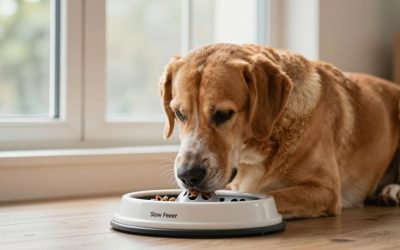
Bloat — gastric dilatation-volvulus (GDV) — is one of the most dangerous and rapidly fatal conditions in dogs. While genetics and anatomy play a role, eating speed is a confirmed contributing factor: dogs that eat quickly swallow large volumes of air with their food, increasing GDV risk. Slow feeder bowls are a simple, affordable intervention that veterinarians recommend for at-risk breeds and fast eaters of any size. Beyond bloat prevention, they turn mealtime into mental enrichment, reducing boredom and associated behavior problems. Here is what works.
Why Trust This Review
AllEarsPetCare reviews dog feeding products on safety (material grade, no sharp edges), effectiveness (actual eating speed reduction), ease of cleaning, and durability. We cross-reference veterinary guidance on bloat prevention with real-world product performance to identify bowls that deliver genuine health benefits rather than gimmicks.
Buying Guide: Slow Feeder Selection Factors
Dog size matters: A small dog slow feeder will frustrate a large dog who cannot fit his snout into the channels; an oversized feeder gives small dogs too much room. Match the product size to your dog’s breed. Kibble size compatibility: Very small kibble can fall through some maze designs and allow speed eating to continue. Test with your specific food or choose a denser pattern. Material safety: All food-contact surfaces should be BPA-free or food-grade stainless. Avoid painted surfaces that may chip. Anti-slip base: Without one, fast eaters push the bowl across the floor and eat off the floor, defeating the purpose. Cleaning practicality: If you cannot clean it easily, bacteria accumulate. Choose the most complex design your cleaning routine can realistically maintain.
Frequently Asked Questions
Do slow feeder bowls actually prevent bloat?
They significantly reduce one contributing factor — air ingestion during rapid eating. They do not eliminate GDV risk, which also involves anatomy, exercise timing, and genetics. Consider a slow feeder as one tool in a multi-factor bloat prevention strategy for at-risk breeds.
Which breeds benefit most from slow feeder bowls?
Deep-chested breeds with highest GDV risk — Great Danes, German Shepherds, Standard Poodles, Irish Setters, Weimaraners, Saint Bernards — should always use slow feeders. Any dog that finishes a meal in under 30 seconds benefits regardless of breed.
Can a slow feeder frustrate my dog?
Initially, yes. Some dogs paw at or bark at slow feeders during the adjustment period. Most accept them within 3–5 meals as they learn the technique. Starting with a simpler maze pattern and progressing to more complex designs eases the transition.
Are slow feeders good for dogs that are not fast eaters?
Yes — the mental enrichment benefit applies to all dogs. Working for food activates natural foraging instincts and provides cognitive stimulation that reduces boredom-related behaviors even in dogs without an eating-speed problem.
Can I use a slow feeder for wet food?
Yes, though the Northmate Green and lick mat-style feeders handle wet food best. Rigid maze bowls work with wet food but require immediate and thorough cleaning to prevent bacterial growth in crevices.
Final Verdict
The Outward Hound Fun Feeder delivers the best-documented eating speed reduction at an accessible price — the default recommendation for most dogs. Large-breed owners who prioritize hygiene and durability should invest in a stainless steel slow feeder built for their dog’s size. For mental enrichment alongside physical slow-feeding — especially for high-energy or anxious dogs — the Northmate Green is in a class of its own. Any of these three will meaningfully reduce eating speed and improve mealtime safety.