- Top Pick: BFPETHOME Orthopedic Washable Large Dog Bed for Senior Dog Comfy Sleep
- Best Value: EHEYCIGA Orthopedic Dog Beds Large Sized Dog, Waterproof Memory Foam Pet Bed with Sides, Non-Slip Bottom Large Pet Bed with Washable Removable Cover, Grey
- Premium Choice: Bedsure SupportMax® Extra Thick Orthopedic XL Dog Beds Large Sized Dog
📅 Last updated:
📋 Table of Contents
The Short Answer
Most senior dogs need a bed one size larger than their weight alone suggests. The best choice is based on the dog’s measured sleeping position, the bed’s usable interior dimensions, and how much support the dog needs to stand up and turn around comfortably.
Measure your dog from nose to the base of the tail while they are lying down in their usual position. Add 6 to 12 inches (15 to 30 cm) to both the length and width. For example, a dog that occupies 30 by 20 inches (76 by 51 cm) while sleeping will usually be more comfortable on a bed with an interior sleep area of about 36 by 26 inches (91 by 66 cm).
As an Amazon Associate we earn from qualifying purchases at no extra cost to you.


For older dogs with arthritis, hip dysplasia, or stiff joints, prioritize a firm orthopedic foam base, a low step-in edge, and a washable cover. Bolsters can make a dog feel secure, but they should not reduce the usable sleeping area or make climbing in and out difficult. As a general shopping budget, comparable orthopedic beds range from about $32 to $53, depending on size, foam thickness, cover, and waterproofing.
Standard Sizes
See also: How to Remove Litter Box Odor Buildup (2026): Step-by-Step • How to Fix a Jammed Automatic Feeder (2026): Step-by-Step
Dog-bed sizes are not standardized between brands. A “large” bed from one manufacturer may be close to a “medium” from another, so compare the listed interior dimensions rather than relying on the label. The measurements below are useful starting points for senior dogs.
| Bed size | Typical dimensions | Approximate dimensions in cm | Best suited for | Typical dog weight |
|---|---|---|---|---|
| Small | 24 x 18 in | 61 x 46 cm | Toy and small dogs that curl up | Up to about 20 lb |
| Medium | 30 x 20 in | 76 x 51 cm | Small to compact medium dogs | About 15–35 lb |
| Large | 36 x 24 in | 91 x 61 cm | Medium dogs or small dogs that stretch out | About 30–55 lb |
| Extra large | 44 x 32 in | 112 x 81 cm | Large dogs and long-bodied sleepers | About 50–85 lb |
| XXL | 52 x 35 in | 132 x 89 cm | Giant breeds or dogs that sprawl | About 80 lb and up |
Weight ranges are only guidelines. A 45-pound greyhound may need a longer bed than a stockier 60-pound bulldog. Measure the dog’s body and compare that measurement with the mattress area inside the bolsters. If a bed is advertised as 44 inches long but its padded interior is only 36 inches, use the smaller interior measurement when deciding whether it will fit.
For senior dogs, mattress thickness matters as much as surface area. A foam base around 3 to 4 inches thick is a practical minimum for many medium and large dogs. Heavier dogs, giant breeds, or dogs with prominent hips and elbows may benefit from 4 to 6 inches of supportive foam. Thickness is not automatically quality: dense, resilient foam usually provides better support than a very soft cushion that quickly flattens.
How to Measure Your Space
- Measure your dog at rest. Wait until your dog is relaxed and lying in their preferred position. Measure from the nose to the base of the tail, not the tip, then measure the widest point from shoulder to shoulder or hip to hip.
- Measure a stretched-out position. If your dog sometimes sleeps fully extended, measure from the nose to the rear paws. Use this longer measurement when choosing a rectangular bed.
- Add room to move. Add at least 6 inches to the length and width for a dog that curls up. Add 8 to 12 inches for a dog that sprawls, changes position frequently, or has stiff joints.
- Check the bed’s interior dimensions. Look for “sleeping area,” “mattress size,” or “interior dimensions.” Do not use the overall outside measurement if the bed has thick bolsters.
- Measure the floor location. Record the available length and width, including space needed for nearby furniture, doors, vents, and walkways. Leave about 24 to 30 inches of clear walking space around a bed in a busy passage.
- Check the entry height. For a dog with arthritis or weak legs, an entry edge of about 2 to 4 inches is generally easier to step over than a tall bolster. If the bed has high sides, confirm that at least one side has a lower opening.
- Account for washable covers. Confirm that the cover can fit your washing machine. A 44-inch or larger bed may require a commercial-size washer, especially when the foam cannot be compressed.
By Room or Use Case
Living Room Bed
A living room bed should provide enough room for a full side stretch without blocking the main route through the room. A 36-by-24-inch bed suits many medium dogs, while a 44-by-32-inch model is more appropriate for large breeds. A low-profile orthopedic bed is a good choice if your dog repeatedly gets up to follow family members. Place it away from a doorway, but where the dog can still see the household activity.
Bedroom Bed
For a bed beside your own, measure the width of the available floor area first. A medium bed around 30 by 20 inches can fit beside many nightstands. If your dog needs an extra-large bed, a rectangular 44-by-32-inch model may work better at the foot of the bed than alongside it. Avoid placing the bed directly over a heating vent or tightly against a radiator; older dogs can be less tolerant of overheating.
Crate or Kennel Bed
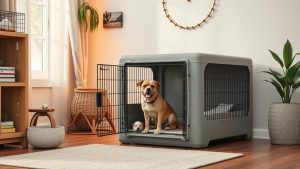
A crate mattress should cover most of the floor without curling up at the corners. Measure the crate’s interior rather than using the crate’s labeled size. Leave enough room for the dog to stand, turn, and lie flat, but avoid a mattress that bunches against the door. For a senior dog, a 2- to 4-inch foam pad with a waterproof liner can add cushioning without raising the sleeping surface too much.
Small Apartment or Office
In a compact space, choose a bed that meets the dog’s sleep needs without narrowing the walkway. A rectangular bed often uses floor space more efficiently than a round bed. A 30-by-20-inch bed may suit a small dog, while a foldable 36-by-24-inch model can provide a comfortable surface that is easier to move when guests arrive. Keep the bed on a non-slip mat so the dog does not slide when standing.
Travel or Second Bed
A travel bed can be slightly simpler than the main orthopedic bed, but it should still provide adequate length and traction. Measure the car’s cargo area, the hotel-room floor space, or the location where the bed will be used. For frequent travel, prioritize a removable washable cover, a waterproof underside, and a weight that one person can carry. Prices for many washable orthopedic-style beds fall around $32 to $53, while thicker or oversized versions may cost more.
Common Sizing Mistakes
- Choosing by weight alone: Weight does not account for body length, sleeping style, or thick fur.
- Ignoring the bolster: A large outside measurement can hide a much smaller usable mattress.
- Buying too small for a stiff dog: Senior dogs often need extra space to reposition without pushing against the sides.
- Assuming softer is better: Excessively plush filling can make it harder for a dog with weak joints to stand up.
- Overlooking bed height: Tall sides may be difficult for dogs with arthritis, even when the mattress size is correct.
- Forgetting door clearance: A correctly sized bed can still be impractical if it blocks a doorway or forces people to step over it.
- Not checking the cover: A removable, machine-washable cover is especially useful for older dogs with accidents or incontinence.
FAQ
Should a senior dog’s bed be larger than their regular bed?
Usually, yes. An extra 6 to 12 inches of usable space gives a senior dog room to stretch, turn, and settle without pressing sore hips or elbows against a bolster. Move up one size if your dog is between sizes or has recently become less mobile.
Is memory foam good for older dogs?
Memory foam can provide pressure relief, but density and thickness matter. Look for a supportive base that does not compress completely under your dog’s weight. A waterproof liner and washable cover are useful additions, particularly for dogs with bladder-control problems.
What size bed does a 60-pound senior dog need?
Many 60-pound dogs fit an extra-large bed around 44 by 32 inches, but measure first. A short, compact dog may be comfortable on a 36-by-24-inch bed, while a long-legged dog that sleeps stretched out may need a 52-by-35-inch XXL model.
Should an orthopedic dog bed have raised sides?
Raised sides can provide head support and a feeling of security, but they should not make entry difficult or reduce the mattress area. Choose a bed with one low opening, a firm bolster that does not collapse, and enough interior space for your dog to lie fully on their side.
Ready to decide? Our #1 pick for 2026 is the Small.
Live price & availability on Amazon.