📅 Last updated:
📋 Table of Contents
Quick answer: Our top pick in 2026 is the Stainless-steel bowl — our #1 rated choice. See the full ranked comparison, alternatives and buying advice below.
The Short Answer
Yes—a pet water fountain is worth it if your cat or dog drinks more readily from moving water and you will clean and refill it consistently. A fountain is not a substitute for fresh water, and it is not automatically healthier than a clean bowl. Its main value is behavioral: the stream, gentle bubbling, and continual circulation can make water more appealing to pets that otherwise drink too little.
For many homes, the decision comes down to maintenance. You will need to wash the fountain every few days, replace or rinse the filter on schedule, and keep an eye on the water level. If that sounds like a chore you will avoid, a simple stainless-steel bowl is the better buy.
As an Amazon Associate we earn from qualifying purchases at no extra cost to you.


What You Actually Get
See also: How to Set Up Timed Pet Feeder (2026): Step-by-Step • Water Fountain Buying Guide for Multiple Pets in 2026: What Actually Matters
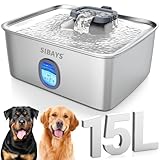
A typical pet fountain includes a water reservoir, a small electric pump, a drinking area, and one or more filters. Most plug into a wall outlet or USB power adapter. The pump continuously moves water through the unit, usually at a quiet trickle rather than a forceful stream.
Capacity is commonly between 64 and 108 ounces—roughly 1.9 to 3.2 liters. A larger reservoir does not mean your pet will drink more, but it can reduce daily refills. For one cat, 80 to 100 ounces is generally a practical size. A large dog, multiple pets, or a warm household may justify 100 ounces or more.
The two Veken models listed for comparison illustrate the usual price range. The Veken Innovation Award Winner Stainless Steel Cat Water Fountain, 108oz, C1 is priced at $27.99, while the Veken Innovation Award Winner 95oz/2.8L Cat Water Fountain, C1 Classic is priced at $19.99. Both offer substantially more capacity than a small countertop bowl, but neither eliminates cleaning or filter costs.
Materials matter. Stainless steel is usually easier to wipe clean and less likely to retain odors than scratched plastic. Plastic fountains can still work well, especially when they have removable parts and a smooth, accessible reservoir. Look for a broad drinking surface, non-slip feet, a water-level window or visible basin, and a pump that can be removed for cleaning.
Most pumps use approximately 1 to 3 watts while running, so electricity costs are usually modest. The ongoing expense is more likely to come from replacement filters. Depending on the model and how often you replace them, filters can add roughly $1 to $5 per month. A fountain priced at $20 to $30 may therefore cost more over a year than its initial price suggests.
Pros
- It may encourage drinking. Some pets prefer moving water and will investigate a fountain more often than a stationary bowl. This can be useful for cats that show little interest in drinking.
- It holds more water. A 95- to 108-ounce reservoir can be convenient for a single pet or a busy household, especially compared with a 24- to 32-ounce bowl.
- Water stays fresher between changes. Circulation can reduce the flat, stale quality that develops in standing water. Filters may also catch hair and larger particles, although they do not sterilize the water.
- It can reduce refill frequency. Rather than topping off a small bowl several times daily, you may only need to check a larger fountain once or twice a day.
- Many are relatively inexpensive. Basic models commonly cost $20 to $40, making a fountain a reasonably low-cost experiment if your pet is reluctant to drink.
- It can be helpful in multi-pet homes. A larger drinking area and a bigger reservoir may make water access easier, provided you still offer enough separate stations for pets that guard resources.
Cons
- It requires more cleaning than many buyers expect. Hair, food particles, slime, and mineral deposits can collect around the pump and inside narrow channels. The drinking surface should be washed every few days, with a deeper pump cleaning at least weekly or according to the manufacturer’s instructions.
- Filters are not optional decoration. A neglected filter can become dirty and restrict flow. Rinsing does not always replace the need for a new filter, and replacement schedules vary from about two to six weeks depending on water quality and pet use.
- A power outage stops circulation. If the pump is unplugged, the fountain becomes a regular water container. Keep a backup bowl available, particularly if your pet depends on the fountain.
- Some pets dislike the sound. A low water level, worn pump, or hard surface can create humming, rattling, or splashing. Sensitive cats may avoid the fountain entirely.
- It takes up counter or floor space. A filled 95-ounce fountain can be bulky and heavy. Place it on a level, water-resistant surface away from electrical cords and food.
- It can create messes. Enthusiastic drinkers may splash, and fountains with a high stream can wet floors or furniture. A silicone mat can help, but it does not solve every spill.
- It does not replace veterinary care. A pet that suddenly drinks much more or much less may have a medical problem. A fountain should never be used to mask a change in thirst, urination, appetite, or energy.
Who Should Buy It
A fountain makes the most sense for cats that seek out faucets, paw at their water, or routinely leave a bowl untouched. It is also a practical choice for owners who are away during the workday and want a larger supply available between checks. Multi-pet households can benefit from the extra capacity, though multiple fountains or bowls may be necessary to prevent competition.
Buy one if you are comfortable with a simple routine: check the level daily, wash the drinking parts every few days, clean the pump weekly, and replace filters as needed. Choose stainless steel when easy cleaning and odor resistance are priorities. A model in the $20 to $35 range is enough for most single-cat households; paying more is mainly worthwhile for quieter operation, better construction, easier disassembly, or a larger capacity.
Who Should Skip It
Skip a fountain if your pet already drinks reliably from a clean bowl and shows no preference for running water. There is no requirement that a healthy pet use a fountain. You may also want to avoid one if your home has no convenient outlet, your pet chews cords, or you travel frequently and cannot maintain the pump.
It is also a poor fit for owners who dislike recurring filter purchases or who are unlikely to take apart a pump. In that case, two or three washable bowls placed in different areas may provide better real-world access to water. Pets that are frightened by motor noise may need a quiet ceramic or stainless-steel bowl instead.
Cheaper Alternatives
| Option | Cost | Trade-off |
|---|---|---|
| Stainless-steel bowl | $8–$20 | No pump, filters, or electricity; water sits still and may need changing once or twice daily. |
| Ceramic bowl | $12–$30 | Heavy and stable with a broad range of designs; can chip and is less convenient to move. |
| Two-bowl rotation | $10–$25 | Use one while the other is washed; requires more frequent refills but is easy to maintain. |
| Wide, shallow water dish | $6–$18 | Helpful for whisker-sensitive cats; offers no circulation and takes up more surface area. |
| Hand-refilled gravity waterer | $15–$35 | Provides extra capacity without a pump; can collect dust and still needs regular washing. |
FAQ
Do pet fountains really help pets drink more?
They can, but the response varies. Cats that prefer moving water may drink more from a fountain, while others ignore it or prefer a bowl. Introduce the fountain beside the existing water source rather than removing the bowl immediately. Once your pet uses it reliably, you can decide whether to keep both options available.
How often should a pet water fountain be cleaned?
Wash the reservoir and drinking surface every two to four days, or more often if you see hair, food, cloudiness, or slime. Clean the pump at least weekly because debris can collect around the impeller. Replace the filter according to the instructions—often every two to six weeks—and sooner if it looks dirty or water flow slows.
Is stainless steel better than plastic?
Stainless steel is generally a strong choice because it is durable, smooth, and easy to clean. Plastic is lighter and often less expensive, but scratches can make it harder to keep sanitary over time. Whichever material you choose, removable parts and a pump that can be opened matter as much as the material itself.
How much water should a cat drink each day?
A common general estimate is about 4 ounces of total water per 5 pounds of body weight per day, including moisture in wet food. Individual needs vary with diet, temperature, activity, age, and health. If your cat’s drinking habits change noticeably, contact a veterinarian rather than relying on a fountain to correct the problem.
Overall, a pet fountain is a worthwhile convenience—not a necessity. The best purchase is a model your pet will use and you will keep clean. If those two conditions are met, a $20 to $30 fountain can be a sensible upgrade; if not, a fresh, well-placed bowl remains the better answer.
Ready to decide? Our #1 pick for 2026 is the Stainless-steel bowl.
Live price & availability on Amazon.